预制菜消费

Search documents
年货消费迎来“00后主理人”:“手搓”年味火了,为宠物花钱更多了
Di Yi Cai Jing· 2026-02-14 08:40
Group 1 - The core trend of emotional consumption and pet consumption is rising during the Spring Festival, with young consumers becoming the main drivers of this trend [1][2] - The online retail sales for the national New Year goods festival reached 989.73 billion yuan by February 8, 2026, with post-00s consumers accounting for over 30% of the total sales and a year-on-year increase of 47% in order value [1] - The demand for "emotional value" in New Year goods is increasing, with products that evoke nostalgia and emotional resonance, such as home decorations and childhood snacks, becoming popular among young consumers [1] Group 2 - The DIY segment is gaining traction, with searches for "New Year DIY" increasing by over 200% and "Horse Year DIY" searches rising by 600%, indicating a willingness to pay a premium for creative and personalized products [2] - The pet market is experiencing significant growth during the Spring Festival, with sales of pet toys, clothing, and food seeing substantial increases, including a 115.60% rise in pet clothing sales compared to last year [2][3] - The pet consumption market in China reached 312.6 billion yuan in 2025, with a growing trend towards diversification in pet products, including offerings for various types of pets beyond just cats and dogs [3] Group 3 - Pre-made dishes are maintaining growth in the New Year meal segment, with sales of a new series of dishes increasing by 116% since launch, reflecting consumer demand for unique and high-quality meal options [3][4] - Consumers are prioritizing regional flavors and are open to trying creative dishes, with nearly 90% preferring hometown flavors and over 80% willing to experiment with innovative New Year meals [4] - Health considerations, such as low-fat and low-sugar options, are becoming increasingly important in the decision-making process for young consumers regarding New Year meals [4]

2025年中国预制菜消费者画像:预制菜凭借其方便快捷特性,满足快生活节奏的年轻群体的需要【组图】
Qian Zhan Wang· 2025-06-16 08:25
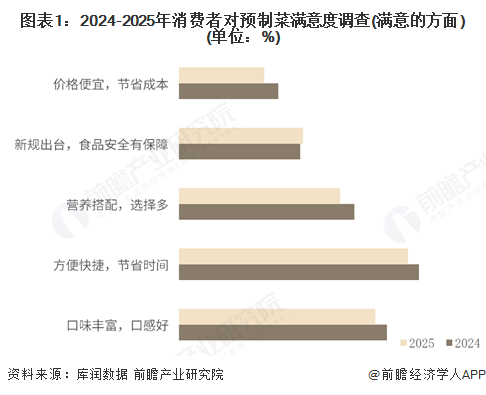
Core Insights - The article discusses the growing popularity of prepared dishes among consumers, highlighting their convenience and variety, while also addressing concerns regarding food safety, pricing, and nutritional balance [1][8]. Consumer Satisfaction - Consumer satisfaction regarding food safety is expected to increase slightly by 1% in 2025 compared to 2024, while satisfaction with pricing, nutrition, and meal preparation time is projected to decline [1]. - The primary concern for consumers remains the production source of prepared dishes, which has consistently ranked highest in improvement areas for two consecutive years [3]. Acceptance of Prepared Dishes - Acceptance of prepared dishes varies significantly by consumption scenario; over 80% of consumers are not open to prepared dishes for traditional family gatherings, while acceptance is highest for outdoor camping scenarios at 52.8% [5]. - Only 9.1% of consumers are completely opposed to prepared dishes, indicating a general openness to their use in everyday meals and snacks [5]. Demographics of Prepared Dish Consumers - The largest demographic of prepared dish consumers is aged 21-30, accounting for 43%, while those aged 41 and above represent only 19% [8]. - The "lazy" consumer segment constitutes the highest proportion at 29%, followed by office workers at 23%, homebodies at 8%, and mothers at 5% [9]. Lifestyle Influence - The rise of prepared dishes is closely linked to the fast-paced lifestyle of urban consumers, who often lack the time or desire to cook [9].