
马克思主义新闻观

Search documents
如何建构中国新闻传播学自主知识体系
Xin Lang Cai Jing· 2026-02-19 04:33
Core Viewpoint - The development of Chinese journalism and communication studies is essential for establishing an independent knowledge system that reflects Chinese practices and counters Western discourse dominance [1][5][15]. Group 1: Historical Context and Development - Journalism studies in China have a history of over a century, with significant contributions from early scholars and practitioners who integrated Western theories with Chinese realities [3][11]. - The establishment of the Beijing University Journalism Research Association in 1918 marked the beginning of systematic journalism research in China, leading to the development of foundational texts and frameworks [11][12]. Group 2: Theoretical Foundations - The Marxist perspective on journalism serves as the fundamental guide for constructing an independent knowledge system in Chinese journalism studies, emphasizing the need to align with national social development [5][15]. - The influence of Western journalism theories has created challenges, necessitating a shift towards a more autonomous and contextually relevant theoretical framework [6][15]. Group 3: Current Challenges and Needs - The rise of new media technologies demands a re-evaluation of existing knowledge frameworks to address the complexities of modern journalism practices, including the integration of social media and digital platforms [8][14]. - There is a growing disconnect between academic research and practical journalism, highlighting the need for a more collaborative approach that bridges theory and practice [8][14]. Group 4: Future Directions - Building an independent knowledge system requires a focus on interdisciplinary collaboration, integrating insights from various fields such as political science, sociology, and technology [16][17]. - The internationalization of Chinese journalism studies is crucial, involving critical engagement with Western theories while promoting unique Chinese perspectives on media and communication [17].

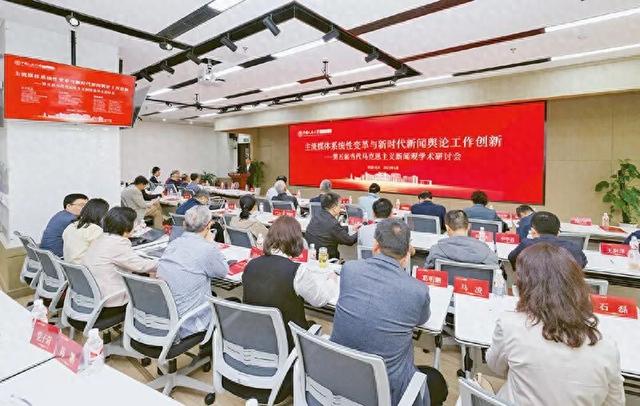
为奋进“十五五”提供强大舆论支撑(深入学习贯彻习近平新时代中国特色社会主义思想)
Ren Min Ri Bao· 2026-02-13 00:28
Core Viewpoint - The "2·19" important speech by General Secretary Xi Jinping provides a scientific guide and action plan for the Party's news and public opinion work in the new era, emphasizing its strategic importance in national governance and the consolidation of the Party's power [1][2]. Group 1: Strategic Positioning - The speech elevates the role of the Party's news and public opinion work from a mere operational task to a significant matter of state governance and national security [2]. - It highlights the historical leap in the Party's understanding of the laws governing news and public opinion work, marking a new height in recognizing the rules of socialist cultural construction and information dissemination in the digital age [2][3]. Group 2: Responsibilities and Principles - The "Five Concerns" framework is introduced, outlining the critical aspects of the Party's news and public opinion work, which include the Party's banner and path, implementation of Party theories, advancement of national affairs, and the cohesion of the people [3]. - The "48-character" guideline encapsulates the core essence of the speech, providing a comprehensive and systematic action framework for the Party's news and public opinion work [3][4]. Group 3: Adapting to Trends - The speech emphasizes the need for innovation in concepts, content, and methods in the face of the internet revolution, asserting that managing the internet is key to controlling the news and public opinion landscape [5][6]. - It calls for the establishment of a modern communication system and the development of a new type of mainstream media to adapt to the digital transformation [6][7]. Group 4: Cultural and Ideological Leadership - The speech stresses the importance of upholding Marxist news views and the Party's principles in guiding media work, particularly in the context of new media [4][10]. - It advocates for a focus on high-quality development in news reporting, emphasizing the need to reflect the voices and aspirations of the people [11][12]. Group 5: Systemic Reform and Integration - The need for systemic reform in mainstream media is highlighted, addressing the challenges posed by traditional organizational structures that do not align with the demands of the all-media era [16][18]. - The integration of news promotion and online public opinion management is identified as a crucial step in maintaining the Party's narrative and influence in the digital space [19][20]. Group 6: Talent Development and Practical Implementation - The speech underscores the importance of cultivating a skilled workforce in news and public opinion work, focusing on political integrity and professional competence [20][21]. - It calls for practical breakthroughs in key areas to enhance the effectiveness of mainstream media and ensure its leading role in public discourse [20].
调查|公考培训乱象:华图、大斌等机构教材出错,课程陈旧退费难
Xin Jing Bao· 2025-12-30 10:16
Group 1 - The core issue in the public examination training sector is the prevalence of misleading materials and outdated content, leading to significant dissatisfaction among students [1][3][4] - The 2026 national civil service examination has seen a record number of applicants, reaching 3.718 million, with a competition ratio of approximately 74:1 for available positions [1] - Complaints against major training institutions like Huatu, Dabin, and Zhonggong highlight issues such as incorrect textbook answers, outdated course content, and difficulties in obtaining refunds [1][6][19] Group 2 - The introduction of a new age limit for applicants, allowing candidates up to 38 years old (43 for recent graduates), is part of a broader reform aimed at optimizing the civil service workforce [1] - Legal interpretations regarding prepaid consumption have been established to protect consumer rights, particularly in cases of misleading practices and refund difficulties [2][21][22] - The training institutions often employ complex refund calculations that can leave students feeling they owe money despite requesting refunds, raising concerns about transparency and fairness [9][12][19]
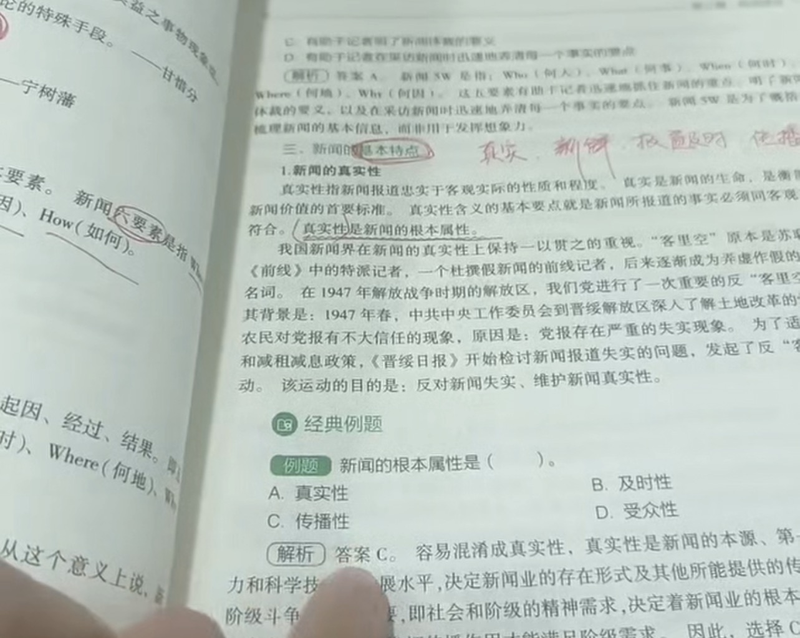
公考培训乱象:华图、大斌等机构教材出错,课程陈旧退费难
Xin Jing Bao· 2025-12-30 10:07
Group 1 - The core issue in the public examination training industry is the prevalence of misleading materials and outdated content, leading to significant dissatisfaction among students [1][3][4] - Complaints have surged against major training institutions like Huatu, Dabin, and Zhonggong, highlighting issues such as incorrect textbook answers, outdated recorded lessons, and difficulties in obtaining refunds [1][3][4][18] - The 2026 national civil service examination has seen a record number of applicants, reaching 3.718 million, with a ratio of approximately 74 applicants for each available position [1] Group 2 - Recent legal interpretations by the Supreme People's Court aim to protect consumer rights in prepaid training services, addressing common issues like refund difficulties and misleading contractual terms [2][20][21] - Consumers are advised to be cautious when selecting prepaid training services, particularly regarding promises of guaranteed results or full refunds if certain conditions are not met [2][22] - The legal framework emphasizes that consumers have the right to request refunds within seven days of payment if they have not received the service, which is crucial for addressing disputes in the education training sector [20][21][23] Group 3 - The training institutions often employ complex refund calculations that can leave students feeling they owe money despite having paid for courses, leading to further frustration [9][10][12] - Many students report that the content of the courses they enrolled in is outdated, with some lessons referencing policies and topics from several years ago, which undermines the relevance of the training [6][8][19] - The lack of transparency in refund policies and the presence of clauses that limit consumer rights have been highlighted as significant issues within the industry [13][19][24]

人民日报社2026年度公开招聘工作人员公告
中国能源报· 2025-12-10 03:24
Core Points - The People's Daily is initiating a public recruitment for 64 positions aimed at recent graduates from domestic universities and overseas students for the year 2026 [2][30] - The recruitment emphasizes the need for candidates to have a strong political stance, support the leadership of the Communist Party of China, and align with socialist values [3][4] - Candidates must not exceed 38 years of age, possess the required professional skills, and have a clean legal record [5][6][7] Recruitment Conditions - Applicants must be citizens of the People's Republic of China and uphold the constitution and laws [3] - Candidates should have a strong interest in journalism and adhere to professional ethics [4] - The recruitment is open to 2026 graduates and those who have not secured employment within two years post-graduation [9] Job Positions and Requirements - Positions are available for both local and non-local graduates, with specific language proficiency requirements for certain roles [10][11] - A detailed list of job positions, including required qualifications and the number of openings, is provided [12][13] Recruitment Process - The recruitment process includes online application, qualification review, written tests, interviews, and health examinations [15][16][17] - Candidates must register online between December 5 and December 24, 2025, and can only apply for one position [15][16] Employment Terms - Successful candidates will sign a contract with the People's Daily and receive corresponding salaries and benefits [23] - The recruitment process emphasizes the importance of maintaining accurate and truthful application materials [26][27]

“十四五”首都高校答卷|中国传媒大学:持续培养拔尖创新人才
Xin Jing Bao· 2025-12-01 13:14
Core Viewpoint - The "14th Five-Year Plan" period is a milestone for the development of Communication University of China, with significant achievements in education and research, guided by Xi Jinping's thoughts and directives [1][2]. Group 1: Educational Development - The university aims to become a "world-class media university with Chinese characteristics," achieving breakthroughs in various areas and enhancing the overall appearance and quality of faculty and students [1]. - A high-quality talent cultivation system has been established, integrating general education, AI, and professional education to meet the challenges of the intelligent era [4]. - The university has implemented a comprehensive evaluation system focusing on "five educations" and has seen an increase in the number of students admitted to master's programs [4]. Group 2: Research and Innovation - The university has optimized its academic structure, with seven disciplines entering the A-class ranking in domestic mainstream disciplines, and has established new doctoral programs [5]. - A high-quality research innovation system has been developed, significantly enhancing the university's ability to meet national strategic needs, with a notable increase in national-level research projects and publications [6]. - The university has formed a multidimensional "big communication" academic ecosystem, covering various fields such as journalism, international communication, and cultural communication [6]. Group 3: Strategic Planning - The university's leadership has outlined a strategic plan for the "15th Five-Year Plan" period, focusing on addressing AI challenges and establishing a digital campus [7]. - The core mission is to transform the university's development from traditional media to a strong emphasis on AI, contributing to national modernization and rejuvenation efforts [7].
媒体社会责任暨第六届全国马克思主义新闻观论坛在上海召开
Jie Fang Ri Bao· 2025-09-30 01:54
Core Viewpoint - The forum focused on the responsibilities of mainstream media in the context of systemic changes, emphasizing the integration of Marxist journalism principles in the new media era [1] Group 1: Event Overview - The sixth National Marxist Journalism Forum was held in Shanghai, where the Media Social Responsibility Report was officially released and a research community was established [1] - The forum was co-hosted by the China Journalists Association and Fudan University, with over 150 participants including media representatives and scholars [1] Group 2: Key Themes and Discussions - The theme of the forum was "Upholding Integrity and Fulfilling Responsibilities," highlighting the need for media to better fulfill their responsibilities during systemic changes [1] - Liu Siyang emphasized that the primary duty of fulfilling social responsibility is to solidify the political foundation, urging the media to internalize social responsibility as a value pursuit [1]
中国记协新闻道德委员会对中央主要新闻单位2024年度媒体社会责任报告开展评议
Xin Hua She· 2025-09-29 16:04
Core Points - The forum emphasized the importance of media's social responsibility as a fundamental requirement, aligning with the directives from the 20th National Congress of the Communist Party of China regarding the systematic reform of mainstream media [1][2] - The media social responsibility report system, established over 12 years, is crucial for enhancing industry credibility and establishing a long-term self-regulatory mechanism [1] - The 2024 reports will reflect the media's commitment to social responsibility, serving as a window to showcase their effectiveness and a chance for self-assessment of business standards and professional ethics [1] Group 1 - The primary responsibility of fulfilling social responsibility is to solidify the political foundation, guiding the news sector to deeply learn and implement Xi Jinping's cultural thoughts [2] - The forum aimed to leverage quality resources from the media and academic sectors to enhance theoretical research on media social responsibility, showcasing the power of Marxist journalism in contemporary news discourse [2] - The event was co-hosted by the China Journalists Association and Fudan University, focusing on how mainstream media can better assume responsibilities during systematic reforms, revitalizing Marxist journalism in the era of all-media [2]