高市冲击

Search documents
日元汇率缘何暴跌暴涨
Xin Hua Wang· 2026-01-29 07:56
Group 1 - The Japanese yen experienced a significant drop last week, followed by an unexpected surge this week, with the exchange rate nearing 160 yen per dollar on the 23rd and rising to the 152 yen per dollar range by the 28th [1] - The decline in the yen's value was attributed to concerns over Japan's fiscal situation following Prime Minister Kishi's announcement of early elections, leading to a sell-off in Japanese government bonds and a spike in bond yields [1] - The Bank of Japan's monetary policy meeting did not provide any supportive signals for the market, resulting in a further decline in the yen's value [1] Group 2 - The volatility in the Japanese financial market has drawn the attention of U.S. authorities, with U.S. Treasury Secretary Yellen expressing concerns over the impact of Japanese bond sales on U.S. bonds [2] - Analysts suggest that U.S. and Japanese financial authorities may have collaborated to intervene in the currency market, leading to the yen's recent appreciation [2] - Reports indicate that the Federal Reserve conducted a currency inquiry, which is seen as a strong signal of market intervention, contributing to the yen's rise [2] Group 3 - Some market analysts believe that the crisis in the Japanese financial market is not over, with ongoing concerns about the potential "Kishi shock" due to aggressive fiscal policies [3] - The Japanese government's debt-to-GDP ratio has reached 240%, raising fears that tax cuts and increased spending will exacerbate the debt burden and further devalue the yen [3] - There are comparisons being made to the "Truss shock" in the UK, with warnings that the impact of Kishi's fiscal policies could be even more severe for Japan [3]
经济热点问答|日元汇率缘何暴跌暴涨
Xin Hua Wang· 2026-01-29 07:37
Core Viewpoint - The Japanese yen experienced significant volatility, plummeting to nearly 160 yen per dollar before rebounding to around 152 yen, driven by concerns over Japan's fiscal situation and coordinated actions by Japanese and U.S. authorities to stabilize the currency [1][2]. Group 1: Reasons for Yen's Decline - The announcement of early elections by Prime Minister Kishi caused renewed worries about Japan's fiscal health, leading to a sell-off in long-term bonds and a sharp depreciation of the yen [1]. - Following Kishi's promise to reduce consumption tax, Japanese government bonds faced heavy selling, resulting in a spike in yields, with 30-year and 40-year bond yields reaching historic highs [1]. Group 2: U.S.-Japan Coordination - The volatility in Japan's financial markets drew U.S. attention, with Treasury Secretary Yellen noting that the sell-off in Japanese bonds was affecting U.S. bonds as well [2]. - Analysts suggested that U.S. and Japanese financial authorities may have coordinated efforts to intervene in the currency market, leading to a temporary surge in the yen's value [2]. - Reports indicated that the Federal Reserve conducted currency inquiries, which were seen as a precursor to potential market intervention, contributing to the yen's appreciation [2]. Group 3: Ongoing Market Concerns - Analysts believe that the crisis in Japan's financial markets is not over, with ongoing fears of a "Kishi shock" due to aggressive fiscal policies that could exacerbate Japan's debt burden [3]. - The government's debt-to-GDP ratio has reached 240%, raising concerns that tax cuts and increased spending will further weaken the yen [3]. - Comparisons have been made to the "Truss shock" in the UK, with fears that Kishi's fiscal strategies could lead to even more severe market repercussions [3].
日本,全线暴跌!黑天鹅,突袭!
Sou Hu Cai Jing· 2025-12-01 07:30
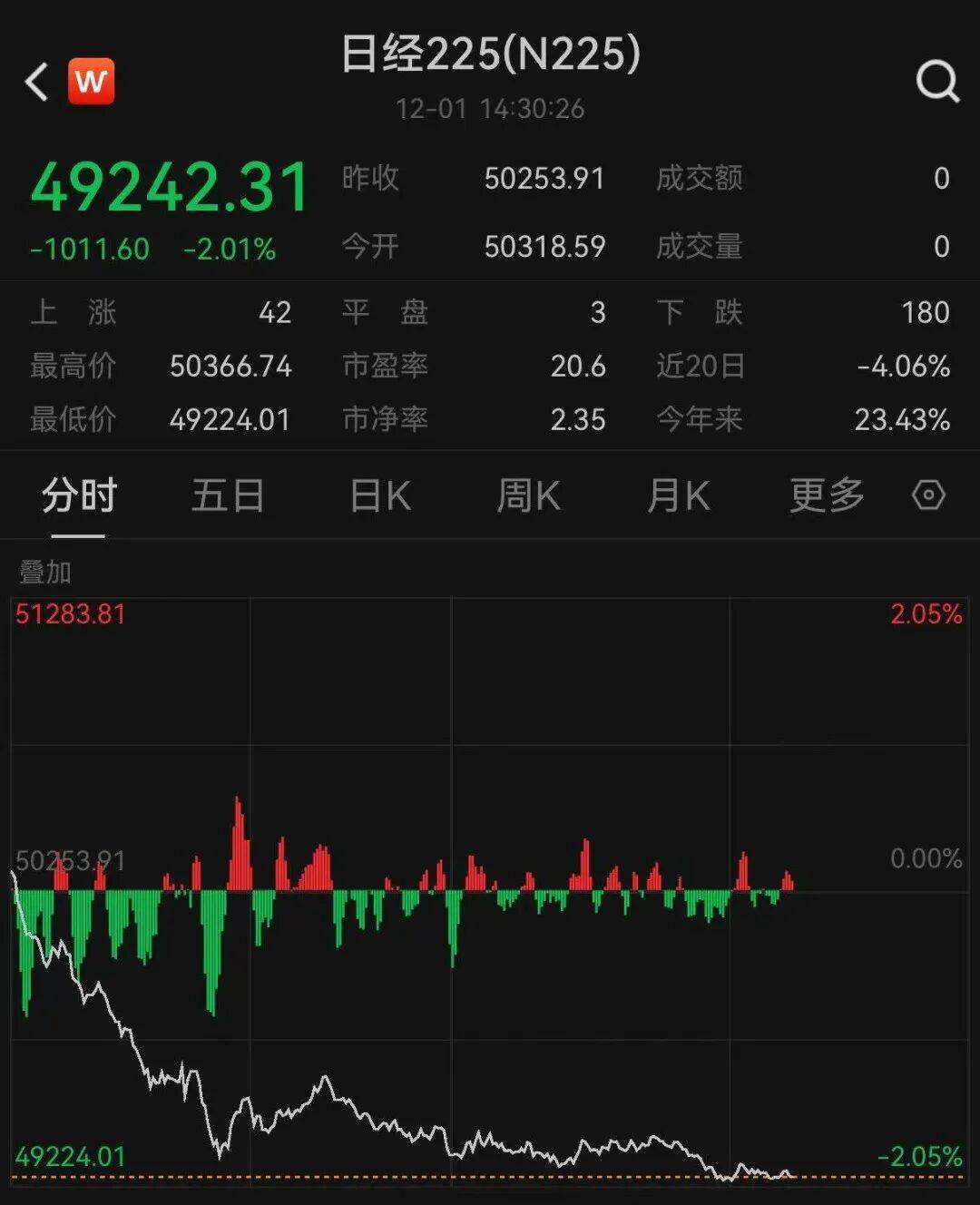
Group 1 - Japanese government bonds have experienced a significant decline due to renewed interest rate hike expectations, with the 3-month bond yield soaring over 34% and the 10-year bond yield reaching 1.840%, the highest level since June 2008 [1] - The Nikkei 225 index opened high but fell sharply, with an intraday drop exceeding 2%, losing over 1,000 points [1] - Bank of Japan Governor Kazuo Ueda indicated that the central bank will weigh the pros and cons of raising interest rates at the next monetary policy meeting, marking the strongest signal yet regarding a potential rate hike [2] Group 2 - The Japanese government plans to issue over 11.7 trillion yen (approximately 529.9 billion RMB) in new bonds to fund a new round of economic stimulus, raising concerns about the impact on fiscal health [4] - Japan's debt is projected to reach 229.6% of GDP by 2025, the highest among developed countries, leading to market worries about fiscal deterioration due to increased spending [4] - The Japanese economy has shown signs of deterioration, with the latest data indicating a 1.8% annualized decline in GDP for Q3, raising concerns about the effectiveness of the government's stimulus measures [6]