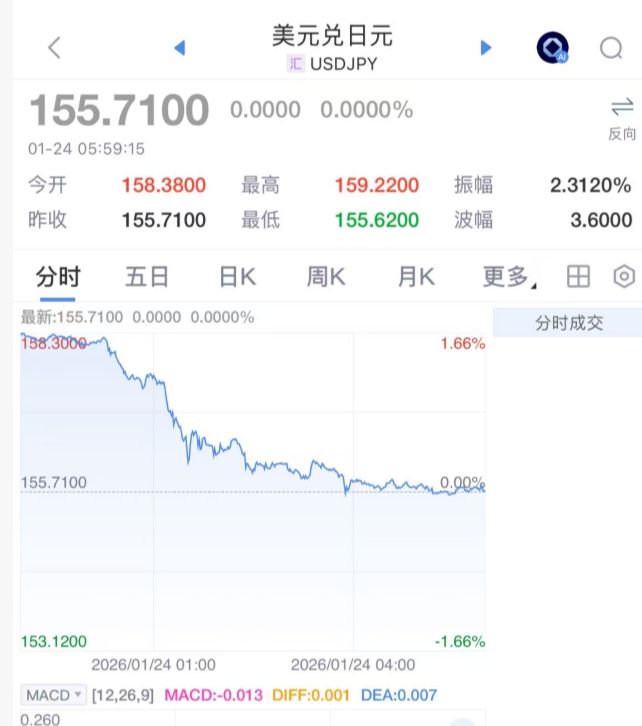
汇率询价

Search documents
美联储1月份进行的汇率询价是由美国财长贝森特发起
Xin Lang Cai Jing· 2026-02-24 00:15
Core Viewpoint - The Federal Reserve's currency inquiry in January was initiated by U.S. Treasury Secretary Scott Bansen, not at Japan's request, indicating a unilateral action by the U.S. rather than a coordinated intervention with Japan [1][1]. Group 1 - The inquiry was not a response to a request from Japan, which would typically lead to considerations for coordinated intervention measures [1][1].
美元兑日元短线拉升,日内涨0.02%,此前报道称日本要求美联储在1月进行汇率询价。
Sou Hu Cai Jing· 2026-02-12 06:24
Core Insights - The USD/JPY exchange rate experienced a short-term increase of 0.02% during the day, indicating a slight appreciation of the US dollar against the Japanese yen [1] Group 1 - Reports suggest that Japan has requested the Federal Reserve to conduct a currency inquiry in January, which may influence future exchange rate policies [1]
日元汇率缘何暴跌暴涨
Xin Hua Wang· 2026-01-29 07:56
Group 1 - The Japanese yen experienced a significant drop last week, followed by an unexpected surge this week, with the exchange rate nearing 160 yen per dollar on the 23rd and rising to the 152 yen per dollar range by the 28th [1] - The decline in the yen's value was attributed to concerns over Japan's fiscal situation following Prime Minister Kishi's announcement of early elections, leading to a sell-off in Japanese government bonds and a spike in bond yields [1] - The Bank of Japan's monetary policy meeting did not provide any supportive signals for the market, resulting in a further decline in the yen's value [1] Group 2 - The volatility in the Japanese financial market has drawn the attention of U.S. authorities, with U.S. Treasury Secretary Yellen expressing concerns over the impact of Japanese bond sales on U.S. bonds [2] - Analysts suggest that U.S. and Japanese financial authorities may have collaborated to intervene in the currency market, leading to the yen's recent appreciation [2] - Reports indicate that the Federal Reserve conducted a currency inquiry, which is seen as a strong signal of market intervention, contributing to the yen's rise [2] Group 3 - Some market analysts believe that the crisis in the Japanese financial market is not over, with ongoing concerns about the potential "Kishi shock" due to aggressive fiscal policies [3] - The Japanese government's debt-to-GDP ratio has reached 240%, raising fears that tax cuts and increased spending will exacerbate the debt burden and further devalue the yen [3] - There are comparisons being made to the "Truss shock" in the UK, with warnings that the impact of Kishi's fiscal policies could be even more severe for Japan [3]
美元指数创四年新低!特朗普称美元“表现良好”
Di Yi Cai Jing· 2026-01-28 00:24
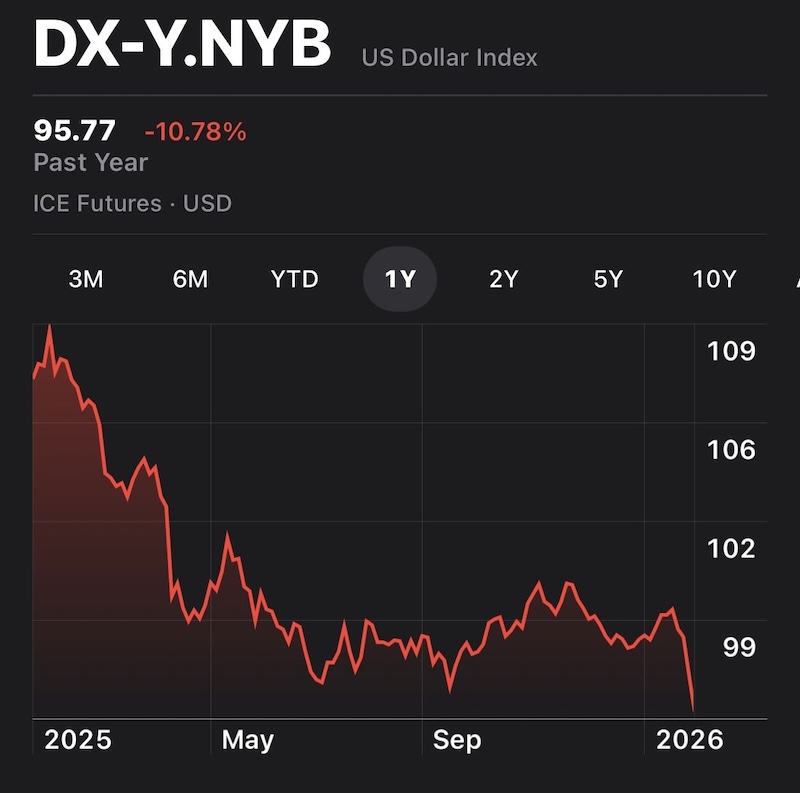
Group 1 - The core focus of the news is the weakening of the US dollar and its impact on non-US currencies, particularly the Japanese yen, which has seen significant appreciation recently [1][5][6] - President Trump's comments on the dollar's performance and his belief in its return to a "reasonable level" have influenced market perceptions, leading to a temporary rise in the dollar index before it fell sharply [1][4] - The ongoing uncertainty surrounding Trump's trade policies and the potential government shutdown has contributed to the dollar's decline, prompting a "sell America" trend among investors [4][6] Group 2 - The Japanese yen has become a focal point in the forex market, with speculation about potential intervention by the US and Japan, leading to a notable increase in the yen's value against the dollar [5][6] - Reports of the New York Federal Reserve inquiring about USD/JPY quotes have heightened expectations of coordinated action between the US and Japan, further impacting dollar assets [5][6] - Barclays suggests that any potential intervention in the yen could further weaken the dollar's flow picture, indicating a shift in market dynamics [6]

市场警惕日美联手干预汇率 日元对美元跳涨
Xin Lang Cai Jing· 2026-01-26 08:41
Core Viewpoint - The Japanese yen experienced a significant appreciation against the US dollar due to market speculation about potential coordinated currency intervention by Japan and the US, with the yen rising from approximately 158.4 to 153.9 yen per dollar in a short period [1] Group 1: Currency Market Dynamics - On the Tokyo foreign exchange market, the yen was trading at about 158.4 yen per dollar at the close on the 23rd, and it surged to 153.9 yen per dollar in early trading on the 26th, marking an increase of over 4 yen [1] - There were notable spikes in the yen's exchange rate in both Tokyo and New York markets on the afternoon of the 23rd, leading to speculation about a possible joint intervention by Japanese and US authorities [1] Group 2: Intervention Signals - The term "exchange rate inquiry" was mentioned, indicating that financial authorities may be preparing for intervention by assessing current exchange rates and market conditions, which is seen as a stronger signal than verbal intervention [1] - A representative from a London financial intermediary confirmed that the Federal Reserve conducted an exchange rate inquiry under the direction of the US Treasury, which was reported by various media outlets [1]
市场警惕日美联手干预汇率 日元对美元跳涨
Xin Hua Wang· 2026-01-26 03:54
Core Viewpoint - The Japanese yen experienced a significant appreciation against the US dollar due to market speculation about potential coordinated currency intervention by Japanese and US authorities [1] Group 1: Currency Market Dynamics - On January 23, the exchange rate for the yen against the dollar was approximately 158.4 to 1, but by January 26, it surged to 153.9 to 1, marking an increase of over 4 yen [1] - There were notable short-term increases in the yen's value in both Tokyo and New York markets on January 23, leading to speculation about a possible joint intervention by Japan and the US [1] Group 2: Intervention Signals - The term "exchange rate inquiry" was mentioned, indicating that financial authorities may be preparing for currency intervention, which is considered a stronger signal than verbal intervention [1] - A representative from a London financial intermediary confirmed that the Federal Reserve conducted an exchange rate inquiry under the direction of the US Treasury [1]
【环球财经】警惕日美联手干预 日元大幅走高
Xin Hua Cai Jing· 2026-01-26 03:01
Group 1 - The core viewpoint of the articles highlights the significant appreciation of the Japanese yen against the US dollar due to market speculation about potential coordinated currency intervention by Japan and the US [1][2] - As of the latest report, the USD/JPY exchange rate fell to 154, marking a new low since November 14 of the previous year, with a daily decline of 1.11% [1] - There were instances of rapid increases in the yen's value during both Asian and North American trading sessions, suggesting that the market anticipates intervention measures [1] Group 2 - Vishnu Varathan, the macro research head at Mizuho Securities for Asia excluding Japan, indicated that Japan's latest currency intervention measures may be more effective due to the real-time intervention threat curbing unrestrained bearish bets on the yen [2] - The Japanese Ministry of Finance has escalated its warnings regarding the yen and adopted a more aggressive stance, emphasizing the "real-time" nature of its intervention intentions [2] - Japanese Prime Minister Fumio Kishida has explicitly warned that authorities will take all necessary measures to address speculative and highly abnormal fluctuations, signaling a strong warning to the yen and Japanese government bond markets [2]
日本、美国联手干预日元
Zhong Guo Ji Jin Bao· 2026-01-25 22:42
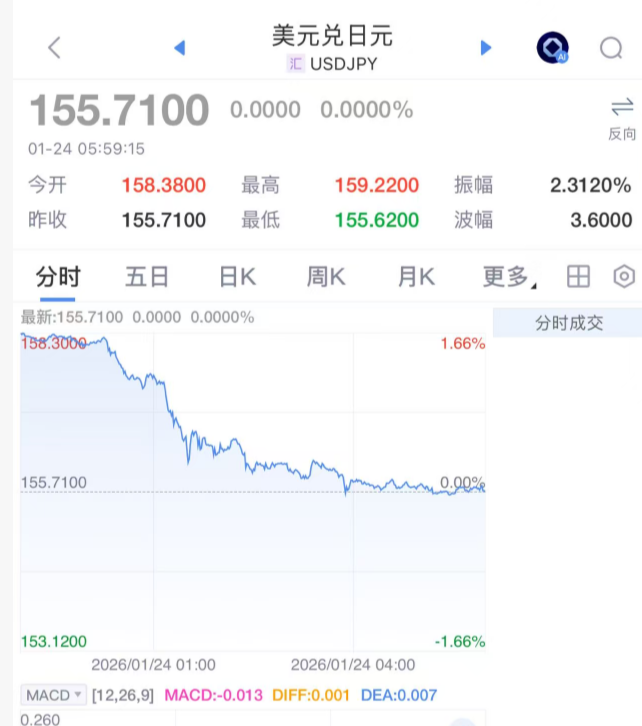
Core Viewpoint - The collaboration between the United States and Japan to intervene in the yen's exchange rate has led to significant fluctuations, with the yen strengthening from around 159 to a four-week high of 155.7, an increase of over 1.6% [1] Group 1: Market Reactions - The New York Federal Reserve conducted a "rate check" on the USD/JPY exchange rate, which may indicate potential intervention by both countries' monetary authorities [3] - Analysts suggest that the rate check could trigger a rapid decline in the dollar and signal that the U.S. and Japan are preparing to take action after weeks of a strong dollar against the yen [3] - The rate check is seen as a warning to traders that authorities believe the yen's trading trend is excessive and are ready to intervene in the market [4] Group 2: Government Statements - Japanese Prime Minister Fumio Kishida warned the financial markets that the government is prepared to take necessary measures in response to speculative and highly abnormal fluctuations in the yen [4] - Kishida emphasized that while he should not comment on market-determined matters, the government will act against excessive volatility [4] - The current government appears to have a lower tolerance for speculative currency fluctuations compared to previous administrations, according to analysts [4] Group 3: Market Speculation - There is growing speculation that Japanese authorities may intervene in the foreign exchange market to curb the yen's decline, potentially with U.S. assistance [4] - The news of the rate check may deter further short-selling of the yen, as short positions have reached their highest level in over a decade [4] - Traders are expected to be cautious at the market opening, with the yen likely trading around 155 against the dollar early in the week [4]
大反转!日本、美国突然联手干预日元
Zhong Guo Ji Jin Bao· 2026-01-25 17:20
Core Insights - The collaboration between the U.S. and Japan to intervene in the yen's depreciation has become a focal point, with the yen strengthening significantly from around 159 to a four-week high of 155.7, marking an increase of over 1.6% [1] Group 1: Currency Intervention - The New York Federal Reserve conducted a "rate check" on the USD/JPY exchange rate, which may indicate a potential intervention by U.S. and Japanese monetary authorities after weeks of a strong dollar against the yen [2] - The "rate check" serves as a signal tool for monetary authorities to indicate readiness to intervene in the market, particularly when volatility increases and verbal warnings are insufficient [4] Group 2: Market Reactions - Traders have been on alert for potential intervention as the yen approaches the critical level of 160 yen per dollar, with speculation rising regarding the readiness of Japanese authorities to act [3] - Japanese Prime Minister Fumio Kishida has warned of necessary measures to address speculative and extreme volatility in the currency market, indicating a lower tolerance for such fluctuations compared to previous administrations [4] - Analysts suggest that the news of the rate check may deter further short positions on the yen, which have reached their highest levels in over a decade [4]
大反转!日本、美国,突然联手
Zhong Guo Ji Jin Bao· 2026-01-25 16:13
Core Viewpoint - The collaboration between the United States and Japan to intervene in the yen's exchange rate has led to significant fluctuations, with the yen strengthening from around 159 to a four-week high of 155.7, marking an increase of over 1.6% [1] Group 1: Market Reactions - The New York Federal Reserve conducted a "rate check" on the USD/JPY exchange rate, which may indicate a potential intervention by the monetary authorities of both countries [3] - Traders have been on alert for possible intervention as the yen approaches the critical level of 160 yen per dollar [4] - Analysts suggest that the rate check serves as a warning to traders that authorities believe the yen's trading trend is excessive and are prepared to act [5] Group 2: Government Statements - Japanese Prime Minister Fumio Kishida has warned that the government is ready to take necessary measures in response to speculative and highly abnormal fluctuations in the currency market [5] - Kishida emphasized that while he should not comment on market-determined matters, the government will respond to excessive volatility [5] - The current administration's tolerance for speculative currency fluctuations appears to be lower than that of previous governments, indicating a more proactive stance [5] Group 3: Analyst Insights - Analysts predict that traders should exercise caution at the market opening, with the yen expected to trade around 155 against the dollar early in the week [6] - The potential for intervention may discourage further short positions on the yen, which have reached their highest levels in over a decade [5]