特拉斯冲击

Search documents
日媒:欧洲警惕日本选举减税承诺 日本财政恶化风险引担忧
Sou Hu Cai Jing· 2026-02-05 02:23
Group 1 - The core concern is the potential negative impact on Japan's fiscal stability due to proposed consumption tax cuts by political parties in response to high prices, which may lead to financial market instability [1][2] - There are fears of a "Truss shock" scenario in Japan, where significant tax cuts without adequate funding could result in a triple decline in currency, bonds, and stocks [1] - Japan's fiscal situation has become a focal point of concern, especially highlighted during the World Economic Forum in Davos, with questions raised about long-term interest rates and fiscal management [1][2] Group 2 - Japan's government debt is projected to reach 236.66% of GDP by 2024, indicating a severe fiscal burden [2] - The standard consumption tax rate in Japan is 10%, which is significantly lower than that of major European countries, with only the UK implementing a zero rate for food [2] - The impact of tax reductions in Germany has been minimal, with only a few restaurant chains reporting price decreases, suggesting that tax cuts may primarily serve as industry subsidies rather than effective consumer relief [2]
日元汇率缘何暴跌暴涨
Xin Hua Wang· 2026-01-29 07:56
Group 1 - The Japanese yen experienced a significant drop last week, followed by an unexpected surge this week, with the exchange rate nearing 160 yen per dollar on the 23rd and rising to the 152 yen per dollar range by the 28th [1] - The decline in the yen's value was attributed to concerns over Japan's fiscal situation following Prime Minister Kishi's announcement of early elections, leading to a sell-off in Japanese government bonds and a spike in bond yields [1] - The Bank of Japan's monetary policy meeting did not provide any supportive signals for the market, resulting in a further decline in the yen's value [1] Group 2 - The volatility in the Japanese financial market has drawn the attention of U.S. authorities, with U.S. Treasury Secretary Yellen expressing concerns over the impact of Japanese bond sales on U.S. bonds [2] - Analysts suggest that U.S. and Japanese financial authorities may have collaborated to intervene in the currency market, leading to the yen's recent appreciation [2] - Reports indicate that the Federal Reserve conducted a currency inquiry, which is seen as a strong signal of market intervention, contributing to the yen's rise [2] Group 3 - Some market analysts believe that the crisis in the Japanese financial market is not over, with ongoing concerns about the potential "Kishi shock" due to aggressive fiscal policies [3] - The Japanese government's debt-to-GDP ratio has reached 240%, raising fears that tax cuts and increased spending will exacerbate the debt burden and further devalue the yen [3] - There are comparisons being made to the "Truss shock" in the UK, with warnings that the impact of Kishi's fiscal policies could be even more severe for Japan [3]
经济热点问答|日元汇率缘何暴跌暴涨
Xin Hua Wang· 2026-01-29 07:37
Core Viewpoint - The Japanese yen experienced significant volatility, plummeting to nearly 160 yen per dollar before rebounding to around 152 yen, driven by concerns over Japan's fiscal situation and coordinated actions by Japanese and U.S. authorities to stabilize the currency [1][2]. Group 1: Reasons for Yen's Decline - The announcement of early elections by Prime Minister Kishi caused renewed worries about Japan's fiscal health, leading to a sell-off in long-term bonds and a sharp depreciation of the yen [1]. - Following Kishi's promise to reduce consumption tax, Japanese government bonds faced heavy selling, resulting in a spike in yields, with 30-year and 40-year bond yields reaching historic highs [1]. Group 2: U.S.-Japan Coordination - The volatility in Japan's financial markets drew U.S. attention, with Treasury Secretary Yellen noting that the sell-off in Japanese bonds was affecting U.S. bonds as well [2]. - Analysts suggested that U.S. and Japanese financial authorities may have coordinated efforts to intervene in the currency market, leading to a temporary surge in the yen's value [2]. - Reports indicated that the Federal Reserve conducted currency inquiries, which were seen as a precursor to potential market intervention, contributing to the yen's appreciation [2]. Group 3: Ongoing Market Concerns - Analysts believe that the crisis in Japan's financial markets is not over, with ongoing fears of a "Kishi shock" due to aggressive fiscal policies that could exacerbate Japan's debt burden [3]. - The government's debt-to-GDP ratio has reached 240%, raising concerns that tax cuts and increased spending will further weaken the yen [3]. - Comparisons have been made to the "Truss shock" in the UK, with fears that Kishi's fiscal strategies could lead to even more severe market repercussions [3].
野村-日本-特拉斯冲击-再升温-选举减税的政策博弈与日本财政担忧
野村· 2026-01-26 02:49
Investment Rating - The report indicates a cautious investment outlook for the Japanese market due to rising long-term bond yields and potential fiscal irresponsibility associated with the consumption tax reduction policy [1][2]. Core Insights - The Japanese government's push for a consumption tax reduction is primarily driven by electoral considerations, raising concerns about fiscal responsibility and investor confidence [1][5]. - Short-term economic growth may be stimulated by the tax reduction, but the long-term effects are expected to diminish, leading to increased uncertainty in the market [6][8]. - The current macroeconomic environment in Japan has shifted from deflation to inflation, with the yen depreciating, which complicates the reliance on expansionary fiscal policies [9][10]. Summary by Sections Consumption Tax Reduction Policy - The consumption tax reduction policy has gained momentum since last year and is expected to be implemented in early 2026, despite previous attempts failing [3]. - The political landscape, including the formation of a reform alliance, has led to a consensus among major parties on the tax reduction [4]. Market Reactions - The market's strong reaction to the consumption tax reduction stems from doubts about the government's commitment to responsible fiscal policy and the potential for the tax cut to become permanent [5][17]. - Investors are particularly concerned about the lack of a clear plan to cover the annual 5 trillion yen revenue shortfall resulting from the tax cut [5][6]. Economic Impact - While the tax reduction may provide a temporary boost to economic growth, it is unlikely to have lasting effects, and the potential for increased government debt issuance raises sustainability concerns [6][8]. - The report highlights that Japan's long-term bond yields have risen sharply, with the 40-year government bond yield exceeding 4% [6]. Political Considerations - The government's decision to pursue the tax reduction is seen as a strategy to consolidate support ahead of elections, which may undermine fiscal credibility [7][20]. - The outcome of the upcoming elections could significantly impact the yen's exchange rate and the overall economic landscape, with different scenarios leading to varying degrees of fiscal responsibility [18][19]. Financial Risks - Japan faces the risk of simultaneous declines in stocks, bonds, and currency, reminiscent of the 2022 UK Truss crisis, if the government continues with irresponsible fiscal policies [11][13]. - The market anticipates that the Bank of Japan and the Ministry of Finance will take measures to stabilize market sentiment, such as adjusting bond purchase strategies [12][14].
野村:日本”特拉斯冲击“再升温:选举减税的政策博弈与日本财政担忧
野村· 2026-01-26 02:49
Investment Rating - The report does not explicitly state an investment rating for the industry Core Insights - Japan is experiencing a "Truss Shock" similar to the UK, characterized by concerns over fiscal discipline and rising bond yields due to proposed tax cuts [33][60] - The government is pushing for a temporary reduction of the food consumption tax to 0%, which may lead to long-term fiscal implications and market skepticism regarding the sustainability of such policies [37][29] - The fiscal policy under Prime Minister Kishi is described as "active but responsible," aiming to balance economic stimulation with fiscal discipline, although market confidence in this approach is wavering [20][52] Summary by Sections Consumption Tax Reduction - The discussion around reducing the consumption tax has shifted from concern to a likely reality, driven by political pressures and the upcoming elections [4][7] - The ruling coalition, including the Liberal Democratic Party and the Japan Innovation Party, supports a temporary reduction of the food consumption tax to 0% for two years [30][17] Rising Bond Yields and Fiscal Concerns - Japan's long-term bond yields have surged, raising fears about fiscal sustainability and the impact of tax cuts on government finances [8][41] - The market is reacting negatively to the perceived lack of fiscal discipline, leading to a "triple sell-off" scenario affecting government bonds, stocks, and the yen [13][64] Policy Tools and Constraints - The report outlines the government's fiscal strategy, which includes measures to address inflation and stimulate the economy while maintaining some level of fiscal discipline [19][20] - There is a concern that the proposed tax cuts may not have a clear funding source, leading to increased market skepticism about the government's fiscal management [37][60] Election Impact and Market Reactions - The upcoming House of Representatives election is expected to influence market dynamics, with potential volatility in bond auctions and fiscal policy announcements [87][83] - The report highlights the uncertainty surrounding the government's ability to maintain fiscal stability amidst proposed tax cuts and rising interest rates [41][38]
澳智库:难成“铁娘子” 高市政策更似英前首相特拉斯
Xin Hua She· 2026-01-05 06:27
Core Viewpoint - The article argues that Prime Minister Fumio Kishida's populist economic policies are outdated and fail to address Japan's structural economic issues [1][2] Group 1: Economic Policy Analysis - Kishida is seen as a political disciple of former Prime Minister Shinzo Abe and admires former UK Prime Minister Margaret Thatcher, but his policies lack the fiscal hawkishness associated with Thatcher [1] - Kishida's expansionary fiscal policies, characterized by significant spending and low interest rates, are more suited to the economic context of 2012 rather than 2026, given the current inflationary environment [1] - The large-scale spending initiatives lack a growth strategy to enhance economic productivity, and tax cuts along with support for household spending may exacerbate inflation and lead to a cost-of-living crisis [1] Group 2: Debt and Structural Challenges - Kishida's expansionary fiscal policies are contributing to rising long-term interest rates, with government debt nearing 250% of GDP, increasing debt servicing costs [2] - The Kishida administration has not presented solutions to address structural challenges such as Japan's aging population and declining birthrate [2]
日本,全线暴跌!黑天鹅,突袭!
Sou Hu Cai Jing· 2025-12-01 07:30
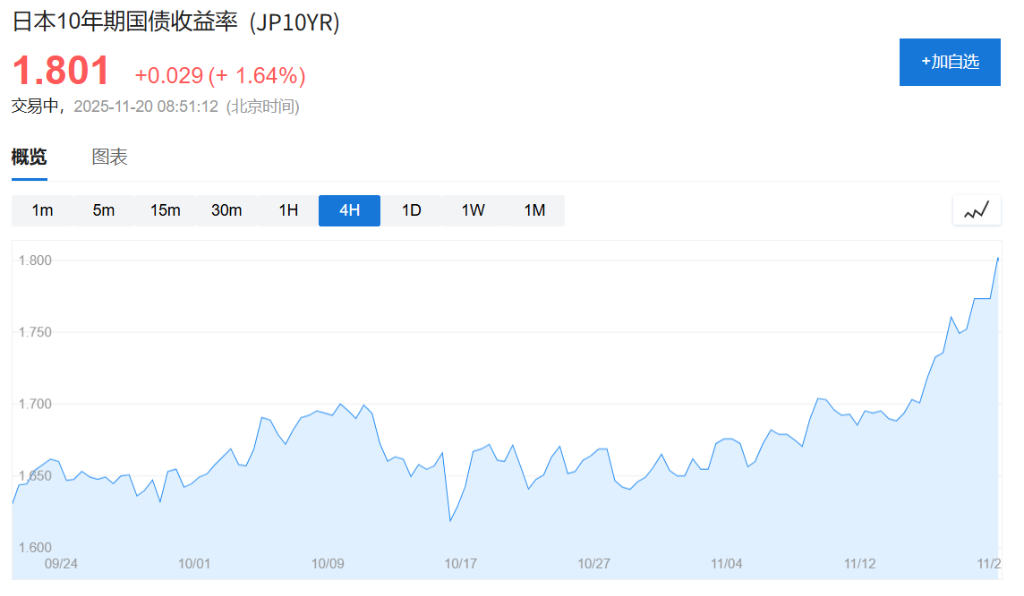
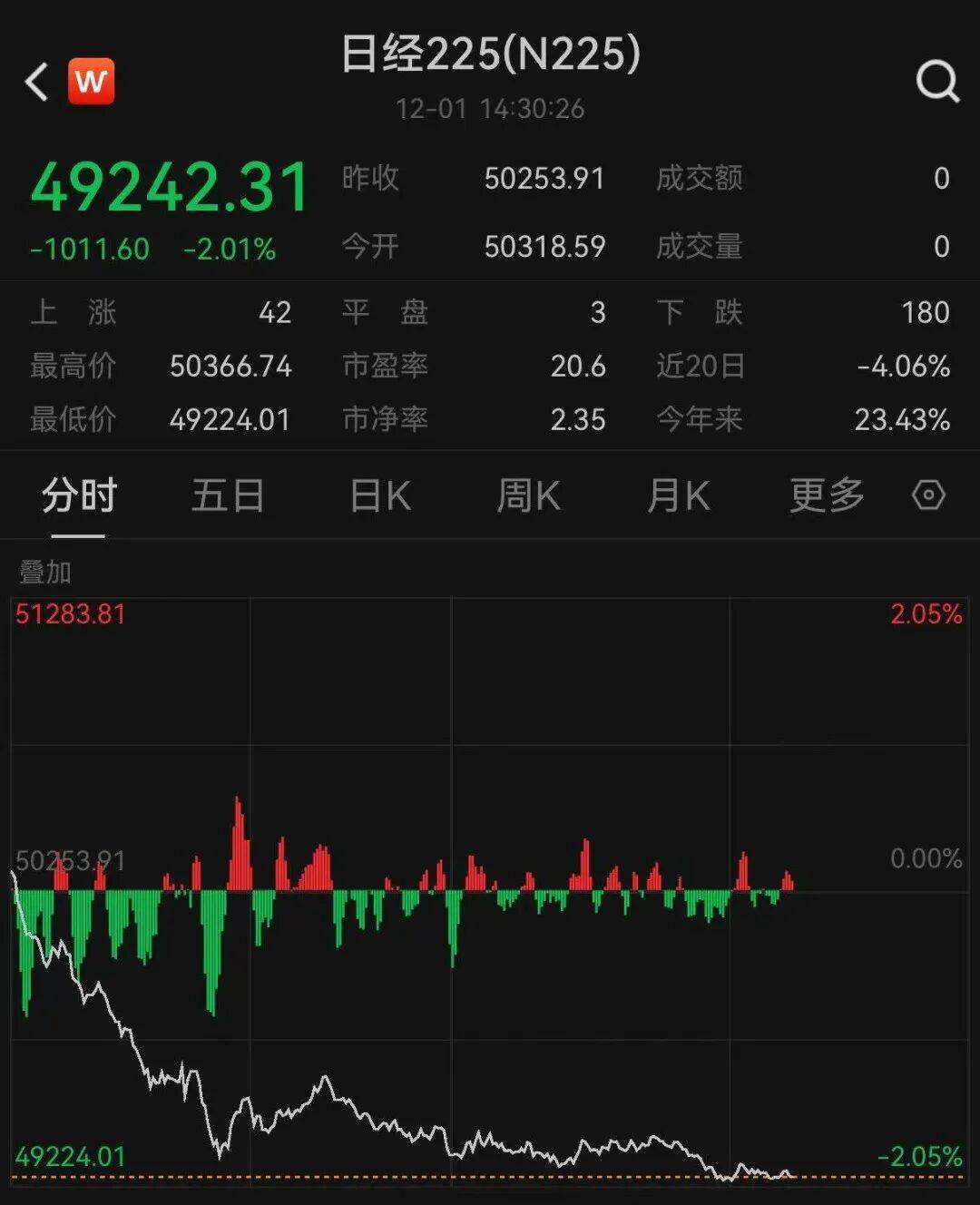
Group 1 - Japanese government bonds have experienced a significant decline due to renewed interest rate hike expectations, with the 3-month bond yield soaring over 34% and the 10-year bond yield reaching 1.840%, the highest level since June 2008 [1] - The Nikkei 225 index opened high but fell sharply, with an intraday drop exceeding 2%, losing over 1,000 points [1] - Bank of Japan Governor Kazuo Ueda indicated that the central bank will weigh the pros and cons of raising interest rates at the next monetary policy meeting, marking the strongest signal yet regarding a potential rate hike [2] Group 2 - The Japanese government plans to issue over 11.7 trillion yen (approximately 529.9 billion RMB) in new bonds to fund a new round of economic stimulus, raising concerns about the impact on fiscal health [4] - Japan's debt is projected to reach 229.6% of GDP by 2025, the highest among developed countries, leading to market worries about fiscal deterioration due to increased spending [4] - The Japanese economy has shown signs of deterioration, with the latest data indicating a 1.8% annualized decline in GDP for Q3, raising concerns about the effectiveness of the government's stimulus measures [6]

日本版“特拉斯冲击”或将上演,超长债供需失衡尚未完全定价
Hua Er Jie Jian Wen· 2025-11-20 11:01
Core Insights - Japan is facing significant fiscal risks similar to the "Truss Shock" in the UK, as the market has not fully priced in the deterioration of supply and demand for ultra-long-term government bonds [1][4] - The Japanese government is finalizing a large-scale economic stimulus plan, with government spending estimated at 21.3 trillion yen, potentially reaching a total of 42.8 trillion yen when including private sector investments, raising concerns about fiscal discipline [1][6] - The Japanese bond market is experiencing a severe sell-off, with the 30-year government bond yield hitting a historical high, and both 10-year and 5-year yields reaching their highest levels since 2008 [1][4] Fiscal Policy Concerns - Nomura Securities warns that ongoing concerns about a "Truss Shock" will lead foreign investors to continue avoiding the Japanese market, exacerbated by a weakening yen and poor performance of ultra-long-term bonds [4][6] - The market is focused on whether the ruling Liberal Democratic Party can gain momentum for further fiscal expansion, which could heighten concerns about fiscal policy [6][7] - The Japanese Finance Minister has raised the urgency of addressing yen depreciation, indicating that the quality and scale of economic stimulus measures should not undermine confidence in the yen or Japanese government bonds [7][8] Yield Curve Dynamics - There is significant potential for the steepening of the yield curve if the supply and demand for ultra-long-term bonds deteriorate further, with the current supply premium indicator for 30-year bonds at 48 basis points, down from a peak of 67 basis points earlier this year [6][8] - The analysis indicates that the yield curve steepening driven by fiscal concerns has not fully reflected the extent of supply and demand deterioration observed in April and May [8][10] Market Reactions - The market's response suggests a lack of effective communication from the government, as expectations for interest rate hikes have not changed despite discussions between the Prime Minister and the Bank of Japan Governor [7][8] - The current market conditions reflect deep investor concerns regarding Japan's policy outlook, emphasizing the need for the government to balance economic stimulus with maintaining fiscal credibility to avoid a "Truss Shock" scenario [10]