
高端白酒行业转型

Search documents
1499元飞天茅台“秒空”背后:消费者质疑与行业转型的双重变奏
Sou Hu Cai Jing· 2026-01-05 22:06
Core Viewpoint - The article highlights the ongoing transformation and challenges faced by the high-end liquor industry in China, particularly focusing on Kweichow Moutai's pricing strategies and market dynamics during a period of adjustment and reform [1][8]. Consumer Experience - The launch of Moutai's "i Moutai" app on January 1, 2026, resulted in a "秒空" (instant sell-out) phenomenon, with consumers facing difficulties in purchasing the product despite high demand, leading to suspicions of insufficient supply and "hunger marketing" tactics [2][3]. - A stark contrast was observed between online sales and offline promotions, with a local distributor selling out 1,000 cases in two hours, raising questions about the allocation of stock between online and offline channels [2][3]. Official Explanation - Moutai stated that daily supply is determined by balancing three goals: preventing speculation, matching supply with demand, and maintaining market stability. However, estimates suggest that actual supply may be less than 30% of reported figures [3]. - The company's strategy of "ambiguous supply" has been interpreted by some consumers as a form of "hunger marketing," as the limited availability may not meet actual consumer demand [3]. Grey Market Dynamics - Despite technological measures to curb speculation, such as real-name verification and dynamic codes, the black market has adapted quickly, with reports of resellers marking up prices by 200 yuan per bottle [3]. - The presence of a grey market, where resellers exploit loopholes, poses significant challenges to Moutai's supply-demand balance and pricing control [3]. Price Discrepancy - There has been a significant price gap between Moutai's official price of 1,499 yuan and the market price, which peaked above 3,000 yuan from 2020 to 2023, before declining to 2,600-2,800 yuan in 2024 [4][5]. - In January 2026, the wholesale price of Moutai fell to 1,490 yuan, marking the first time it dropped below the official price, which has contributed to a burgeoning grey market [5]. Channel Reform - Moutai has initiated aggressive reforms since 2025, shifting 80% of its distribution to direct sales channels and launching the "i Moutai" digital marketing platform to reduce reliance on traditional distributors [6]. - The upgrade of the "i Moutai" platform aims to streamline product offerings and combat the speculative practices of distributors, pushing the industry towards a service-oriented model [6]. Youth Strategy - The "i Moutai" app has attracted over 80 million registered users, with 41% aged between 25 and 35, indicating a shift towards a younger consumer base [7]. - Moutai's strategies, such as limited-time offers and point redemption, aim to engage younger consumers and reshape the brand's image away from being solely a "government wine" or "business wine" [7]. Industry Trends - Moutai's price adjustments reflect broader trends in the high-end liquor market, where major brands like Wuliangye and Luzhou Laojiao are also experiencing revenue and profit declines [8]. - The collective price reductions across the industry signify a return to consumer-centric pricing, moving away from the financial attributes that previously dominated the market [8]. Balancing Act - Moutai faces the challenge of balancing commercial interests with social responsibilities, as aggressive price suppression could harm distributor relationships while allowing high prices contradicts regulatory goals [9]. - The recent drop in wholesale prices has raised concerns about potential market instability, while the "秒空" phenomenon has led to accusations of artificially created scarcity [9]. Future Outlook - Analysts suggest that 2026 will be a pivotal year for the industry, with a focus on operational stability rather than aggressive channel expansion [10]. - The upcoming 2026 Spring Festival is seen as a critical observation point for Moutai's ability to meet genuine consumer demand and stabilize wholesale prices, which will indicate the success of its market transformation efforts [10].


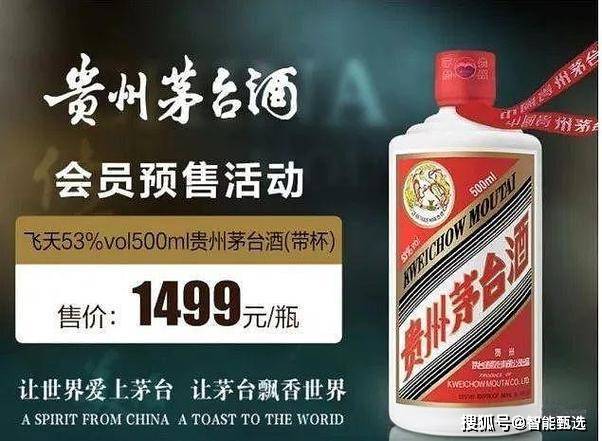
飞天茅台价格失守1500关口?行业转型压力初步浮现
Xin Lang Cai Jing· 2025-12-17 08:54
Core Viewpoint - The price of Feitian Moutai, once regarded as "liquid gold," has significantly declined, dropping below the official guidance price of 1499 yuan per bottle by the end of 2025, indicating a profound challenge to the high-end liquor industry's reliance on "financial attributes" and "channel inventory" growth models, leading to a necessary adjustment in brand value and business models [1][6]. Group 1: Price Decline and Market Pressures - The primary reason for the price decline is a significant shrinkage in terminal demand, particularly in core consumption scenarios such as business banquets and high-end gifts, which have weakened the effectiveness of Moutai as a "social currency" [2][7]. - High inventory levels among distributors have become a critical issue, with reports indicating that cash flow pressures have led to aggressive sell-offs, creating a cycle of price drops and further sell-offs [2][8]. - The fundamental growth logic of Moutai is under threat, as it has transitioned from being viewed as a stable investment to a depreciating asset, exacerbating market sell-off pressures [8][10]. Group 2: Industry Reactions and Strategic Adjustments - The price drop of leading products like Moutai has triggered a series of chain reactions, particularly affecting the stability of the distribution network, with the phenomenon of wholesale prices falling below factory prices leading to potential losses for distributors [9]. - The ongoing price decline poses a threat to Moutai's high-end brand positioning, as a stable price system is crucial for maintaining brand image and value perception [9]. - In response to these challenges, leading liquor companies, including Moutai and Wuliangye, have initiated a "price stabilization defense," implementing measures such as reducing market supply and shifting focus from inventory-driven sales to consumer-centric strategies [9][10].