高端轿车市场

Search documents
冲击高端轿车市场 中国汽车品牌迎来“大考”
Zhong Guo Qing Nian Bao· 2025-12-18 00:57
Core Viewpoint - The Chinese automotive market is witnessing a shift towards high-end electric vehicles, with companies like Lantu aiming to compete directly with established luxury brands such as BBA (Benz, BMW, Audi) [2][9] Group 1: Market Dynamics - Statistics indicate that the demand for vehicle upgrades and exchanges has become the main driver of consumption in the Chinese automotive market [2][6] - In November, domestic luxury car retail reached 240,000 units, with the penetration rate of electric vehicles rising to 38.8%, up from 32.9% year-on-year [10] - The market is experiencing intense competition, with leading companies engaging in price wars to capture market share, leading to sustained pressure on overall profit margins [12] Group 2: Company Developments - Lantu's flagship sedan, the Zhaiguang L, was launched with a price range of 279,900 to 309,900 yuan, positioning it to compete with traditional luxury car models [2][9] - The Zhaiguang L features advanced technology, including an 800V system, 5C ultra-fast charging, and a 63kWh large-capacity battery, making it a significant player in the PHEV segment [10] - Lantu aims to establish itself as a leading high-end electric vehicle brand, emphasizing the need for Chinese brands to enhance their market presence and brand image [4][11] Group 3: Future Outlook - Analysts predict that the Chinese automotive market will face a critical turning point by 2025, with a focus on technological advancements in battery technology and smart driving features [12][13] - The government is expected to continue supporting automotive consumption policies, which will provide a favorable environment for the growth of high-end electric vehicles [12]

鸿蒙智行最美轿跑,华为把“最锋利”的一刀交给尚界
华尔街见闻· 2025-12-16 04:49
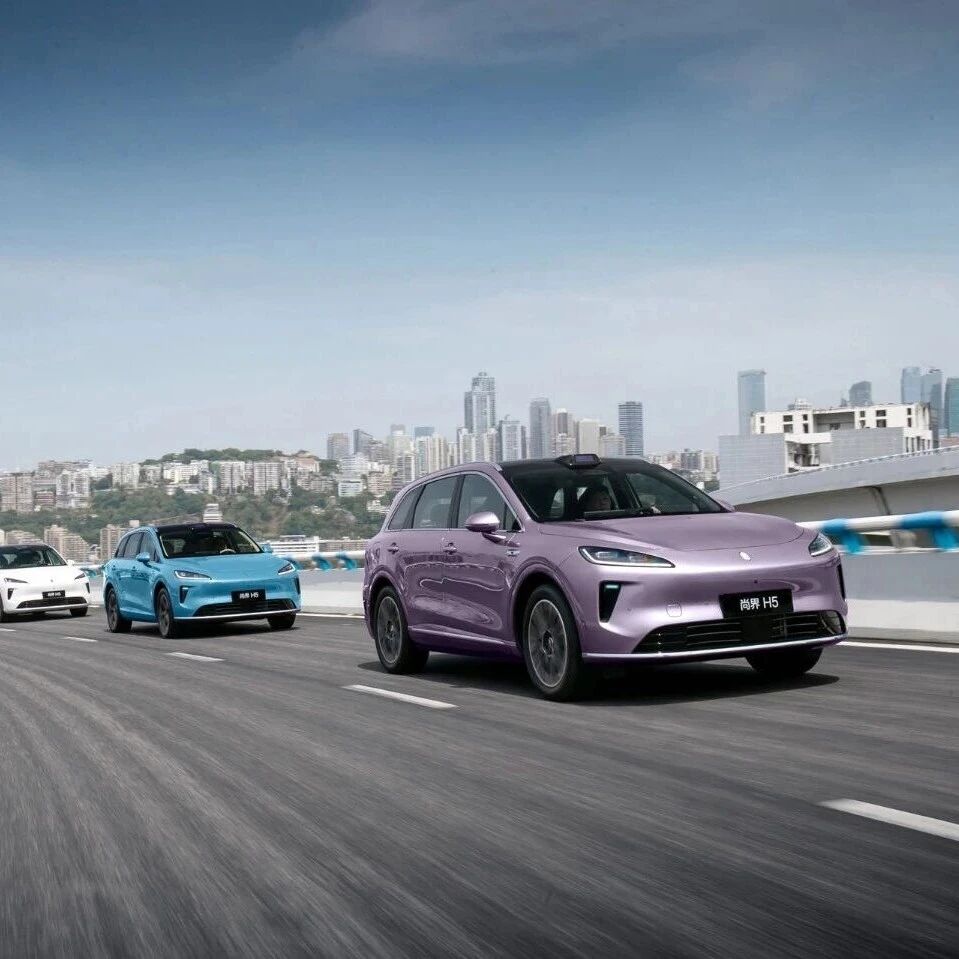
Core Viewpoint - The article discusses how the automotive industry, particularly the collaboration between SAIC Motor and Huawei, is poised to disrupt the market with the launch of the new brand "Shangjie" and its first model, the Shangjie H5, which has achieved significant early success in a challenging environment [2][4][10]. Group 1: Market Context and Competitive Landscape - In a competitive environment where new technologies are quickly replicated, some companies manage to enter the market effectively, exemplified by Pinduoduo in e-commerce [2]. - The automotive industry is currently dominated by the themes of new energy and new forces, with SAIC Motor preparing to make a significant impact through its partnership with Huawei [2][4]. Group 2: Product Launch and Initial Success - The Shangjie H5 has achieved a remarkable delivery volume of 20,000 units, making it the fastest new brand to surpass 10,000 units after its launch [2][4]. - The success of the Shangjie H5 is notable given the declining demand in the fourth quarter and the overall reduction in industry expectations [4][7]. Group 3: Strategic Collaboration and Resource Utilization - The partnership between SAIC and Huawei is crucial for the success of the Shangjie brand, leveraging Huawei's technology and SAIC's manufacturing capabilities [10][28]. - SAIC has invested nearly 30 billion yuan to upgrade its manufacturing facilities to ensure quality and efficiency in production [12][35]. Group 4: Consumer Insights and Market Demand - The Shangjie H5 has demonstrated a strong market response, particularly in the 150,000 to 200,000 yuan price range, challenging previous assumptions about consumer price sensitivity [11][12]. - The vehicle addresses consumer demands for safety and advanced technology, indicating a shift in market expectations [12][11]. Group 5: Future Product Development and Market Strategy - The next model from Shangjie is expected to be a high-end coupe, targeting the younger consumer demographic and aiming to redefine the market for sporty vehicles [19][21]. - The strategic focus on aesthetics and performance is intended to position Shangjie as a strong competitor in the high-end segment, potentially rivaling established European brands [21][24].