高精尖制造

Search documents
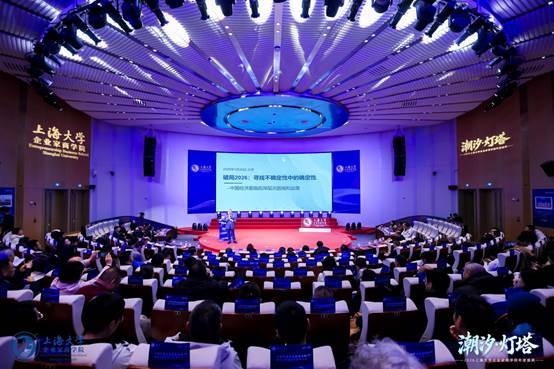
2026上海大学企业家商学院年度盛典圆满落幕,共话企业未来新航向
Sou Hu Cai Jing· 2026-01-30 02:15
Group 1 - The global economic growth momentum is undergoing a significant shift, with Chinese entrepreneurs facing a "tide era" filled with volatility and uncertainty [1] - The "Tide·Lighthouse" 2026 Shanghai University Entrepreneur Business School Annual Ceremony was held in Beijing, focusing on practical training combined with theoretical discussions for over 300 entrepreneurs [1][3] - The event featured prominent economists and entrepreneurs discussing macroeconomic trends, policy interpretations, and practical business operations, providing a framework for understanding the changing times [3] Group 2 - Economist Xiang Songzuo analyzed global and Chinese macroeconomic trends, highlighting the increasing uncertainty and the divergence between traditional industries and emerging sectors like AI, semiconductors, and innovative pharmaceuticals [3][5] - He emphasized that uncertainty presents opportunities for entrepreneurs to create value, urging them to focus on the "14th Five-Year Plan" priorities and leverage financial tools to navigate economic transitions [5] - Zhang Aoping provided insights into the new policy dividend release logic, detailing the "three-four-seven-twelve" policy cycle and the importance of aligning business development with national needs [5][7] Group 3 - The event adopted a "entrepreneurs teaching entrepreneurs" model, focusing on practical applications through real-world case studies and site visits [8] - Keynote speaker Song Zhiping discussed the importance of desire for success and lifelong learning among Chinese entrepreneurs, emphasizing the need to focus on core competitiveness and sustainable growth [8][10] - The event included practical sharing from various entrepreneurs in sectors like health, international business, and education, highlighting actionable strategies for navigating challenges [10] Group 4 - The ceremony served as a platform for knowledge exchange and collaboration, with a focus on creating an ecosystem for entrepreneurs [12] - The Shanghai University Entrepreneur Business School aims to empower growth-oriented entrepreneurs through practical experiences and resource sharing, distinguishing itself from traditional educational models [14] - The school announced strategic directions for 2026, focusing on profitability, quality of life, and succession planning for the next generation of entrepreneurs [14][16] Group 5 - The event culminated in the signing of strategic cooperation agreements with various organizations to enhance support for entrepreneurs in policy research, industry implementation, and international exchange [18][22] - The Shanghai University Entrepreneur Business School is transitioning from a teaching platform to a collaborative ecosystem, aiming to provide comprehensive support for entrepreneurs [22][23] - The school plans to integrate insights from the annual event into its curriculum, focusing on practical training and cross-industry discussions to guide entrepreneurs through changing economic landscapes [23]

10.3万亿!美国跌至第三,不再是中国第一大出口国,谁上位了?
Sou Hu Cai Jing· 2025-07-02 16:02
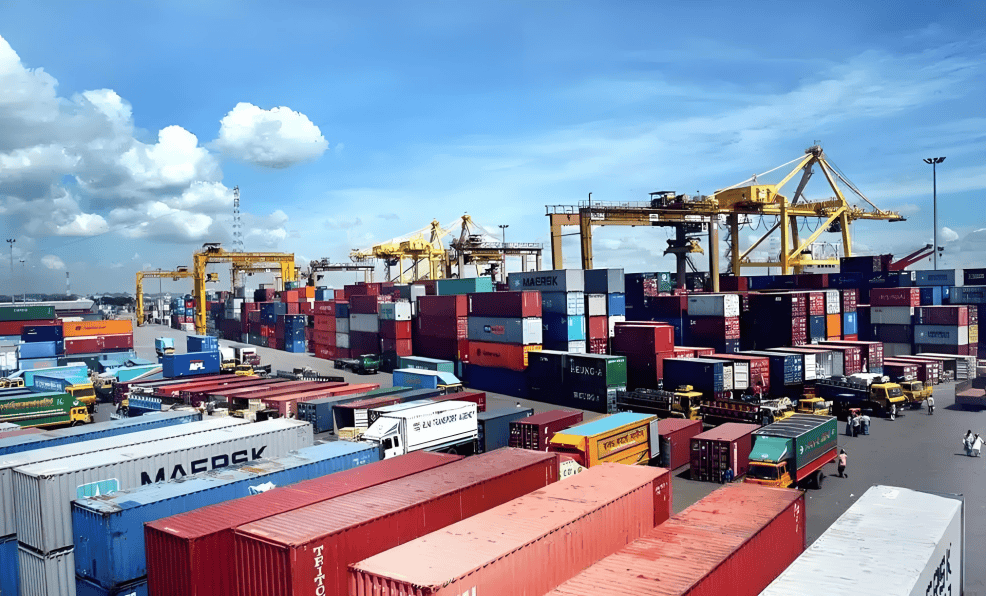
Core Insights - China's foreign trade has shown remarkable resilience, with a total import and export value of 10.3 trillion yuan in Q1 2025, including exports of 6.13 trillion yuan, despite a 6% decline in imports [1][4][21] - The trade surplus reached 237.6 billion USD, highlighting the irreplaceable role of Chinese manufacturing in the global market [1][4] - The easing of U.S. tax policies has led to an influx of foreign trade orders, benefiting Chinese exporters [3][4] Trade Performance - In Q1 2025, China's total trade volume increased year-on-year, marking the second consecutive year of surpassing 10 trillion yuan in a single quarter [4][21] - Exports to ASEAN and the EU have been growing, with figures exceeding 146 billion USD and 122.08 billion USD respectively [6][21] - The share of trade with countries involved in the Belt and Road Initiative has also increased, particularly with ASEAN, which saw a 7.1% growth in trade share compared to the previous year [7][21] Export Categories - The top three export categories in Q1 2025 were electromechanical products, integrated circuits, and automobiles, with electromechanical products accounting for over 60% of exports [10][11] - The rise of technical products such as industrial machinery, semiconductor components, and transportation equipment showcases China's strong manufacturing capabilities [11][14] Import Trends - The slowdown in import growth is attributed to fluctuations in international commodity prices, particularly for energy and agricultural products [12][14] - China is undergoing a significant energy structure transformation, optimizing the import of coal and iron resources while promoting green economic development [14][25] Emerging Products - New categories of exports, referred to as the "new three samples," include wind power generators, integrated circuits, and lithium batteries, which have seen significant growth [15][20] - Wind power generator exports increased by 71.9% last year, with a further 43% growth in Q1 2025 [17] - Integrated circuits are projected to reach a trade total of nearly 160 billion USD in 2024, with a year-on-year increase of 18% [18] - Lithium battery exports to the U.S. reached over 15.3 billion USD in 2023, with a 7.7% increase in Q1 2025 despite tariff sanctions [20] Market Diversification - China's GDP is increasingly reliant on the domestic market, with over 60% of GDP coming from domestic consumption [24][25] - Chinese companies are actively reducing dependence on the U.S. market by exploring diverse export channels and developing non-U.S. market strategies [25][26] - The cross-border e-commerce sector has played a crucial role in expanding foreign markets, supported by the establishment of over 165 cross-border e-commerce pilot zones [26][28]