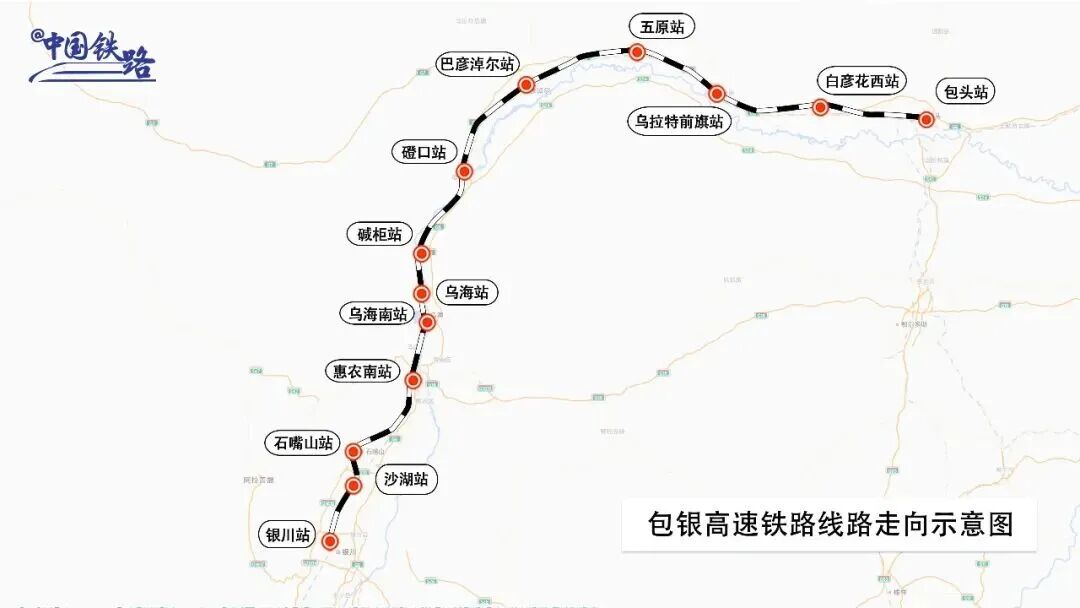
包银高铁

Search documents
让团圆之路温情满途
Xin Lang Cai Jing· 2026-02-15 20:08
Core Viewpoint - The opening of the Baoyin High-Speed Railway on December 23, 2025, significantly enhances transportation efficiency for Baotou and surrounding areas, connecting Baotou to the national high-speed rail network and reducing travel times for residents [1][2]. Group 1: Transportation Impact - The Baoyin High-Speed Railway allows for a daily operation of 72 high-speed trains, increasing the frequency of service from an average of 40 trains to 96 trains per day, thereby improving connectivity and reducing travel time to Baotou to just 1 hour and 4 minutes, saving 1 hour and 2 minutes compared to previous travel methods [1]. - The railway's operation provides efficient transportation options for tourism, medical services, and business commuting, which is expected to boost local economic activities [1]. Group 2: Operational Challenges - The increase in train frequency and passenger volume during peak travel periods, such as the Spring Festival, presents operational challenges for the Baotou station, including heightened workload for staff without an increase in personnel [1]. - The station staff, particularly the passenger service team, is in the process of adapting to the new operational demands, focusing on improving passenger flow management and ensuring timely train departures [1]. Group 3: Human Element - The dedication of station staff, exemplified by the commitment of employees like Ding Siyu, highlights the importance of customer service in enhancing the travel experience, as they provide assistance and support to passengers, especially during busy travel times [2]. - Personal stories of staff interactions with passengers, such as helping an elderly traveler, illustrate the human aspect of the transportation service, emphasizing the value of compassion and responsibility in the industry [2].
多彩文化活动点亮春运旅途 多项便民服务温暖回乡路
Yang Shi Wang· 2026-02-10 09:11
Group 1: Cultural Activities and Passenger Experience - The Lanzhou Railway Bureau has launched various cultural activities to enhance the travel experience, transforming waiting areas and high-speed trains into "cultural stations" [1] - Interactive cultural activities such as sugar figurine making, paper cutting, and gourd carving have attracted many travelers [1] - A calligraphy area allows enthusiasts to create works, including Spring Festival couplets that reflect the changing travel habits and convey New Year wishes [1] Group 2: Enhanced Services for Travelers - Multiple organizations have collaborated to upgrade convenience services at the station, including the establishment of a "Children's Station" to assist travelers with infants [5] - Emergency medical supplies are available for travelers experiencing sudden illnesses, and a "security check delivery" service is provided for prohibited items [5] Group 3: Increased Train Services and Passenger Flow - The daily passenger volume at the Lanzhou Railway Bureau is expected to peak around New Year's Eve, with measures such as adding temporary trains and peak line services to meet demand [7] - The newly opened Baoyin High-Speed Railway is experiencing its first Spring Festival peak, with significant increases in train services from 146 to 182 daily, and over 60% of these being high-speed trains [12] Group 4: Impact of New High-Speed Rail - The Baoyin High-Speed Railway has significantly changed travel patterns in Inner Mongolia, with high-speed trains now dominating the Spring Festival travel landscape [12] - The average daily passenger volume on the Baoyin High-Speed Railway's nine stations in Inner Mongolia is 29,000, accounting for a quarter of the region's total [15] - Travelers can now reach cities like Yinchuan and Lanzhou from Baotou in a more efficient manner, with many long-distance routes achieving "morning departure, afternoon arrival" [15] Group 5: Upgraded Facilities and Services - The station has upgraded waiting environments, adding 240 charging-enabled seats to assist travelers in keeping their devices charged [17] - Special services for elderly travelers include dedicated service windows and assistance with important travel information, while children's play areas and temporary childcare services are also provided [17]

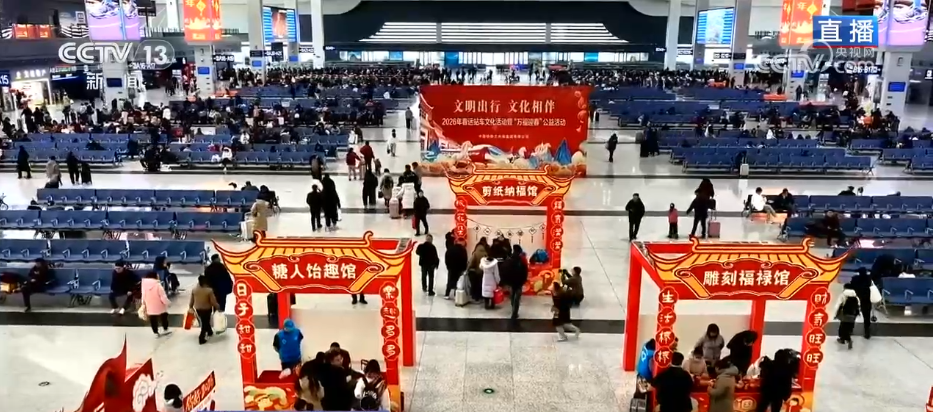
高铁穿草原,年味暖边疆!包银高铁的首趟春运民生图景
Xin Lang Cai Jing· 2026-02-02 16:59
Core Viewpoint - The opening of the 2026 Spring Festival travel season marks a significant increase in passenger flow, highlighting the importance of the newly operational Baoyin High-Speed Railway in enhancing connectivity and economic development in the western regions of China [1]. Group 1: Infrastructure Development - The Baoyin High-Speed Railway, which connects Hohhot and Yinchuan, was fully operational as of December 23 last year, contributing to the national "eight vertical and eight horizontal" high-speed railway network [1]. - This railway line is part of the Beijing to Lanzhou corridor, which is crucial for the new era of western development in China [1]. Group 2: Economic and Social Impact - The railway facilitates travel across scenic landscapes, enhancing the travel experience for passengers during the Spring Festival, a time associated with family reunions and cultural significance [1]. - The emotional connection of passengers to their tickets reflects the deep-rooted cultural importance of returning home during the festive season, indicating the railway's role in supporting social cohesion [1].
新线首运|高铁穿草原,年味暖边疆!包银高铁的首趟春运民生图景
Xin Hua Wang· 2026-02-02 16:43
Core Viewpoint - The opening of the 2026 Spring Festival travel season marks a significant increase in passenger flow, highlighting the importance of the newly operational Baoyin High-Speed Railway in enhancing connectivity and supporting regional development in western China [1]. Group 1: Infrastructure Development - The Baoyin High-Speed Railway, which fully opened on December 23 last year, is part of the national "eight vertical and eight horizontal" high-speed railway network, facilitating the Beijing to Lanzhou corridor [1]. - This railway line is expected to inject new momentum into the western development strategy of China, promoting economic growth and improving transportation efficiency in the region [1]. Group 2: Passenger Experience - The article emphasizes the emotional significance of train tickets for passengers, symbolizing their connection to home and the joy of returning for the Spring Festival [1]. - The smiles of passengers disembarking in Yinchuan reflect the positive impact of improved transportation on personal journeys and the overall travel experience during the festive season [1].
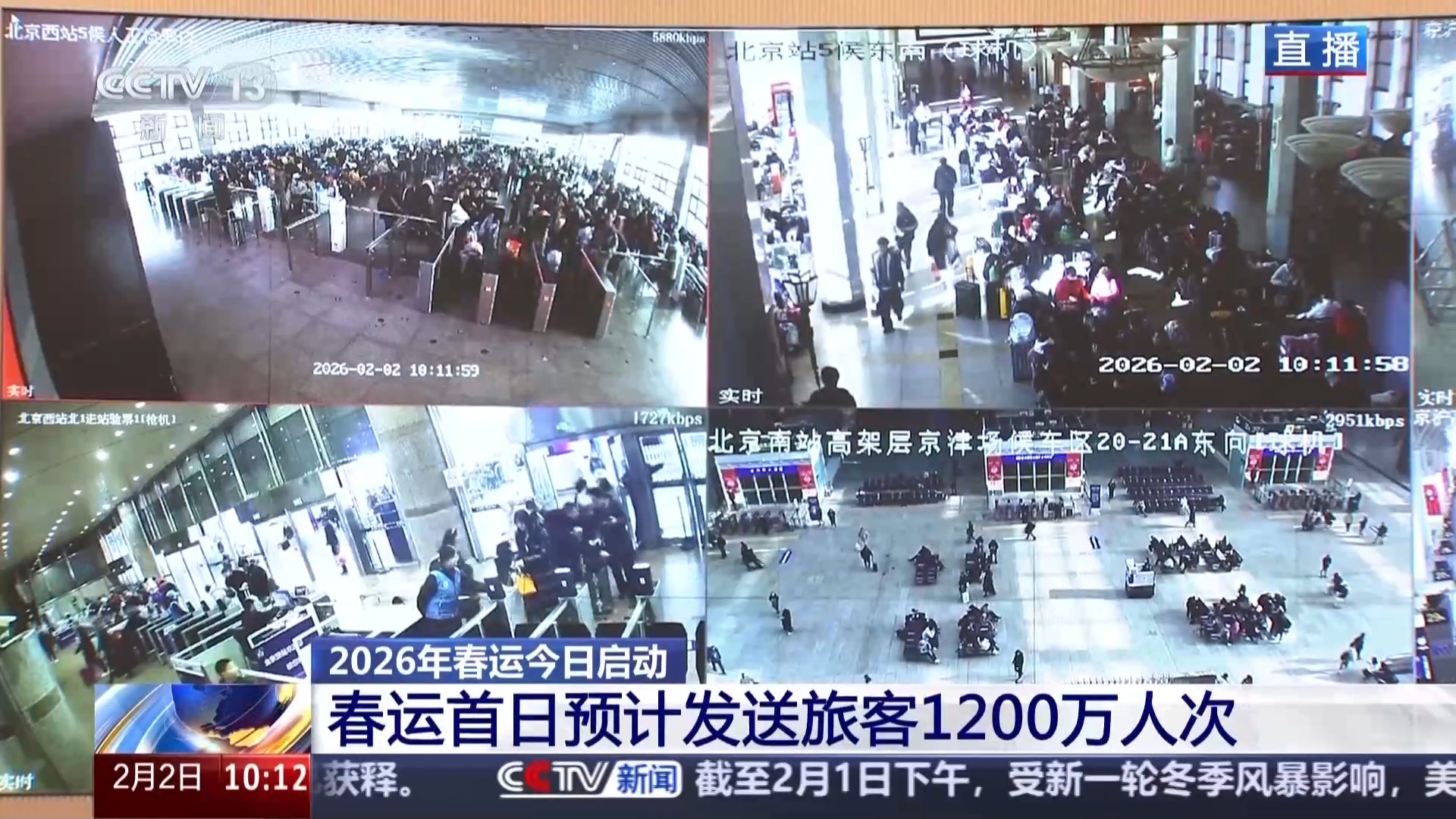
视频丨春运首日铁路预计发送旅客1200万人次
Yang Shi Xin Wen Ke Hu Duan· 2026-02-02 06:05
Core Viewpoint - The Spring Festival travel season is expected to see a significant increase in passenger volume, with the national railway projected to send 540 million passengers from January 7 to March 13, 2026, marking a 5% year-on-year increase in daily average passenger volume to 13.48 million [2][3]. Group 1: Passenger Volume and Trends - On the first day of the Spring Festival travel period, an estimated 12 million passengers are expected to be sent by the national railway [2]. - The travel patterns are characterized by a focus on labor, family visits before the festival, and a mix of student, tourism, and labor flows during and after the festival [3]. Group 2: Capacity Enhancement Measures - To effectively increase overall capacity, new high-speed rail lines and trains will be utilized, including the Guangzhan, Baoyin, and Xiyan high-speed rail lines, along with newly deployed Fuxing bullet trains [5]. - The railway will add over 1,500 direct passenger trains daily across different railway bureaus and will operate over 1,000 night high-speed trains on major routes [7]. Group 3: Targeted Capacity Deployment - In areas with concentrated passenger flow, such as Beijing, Guangzhou, and Shanghai, additional capacity will be deployed to meet travel demands, including temporary trains and expanded services [8]. - Major railway hubs will maintain a reserve of trains and personnel to respond to sudden increases in passenger flow [8]. Group 4: Cultural and Tourism Initiatives - Various railway departments are organizing activities and special trains to enhance the travel experience, such as cultural performances and themed trains that promote local products and tourism [9][11]. - Initiatives like the "Tianjin Travel Time Train" aim to integrate cultural displays and immersive performances into the travel experience, supporting local tourism and economic growth [11].
中国铁路春运启动 预计发送旅客5.4亿人次
Zhong Guo Xin Wen Wang· 2026-02-02 05:26
Core Insights - The 2026 Spring Festival travel season in China is expected to see 540 million passenger trips, averaging 13.48 million trips per day, representing a year-on-year increase of 5.0% [1] Group 1: Passenger Volume and Growth - The national railway is projected to send 540 million passengers during the Spring Festival travel period from February 2 to March 13, 2026, over 40 days [1] - Daily passenger volume is expected to average 13.48 million, with a year-on-year growth of 5.0% [1] Group 2: Operational Enhancements - The railway department will utilize new lines and stations, including the Guangzhan, Baoyin, and Xiyan high-speed railways, along with newly deployed Fuxing bullet trains to enhance capacity [1] - An additional 1,500 direct passenger trains can be added daily across railway bureau groups, with over 1,000 night high-speed trains scheduled on major routes [1] - The overall passenger train capacity is expected to increase by 5.3% compared to the previous year [1] Group 3: Targeted Capacity Adjustments - The railway department will implement temporary passenger trains, double-heading of high-speed trains, and expansion of conventional passenger trains to meet travel demand in key areas [2] - The number of direct train stations from Hong Kong to the mainland has increased to 110, facilitating cross-border travel during the Spring Festival [2]
七条高铁开通!高铁第一省再度易主,湖北增量第一
3 6 Ke· 2025-12-31 03:00
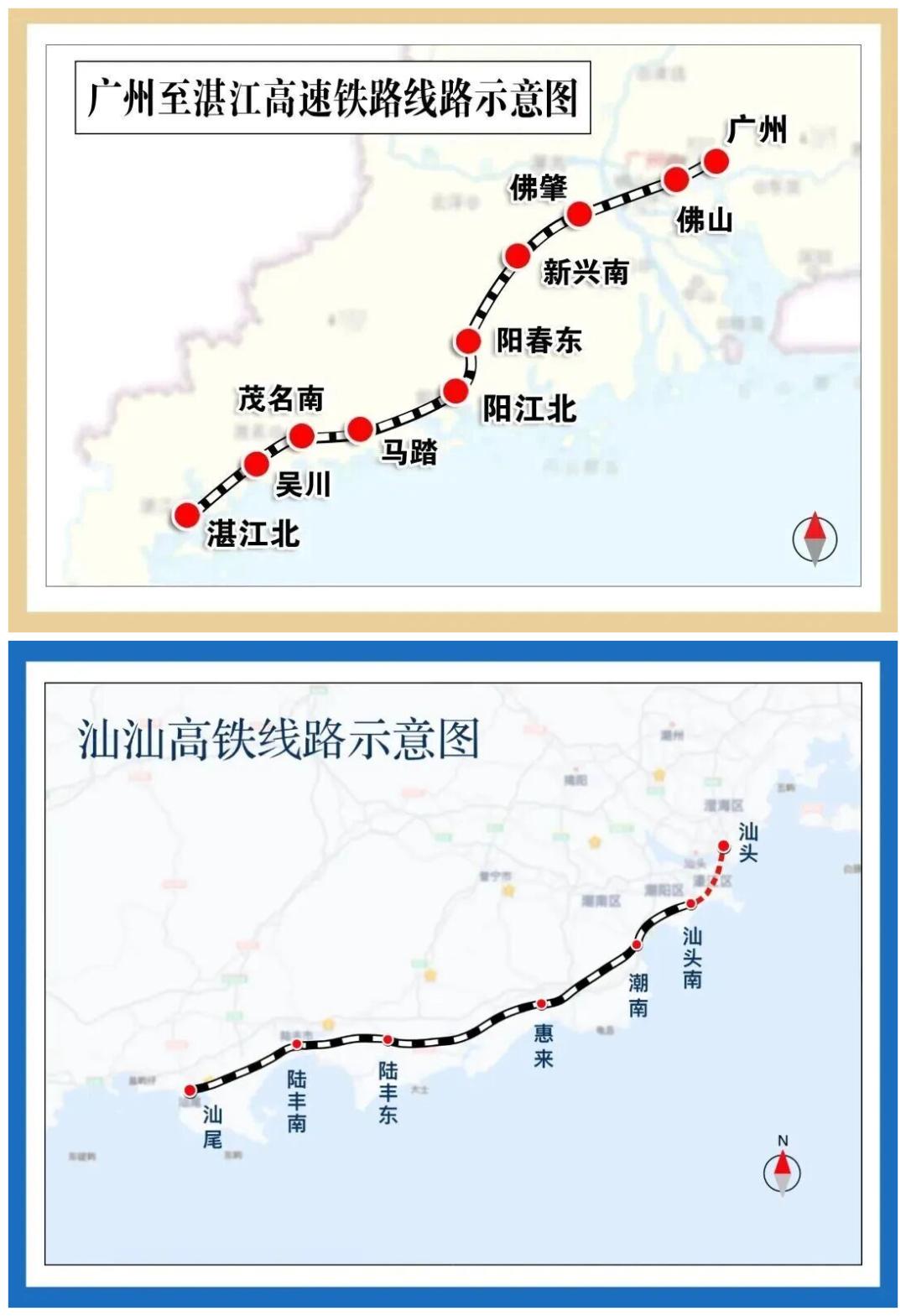
Core Insights - In the last ten days of December, seven high-speed rail lines were opened, marking a significant expansion of China's high-speed rail network [1][19][21] Group 1: New High-Speed Rail Openings - The Guangzhan High-Speed Rail and the Shanshan High-Speed Rail opened on December 22, significantly reducing travel time from Zhanjiang to Guangzhou from 2.5 hours to 1.5 hours [2] - The Baoyin High-Speed Rail's Baohui section opened on December 23, completing a total length of 519 kilometers, with a design speed of 250 km/h, connecting seven cities in Inner Mongolia to the national high-speed rail network [5] - The Wuyi High-Speed Rail, part of the East-West artery, opened on December 26, covering 314 kilometers at a speed of 350 km/h, reducing the commute time from Wuhan to Yichang to 69 minutes [7][10] - The Hangzhou-Qingzhou High-Speed Rail opened, covering 131 kilometers at a speed of 350 km/h, allowing travel from Quzhou West to Hangzhou West in 1 hour and 13 minutes [14] - The Xiyan High-Speed Rail, with a length of 299.8 kilometers and a design speed of 350 km/h, will reduce travel time from Xi'an to Yan'an from 2.5 hours to about 1 hour [15] - The Hefei-Xin High-Speed Rail's Hezi section opened on December 30, covering 198 kilometers with five new stations [17] Group 2: National High-Speed Rail Developments - By the end of 2025, a total of 12 new lines are expected to open, contributing to a national high-speed rail operating mileage exceeding 50,000 kilometers, achieving the "14th Five-Year Plan" goal [21][31] - Guangdong regained its position as the top province in high-speed rail mileage, surpassing Shandong with a total of 3,437 kilometers after adding approximately 421 kilometers in 2025 [23][25] - Hubei achieved the highest growth in high-speed rail mileage in 2025, adding 429 kilometers, which elevated its ranking from 13th to 5th nationally [27] - Inner Mongolia ranked third in growth with the opening of the Baoyin Railway's Baohui section, contributing 402 kilometers [28] - The total high-speed rail operating mileage in China is now the largest in the world, covering 97% of cities with populations over 500,000 and handling 80% of passenger traffic [22][21] Group 3: Future High-Speed Rail Plans - The national railway construction is set to continue aggressively, with plans to reach 180,000 kilometers of railway by 2030, including 60,000 kilometers of high-speed rail [36] - Major cities are actively planning and constructing new high-speed rail stations to enhance connectivity, with significant projects underway in cities like Zhengzhou, Shanghai, and Shenzhen [49][51]
串联五省,中国最长高铁环线来了
3 6 Ke· 2025-12-29 03:01
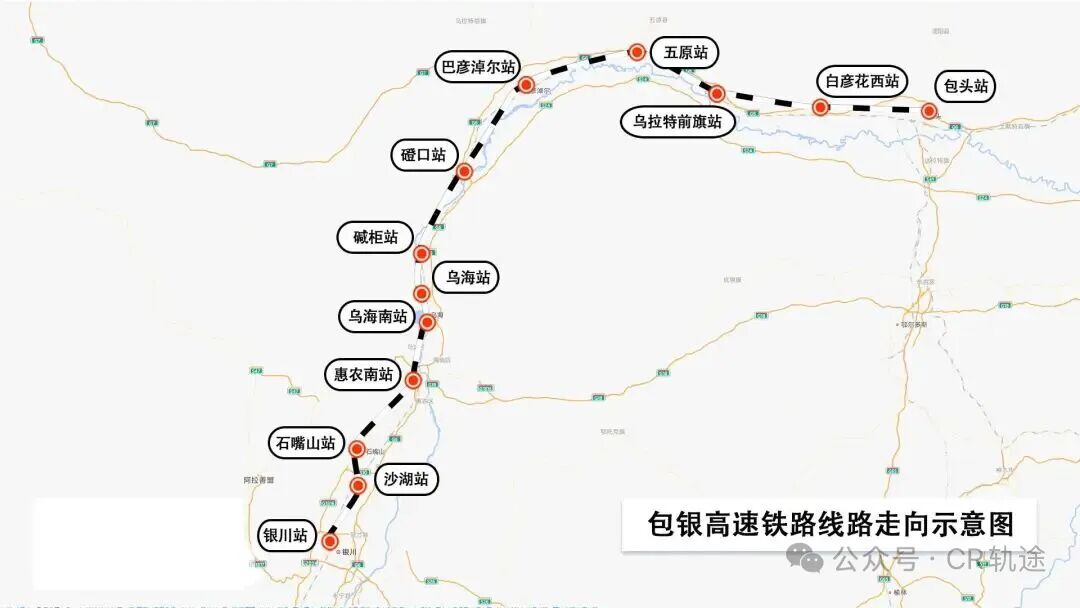
Core Viewpoint - The opening of the Baoyin High-Speed Railway on December 23 marks the completion of a significant high-speed rail loop connecting five provinces in China, establishing the longest high-speed rail loop in the country, surpassing the Yangtze River Delta loop [1][14]. Group 1: High-Speed Rail Network Development - The Baoyin High-Speed Railway is a crucial part of China's "eight vertical and eight horizontal" high-speed rail network, connecting Baotou in Inner Mongolia to Yinchuan in Ningxia, with a total length of approximately 420 kilometers [1][3]. - The railway significantly enhances connectivity between major cities in Northwest China, including Xi'an, Yinchuan, Hohhot, and Taiyuan, creating a "super high-speed rail circle" [7][8]. Group 2: Economic and Social Impact - The new railway is expected to boost tourism in the Northwest region, which has seen increasing interest in recent years, by improving access to these areas [7][10]. - The completion of this high-speed rail loop is anticipated to facilitate better resource allocation and collaboration among various city clusters, enhancing economic development in the region [10][14]. Group 3: Regional Development Disparities - Historically, the Northwest region has lagged in high-speed rail development, with Inner Mongolia having only about 1,000 kilometers of high-speed rail compared to its extensive railway network [5][15]. - The Baoyin High-Speed Railway's opening addresses the transportation gap in the region, integrating it into the national high-speed rail network and potentially increasing its importance on the national stage [14][15].
高铁时代呼啸而至 乌海乘势驰骋向前
Xin Lang Cai Jing· 2025-12-25 19:23
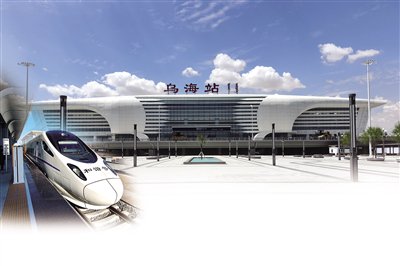
Core Viewpoint - The opening of the Baoyin High-Speed Railway marks a significant milestone for the city of Wuhai, ushering in a new era of high-speed rail travel and enhancing the city's integration into national development strategies [6][14]. Group 1: High-Speed Rail Impact - The Baoyin High-Speed Railway connects key regions, reducing travel time significantly; for example, the journey from Baotou to Yinchuan is shortened from 5 hours 58 minutes to 2 hours 38 minutes [8][9]. - The railway facilitates a new lifestyle, allowing for same-day business trips and spontaneous weekend getaways, thus enhancing the efficiency of travel for work, tourism, and family visits [9][10]. Group 2: Infrastructure Development - The Baoyin High-Speed Railway spans 519 kilometers with a design speed of 250 km/h, featuring significant engineering challenges, including the Gander Mountain Tunnel and the Wuhai Yellow River Bridge [11][12]. - The Wuhai Station, the largest new station on the line, has a modern design and serves as a regional transportation hub, expected to drive commercial and residential development in the area [13][14]. Group 3: Economic and Cultural Opportunities - The railway serves as a conduit for resource and talent flow, enhancing industrial upgrades and promoting regional economic collaboration between Inner Mongolia and Ningxia [14][15]. - Wuhai's unique cultural and natural attractions can be better accessed, promoting tourism and transforming transient visitors into long-term consumers, thereby boosting the local economy [15]. Group 4: Urban Development and Quality of Life - The opening of the railway is anticipated to elevate Wuhai's urban status, improving access to healthcare, education, and cultural resources from larger cities, thus enhancing the quality of life for residents [14][15]. - The local government aims to maximize the benefits of the high-speed rail by planning a high-speed rail economic zone, optimizing industrial layout, and improving service functions [15].
北方高铁超级大环线,来了
3 6 Ke· 2025-12-24 02:13
Core Viewpoint - The Baotou-Yinchuan High-Speed Railway (Baoyin High-Speed Railway) has been fully operational, enhancing connectivity in the region and contributing to China's high-speed rail network. Group 1: Project Overview - The Baoyin High-Speed Railway spans 519 kilometers, with a design speed of 250 km/h, connecting Baotou to Yinchuan through several cities in Inner Mongolia and Ningxia [1]. - The newly opened section from Baotou to Huinong is 422 kilometers long, while the Huinong to Yinchuan section, measuring 97 kilometers, was opened in October 2024 [1]. - This project marks the longest single-section high-speed rail opening in Inner Mongolia, increasing the total operational high-speed rail mileage in the region to 880 kilometers [1]. Group 2: Strategic Importance - Baotou serves as a major railway hub in Inner Mongolia, with extensive rail connections facilitating energy and material transport [3]. - Future plans include developing a "T" shaped high-speed rail network, enhancing connectivity to cities like Hohhot, Yulin, Xi'an, and Chongqing, supporting the modernization of the Yellow River "Jizhi" urban area [3]. Group 3: National Connectivity - The Baoyin High-Speed Railway connects with the Beijing-Baotou Passenger Dedicated Line and the Yinchuan-Lanzhou High-Speed Railway, completing a crucial segment of China's "Eight Vertical and Eight Horizontal" high-speed rail network [4]. - This railway will significantly improve access between major cities in the northwest and north China, creating a "half-day traffic circle" for many western cities [4]. - The enhanced rail network will facilitate the efficient flow of talent, technology, and capital, promoting regional development opportunities [4].