
雄商高铁

Search documents
雄商高铁启动全线静态验收
Qi Lu Wan Bao· 2026-02-04 08:46
Group 1 - The Xiongshang High-Speed Railway has officially started its static acceptance work, marking a key construction milestone as the main engineering work is nearly complete [1] - The static acceptance process will involve a comprehensive inspection of all facilities along the 552 kilometers of track, including bridges, communication systems, and power supply, ensuring high-quality engineering standards [1] - The railway, designed for a speed of 350 kilometers per hour and featuring 16 stations, is a crucial part of the national high-speed rail network, significantly enhancing connectivity between cities in North, Central, and East China [1] Group 2 - The completion of the Xiongshang High-Speed Railway will establish a major transportation artery that promotes regional collaborative development, particularly benefiting cities along the route [1] - The city of Liaocheng is expected to become a high-speed rail hub, enhancing its integration into the Beijing-Tianjin-Hebei and Yangtze River Delta economic circles, thus improving its transportation advantages and urban development capabilities [1]
距离开通再进一步,雄商高铁启动全线静态验收
Qi Lu Wan Bao· 2026-02-03 03:15
Core Viewpoint - The commencement of static acceptance work for the Xiongshang High-speed Railway marks a significant milestone in the project's construction, indicating that the main engineering work is nearly complete and paving the way for subsequent testing and operational launch [1] Group 1: Project Overview - The Xiongshang High-speed Railway spans 552 kilometers, connecting Xiong'an New Area in Hebei Province to Shangqiu Station in Henan Province, with a designed speed of 350 kilometers per hour and 16 stations along the route [1] - This railway is a crucial part of the national "Eight Vertical and Eight Horizontal" high-speed rail network, specifically the Beijing-Hong Kong (Taiwan) corridor [1] Group 2: Economic and Regional Impact - Upon completion, the railway will create a major high-speed rail artery that connects North China, Central China, and East China, significantly reducing travel time between cities along the route [1] - The city of Liaocheng in Shandong Province is expected to become a high-speed rail "cross" hub, enhancing its integration into the Beijing-Tianjin-Hebei and Yangtze River Delta economic circles, thereby improving its transportation advantages and urban development capabilities [1] Group 3: Quality Assurance Measures - The static acceptance process, which will take place from February 1 to late March, involves a comprehensive inspection and professional evaluation of all railway infrastructure, including tracks, bridges, communication systems, and power supply [1] - This rigorous quality control is essential for ensuring the safety and reliability of high-speed rail operations [1]
雄商高铁山东段全面静态验收
Xin Lang Cai Jing· 2026-02-01 17:15
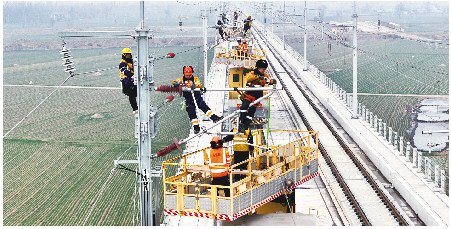
Core Viewpoint - The Xiongshan High-Speed Railway in Shandong province has entered the comprehensive static acceptance phase, marking a significant milestone in its development as part of China's "Eight Vertical and Eight Horizontal" high-speed rail network [2] Group 1 - The Xiongshan High-Speed Railway has a total length of 552 kilometers, making it an important component of China's high-speed rail infrastructure [2] - The acceptance phase was initiated with the arrival of the contact network inspection train and work vehicles from the Jinan Power Supply Section of China Railway Jinan Bureau Group Co., Ltd [2]

雄商高铁山东段开启静态验收
Xin Hua Wang· 2026-02-01 09:26
Core Viewpoint - The static acceptance work for the Shandong section of the Xiong'an New Area to Shangqiu High-Speed Railway has commenced, marking a significant step in the project aimed at enhancing transportation connectivity in the region [1] Group 1: Project Overview - The Xiong'an-Shangqiu High-Speed Railway has a total length of 552 kilometers, with a design speed of 350 kilometers per hour, passing through 9 cities across Hebei, Shandong, and Henan provinces [1] - The Shandong section spans 269 kilometers and includes 7 stations: Linqing East, Liaocheng West, Yanggu East, Liangshan, Yuncheng, Heze East, and Caoxian West [1] Group 2: Static Acceptance Process - Static acceptance refers to a comprehensive inspection of the railway system's equipment installation and functionality verification after construction completion, crucial for ensuring safe high-speed railway operations [1] - The Jinan Power Supply Section of the China Railway Jinan Bureau employs a "1 maintenance train + 3 work vehicles" operational model for the static acceptance, focusing on the inspection and repair of contact lines and supporting structures [1] Group 3: Strategic Importance - The Xiong'an-Shangqiu High-Speed Railway is a vital part of China's "Eight Vertical and Eight Horizontal" high-speed railway network, specifically the Beijing-Hong Kong (Taiwan) corridor [1] - Upon completion, the railway will interconnect with other lines such as the Shijiazhuang-Jinan High-Speed Railway, Zhengzhou-Jinan High-Speed Railway, and Rizhao-Lanzhou High-Speed Railway, optimizing the transportation network in western Shandong and significantly reducing travel time to neighboring provinces [1]
雄商高铁全线开始铺轨
Qi Lu Wan Bao· 2025-09-04 16:06
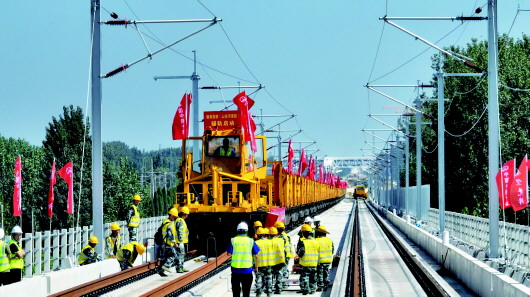
Core Points - The Xiong'an to Shangqiu High-Speed Railway (referred to as Xiongshang High-Speed Railway) has officially entered the track-laying phase as of September 1 [2] - The total length of the main line is 552 kilometers, with a design speed of 350 kilometers per hour [2] - The railway consists of three segments: 258 kilometers in Hebei, 269 kilometers in Shandong, and 25 kilometers in Henan [2] - Track-laying operations have commenced simultaneously from the Hebei section's Hejian track-laying base and the Shandong section's Yuncheng track-laying base [2]
河北山东两地同时启动,雄商高铁全线进入铺轨阶段
Xin Jing Bao· 2025-09-02 08:41
Core Viewpoint - The Xiong'an New Area to Shangqiu High-Speed Railway (referred to as "Xiongshang High-Speed Railway") has officially entered the track-laying phase, marking significant progress in the project [1] Group 1: Project Overview - The Xiongshang High-Speed Railway has a total length of 552 kilometers, with a design speed of 350 kilometers per hour [1] - The railway consists of three segments: 258 kilometers in Hebei, 269 kilometers in Shandong, and 25 kilometers in Henan [1] - Track-laying operations have commenced simultaneously from the Hebei and Shandong track-laying bases [1] Group 2: Strategic Importance - The Xiongshang High-Speed Railway is a crucial part of China's "Eight Vertical and Eight Horizontal" high-speed railway network, specifically within the Beijing-Hong Kong (Taiwan) corridor [1] - Once completed, the railway will enhance the Beijing-Tianjin-Hebei rail transit network, supporting the national strategy for coordinated development in the region [1] - The project is expected to facilitate the development of the Xiong'an New Area and promote economic and social growth along the railway line [1]
雄商高铁全线正式进入铺轨阶段
Qi Lu Wan Bao· 2025-09-01 06:37
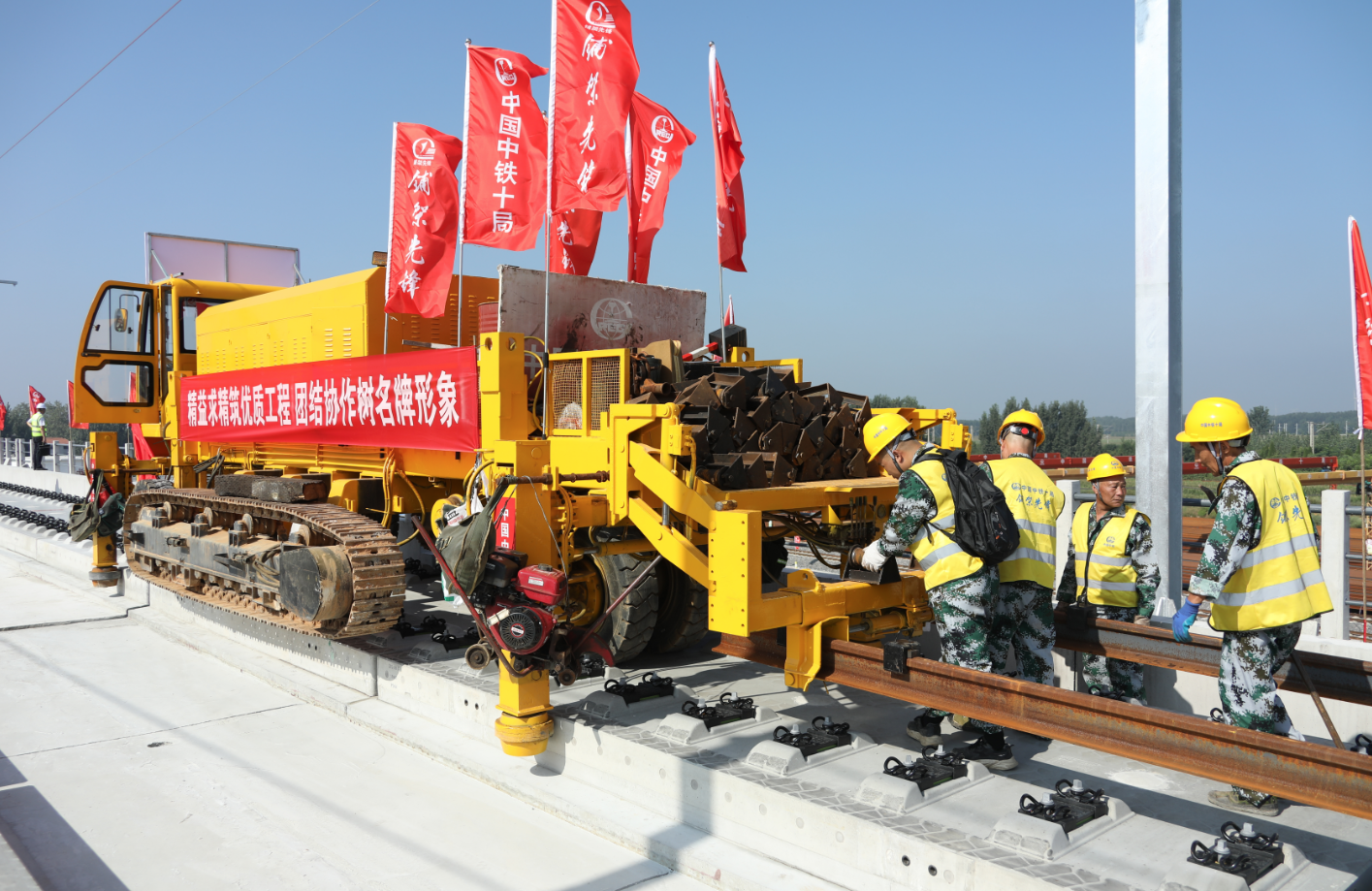
Group 1 - The Xiong'an-Shangqiu High-Speed Railway (referred to as Xiongshang High-Speed Railway) has officially entered the track-laying phase as of September 1 [2] - The total length of the Xiongshang High-Speed Railway is 552 kilometers, with a design speed of 350 kilometers per hour. The Hebei section is 258 kilometers, the Shandong section is 269 kilometers, and the Henan section is 25 kilometers [3] - The Xiongshang High-Speed Railway is a crucial part of China's "Eight Vertical and Eight Horizontal" high-speed railway network, specifically the Beijing-Hong Kong (Taiwan) corridor. Its completion will enhance the Beijing-Tianjin-Hebei rail transit network and support the implementation of the national strategy for coordinated development in the Beijing-Tianjin-Hebei region [5]
鲁冀两地同步启动 雄商高铁全线正式进入铺轨阶段
Yang Shi Xin Wen· 2025-09-01 03:25
Group 1 - The Xiongshan High-Speed Railway has a total length of 552 kilometers, with a design speed of 350 kilometers per hour [6] - The railway includes segments of 258 kilometers in Hebei, 269 kilometers in Shandong, and 25 kilometers in Henan, with track-laying starting simultaneously from Hebei and Shandong [6] - The completion of the Xiongshan High-Speed Railway will enhance the Beijing-Tianjin-Hebei transportation network and support the development of the Xiong'an New Area, contributing to the economic and social development along the route [10]
年内4条高速建成通车,济宁重点交通基础设施项目畅通发展新动脉
Qi Lu Wan Bao Wang· 2025-07-01 07:03
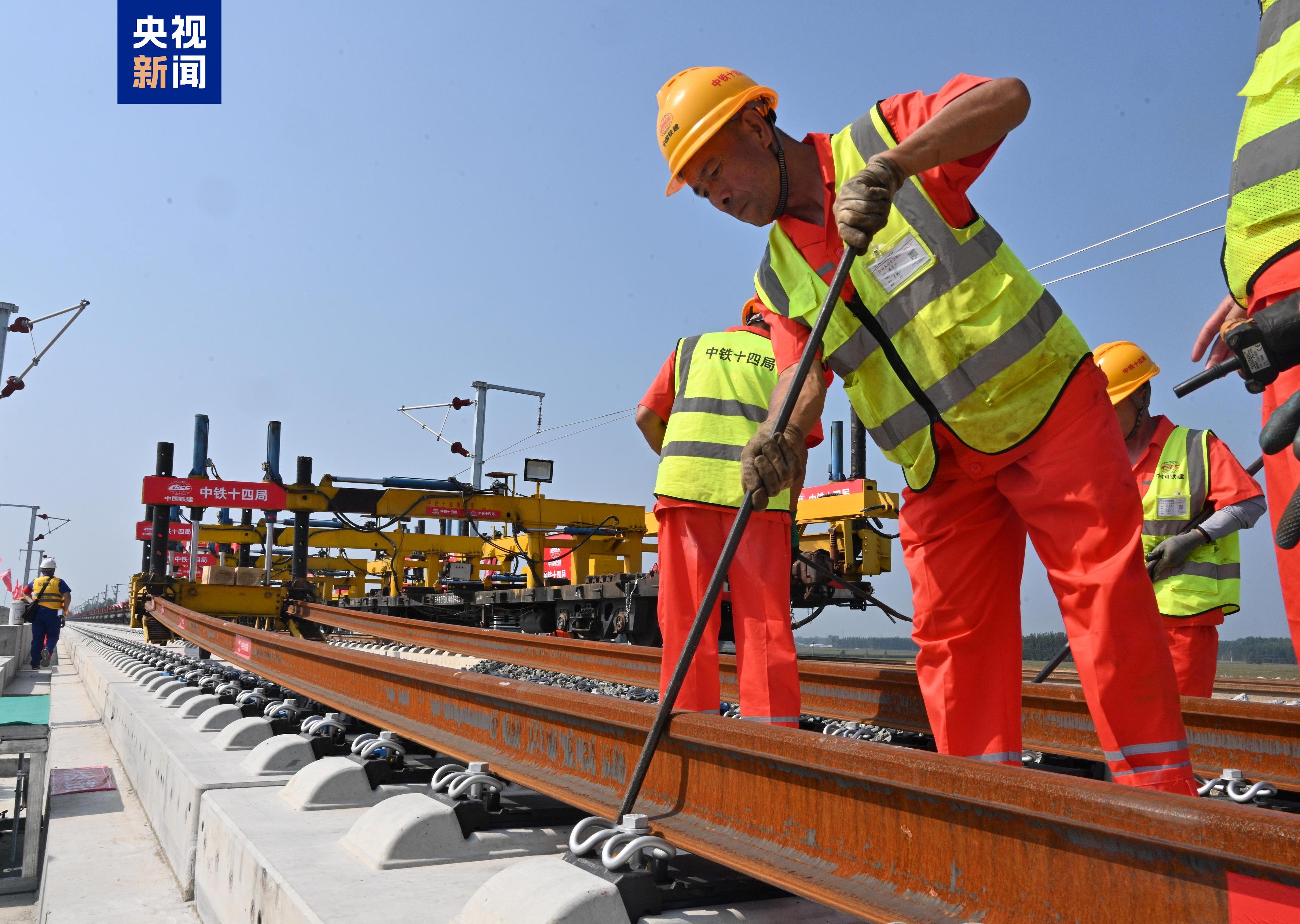
Core Points - The construction of the Xiongshang High-speed Railway Liangshan section is accelerating, with track laying set to begin in October, reducing travel time from Liangshan to Beijing to under 2 hours [1][3] - Multiple transportation projects, including highways and railways, are progressing rapidly, enhancing the regional transportation network and promoting economic integration with the provincial capital and the Beijing-Tianjin-Hebei region [1][7] Group 1: High-speed Railway Development - The Xiongshang High-speed Railway Liangshan section is a key project, with the main bridge spanning 1600 meters and innovative construction techniques reducing the beam construction cycle from 21 days to 15 days [2][3] - The project is part of China's "Eight Vertical and Eight Horizontal" high-speed railway network, with a total length of 552 kilometers, and the Liangshan section measuring 19.1 kilometers [3][4] - The Liangshan area is establishing a comprehensive transportation hub, with supporting infrastructure such as a passenger transport hub and a command and dispatch center being developed [3][4] Group 2: Highway Projects - The Jishang Expressway has achieved over 60 billion yuan in investment, with over 95% of the roadbed and bridge works completed, aiming for early completion [4][5] - The Jizhou Expressway is also progressing well, with 94.2% of the roadbed and 44.6% of the pavement works completed, enhancing regional connectivity [5][6] - The completion of these expressways will significantly improve transportation efficiency and alleviate traffic pressure in the region [6] Group 3: Integrated Transportation Network - Jining is leveraging the opportunity of building a transportation stronghold in Shandong, focusing on interconnectedness and high-quality development [7][8] - The city has initiated a "Hundred-Day Hard Work" campaign to accelerate project construction, with a total railway length of 836 kilometers established [7][8] - The port's cargo throughput reached 45.02 million tons in the first five months, a 12% increase year-on-year, indicating robust growth in the logistics sector [8]
雄商高铁再度刷新建设“进度条”
Zhong Guo Jing Ji Wang· 2025-05-26 05:48
Core Insights - The successful completion of the 2.334-kilometer railway line in Yuncheng County marks a significant milestone for the Xiongshan High-speed Railway project, enhancing logistics and railway transport capabilities in the region [1][2] - The Xiongshan High-speed Railway spans 26.8 kilometers between Liangshan and Yuncheng, featuring two stations and various construction tasks, which have been executed with strict adherence to safety and quality standards [2] Group 1 - The railway line was officially closed on May 25, with over 300 workers completing critical construction tasks within 210 minutes [1] - The newly constructed freight yard at Yuncheng Station is designed to boost railway transport and local economic development, following a "logistics park model" [1] - The construction faced multiple challenges, including land acquisition, high construction standards, and safety pressures, which were effectively managed through coordinated efforts [1] Group 2 - The Xiongshan High-speed Railway connects key high-speed rail lines, covering a total length of 551.97 kilometers and designed for speeds of up to 350 kilometers per hour [2] - This railway is a crucial part of the national "eight vertical and eight horizontal" high-speed rail network, serving the strategic development of the Xiong'an New Area and facilitating economic collaboration in the Beijing-Tianjin-Hebei and surrounding regions [2] - The project has undergone extensive construction activities, including 826 instances of tertiary construction and 2 instances of secondary key construction, ensuring high-quality and efficient completion [2]