黄金投机

Search documents
40%兑付、6个月等待:黄金平台爆雷后,普通人该选哪条路?
Sou Hu Cai Jing· 2026-02-06 14:54
Group 1 - Recent fluctuations in gold prices have led to significant market volatility, with rapid increases and decreases observed [1][2] - The situation has escalated into a series of financial crises, with multiple platforms facing liquidity issues [2][3] - A specific platform, YunDianTang, has been reported to have abnormal payment issues, following the collapse of another platform [3][4] Group 2 - Users of YunDianTang have experienced difficulties in retrieving their funds, with reports of accounts being locked and customer service providing inadequate responses [9][10] - The platform's business model involves enticing users with higher-than-market buyback prices, which serves as a lure for investors [11][12] - As panic set in when the platform became inaccessible, users began to realize the severity of the situation, leading to a rush to withdraw funds [13][14] Group 3 - The payout ratio for YunDianTang has been declining rapidly, with only 60% of funds being returned on January 29, dropping to 40% shortly thereafter [16] - The platform offered three payout options, which effectively pressured users into accepting losses rather than risking total loss [18] - Many users were unaware that they were engaging in high-leverage trading, which significantly increased their risk exposure [19][20] Group 4 - The article highlights that many individuals affected by these platforms are not greedy speculators but rather people in desperate financial situations [21][22] - The combination of low platform credibility, high promises of returns, and the allure of quick profits has led to increased risks for ordinary investors [23][24] - The conclusion emphasizes that ordinary individuals should avoid speculative trading in gold due to the inherent risks involved [25][26][27][28]

大华分析师:黄金或将面临日益加剧的波动和投机
Xin Lang Cai Jing· 2026-01-05 15:57
Core Viewpoint - The report from Dahua analysts indicates that gold is experiencing increasing volatility and speculation, with a notable rise in implied volatility and rental rates, signaling a potential risk for investors [1] Group 1: Market Dynamics - The implied volatility of gold has quietly increased due to expanding weekly price fluctuations and rising implied rental rates [1] - The last trading week of 2025 saw unprecedented volatility in gold and various precious metals, which is a key warning signal of heightened speculative activity [1] Group 2: Investor Behavior - The accumulation of physical gold bars is driving an influx of retail investors into gold and precious metal products, potentially exacerbating year-end liquidity tightness [1] Group 3: Price Forecast - Dahua maintains its gold price forecast, predicting it will reach $4,600 per ounce by the end of 2026, with a longer-term target of $5,000 per ounce [1]
国际金价大幅收涨突破4300美元,却遭国际清算银行发出泡沫警告
Huan Qiu Wang· 2025-12-12 01:20
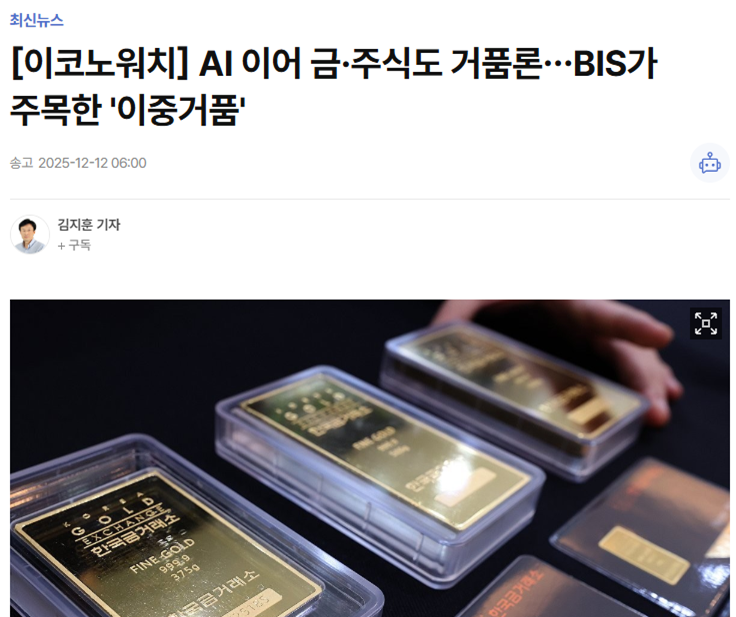
Group 1 - The international precious metals futures saw a general increase, with COMEX gold futures rising by 2.00% to $4309.30 per ounce and COMEX silver futures increasing by 4.83% to $63.98 per ounce, supported by the Federal Reserve's third interest rate cut of the year to 3.50%-3.75% and Powell's statements enhancing expectations for monetary easing [1] - Gold prices have surged by 60% this year, marking the highest annual increase since 1979, with a 20% rise since September, driven by an influx of retail investor funds and central banks' continuous gold purchases [1] - The Bank for International Settlements (BIS) issued a warning in its quarterly report regarding the rapid rise in gold and U.S. stock prices, indicating potential bubbles that may lead to significant corrections [4] Group 2 - The surge in gold prices has led to speculation, raising concerns about the safety of gold as an asset, and questioning what other assets could serve as safe havens during price declines [4] - In Shenzhen, the Gold and Jewelry Industry Association issued a warning about certain gold companies engaging in "pre-priced trading," which may be illegal, yet such practices have continued to evolve into more complex and hidden forms [4] - Some trading platforms have shifted from promoting "pre-priced" concepts to "pricing settlement" models, with leverage ratios approaching 100 times, indicating a trend towards more aggressive trading practices [4]
警报拉响,FOMO狂潮席卷,传统避险资产变成赌场,究竟谁能幸免?
Sou Hu Cai Jing· 2025-09-24 07:51
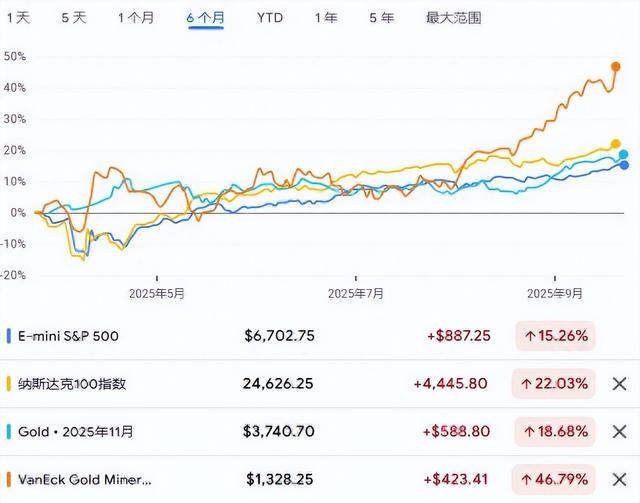
Group 1 - The global financial market is experiencing unprecedented euphoria driven by FOMO, with AI as the main catalyst, leading to soaring indices and even traditional safe-haven assets like gold becoming speculative tools [1][7] - AI has become the absolute protagonist of the current market rally, with significant investments from major companies like Nvidia, which announced plans to invest $100 billion in building a super data center for OpenAI, boosting market optimism [3][5] - The valuation of AI stocks has reached extreme levels, with many companies' stock prices reflecting overly optimistic future scenarios, leaving little room for error [5][6] Group 2 - The concentration of trading activity is alarming, with less than 100 shares accounting for 66% of total trading volume in the U.S. stock market in Q3, up from 31% in 2019, indicating a crowded trade environment [6] - Gold prices have surged to a historical high of $3,775.1 per ounce, defying traditional safe-haven behavior and moving in tandem with risk assets like the Nasdaq index and Bitcoin, signaling a breakdown of traditional hedging mechanisms [9][11] - The performance of gold mining stocks has been aggressive, with related ETFs (GDX) rising nearly 100% from their lows, indicating that speculative fervor has permeated even the most conservative sectors [11] Group 3 - The Federal Reserve's recent decision to lower the benchmark interest rate by 25 basis points to a target range of 4.00%-4.25% has led to market confusion, as the stock market did not respond positively and bond yields unexpectedly rose [16][18] - Internal divisions within the Federal Reserve have contributed to market uncertainty, with differing opinions among officials regarding the need for further rate cuts, complicating the clarity of policy signals [18][19] - The current market environment is being compared to 1999, where fundamental analysis has been overshadowed by liquidity and price momentum, with traders focusing solely on price increases [22]