120口诀

Search documents
头晕、手臂无力、口齿不清 可能是急性脑卒中!尽快就医别耽误!
Yang Shi Wang· 2026-01-25 13:30
Core Viewpoint - The recent cold wave in northern China has led to a significant increase in stroke cases, particularly in the elderly, highlighting the health risks associated with sudden temperature drops [1][2][4]. Group 1: Stroke Incidence and Risk Factors - Clinical studies indicate that for every 1°C drop in temperature, the risk of stroke increases by approximately 1.13% [4]. - Since the onset of winter, the number of stroke patients treated at the First Affiliated Hospital of China Medical University has risen by 30% to 40% [4]. - The trend shows a notable increase in stroke cases among younger individuals, with a 40% rise in the incidence of ischemic strokes in people aged 18 to 45 over the past decade [6]. Group 2: Emergency Response and Treatment - Stroke is the leading cause of death and disability in China, with nearly 15 million stroke patients and 3.3 million new cases annually [9]. - The "120 rule" has been introduced to help quickly identify acute strokes, emphasizing the importance of immediate medical attention within the critical 4.5-hour window for effective treatment [10][18]. - The average time from patient arrival to thrombolysis treatment in Hai'an has been reduced to 37 minutes, showcasing improvements in emergency response [21]. Group 3: Public Health Initiatives - The "Million Reduction of Disability Project" aims to reduce new cases of disability from strokes by 1 million by 2030, with a focus on building stroke centers and improving emergency response systems [19]. - Nationwide, stroke centers now cover 718 tertiary hospitals and 1,550 secondary hospitals, creating a comprehensive treatment network [23]. - The initiative has led to a median time of 40 minutes for stroke patients from admission to thrombolysis, surpassing the international standard of 60 minutes [21].

头晕、手臂无力、口齿不清……可能是急性脑卒中!尽快就医别耽误
Xin Lang Cai Jing· 2026-01-25 11:02
Core Viewpoint - The article highlights the significant increase in stroke cases in northern China due to a recent cold wave, emphasizing the correlation between temperature drops and the risk of cerebrovascular diseases [1][3][5]. Group 1: Stroke Incidence and Risk Factors - Clinical studies indicate that for every 1°C drop in temperature, the risk of stroke increases by approximately 1.13% [3]. - Since the onset of winter, the emergency department at China Medical University Affiliated First Hospital has seen a 30% to 40% increase in stroke cases [3]. - The drop in temperature leads to blood vessel constriction and increased blood viscosity, which are significant risk factors for stroke [5]. Group 2: Demographics and Trends - There is a rising trend in stroke incidence among younger individuals, with a 40% increase in the rate of ischemic strokes among those aged 18 to 45 globally over the past decade [7]. - The average age of stroke patients is decreasing, with cases reported in individuals as young as 16 years old [9]. Group 3: Emergency Response and Treatment - Stroke is the leading cause of death and disability in China, with nearly 15 million stroke patients and 3.3 million new cases annually [9]. - The "120" emergency response protocol is crucial for timely treatment, as every minute of delay results in the death of approximately 1.9 million brain cells [9]. - The implementation of the "Million Reduction of Disability Project" aims to reduce new cases of disability from stroke by 1 million by 2030, with a focus on building stroke centers and improving emergency response times [18][20]. Group 4: Community Health Initiatives - Jiangsu Province has invested in building a three-tiered prevention and treatment system for stroke, ensuring rapid treatment for patients [18]. - The average time from patient arrival to thrombolysis in Hai'an City has been reduced to 37 minutes, significantly improving outcomes [18]. - Nationwide, the median time from hospital admission to thrombolysis has decreased to 40 minutes, surpassing the international standard of 60 minutes [20]. Group 5: Awareness and Education - Experts emphasize the importance of recognizing stroke symptoms and the need for immediate medical attention to avoid missing critical treatment windows [9][13]. - Educational initiatives are underway to improve public awareness of stroke risks and symptoms, particularly among high-risk populations [20].
中新健康|怎样预防脑卒中的发生?专家分享“120口诀”
Zhong Guo Xin Wen Wang· 2025-10-27 08:27
Core Viewpoint - The increasing incidence of stroke among young people is attributed to several factors, including neglect of health check-ups, unhealthy lifestyles, cardiac issues, and systemic diseases. Early detection and control of risk factors are crucial for prevention [1][2]. Group 1: Factors Contributing to Stroke in Young People - Many young individuals overlook regular health check-ups, leading to undiagnosed conditions such as diabetes, hypertension, and hyperlipidemia, which can result in vascular hardening and stroke [1]. - Unhealthy lifestyle choices, including late nights and lack of exercise, contribute to obesity and atherosclerosis, increasing the risk of stroke [1]. - Cardiac issues, particularly atrial fibrillation and congenital heart diseases, can lead to blood clots that obstruct cerebral blood vessels, causing strokes [2]. Group 2: Other Contributing Conditions - Systemic diseases, such as autoimmune disorders, blood diseases, and arteritis, can also elevate the risk of stroke in young individuals. Additionally, long-term use of contraceptives and smoking among women further increases stroke incidence [2]. Group 3: Prevention and Early Detection - Most strokes are preventable and treatable if risk factors are identified early. The "120 mnemonic" is recommended for recognizing stroke symptoms: - "1" refers to checking for facial symmetry and signs of drooping [3]. - "2" involves assessing limb strength and numbness on one side [4]. - "0" pertains to evaluating language difficulties or comprehension issues [5]. - Immediate action, such as calling emergency services, is advised if these symptoms are present [4].
年轻不是“护身符”!警惕脑卒中,牢记“120口诀”
Yang Shi Wang· 2025-05-24 16:35
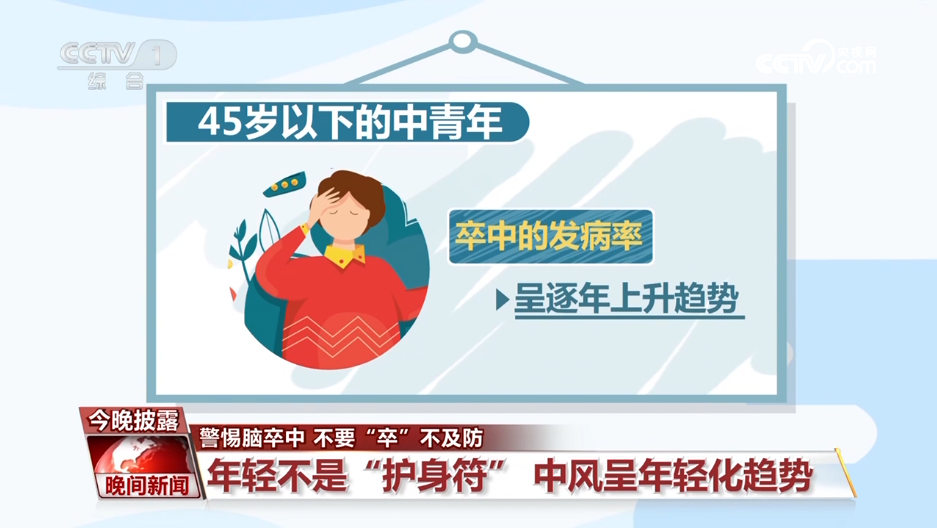
Core Viewpoint - Stroke is increasingly affecting younger individuals, with poor lifestyle habits being a significant contributing factor [1][3][5] Group 1: Stroke Trends and Statistics - Stroke, also known as cerebrovascular accident, is characterized by sudden brain tissue damage due to blood vessel blockage or rupture [3] - The incidence of stroke among individuals under 45 years old is rising annually, as reported by the World Health Organization [3] - A case study of a 33-year-old man diagnosed with acute cerebral infarction highlights the trend of younger patients experiencing strokes [3][6] Group 2: Contributing Factors - Poor lifestyle choices such as staying up late, high-fat, high-salt, and high-oil diets, as well as alcohol abuse, significantly increase the risk of stroke among young people [5][20] - Other medical conditions, such as patent foramen ovale, can also lead to strokes, even in individuals without traditional risk factors like hypertension or diabetes [6][8] Group 3: Urgency of Treatment - Immediate medical attention is crucial, with a recommendation to seek treatment within 4.5 hours of symptom onset [9][11] - The "120 mnemonic" and the international BEFAST mnemonic are tools developed to quickly identify stroke symptoms and encourage prompt emergency response [12][14][16][17] Group 4: Prevention Strategies - Experts emphasize the importance of lifestyle changes to prevent strokes, including reducing salt, fat, and sugar intake, increasing fruit and vegetable consumption, and engaging in regular aerobic exercise [18][20] - Regular health check-ups are advised to detect and manage potential risk factors like hypertension early [20]