A股退市新规

Search documents
8家公司晚间利空,2公司被立案调查,6公司发终止上市风险公告!
Sou Hu Cai Jing· 2026-02-12 16:19
Core Viewpoint - The announcement of an investigation into Tianji Co. for information disclosure violations has caused significant concern among its shareholders, leading to expectations of a sharp decline in stock price following a period of high performance [4][18]. Group 1: Tianji Co. Investigation - Tianji Co. experienced a stock price surge of 7.06% on February 11, closing at a high, with a trading volume of 4.2 billion yuan and a turnover rate of 19% [4]. - The company is under investigation by the China Securities Regulatory Commission (CSRC) for suspected violations of information disclosure laws, which is typically viewed as a major negative signal in the A-share market [4][18]. - The stock price of Tianji Co. has increased from approximately 6 yuan to 56 yuan since 2025, representing a staggering increase of 900% [4]. - The company recently forecasted a net profit of 105 million yuan for 2025, recovering from a loss of 1.351 billion yuan in 2024, but its total market capitalization has reached 22 billion yuan [6]. Group 2: Other Companies Under Investigation - Another company, Lansi Heavy Industry, announced that its vice president is under investigation for misconduct, which may have a limited direct impact on its stock price [6][7]. - Lansi Heavy Industry is forecasting a loss of 440 million yuan for 2025, a significant decline from its previous profitability, and has seen a 12.5% decrease in shareholders [6]. Group 3: Risk of Delisting - On the same night, seven other companies issued warnings about potential delisting, indicating a tightening regulatory environment in the A-share market [9][18]. - ST Guandian has issued its second warning about potential delisting due to consecutive years of losses, forecasting a loss of 185 million yuan for 2025 [9]. - ST Xinchao, despite forecasting a profit of 1.1 billion yuan for 2025, has also issued a delisting risk warning due to unresolved audit issues [9]. - ST Huike and ST Kaixin have similarly warned of delisting risks, with ST Huike forecasting a loss of 18.5 million yuan for 2025 [11][12]. Group 4: Regulatory Environment - The recent announcements reflect the ongoing enforcement of stricter delisting regulations aimed at promoting a healthy market cycle of entry and exit [18]. - Companies facing investigations, particularly for information disclosure violations, risk severe penalties, including potential forced delisting if significant violations are confirmed [18]. - Current delisting criteria include negative net profit with revenue below 100 million yuan and negative net assets, which several companies are at risk of violating [18].

A股晚间暴雷!1股终止上市,1st公司减持3%,19家公司股东跑路
Sou Hu Cai Jing· 2025-12-03 16:22
Group 1 - The A-share market has seen 30 companies delisted since 2025, with various reasons including trading, financial issues, and severe violations leading to forced delisting [2] - The predominant method of delisting has been due to companies' stock prices falling below 1 yuan for 20 consecutive trading days, with examples including ST Jiayao and ST Dongfang [2] - Companies like ST Dayao and ST Boxin were delisted due to their market capitalization falling below 500 million yuan for 20 consecutive trading days, indicating severe financial distress [2] Group 2 - The delisting types are diversifying, with companies like ST Jiuyao and ST Longjin facing financial delisting due to three consecutive years of net profit losses and revenue below 100 million yuan [2] - ST Dongtong's case is highlighted as it experienced a stock price surge before delisting, leading to speculation that it was a strategy to offload shares to investors [8] - New delisting regulations effective in 2025 will raise the revenue threshold for mainboard companies from 100 million yuan to 300 million yuan and introduce a clause for immediate delisting after one year of serious fraud [8] Group 3 - A simultaneous wave of share reductions has occurred, with 19 companies announcing share reduction plans on December 2, including ST Wanfang, which plans to reduce 3% of its total shares [9] - The stock price of North China Holdings has increased by 90% this year, with a shareholder planning to reduce 3% of shares, indicating a trend of significant share reductions amidst rising stock prices [9] - The first five months of 2025 saw a 135% increase in shareholder reduction plans compared to the same period in 2024, with venture capital funds being the primary drivers of these reductions [14]



多家公司,“披星戴帽”
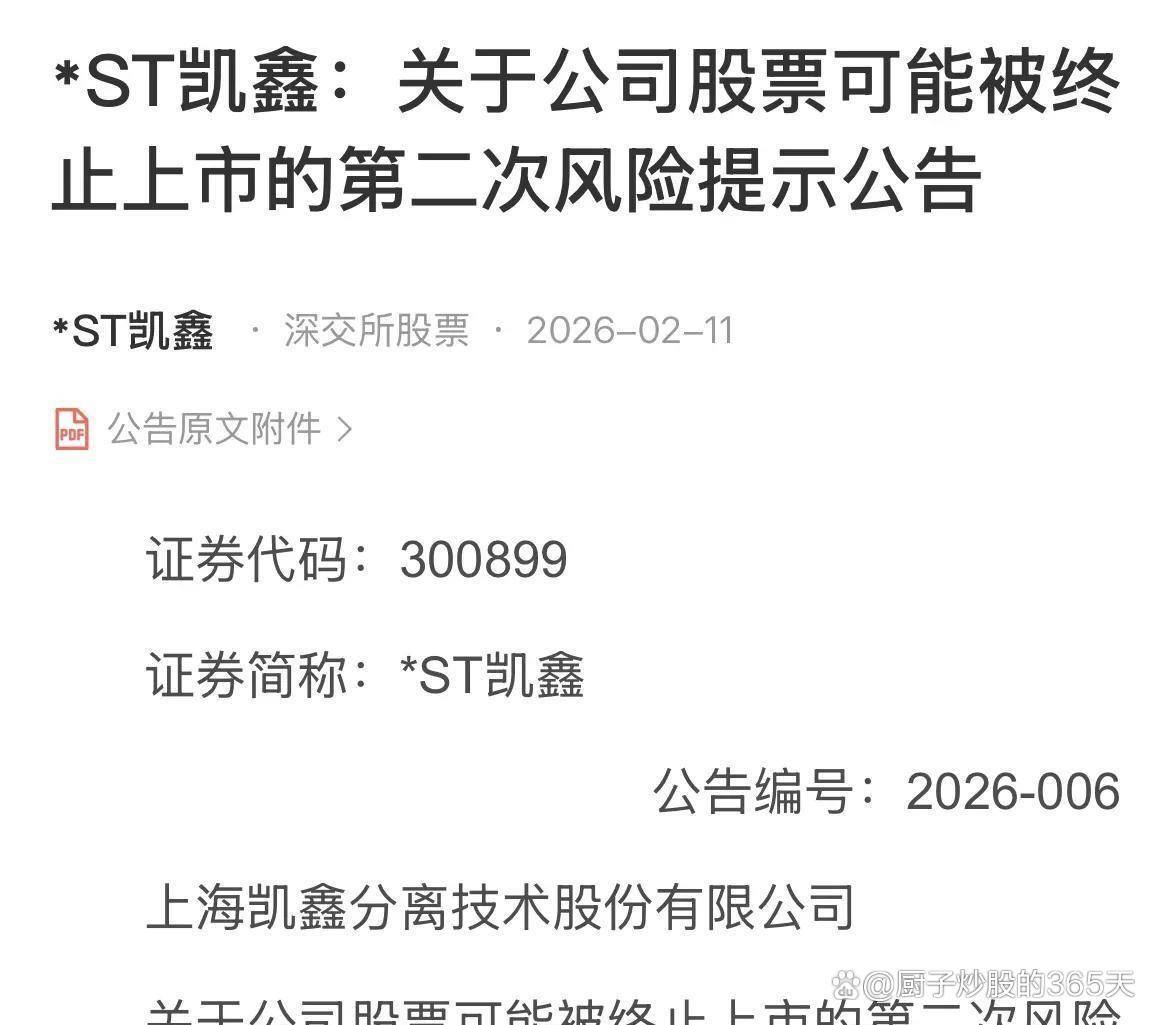
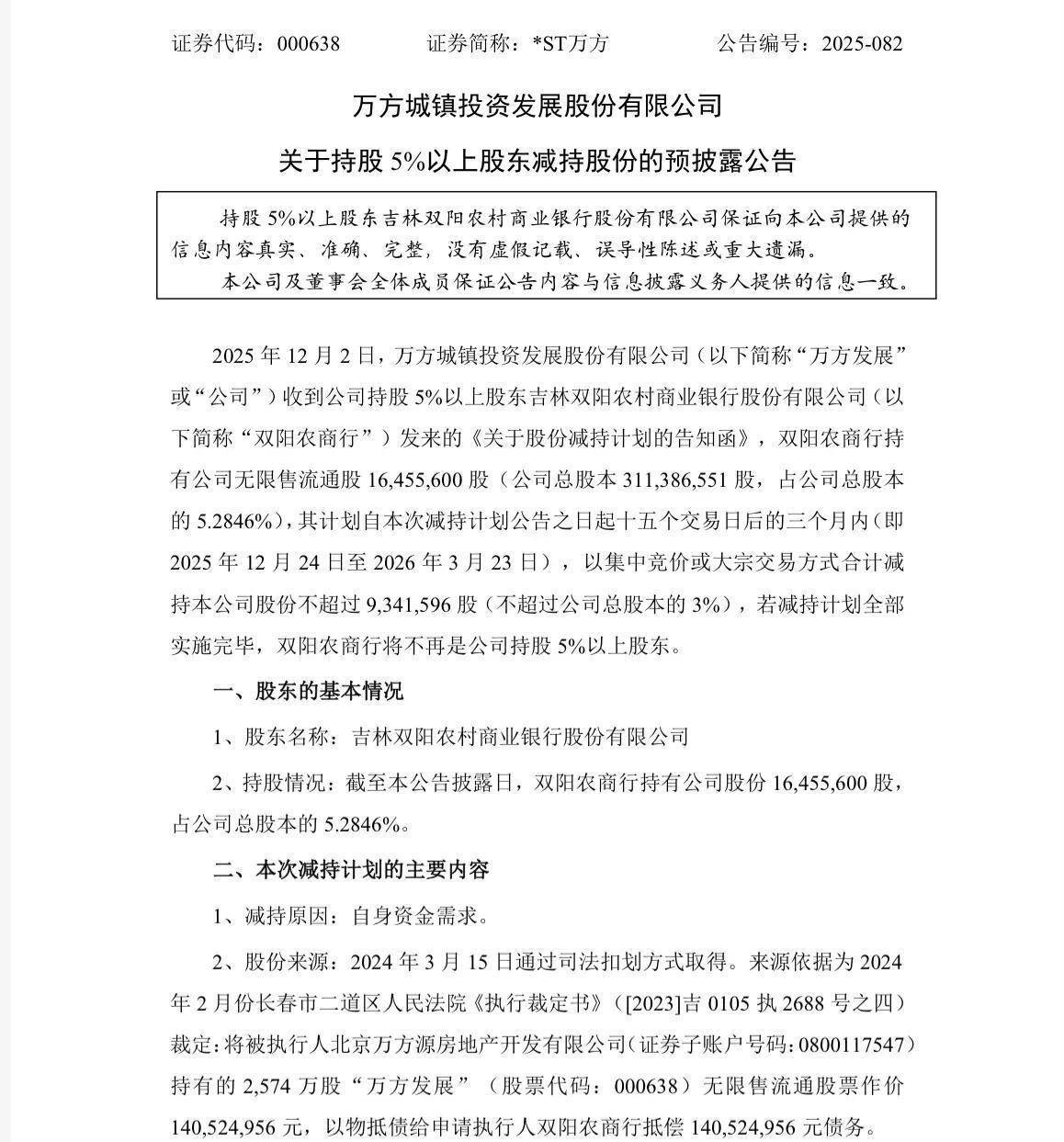
Zheng Quan Shi Bao· 2025-04-29 10:10
Core Viewpoint - The implementation of the new "National Nine Articles" and accompanying delisting regulations has tightened financial delisting indicators, creating significant pressure for underperforming companies in the A-share market [1][5]. Group 1: Delisting Risk Warnings - As of April 28, 2024, a total of 41 companies will be subject to risk warnings due to financial non-compliance and internal control deficiencies, with their stock being suspended for one day on April 29 and renamed starting April 30 [2][3]. - Since the beginning of the year, 99 companies have been subjected to risk warnings, with 74 facing delisting risk due to market capitalization and 25 receiving other risk warnings [2]. - Companies like Guohua Network Security reported negative profits and revenues below 300 million yuan, triggering delisting risk warnings under the Shenzhen Stock Exchange rules [2][3]. Group 2: New Delisting Regulations - The new delisting regulations, effective from 2024, include stricter financial, trading, compliance, and major violation indicators for delisting risk warnings [5][6]. - The revenue threshold for main board companies has been raised from 10 million yuan to 30 million yuan, increasing the elimination of underperforming companies [6]. - The market capitalization delisting threshold for main board A-shares has been increased from 300 million yuan to 500 million yuan, while thresholds for the Sci-Tech Innovation Board and Growth Enterprise Market remain unchanged at 300 million yuan [6]. Group 3: Market Impact and Investor Protection - The new delisting regulations aim to enhance the overall quality of listed companies by increasing delisting standards and reducing the value of "shell" resources, effectively driving out underperforming entities [7]. - The regulations also emphasize deterrence against financial fraud and governance issues, making it more challenging to engage in shell trading [7]. - The implementation of these regulations is expected to accelerate the market's cleansing process, with a higher likelihood of companies being forcibly delisted due to financial misconduct [7].


4家上市公司濒临退市边缘,2025年A股“生死劫”全解析
Sou Hu Cai Jing· 2025-04-21 06:18
Core Viewpoint - The new delisting regulations in A-shares are intensifying, leading to an accelerated "survival of the fittest" process in the market, with a recent surge in delisting risk warnings from multiple companies [1] Group 1: Companies at Risk - ST Xintong is facing delisting risk due to 368 million yuan in non-operating fund occupation, with a two-month deadline for rectification [2] - ST Ningke is projected to incur a loss of 580 to 650 million yuan in 2024, with non-deductible revenue below 300 million yuan, risking delisting if the annual report receives an "unable to express opinion" audit [5][6] - ST Dayao has seen its market value drop below 500 million yuan, making it the first trading delisting stock of 2025, with a stock price plummeting to 1.18 yuan [7][8] - ST Modern has not completed regulatory rectification on time and risks delisting if it fails to submit an audit proof within two months [9][10] Group 2: Regulatory Background - The 2025 delisting regulations have tightened financial indicators, including continuous losses, revenue below 300 million yuan with negative net assets, and excessively low market value [11] - Regulatory scrutiny on information disclosure violations and financial fraud has intensified, exemplified by the case of Dongfang Group, which inflated revenue by 16.1 billion yuan over four years [11] Group 3: Investor Guidance - Investors are advised to avoid high-risk stocks, particularly ST and *ST stocks, companies with continuous losses, and those with abnormal stock price fluctuations [12] - Caution is advised against "doomsday speculation," as some ST stocks may experience short-term surges followed by sharp declines due to major shareholders offloading [13] - Investors should focus on the quality of financial reports, particularly looking for non-standard audit opinions and issues related to major shareholder fund occupation [14] - A rational perspective on "shell protection" expectations is necessary, as the accelerated delisting process under new regulations poses high risks for speculative bottom-fishing [15]