AI+大模型

Search documents
重庆治理欠薪 冬季行动
Xin Lang Cai Jing· 2026-02-08 17:26
Core Insights - The article highlights the successful implementation of a winter action plan in Chongqing aimed at addressing wage arrears, resulting in significant recoveries for workers and improved governance mechanisms [1][2][3][4] Group 1: Governance and Organizational Structure - A multi-departmental task force of 55 members was established to coordinate efforts in wage arrears recovery, creating a unified command structure for effective governance [2] - The governance model involves collaboration among various departments, including human resources, public security, and construction, ensuring comprehensive oversight and accountability [2] Group 2: Recovery Efforts and Results - Since the launch of the winter action plan, 11,000 workers have had their wages recovered, totaling 140 million yuan [1] - In a specific case, a rapid response led to the recovery of 292,000 yuan for a group of workers, with additional efforts uncovering further wage arrears for another group [2] Group 3: Efficiency and Technological Integration - The introduction of the "Yuyue - Wage Arrears Governance" digital platform has significantly enhanced the efficiency of wage arrears management, with a 51% increase in processing speed [3] - The initiative has involved extensive field visits to over 20,000 employers, identifying nearly 4,600 effective leads on wage arrears [3] Group 4: Legal and Enforcement Measures - The government has intensified its crackdown on malicious wage arrears, resulting in numerous administrative actions and criminal referrals, recovering over 7.18 million yuan for 628 workers [4] - A public awareness campaign has been launched to deter wage arrears, including the publication of major violations and the establishment of a hotline for workers to report issues [4]
“行业标杆”海螺集团:从模式创新到科技领航
Shang Hai Zheng Quan Bao· 2025-09-17 19:28
Core Viewpoint - Anhui Conch Group has established itself as a leader in the cement industry, with a production capacity exceeding 370 million tons and a market share of approximately 13%, contributing nearly 40% of the industry's profits [1][2] Group 1: Company Development and Strategy - Conch Cement was founded in 1996, with significant investments and strategic acquisitions that facilitated rapid growth, including a successful IPO in Hong Kong and later in mainland China [2][3] - The company has adopted a mixed ownership structure, with 51% state-owned and 49% employee-held shares, fostering a stable stakeholder relationship [2][3] - The success of Conch Group is attributed to favorable external conditions, including China's economic transition, strategic location in the Yangtze River Economic Belt, and a strong corporate culture emphasizing unity and innovation [3] Group 2: Industry Challenges and Responses - The domestic cement production is projected to decline from 2.395 billion tons in 2020 to 1.811 billion tons by 2024, prompting the need for high-quality development [4] - Conch Group plans to enhance its business through internal industry chain extensions and external international expansion, with over 190 billion yuan invested in 21 overseas factories across 14 countries [4][5] - The company has introduced a new development model called "One Base and Five Industries," focusing on cement manufacturing while expanding into new sectors like renewable energy and digital economy [5] Group 3: Innovation and Technology - Conch Group has pioneered several innovations, including domestic equipment replacement, a "payment upon delivery" sales model, and a unique operational strategy that integrates clinker bases with grinding stations [6][7] - The company has initiated the "Cement Industrial Brain" project to enhance operational efficiency and has developed an industrial internet platform for comprehensive smart operations [7] - In collaboration with industry partners, Conch has launched the first "AI + large model" in the cement sector, applying AI technology across various operational scenarios [7]
“械”逅医博会:AI+大模型掀医疗革命!本土创新加速器械进化|2025智·未来
Hua Xia Shi Bao· 2025-04-11 03:28
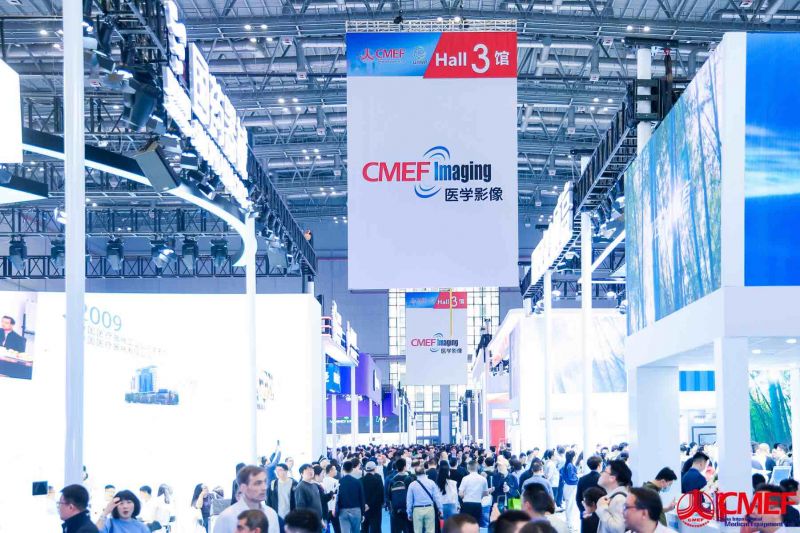
Core Insights - The integration of AI in healthcare is transforming the industry, with significant advancements showcased at the 91st China International Medical Equipment Fair (CMEF) [2][4][10] - The Chinese government is actively supporting the innovation and development of medical devices through policy reforms and financial incentives, including a special bond of 148 billion yuan [2][15] - Domestic companies are making strides in high-end medical equipment, with products that enhance precision and accessibility in healthcare [10][15][22] Group 1: AI and Medical Technology - The AI-driven medical models, such as Mindray's "Qiyuan" critical care model, can integrate patient data and provide treatment suggestions within five seconds, already implemented in several top-tier hospitals [4][10] - Haier Biomedical has launched an AI strategy with its "Kuidou" sample library model, focusing on intelligent management of biological samples [4][6] - The emergence of AI-powered solutions in blood sugar management, remote emergency care, and imaging diagnostics is pushing the medical field from "assistance" to "autonomy" [4][10] Group 2: Innovations in Medical Devices - The introduction of the "Newton 3D" intraoperative CT and surgical robot by GeRui Technology showcases advancements in precision surgery, offering real-time 3D imaging and navigation for complex procedures [13] - The ZAP-X radiation surgery robot, featuring a unique self-shielding design, is aimed at improving the safety and precision of radiation therapy for brain and head-neck tumors [15] - The launch of innovative non-invasive respiratory devices, such as the SyncFree algorithm-based respiratory machine by Yuyue Medical, highlights the shift towards home healthcare solutions [20] Group 3: Market Trends and Consumer Needs - The demand for home healthcare solutions is rising, particularly for chronic conditions like COPD and OSA, with projections indicating significant increases in patient numbers by 2025 [16][18] - The domestic hearing aid market is experiencing a transformation, with local products now competing with foreign brands due to advancements in technology and affordability [20] - The overall vitality of the domestic medical device industry is evident, as it continues to evolve towards high-quality development and innovation [22]



美的携手华为以鸿蒙生态重塑全场景智慧体验
Cai Fu Zai Xian· 2025-03-25 10:05
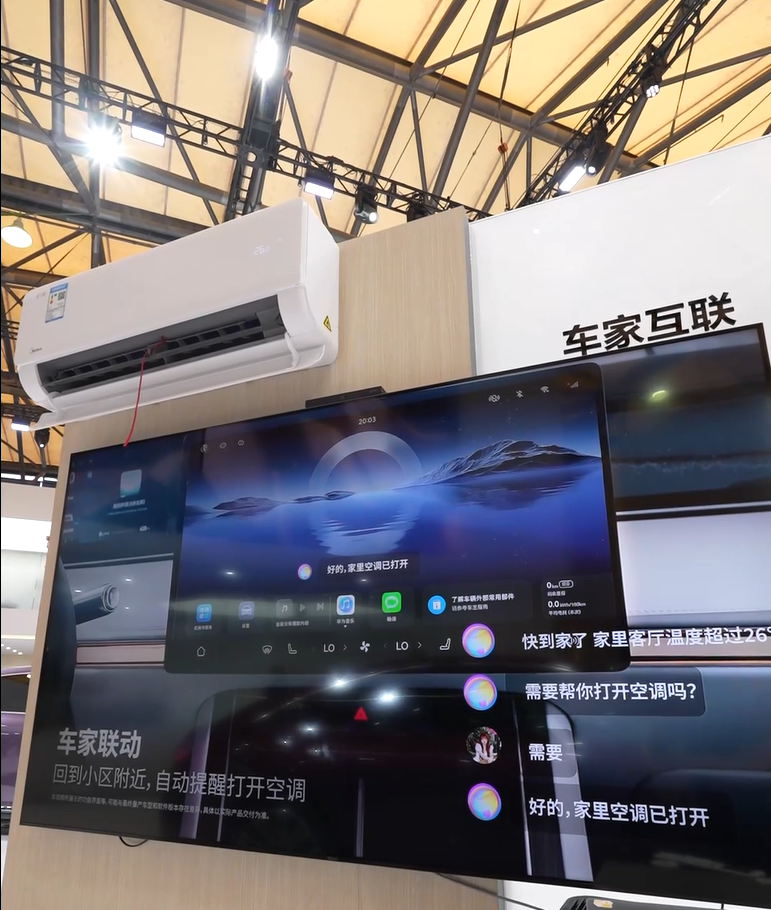
Core Viewpoint - Midea and Huawei are collaborating to reshape the smart home experience through the HarmonyOS ecosystem, aiming to create a comprehensive "human-vehicle-home" interconnected environment as the smart home and smart vehicle markets rapidly grow [1][11]. Market Trends - The smart home market in China is projected to reach 784.8 billion yuan in 2024 and exceed 800 billion yuan in 2025 [1]. - The penetration rate of new energy vehicles in China is expected to rebound to 54.1% by March 2025 [1]. Technological Collaboration - Midea has fully adapted its product line to the HarmonyOS since 2021, enabling seamless device connectivity through Huawei's NFC technology [3]. - The collaboration has evolved to enhance user experience, transitioning from passive responses to proactive sensing, exemplified by Midea's air conditioning system that adjusts airflow based on user positioning [3][5]. Standardization Efforts - Midea and Huawei are advancing the standardization process in the smart home sector by co-authoring the "Huawei HarmonyOS Smart Home Ventilation Gateway White Paper," which sets technical standards for smart ventilation device connectivity [6][7]. - Midea's split air conditioning system serves as a benchmark for this standardization, allowing users to optimize indoor air quality through integrated control of ventilation and air monitoring devices [7]. Ecosystem Development - The partnership aims to create an open ecosystem, enhancing the user experience through AI technologies and deepening collaboration across various sectors [10][11]. - Midea is integrating AI models to improve user interaction and energy efficiency in its air conditioning products, focusing on user habits and environmental conditions [10]. - The collaboration includes mutual channel access, with Midea introducing Huawei's products in its smart home stores and Huawei facilitating Midea's sales channels [10]. Future Outlook - The "human-vehicle-home" ecosystem exemplifies a model for the industry, with Midea expected to deepen partnerships and enhance the smart home service chain, driving high-quality development in the sector [13].