AI与脑机接口融合

Search documents
深度|资本“疯抢”脑机接口老股!询价一路走高,溢价频频出现
证券时报· 2026-03-30 00:41
Core Viewpoint - The brain-computer interface (BCI) sector is experiencing unprecedented investment enthusiasm, with significant interest from various capital sources, including industry giants and venture capital firms [1][6][7]. Group 1: Investment Trends - Nearly 10 top-tier funds have actively sought to acquire shares in Strong Brain Technology, indicating a strong demand for BCI projects [1]. - The BCI market has seen a surge in financing, with 17 investment events totaling 38.03 billion yuan in 2023, surpassing the entire 2025 financing scale of 14.55 billion yuan [4]. - Notable financing events include 5 billion yuan raised by Ladder Medical and 20 billion yuan by Strong Brain Technology, marking record amounts in the BCI sector [3][4]. Group 2: Investment Preferences - Investors are particularly interested in companies with high technical barriers and rapid clinical progress, focusing on four key categories: core technology advantages, strong founding teams, advanced clinical progress, and clear commercialization paths [5]. - The investment landscape is diversifying, with participation from comprehensive funds, industrial capital, local state-owned enterprises, and internet giants [7]. - There is a notable preference for companies that can demonstrate a clear path to commercialization and have a strong academic and industrial background among their founding teams [10]. Group 3: Future Directions - The future of BCI development is expected to extend beyond clinical applications into areas such as entertainment, education, and industrial applications, highlighting the potential for broader human-computer interaction [8][11]. - There is a growing interest in both invasive and non-invasive BCI technologies, with significant potential in treating neurological conditions and exploring commercial applications like brain-controlled devices [12]. - The industry anticipates further policy support for foundational research and the integration of AI with BCI technologies, aiming for a more systematic approach to development and application [11].

狄耐克融资净卖出262.6万元,股价近期震荡
Jing Ji Guan Cha Wang· 2026-02-11 08:44
Group 1 - Company raised 7.0987 million yuan through financing and repaid 9.7248 million yuan, resulting in a net financing sell-off of 2.626 million yuan, with a financing balance of 187 million yuan, down 1.39% from the previous day [1] - As of January 30, the number of shareholders for the company was 26,400, a decrease of 4.5% from the previous period, while the average shareholding per account increased to 9,601 shares, indicating a slight increase in share concentration [1] Group 2 - The stock price exhibited a fluctuating pattern over the past 7 trading days (February 4 to February 11), closing at 15.64 yuan on February 11, with a slight increase of 0.13% [2] - The highest price during this period was 15.89 yuan on February 9, while the lowest was 15.28 yuan on February 6, with a cumulative decline of 0.64% over the last 5 days and a narrowing fluctuation range of 1.02% [2] - On February 11, there was a net inflow of 5.29 million yuan from institutional funds, while retail investors experienced a net outflow; the trading activity showed increased volatility in the short term [2] Group 3 - Guotai Junan Securities released a report on February 6, highlighting the trend of deep integration between AI and brain-computer interfaces, supported by the "14th Five-Year Plan" policies, which are driving technological iterations and scene implementations in the computer industry [3] - The company, as a participant in the smart medical field, is expected to benefit long-term from its layout in brain-computer interfaces due to industry catalysts [3]

国泰海通证券:计算机行业资本与政策赋能 迎来产业窗口期
智通财经网· 2026-02-06 03:57
Core Viewpoint - The integration of AI and brain-computer interfaces (BCIs) is accelerating the commercialization growth cycle, driven by technological iterations and policy support under the 14th Five-Year Plan [1][3]. Group 1: Technology Development - BCIs enable bidirectional information transmission, creating a collaborative pathway between humans and machines, with core functions including neural signal interpretation and external device control [2]. - Various technological routes are developing in parallel: non-invasive methods are currently mainstream due to their ease of use and safety, while semi-invasive and invasive methods offer advantages in risk-efficiency and high spatial resolution, respectively [2]. - The deep integration of AI with BCIs is a significant trend, enhancing signal decoding precision and efficiency through machine learning algorithms, leading to the evolution towards a "brain-machine intelligent community" [2]. Group 2: Market Dynamics - The global competition in the BCI industry is intensifying, with the US focusing on invasive technologies and China making breakthroughs in non-invasive and language decoding fields, while also catching up in invasive technologies [3]. - Domestic policies are supporting the BCI industry through the 14th Five-Year Plan, establishing a comprehensive support system that includes technological innovation, application scenarios, and medical insurance payment [3]. - Capital investment in the BCI sector is expected to see significant growth by 2025, with a notable increase in financing events and amounts, indicating a trend towards early-stage investment and a concentration of capital in leading enterprises [3]. Group 3: Application Scenarios - The healthcare sector is currently the most established application area for BCIs, with successful implementations in hearing impairment, tremor treatment, and motor rehabilitation, supported by a robust medical insurance payment system [4]. - Other application scenarios are rapidly expanding, including consumer markets targeting both disabled and healthy populations, and industrial applications focusing on high-risk, high-precision tasks transitioning from experimental validation to commercialization [4]. - Leading companies are building competitive advantages through comprehensive R&D, industry-academia collaboration, and multi-scenario layouts, creating differentiated strengths in non-invasive technology applications and AI integration [4].


与沐曦打通GPU算力平台,AI让脑机接口更近了
3 6 Ke· 2025-12-16 03:11
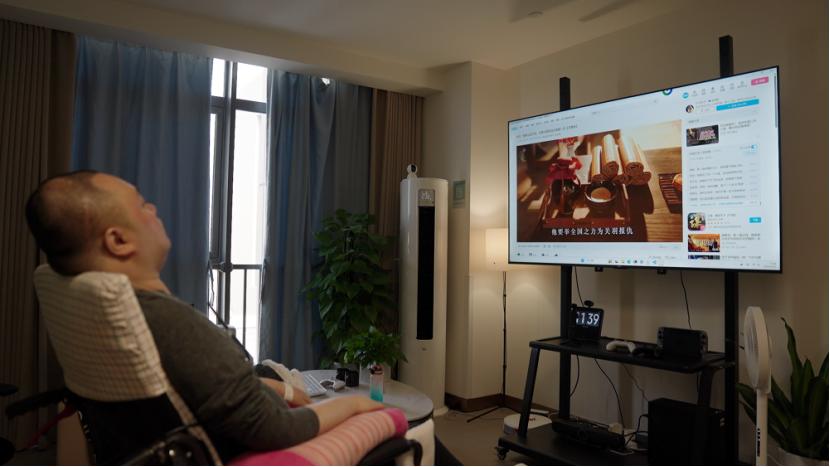
Core Insights - The establishment of the Peak Intelligent Laboratory by the Tianqiao Brain Science Research Institute and the launch of the brain-like pulse model "Shunxi 1.0" represent a significant advancement in brain-inspired computing and large model integration in China [1][2] - The model "Shunxi 1.0" aims to address key challenges in AI, such as high energy consumption, long sequence modeling, and limited generalization capabilities, by mimicking the human brain's neural dynamics [2][3] Group 1: Model Development and Features - "Shunxi 1.0" is the first brain-like pulse model developed in China, utilizing a different approach from mainstream models based on the Transformer architecture, focusing on pulse-based information transmission [2][3] - The model operates on a domestic GPU computing platform, achieving approximately 90% performance of Alibaba's Qianwen 7B model while using only about 2% of the pre-training data [2][3] - The research team emphasizes the natural advantages of brain-like models in low-power inference, complex temporal modeling, and cross-task generalization, indicating potential for application breakthroughs in various scenarios [3] Group 2: Brain-Computer Interface Applications - The clinical application of brain-computer interfaces (BCIs) is accelerating in Shanghai, with companies like Brain Tiger Technology leading the way in developing fully implanted, wireless, and multifunctional BCI products [4][6] - A recent clinical trial at Huashan Hospital demonstrated the successful implantation of a BCI in a patient with high-level paraplegia, allowing control of a cursor and web browsing through thought alone [4][6] - The BCI system's design minimizes infection risks and enhances safety by placing the battery module under the skin, away from the brain, and achieving a brain control decoding rate of 5.2 BPS, nearing international standards [6] Group 3: Industry Trends and Collaboration - The development of BCIs is reshaping the relationship between medicine, research, and industry, with clinical needs driving technological improvements and fostering direct collaboration between doctors and engineers [7] - The intersection of artificial intelligence and brain-computer interfaces is seen as a dual shaping process, where AI enhances the interpretation of brain signals while insights into brain mechanisms push AI architectures towards greater efficiency and lower energy consumption [7]