AI生态整合

Search documents
?疯狂烧钱的OpenAI又来融资了! 前有软银斥300亿美元加码 后有英伟达、微软与亚马逊携手砸钱
Zhi Tong Cai Jing· 2026-01-29 04:55
Core Viewpoint - OpenAI is seeking to raise up to $60 billion in a new funding round, with potential investments from Nvidia, Microsoft, and Amazon, which could elevate its valuation to between $750 billion and $830 billion [1][2]. Group 1: Investment Details - Nvidia is negotiating to invest up to $30 billion, while Microsoft may contribute less than $10 billion, and Amazon's investment could exceed $10 billion, potentially reaching over $20 billion [1][2]. - Amazon's investment may depend on ongoing negotiations regarding other large transactions, and it has previously committed to providing $38 billion in AI cloud computing infrastructure over seven years [2]. Group 2: Strategic Implications - OpenAI and SoftBank are key participants in the "Stargate" project, a $500 billion initiative aimed at building large-scale AI data centers in the U.S. [3]. - The construction of these data centers is driving significant investments from major tech companies, including Oracle, Microsoft, and Meta, to support the growing demand for AI infrastructure [3]. Group 3: Competitive Landscape - OpenAI faces increasing competition from Alphabet's Google, necessitating rapid advancements in its AI capabilities, including the ambitious goal of building a $1.4 trillion AI infrastructure [4]. - Nvidia's investment strategy aims to solidify its market dominance in AI infrastructure through strategic partnerships and potential acquisitions, with a commitment to invest up to $100 billion in OpenAI for new data centers [6].



阿里新版推理模型性能和效率显著提升
Zheng Quan Ri Bao· 2026-01-27 16:49
Core Insights - Alibaba has launched its flagship reasoning model Qwen3-Max-Thinking, which boasts over 1 trillion parameters and 36 trillion tokens of pre-training data, making it the largest and most capable reasoning model from Alibaba to date [3] Group 1: Model Performance and Innovation - The Qwen3-Max-Thinking model has achieved significant performance improvements through a new test-time scaling mechanism, allowing for more efficient reasoning calculations and smarter outcomes [2] - In the "Human Last Evaluation" (HLE) test, Qwen scored 58.3, surpassing competitors like GPT-5.2-Thinking (45.5) and Gemini 3 Pro (45.8), marking it as the highest-scoring model currently available [2] Group 2: Ecosystem Integration and Strategic Direction - The release of Qwen3-Max-Thinking is part of Alibaba's broader strategy for the "AI Service Era," integrating AI capabilities into various applications, including the Quark AI glasses and the Qwen App, which now supports multiple real-world task functionalities [5] - Alibaba has established the Qwen C-end business group to consolidate its AI product lines, aiming to create a "super app" that serves as the primary entry point for users in the AI era [5] Group 3: Industry Impact and Competitive Landscape - The integration model of Qwen is redefining the value logic of "entry" in the domestic AI application industry, shifting competition from single model capabilities to a comprehensive comparison across dimensions [6] - Alibaba's AI ecosystem has transitioned from "single model breakthroughs" to "full-stack collaborative implementation," leveraging real business data to enhance model iteration and create a sustainable competitive advantage [6]


机构:中国智能眼镜市场2025年二季度同比增长145.5%
Huan Qiu Wang· 2025-09-18 06:13
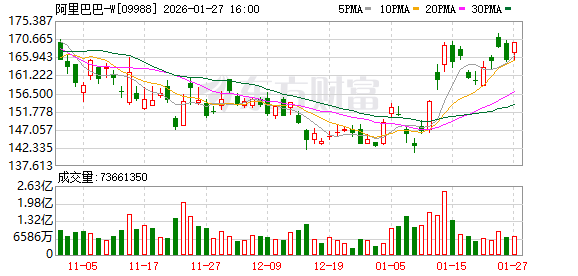
Core Insights - The Chinese audio and audio recording glasses market experienced significant growth in Q2 2025, driven by the launch of new products from Xiaomi, including the Xiaomi AI glasses and Thunderbird V3, leading to a market share increase to 19.7% [3]. Market Performance - In Q2 2025, the total shipment of smart glasses in China reached 664,000 units, marking a year-on-year increase of 145.5% [2]. - The audio and audio recording glasses segment saw shipments of 514,000 units, reflecting a remarkable year-on-year growth of 256.6% [3]. - The AR/VR market in China recorded shipments of 150,000 units in Q2 2025, with a year-on-year growth of 18.7% [3]. Market Segmentation - The AR & ER category significantly contributed to the growth, achieving a market share of 76.4% with a year-on-year increase of 61.8%, while the VR & MR segment faced a decline of 36.2% [3]. - The competitive landscape is shifting, with notable performances from products like the Thunderbird Air 3S and Xreal One, while Pico experienced a decline due to a product transition period [3]. Future Projections - The Chinese smart glasses market is projected to reach 2.846 million units by 2025, representing a year-on-year growth of 116.4%, with audio and audio recording glasses expected to account for 2.202 million units, growing by 183.2% [3]. - The AR/VR device shipments are anticipated to reach 644,000 units, reflecting a year-on-year growth of 19.8% [3]. Industry Trends - Analysts predict that the second half of 2025 will see a comprehensive deepening of the smart glasses market in China, with a focus on AI ecosystem integration, channel optimization, technological collaboration, and matching of scene demands [4].