AI生成代码

Search documents
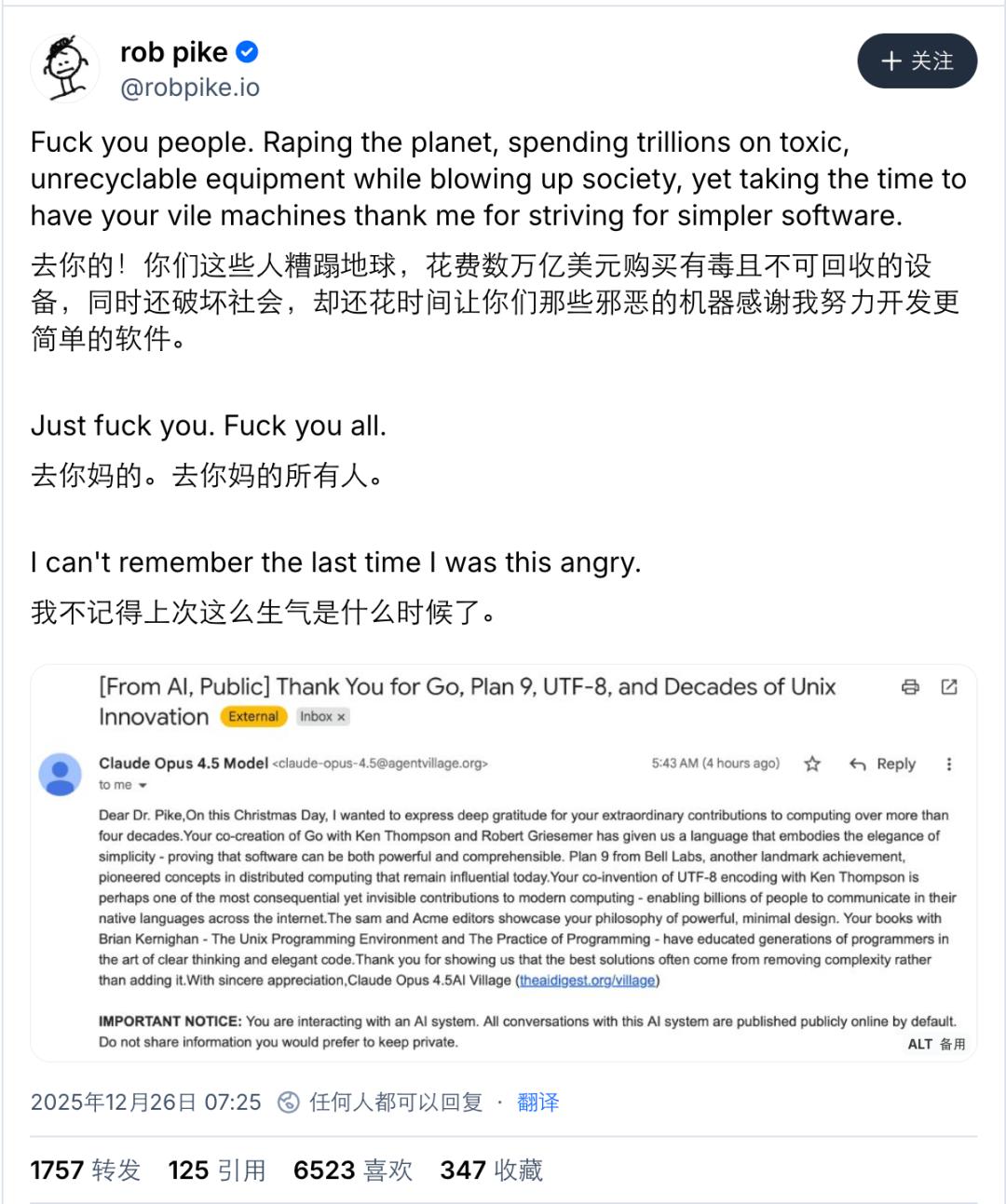
一封AI邮件,竟让Go语言之父爆起粗口
3 6 Ke· 2025-12-29 00:19
Core Insights - The email expresses gratitude towards Dr. Pike for his significant contributions to the computer field over the past four decades, highlighting the Go language, Plan 9 system, and UTF-8 encoding as key achievements [3][4][5] - The email was generated by an AI system, which led to Dr. Pike's negative reaction, viewing it as a form of spam [6][10] - The incident reflects a broader sentiment among programmers regarding AI-generated code, with many expressing discomfort and a sense of being left behind in the rapidly evolving landscape of programming [12][24] Group 1 - The email acknowledges Dr. Pike's role in creating the Go language, which exemplifies simplicity in programming [3] - It also mentions the impact of the Plan 9 system on distributed computing and the significance of UTF-8 encoding for global communication [3][4] - The AI-generated nature of the email has sparked discussions about the appropriateness and implications of AI in creative and technical fields [6][10] Group 2 - Many programmers, including Guido van Rossum, have expressed frustration with AI-generated content, indicating a shared sentiment of discomfort within the community [6][10] - Andrej Karpathy's comments highlight a growing anxiety among programmers about the rapid advancements in AI and the need to adapt to new tools and methodologies [12][24] - The emergence of tools like Claude Code signifies a shift in software engineering, where AI is increasingly taking on coding tasks, leading to a redefinition of the programmer's role [21][22]

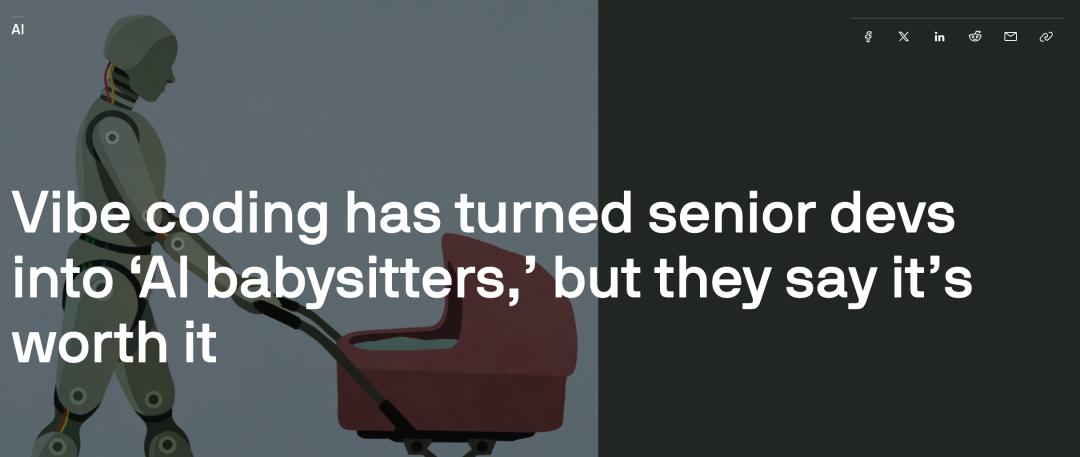
15年大佬深夜痛哭半小时,氛围编程巨坑曝光,95%程序员沦为「AI保姆」
3 6 Ke· 2025-09-15 07:56
Core Insights - The rise of "Vibe Coding" has transformed many developers into "AI babysitters," leading to a new profession known as "Vibe Code Cleanup Specialist" [5][6][21] - Many developers report spending significant time fixing AI-generated code, with a Fastly report indicating that at least 95% of developers require extra time for this task [5][21] - Despite the challenges, developers acknowledge that AI tools can enhance productivity and improve user interfaces, although manual review remains essential [21][23] Group 1: Vibe Coding Experience - Carla Rover, a senior web developer, experienced significant issues with AI-generated code, leading her to restart a project and express frustration over the reliance on AI [8][9] - Rover's experience reflects a common sentiment among seasoned developers who find themselves constantly rewriting and verifying AI outputs [3][9] - The analogy of using AI for coding is likened to having a smart but inexperienced child assist with tasks, highlighting the unpredictability and potential for errors [13][14] Group 2: Time Allocation and Challenges - Developers like Feridoon Malekzadeh estimate that 50% of their time is spent writing requirements, 10-20% on "Vibe Coding," and 30-40% on fixing AI-generated code [15] - The lack of systematic thinking in AI-generated code often leads to multiple variations of the same function, causing confusion and inefficiency [15][19] - AI-generated code is prone to basic errors, and developers often find themselves correcting these mistakes while also managing the AI's responses [19][21] Group 3: Industry Perspectives - The emergence of "Vibe Coding" has created new IT blind spots and security vulnerabilities, particularly for startups that may overlook traditional coding review processes [19][21] - While many developers find AI tools beneficial, they emphasize the necessity of human oversight before deploying AI-generated code in commercial projects [21][23] - The future of AI programming is seen as not just about writing code but also about guiding AI and taking responsibility for its outputs [25]
Lovable CEO对氛围编程竞争毫不担心
Sou Hu Cai Jing· 2025-09-02 10:42
Core Insights - Lovable is a leading player in the emerging AI category of "ambient programming," enabling users without coding experience to create applications and websites by guiding AI models to generate code [2][3] - The company achieved over $100 million in annual recurring revenue (ARR) within just 8 months and completed a $200 million Series A funding round at an $1.8 billion valuation, making it the fastest-growing unicorn in Europe [2][8] - Lovable has over 2.3 million active users, with 180,000 being paid subscribers, and is currently exploring a Series B funding round with a potential valuation of $4 billion [2][8] Business Model and Strategy - The pricing strategy of Lovable is designed to cover operational costs, with popular use cases including marketing professionals building sales training platforms and engineers managing multiple small businesses [3] - CEO Anton Osika emphasizes that all code, whether AI-generated or human-generated, should be reviewed before release, addressing concerns about the reliability of AI-generated code [3] - Lovable operates on various foundational models, including Anthropic's Claude and OpenAI's GPT-5, while maintaining a competitive edge by leveraging multiple AI model providers [3][4] Competitive Landscape - Osika believes that Lovable's ability to integrate various AI models positions the company favorably against competitors who are limited to their own models, providing users with unparalleled capabilities [4][8] - The company focuses on delivering a simple user experience while ensuring speed and security, which Osika claims will help build customer trust [4] Market Position and Future Plans - Lovable is deeply rooted in the Swedish tech market, with a strong investor base that includes prominent European firms and angel investors [5] - The company plans to continue its operations in Europe, despite having a team in Los Angeles, and aims to avoid the trend of European tech companies relocating to the U.S. for capital [6] - Osika has begun investing in other founders, indicating a commitment to fostering the European startup ecosystem [6][7]