AI编码

Search documents
刚刚,OpenAI买下Python最强基建,准备垄断开发者「生产资料」
机器之心· 2026-03-20 01:14
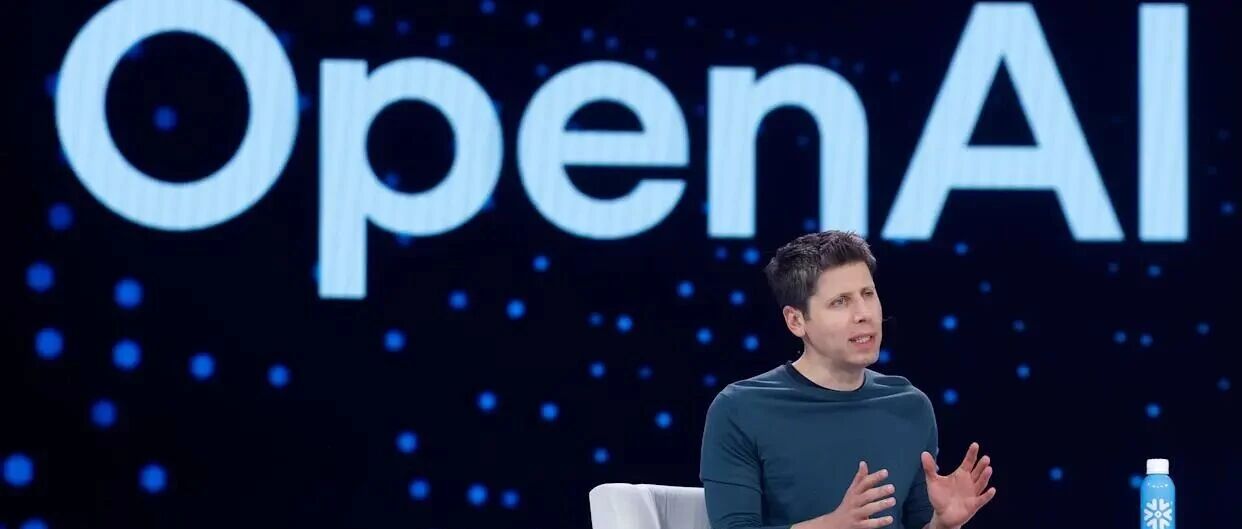
Core Viewpoint - OpenAI's acquisition of Astral marks a significant shift in the AI large model competition, particularly in programming, moving from merely "generating code" to "taking over the underlying infrastructure" [4]. Group 1: Acquisition Details - OpenAI announced the acquisition of Astral, a startup focused on building high-performance development tools for the Python ecosystem, with the Astral team joining OpenAI's Codex team [2][6]. - Astral was founded in late 2022 and aims to enhance the efficiency of the Python ecosystem by leveraging Rust's performance advantages to rewrite traditional Python infrastructure [6]. Group 2: Astral's Tools and Impact - Astral has developed several important open-source tools, including: - **Ruff**: A fast Python code checker and formatter, running 10-100 times faster than traditional tools like Flake8 and Black [7]. - **uv**: A rapid package and dependency management tool that can replace pip and other tools, solving complex dependency conflicts in milliseconds [7]. - **ty**: A fast type checker for Python, recently launched by Astral [7]. - These tools have gained significant traction, with uv's downloads exceeding 126 million in the past month, indicating high usage among developers [8]. Group 3: Community Concerns - Despite assurances from OpenAI and Astral's founder that the original team will continue to support open-source products, many developers express concerns about the potential impact on the Python development environment due to the acquisition [11]. - There are fears that as major tech companies acquire open-source tools, the openness of these tools may be compromised, leading to a competitive advantage for the acquiring companies [11]. Group 4: Codex Evolution and Future Plans - OpenAI aims to integrate Astral's tools into Codex, which has seen a threefold increase in users and a fivefold increase in usage since the beginning of the year, with over 2 million weekly active users [13]. - Codex currently assists in writing functions, fixing bugs, and running tests, but struggles with tasks like installing the correct Python version and resolving dependency conflicts, which Astral's tools can address [13]. - OpenAI envisions Codex evolving into a system that assists throughout the entire software development process, with Astral's tools playing a crucial role in this integration [13]. Group 5: Competitive Landscape - The acquisition of Astral is part of OpenAI's broader strategy, following other acquisitions aimed at enhancing its capabilities in AI code tools, amidst competition with companies like Anthropic and Cursor [15]. - The acquisition also poses a direct challenge to Anthropic, as Astral's tools have previously seen contributions from Anthropic's Claude AI [16].

以实干促创新,华为云发布“码道”代码智能体公测版
Huan Qiu Wang· 2026-02-26 12:54
Core Viewpoint - Huawei Cloud has launched the public beta of CodeArts, an AI coding platform designed to enhance efficiency, security, and standardization in enterprise-level development, leveraging over 20 years of R&D experience and a vast codebase of billions of lines [1][3]. Group 1: Product Features - CodeArts is not merely a code completion tool but an integrated AI coding platform that includes a code large model, intelligent IDE, and autonomous development mode, covering core AI coding capabilities such as code generation, knowledge Q&A, and unit test case generation [3]. - The platform supports the ArkTS language for HarmonyOS native application development, significantly improving development efficiency and accuracy within the Harmony ecosystem [3]. - CodeArts is compatible with mainstream development environments, including IDE, VSCode, JetBrains, and CLI, achieving a 30% reduction in token consumption for the same tasks, thus providing a more precise and efficient development experience [3]. Group 2: Security and Privacy - Huawei Cloud adheres to principles of local data processing, immediate data destruction, and encrypted transmission, ensuring that user code remains in the local environment to prevent sensitive information leakage [5]. - Future features will include audit logs, malicious code detection, and open-source copyright alerts to strengthen the AI coding security framework [5]. Group 3: Customization and Scalability - CodeArts includes high-frequency scenario skills covering the entire software lifecycle, such as requirement management and vulnerability remediation, and allows enterprises to quickly import custom skills for personalized AI agent customization [5]. - The platform integrates leading open-source models GLM-5.0 and DeepSeek-V3.2, along with exclusive models for HarmonyOS and Ascend, and offers third-party model access interfaces [5]. - Its innovative four-layer intelligent agent expansion architecture enables developers to define main and sub-agents flexibly, continuously expanding capabilities to meet complex development needs [5]. Group 4: Industry Impact - Industry experts believe that AI coding tools like Huawei Cloud CodeArts are evolving from auxiliary roles to core productivity drivers in development, potentially lowering software development barriers and enhancing innovation efficiency, thus contributing to the high-quality development of the software industry in China [5].
华为云码道公测版发布 工程化 AI 编码重构研发新范式
Xin Lang Cai Jing· 2026-02-26 09:18
Core Viewpoint - Huawei Cloud has launched the public beta of CodeArts, an AI coding assistant, emphasizing "AI coding pragmatism" and aiming to transform software development from "tool assistance" to "intelligent collaboration" [1][7]. Group 1: Product Features - CodeArts integrates multi-model capabilities and full-stack development tools, leveraging over 20 years of Huawei's R&D experience and a codebase of over 100 billion lines [1][8]. - The platform features a unified architecture of "large models + IDE + self-developed mode," covering the entire AI coding process, including code generation, knowledge Q&A, unit test case generation, and codebase indexing [2][8]. - CodeArts supports various development environments, including native IDEs, VS Code, JetBrains, and CLI, ensuring compatibility with developers' existing habits [3][9]. Group 2: Efficiency and Quality - CodeArts optimizes efficiency by reducing inference rounds, saving 30% of tokens for equivalent tasks, thus providing a "more accurate, faster, and cost-effective" coding experience [3][9]. - The platform emphasizes quality assurance through a structured "specification" that AI can read, ensuring code generation meets standards, comprehensive unit testing, and intelligent checks throughout the development process [4][10]. - A full-dimensional security system is established, including local storage of code files, "burn after use" cloud data, and encrypted transmission to prevent data leaks [4][10]. Group 3: Customization and Expansion - CodeArts allows developers to add custom skills and supports integration with third-party models, enhancing the adaptability of the AI assistant to various industry needs [6][11]. - The platform's unique four-layer expansion mechanism enables developers to customize the AI assistant and its sub-assistants, catering to personalized development requirements [6][11]. Group 4: Industry Impact - The launch of CodeArts aligns with the industry's shift towards "engineering implementation" in AI coding, moving beyond mere technical accumulation to meet enterprise demands [6][12]. - As AI coding enters a critical phase in 2026, CodeArts aims to provide a practical AI coding solution that integrates engineering capabilities, enterprise standards, and ecological adaptability [6][12].
码道春节公测!华为云面向开发者公开征集码道实测意见
Cai Jing Wang· 2026-02-13 02:46
Core Insights - Huawei Cloud's CodeArts has launched a public beta with participation from over 10,000 developers to enhance product experience and meet actual development needs [1] - The product integrates three core capabilities: IDE, self-development model, and code library indexing, enabling a full process from requirement design to code implementation [1] - Feedback from developers will be collected to continuously iterate and optimize the product, addressing pain points in the AI coding industry [1] Product Features - CodeArts is designed as an AI-native intelligent coding product that balances coding creativity and standardization [1] - The focus of the feedback collection includes practical experience, function adaptation, and performance optimization [1] - Developers can provide feedback through the Huawei Cloud official website's CodeArts public beta platform [1] Future Development - Huawei Cloud aims to leverage developer feedback to make CodeArts a leading AI research and development expert that enhances developer efficiency [1]
“氛围编码”2年攒下的烂摊子,正在逼我重新手写代码
3 6 Ke· 2026-01-27 13:04
Core Insights - The emergence of AI coding tools has sparked debates about whether machines can replace human developers, with some praising their efficiency while others caution against potential limitations in code quality and system stability [1] - A developer named mo shared his experience of relying on AI for "vibe coding" over two years, ultimately realizing that while AI-generated code may seem reasonable in parts, it struggles with overall structure and long-term maintainability, leading him to revert to hand-coding [10][11] Group 1: Developer Experiences - Many developers follow a similar journey with AI coding tools, initially impressed by their ability to handle simple tasks and later complex ones [2][6] - As developers assign more complex tasks to AI, they begin to notice flaws, leading to frustration and a tendency to blame themselves for the AI's shortcomings [7][9] - The reliance on AI for coding can result in a lack of understanding of the overall system architecture, as AI-generated code often fails to consider the broader context [10][12] Group 2: Educational Concerns - There is growing concern among educators that AI's ability to perform simple tasks too well may lead novice programmers to skip essential foundational training, hindering their long-term development [11][12] - Teachers emphasize the importance of students writing their own code to build understanding and intuition, as relying on AI can prevent the internalization of critical skills [12][13] - Experienced engineers note that while AI can boost productivity in the short term, it may leave developers stuck at a lower skill level without the necessary growth to reach their full potential [14][15] Group 3: Caution in AI Usage - Developers are increasingly adopting a more cautious approach to using AI, recognizing that while it can save time, it often introduces technical debt that accumulates over time [14][15] - The reliance on AI can weaken a developer's understanding of code, leading to difficulties in troubleshooting and a lack of a mental model of the codebase [16][17] - As developers become more dependent on AI, their productivity may plummet when they are unable to access these tools, highlighting the risks of over-reliance [16][17]
Claude Opus 4.5 全面上线,凭什么夺回 Agentic Coding 第一!
深思SenseAI· 2025-11-25 12:42
Core Insights - The article discusses the advancements in AI models, particularly focusing on Opus 4.5, which shows significant improvements in performance and efficiency compared to its predecessors and competitors [1][14][16] Group 1: Performance Comparison - Opus 4.5 outperforms Gemini 3 Pro in generating interactive applications, achieving a high level of completion and usability with minimal prompts [1][3] - In coding tests, Opus 4.5 demonstrates superior efficiency, using significantly fewer tokens while achieving comparable or better results than Sonnet 4.5 [6][7] - The model's ability to utilize tools has improved, allowing it to selectively call only relevant tools, which enhances efficiency and reduces token consumption [8][9] Group 2: Cost Efficiency - The pricing structure for token usage has been reduced to $5 per million input tokens and $25 per million output tokens, approximately one-third of previous costs, leading to a notable increase in cost-effectiveness [7][8] - Opus 4.5's advanced tool usage allows it to complete tasks at a much lower cost compared to Sonnet 4.5, with estimates showing a task cost of about $1 for Opus 4.5 versus $4 for Sonnet 4.5 [8][9] Group 3: Advanced Features - The introduction of the "effort" parameter allows users to customize the model's input intensity, balancing between time and cost efficiency [4][6] - The "infinite chat" feature enables continuous dialogue without hitting context limits, allowing for more seamless long-term projects and collaboration [11][12][13] - The enhanced computer use capability allows the AI to perform tasks directly on a computer interface, including zooming in on elements for precise interactions [9][10] Group 4: Market Positioning - Opus 4.5 is positioned as a tool for professional software developers and knowledge workers, emphasizing its utility in complex project management and collaborative development [16] - The model aims to redefine software production processes by acting as a collaborative developer rather than just a code completion tool [16]

OpenAI旗下视频生成应用Sora实现百万下载,AI编码竞赛格局生变
智通财经网· 2025-10-10 07:10
Group 1: OpenAI's Sora Application - OpenAI's AI video application Sora achieved 1 million downloads within five days of its launch, surpassing the download speed of ChatGPT despite being invitation-only and limited to North America [1] - Sora allows users to generate short videos for free by inputting prompts and has quickly topped the Apple App Store rankings [1] - Concerns have been raised by CAA regarding potential copyright infringement risks associated with Sora, prompting OpenAI's CEO to announce upcoming content copyright control features [1] Group 2: AI Coding Landscape - OpenAI's Codex coding assistant is rapidly approaching Anthropic's Claude Code in the AI coding sector, with a 74.3% adoption rate for Codex compared to 73.7% for Claude Code based on data from Modu [2] - The performance improvement of Codex is attributed to the release of the GPT-5-Codex model, which increased its code generation success rate from 69% [2][3] - Despite the performance gains, Codex's merge rate in pull requests remains lower than Claude Code, with 24.9% for Codex and 32.1% for Claude Code [2] - Sourcegraph's Amp proxy currently has the highest code adoption rate at 76.8%, while Google's Gemini CLI is noted as the most cost-effective coding assistant [3] - For Anthropic, coding technology is a core revenue driver, primarily through API sales to clients like Microsoft, while OpenAI views coding as a key area for developing general artificial intelligence [3]
AI编码工具双雄也开始商业互捧了?Cursor × Claude 最新对谈:两年后,几乎100%代码都将由AI生成!
AI前线· 2025-06-21 03:38
Core Insights - Cursor achieved an annual recurring revenue (ARR) of $100 million in less than two years, a milestone that typically takes most SaaS companies a decade to reach [1] - The company writes 1 billion lines of code daily, showcasing its rapid development capabilities [3][5] - Founded by four MIT graduates, Cursor has raised $9.5 billion in funding within 18 months, with a team of fewer than 50 people [5][6] Company Strategy - Cursor aims to avoid becoming another bubble in the tech industry, focusing on disciplined growth rather than large-scale hiring [6] - The company has formed a strategic alliance with OpenAI, receiving $8 million in seed funding, which is seen as both financial support and a partnership with a leader in AI [6] - Cursor's small team size forces efficiency and a focus on product quality over organizational complexity [6] User Experience and Product Development - Users have expressed amazement at Cursor's efficiency, with each engineer handling 20,000 transactions per second [7] - Cursor is highly popular among developers for its coding tools, which enhance productivity significantly [10] - The company emphasizes a unique coding experience that differs fundamentally from traditional IDEs and simple AI assistants [11] Growth and Market Position - Cursor has broken previous software company growth records, surpassing even legendary companies like Wiz and Deel [12] - The company is at the forefront of a new wave of intelligent coding tools, significantly improving programming efficiency for millions of developers [12] Product Iteration and AI Integration - Continuous evolution of new models provides opportunities for debugging and exploration, which in turn feeds back into product iteration and the creation of new features [13][17] - Cursor's development process involves using its own tools to build and improve its products, creating a recursive feedback loop [20][21] - The company is focused on optimizing code review processes to enhance software development efficiency [24][27] Future Directions - Cursor is exploring the integration of more external systems and enhancing user interaction data to further optimize its offerings [31] - The company anticipates a future where AI-generated code will dominate, with developers focusing more on understanding requirements and guiding software direction [39] - Cursor is also looking into the potential for software to adapt and evolve based on user interactions without the need for manual coding [41]

“由 AI 生成的代码,从诞生那一刻起就是「遗留代码」!”
AI科技大本营· 2025-05-12 10:25
Core Viewpoint - The article presents the idea that AI-generated code can be considered "legacy code" from the moment it is created due to its lack of contextual memory and maintenance continuity [1]. Group 1: Characteristics of AI-Generated Code - AI-generated code is inherently "stateless," meaning it lacks the ability to understand the original author's intent or maintain a real-time memory of the coding process [3]. - Each piece of AI-generated code is essentially "written by someone else," as AI constructs its understanding of the context from scratch, without retaining the original input-output transformation process [5]. - AI-generated code is immediately perceived as "old code," skipping the "new code" phase and entering a state of being "legacy code" without the freshness or ongoing maintenance from the original author [5]. Group 2: Implications for Software Development - The current state of AI-generated code suggests a shift in software development practices, where the reliance on prompts and context windows may lead to less emphasis on long-term code maintenance [5]. - The article posits that AI-generated code may serve as a transitional tool in the short to medium term, facilitating a new approach to coding and software development [6]. Group 3: Perspectives from the Community - Comments from the community highlight the historical context of programming theories, suggesting that the complexity of software systems is rooted in collective developer understanding, which may be lost over time [8]. - There is a discussion on whether large language models (LLMs) can develop a theoretical understanding of programming akin to human developers, or if this understanding is inherently different [12].