AI + 医疗

Search documents
医药行业跟踪报告:生物医药首次被列为国家“新兴支柱产业”,战略定位进一步提升
Shanghai Aijian Securities· 2026-03-10 08:15
Investment Rating - The report assigns an "Outperform" rating for the pharmaceutical sector, indicating a positive outlook compared to the broader market [4][11]. Core Insights - The pharmaceutical sector is experiencing a significant transformation, with the government designating biopharmaceuticals as a "new pillar industry," signaling a strategic elevation in its importance [5]. - The report highlights the successful approval of the world's first photodynamic therapy product for cervical precancerous lesions in China, showcasing innovation in non-invasive treatments [5]. - Despite recent market volatility due to geopolitical tensions, the long-term trend of innovation in China's pharmaceutical industry remains strong, with expectations for continued growth in overseas markets for innovative drugs [5][4]. Summary by Sections Industry Performance - The SW Pharmaceutical Bio Index decreased by 2.78% during the week of March 2 to March 8, underperforming the CSI 300 Index, which fell by 1.07% [4]. - Among sub-sectors, only in vitro diagnostics showed a slight gain of 0.18%, while CXO and medical devices experienced declines of 4.99% and 4.62%, respectively [4]. Government Policy and Market Trends - The Chinese government has consistently included "innovative drugs" in its work reports for three consecutive years, emphasizing support for the development of innovative pharmaceuticals and medical devices [5]. - In 2025, the total number of License-out transactions for Chinese innovative drugs reached 157, with a total value of approximately $135.7 billion, indicating a doubling in upfront payments compared to 2024 [5]. Investment Opportunities - The report suggests focusing on investment opportunities in ADCs, bispecific antibodies, small nucleic acids, and weight-loss drugs, as well as high-growth areas like CXO, medical device exports, brain-computer interfaces, and AI in healthcare [5].
价值700亿美元的AI+医疗仍有很长的路要走丨ToB产业观察
Tai Mei Ti A P P· 2026-01-16 09:38
Core Insights - The Chinese government has officially launched the "Artificial Intelligence +" initiative, focusing on enhancing the healthcare sector through AI applications, aiming to improve the quality of life and healthcare services [2] - The healthcare industry is becoming a primary area for AI technology implementation, transitioning from optional to essential applications, with significant growth expected in the AI healthcare market [2][3] Industry Overview - The healthcare sector faces critical challenges such as uneven resource distribution, high physician workloads, and low research translation efficiency, creating ample opportunities for AI applications [3] - By 2025, the global AI application market is projected to reach $127 billion, with the healthcare sector accounting for 20% of this total [2] - The "AI + healthcare" market is expected to grow at a compound annual growth rate of over 29%, reaching $70 billion by 2032 [2] AI Applications in Healthcare - AI applications in healthcare have evolved through various stages, with clinical decision support systems (CDSS) being a key area of focus, addressing the knowledge gap between medical advancements and physician expertise [3][4] - The introduction of large language models has significantly improved the capabilities of CDSS, allowing for real-time updates and broader disease coverage, with accuracy rates surpassing 91% in some cases [5][11] - Medical imaging AI has matured, transitioning from basic disease screening to advanced multi-modal analysis, enhancing diagnostic precision and patient outcomes [6][7] Business Models and Commercialization - The commercialization of medical imaging AI is shifting from product sales to service-based models, driven by the integration of AI into healthcare workflows [7][10] - Companies like Ping An are leveraging AI to enhance patient services, streamline processes, and improve healthcare accessibility, with AI assisting in over 50% of family doctor tasks [8][11] - The AI healthcare market is facing challenges related to high development costs, long return on investment periods, and difficulties in monetization due to varying payment capabilities across healthcare institutions [21][22] Challenges and Future Outlook - Despite advancements, the integration of AI in healthcare faces hurdles such as data quality, regulatory issues, and the need for explainability in AI decision-making [16][19] - The lack of standardized, high-quality data across healthcare institutions hampers the training of AI models, necessitating improvements in data governance and sharing mechanisms [18][19] - The AI + healthcare sector is expected to enter a new phase of large-scale implementation by 2026, driven by collaborative efforts and continuous technological innovation [22]




去年西城人均期望寿命达85.05岁
Xin Jing Bao· 2026-01-07 09:57
Group 1 - The average life expectancy in Xicheng District reached 85.05 years last year, with a maternal mortality rate of 0 per 100,000 [1] - By 2025, Xicheng aims to maintain an average life expectancy of 85.05 years, a maternal mortality rate of 0 per 100,000, an infant mortality rate of 1.38‰, and a 27.5% decrease in the incidence of legally mandated infectious diseases compared to the same period in 2024 [1] - The district has implemented a childcare subsidy policy, benefiting over 30,000 children aged 0-3 [1] Group 2 - Xicheng District has established an integrated information system covering 11 district hospitals, significantly reducing non-diagnostic medical visit times by an average of 30-40 minutes [1] - In 2026, the district plans to launch the "Health and Wellness Digital Empowerment Action," leveraging an integrated platform to build a health big data and AI foundation, aiming for "less hassle for residents and smarter regulation" [1] - The initiative will promote more "AI + healthcare" application scenarios [1]
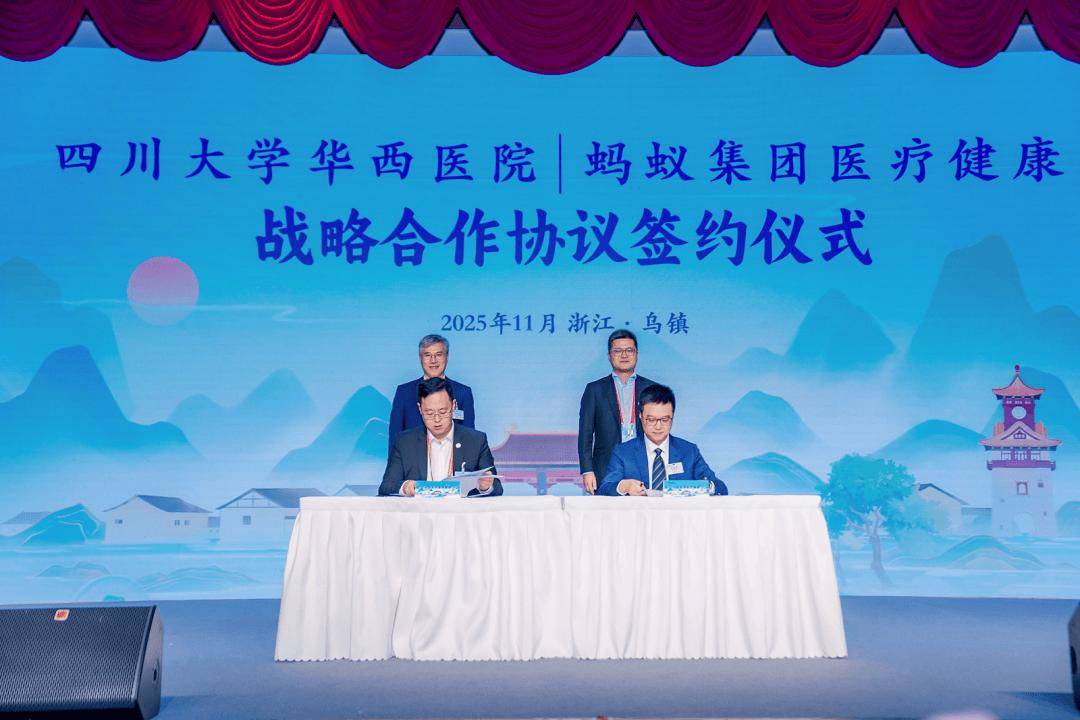
蚂蚁集团与华西医院合作:探索 AI 医疗,改善患者就医、支付体验
Sou Hu Cai Jing· 2025-11-09 05:58
Core Insights - Ant Group and West China Hospital are collaborating to advance scientific research and service system construction focused on chronic diseases, particularly respiratory diseases, leveraging clinical experience and technological capabilities [2][3] Group 1: Collaboration Focus - The partnership will concentrate on four main areas: cutting-edge technology research and application development for respiratory diseases, optimizing medical payment services, enhancing patient experience through streamlined medical processes, and establishing a standardized data governance system [3] Group 2: AI and Healthcare Integration - Since its entry into AI healthcare in 2023, Ant Health has formed partnerships with several top medical institutions, including Peking University Third Hospital and Shanghai Jiao Tong University School of Medicine Affiliated Renji Hospital [2]
泰达生物子公司博雅全健亮相China-Hospeq 2025 以 AI智慧赋能人类卫生健康共同体
智通财经网· 2025-08-16 13:29
Group 1 - The 31st China International Medical Instrument and Equipment Exhibition and Technical Exchange Conference will be held in Beijing from August 15 to August 17, 2025, featuring a seminar on AI in healthcare [1] - The seminar aims to leverage AI technology to create a "Health Silk Road," breaking down barriers in medical resource allocation and enhancing the efficiency of healthcare services across regions [2] - Multiple initiatives were launched during the seminar, including the establishment of a global children's early diagnosis and treatment AI innovation ecosystem, contributing to the construction of the "Health Silk Road" [2] Group 2 - The "Xihe No. 1" medical model, developed by Peking University Third Hospital and other partners, has been a focal point, utilizing 1 million real clinical cases and featuring over 100 billion parameters [3] - The model's training data comes from 18 medical institutions, ensuring high accuracy and compliance, with a medical knowledge coverage rate of 98% and precision rate exceeding 90% [4] - The model aims to address high misdiagnosis rates in cardiovascular diseases and improve diagnostic efficiency in primary care settings [5] Group 3 - The company is building an AI + healthcare ecosystem that encompasses data, models, and clinical applications, focusing on rapid translation of research outcomes into practical applications [6] - The company is also exploring AI-enabled hardware products to meet healthcare service demands, indicating a broadening of its service offerings [6] - The company has formed strategic partnerships to enhance data quality and application in AI medical models, aiming to serve over 100 million patients within three years [8][9]
泰达生物(08189)子公司博雅全健亮相China-Hospeq 2025 以 AI智慧赋能人类卫生健康共同体
智通财经网· 2025-08-16 12:18
Group 1 - The 31st China International Medical Instrument and Equipment Exhibition and Technical Exchange Conference will be held in Beijing from August 15 to August 17, 2025, featuring a seminar on AI in healthcare [1] - The seminar aims to leverage AI technology to create a "Health Silk Road," breaking down barriers in medical resource allocation and enhancing the efficiency of healthcare services across regions [2] - Multiple initiatives were launched during the seminar, including the establishment of a global children's early diagnosis and treatment AI innovation ecosystem, contributing to the construction of the "Health Silk Road" [2] Group 2 - The "Xihe No. 1" medical model, developed by Peking University Third Hospital and other partners, has been highlighted, featuring over 100 billion parameters and a 98% coverage rate of medical knowledge [3] - The model's training data is sourced from 18 medical institutions, ensuring high accuracy and compliance, with a reported error rate of less than 10% [4] - The model addresses significant issues in cardiovascular disease diagnosis, where traditional methods have high misdiagnosis rates [5] Group 3 - The company is focused on building an AI + healthcare ecosystem that spans various fields, including omics research and drug development, to accelerate the translation of research outcomes [6] - The company is also exploring AI-enabled hardware products to meet healthcare service demands [6] - The company aims to serve over 100 million patients within three years and establish a global AI collaboration network for shared medical wisdom [9] Group 4 - The company, Tianjin TEDA Biomedical Engineering Co., Ltd., is committed to optimizing medical resource allocation through AI technology [8] - The company has formed strategic partnerships to enhance data quality and application in AI medical models [8] - The company plans to continue its exploration in the AI + healthcare sector, collaborating with various stakeholders to improve healthcare access and quality [9]
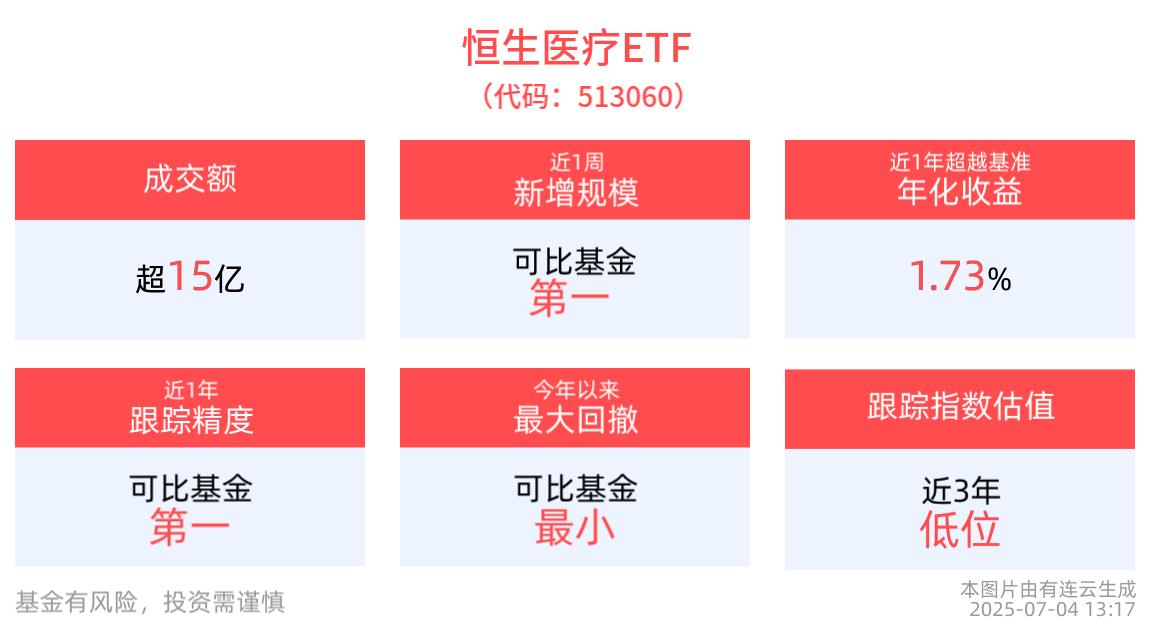
康方生物首个双抗ADC药物临床入组!恒生医疗ETF(513060)午后翻红涨近1%,近1周新增规模居同类第一
Sou Hu Cai Jing· 2025-07-04 05:46
Core Viewpoint - The Hang Seng Healthcare Index (HSHCI) has shown strong performance, with significant gains in constituent stocks, indicating a positive trend in the healthcare sector [3]. Group 1: Market Performance - As of July 4, 2025, the HSHCI rose by 1.19%, with notable increases in stocks such as Huahao Zhongtian Pharmaceutical-B (02563) up 16.34% and Kangfang Biotech (09926) up 8.67% [3]. - The Hang Seng Healthcare ETF (513060) increased by 0.86%, with a latest price of 0.59 yuan, and has seen a cumulative increase of 3.57% over the past week [3]. - The ETF recorded a turnover rate of 18.66% during the trading session, with a transaction volume of 1.516 billion yuan, indicating active market participation [3]. Group 2: Investment Opportunities - Huatai Securities suggests that AI is expected to reshape drug development and healthcare service delivery, with increasing applications in the medical field, highlighting potential investment opportunities by 2025 [4]. - The Hang Seng Healthcare ETF has seen a significant growth in scale, with an increase of 191 million yuan over the past week, ranking in the top third among comparable funds [4]. - Leveraged funds are actively investing, with the latest financing buy-in amounting to 291 million yuan and a financing balance of 277 million yuan [4]. Group 3: Performance Metrics - The Hang Seng Healthcare ETF has achieved a net value increase of 18.78% over the past two years, with a maximum monthly return of 28.34% since inception [4]. - The ETF has outperformed its benchmark with an annualized excess return of 1.73% over the past year, and a Sharpe ratio of 1.85 as of June 27, 2025 [4]. - The ETF has the lowest drawdown among comparable funds, with a relative drawdown of 0.45% year-to-date [4]. Group 4: Fee Structure and Valuation - The management fee for the Hang Seng Healthcare ETF is 0.50%, and the custody fee is 0.15% [5]. - The ETF's tracking error over the past year is 0.069%, the highest tracking precision among comparable funds [5]. - The latest price-to-earnings ratio (PE-TTM) for the HSHCI is 27.68, indicating a valuation below 90.41% of the historical data over the past three years, suggesting it is at a historical low [5]. Group 5: Index Composition - The top ten weighted stocks in the HSHCI account for 58.46% of the index, including companies like Innovent Biologics (01801) and BeiGene (06160) [5].