AI Learning

Search documents
Chegg(CHGG) - 2025 Q4 - Earnings Call Transcript
2026-02-09 22:32
Financial Data and Key Metrics Changes - In Q4 2025, Chegg delivered $18 million in revenue from its skilling business, indicating a strong start for double-digit growth in 2026 [6][13] - Academic services revenue was reported at $55 million, with a focus on cash generation [13] - Non-GAAP operating expenses were reduced to $44.8 million, a 47% decrease year-over-year, reflecting successful restructuring efforts [13][14] - Adjusted EBITDA for Q4 was $13 million, representing an 18% margin [13] - Free Cash Flow in Q4 was -$15 million, primarily due to $12 million in severance payments related to restructuring [14] Business Line Data and Key Metrics Changes - Chegg Skilling is now the primary growth engine, while the legacy academic learning services are being managed for cash flow generation [5][11] - The company is testing various pricing and packaging strategies to optimize the legacy business and extend its operational runway [7][13] Market Data and Key Metrics Changes - The global demand for workforce skilling has reached $40 billion, presenting a significant opportunity for Chegg [8] - Chegg is expanding its course catalog to include high-demand technical skills, particularly in AI and language learning [9] Company Strategy and Development Direction - Chegg is focused on the $40 billion skilling market, aiming for double-digit revenue growth and strong margins [5][10] - The company plans to strengthen its balance sheet by ending the year with zero debt and a meaningful cash balance [10][16] - New partnerships with companies like DHL and Woolf University are aimed at expanding Chegg's reach into global enterprise and academic markets [9][10] Management's Comments on Operating Environment and Future Outlook - Management expressed confidence in the new business structure and its potential for success, highlighting positive early signs in the skilling business [5][11] - The company anticipates stronger performance in the second half of 2026, driven by continued investment and new distribution partners [16] Other Important Information - Chegg repurchased $9 million of its 2026 convertible notes at a discount to enhance its capital structure [12] - The company received a delisting notice from the NYSE but has multiple avenues to regain compliance [15] Q&A Session Summary Question: Key drivers of skilling growth and core business performance - Management noted that retention rates in the core business are stronger than expected, providing a runway for product reinvention [20][22] Question: Opportunities from the Coursera/Udemy merger - Management sees potential partnerships with these companies rather than competition, focusing on content creation and distribution [30] Question: Demand for AI learning content - There is a growing demand for AI learning content across all employee levels, not just frontline workers, indicating a significant growth market [32][33]

高中辍学闯进 OpenAI:拒绝Vibe Coding,用 ChatGPT 自学逆袭成 Sora 团队研究科学家
AI前线· 2025-12-07 05:33
Core Insights - The article discusses the unconventional journey of Gabriel Petersson, a self-taught AI researcher at OpenAI, who transitioned from being a high school dropout to a member of the Sora team, focusing on video generation models [3][4][33] - It emphasizes the potential for individuals to leverage AI tools like ChatGPT to accelerate their learning and achieve advanced knowledge without formal education [4][19][32] Group 1: Gabriel's Journey - Gabriel Petersson, a high school dropout from a small town in Sweden, utilized project-driven learning and AI to self-educate in mathematics and machine learning, ultimately joining OpenAI [3][4][8] - His initial foray into entrepreneurship involved creating a recommendation system, where he learned coding and sales through hands-on experience rather than formal education [11][12][15] - Gabriel's approach to learning was driven by real-world projects, which forced him to acquire necessary skills quickly, demonstrating that practical experience can be more effective than traditional education [16][18][24] Group 2: Learning Methodology - The article outlines a "recursive learning" method where individuals can identify gaps in their knowledge and use AI to fill those gaps by asking targeted questions [27][28] - Gabriel advocates for a top-down learning approach, starting with real tasks and drilling down into the foundational concepts as needed, contrasting with traditional bottom-up educational methods [20][21][22] - The use of AI, particularly ChatGPT, is highlighted as a transformative tool for learning, allowing users to interactively explore concepts and receive immediate feedback [30][31][32] Group 3: Industry Implications - The narrative suggests that the traditional barriers to entry in high-tech fields, such as the necessity of advanced degrees, are diminishing due to the availability of AI tools that facilitate self-learning [33][34] - Gabriel's experience illustrates a shift in the industry where practical skills and the ability to leverage AI for problem-solving are becoming more valuable than formal educational credentials [46][48] - The article posits that the integration of AI in learning could lead to significant productivity gains across various sectors, potentially contributing to substantial GDP growth [33][34]


高中辍学闯进 OpenAI:拒绝Vibe Coding,用 ChatGPT 自学逆袭成 Sora 团队研究科学家
3 6 Ke· 2025-11-30 23:57
Core Insights - The article highlights the unconventional journey of Gabriel Petersson, a self-taught AI researcher at OpenAI, who transitioned from being a high school dropout to working on advanced AI models without formal education [1][3]. Group 1: Gabriel's Journey - Gabriel Petersson, a high school dropout from a small town in Sweden, joined OpenAI's Sora team, focusing on video generation models, despite lacking formal qualifications [1][4]. - His approach to learning involved hands-on projects, using AI tools like ChatGPT to fill knowledge gaps in mathematics and machine learning [1][25]. - Gabriel's initial experience in a startup involved selling a recommendation system, where he learned to code under pressure, which accelerated his learning process [4][14]. Group 2: Learning Methodology - Gabriel emphasizes a project-driven learning approach, where real-world problems drive the acquisition of knowledge, contrasting with traditional education methods [14][19]. - He advocates for a recursive learning method, where one identifies gaps in understanding and uses AI to clarify concepts, akin to the Feynman technique [27][28]. - The use of AI, particularly ChatGPT, allows for immediate feedback and clarification, making learning more efficient and tailored to individual needs [30][32]. Group 3: AI's Role in Education - The article discusses how AI tools can democratize access to knowledge, enabling individuals to learn complex subjects without formal education [20][35]. - Gabriel argues that traditional educational systems are slow and often fail to adapt to the needs of learners in the age of AI [22][64]. - He believes that the integration of AI in learning can significantly enhance understanding and retention of complex concepts [29][30]. Group 4: Career Development - Gabriel's experience illustrates that practical skills and the ability to learn quickly can outweigh formal qualifications in the tech industry [33][54]. - He highlights the importance of networking and seeking mentorship from experienced professionals to gain insights and improve skills [49][60]. - The article suggests that demonstrating practical abilities through projects and contributions to platforms like Stack Overflow can open doors to opportunities in top tech companies [56][59].

北森完成酷学院收购后,AI Learning战略布局提速
2 1 Shi Ji Jing Ji Bao Dao· 2025-05-23 06:48
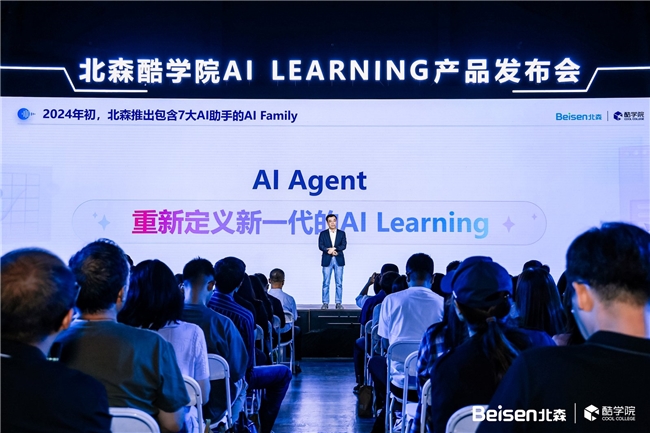
Core Insights - The acquisition of Ku Academy by Beisen Holdings accelerates the company's AI Learning strategy, aiming to serve nearly 10,000 clients by combining their customer bases [1][2] - Beisen focuses on providing integrated HR SaaS solutions for medium to large enterprises and plans to list on the Hong Kong Stock Exchange in 2024 [1] - The new AI Learning platform introduces five AI Agents to enhance the learning experience, covering various aspects from course creation to examination [2][3] Group 1: Acquisition and Strategic Goals - Beisen's acquisition of Ku Academy is a strategic move to enhance its AI Learning capabilities, with a combined customer base of over 9,000 [1] - The acquisition marks a significant event in the Chinese SaaS industry, being the first merger of 2025 [1] - The focus post-acquisition will be on increasing investment in AI Learning product development to cater to diverse clients [1][2] Group 2: AI Learning Platform Features - The new AI Learning platform includes five AI Agents: AI Course Assistant, AI Learning Assistant, AI Practice Partner, AI Leadership Coach, and AI Exam Assistant, facilitating a comprehensive learning process [2][3] - The AI Learning model shifts from traditional video-based learning to personalized, interactive skill training, promising a revolutionary change in corporate training [2][3] - The AI Learning Assistant acts as a personalized guide for employees, enhancing engagement and learning outcomes [3][4] Group 3: Differentiation and Expertise - Beisen's core advantage lies in its background in talent science, integrating expertise in capability assessment and development into its AI models [6][7] - The company emphasizes the importance of expert knowledge and consulting services to create customized AI Agents for clients, differentiating itself from competitors [7] - Beisen's approach combines industry know-how with AI capabilities, positioning it uniquely in the market as a provider of content-rich AI Agents [7]
北森酷学院发布新一代AI Learning平台,企业学习开启Agents时代
Cai Fu Zai Xian· 2025-05-22 01:43
Core Viewpoint - Beisen Holdings, a leading integrated HR SaaS platform in China, announced the acquisition of Cool Academy and the launch of its new AI Learning platform, which incorporates five AI Agents to enhance the learning experience and streamline the training process [1][19]. Group 1: AI Learning Platform Features - The AI Learning platform includes five AI Agents: AI Course Assistant, AI Learning Assistant, AI Practice Partner, AI Leadership Coach, and AI Exam Assistant, covering the entire learning process from course creation to assessment [1][6]. - The AI Course Assistant revolutionizes course production by automating the creation of outlines, PPTs, and exams, significantly increasing efficiency and reducing costs for companies [7]. - The AI Learning Assistant provides personalized learning experiences by recommending courses and offering real-time interaction, addressing the low completion rates of traditional eLearning [8][9]. Group 2: Changes in Learning Methodology - The introduction of AI Agents leads to a shift from traditional browser-based learning to interactive, dialogue-based learning, enhancing user engagement [4][9]. - The AI Practice Partner focuses on skill training rather than just knowledge acquisition, providing realistic practice scenarios and personalized feedback to improve employee capabilities [11][12]. - The AI Leadership Coach transforms leadership training from theoretical knowledge to practical experience through simulated management scenarios, addressing the gap between learning and application [15][16]. Group 3: Market Implications - The merger of Beisen and Cool Academy aims to capitalize on the significant market opportunity presented by the transition from eLearning to AI Learning, potentially reshaping the corporate training landscape [19]. - With over 9,000 potential enterprise clients, the integration of AI Learning solutions is expected to facilitate a rapid shift in corporate training methodologies [19]. - The unique combination of expert knowledge and AI technology positions Beisen as an innovator in the enterprise learning market, poised to lead the transformation towards AI-driven training solutions [17][18].