
AI To C市场

Search documents
“千问”正式上线,阿里要认真做一款AI应用了
3 6 Ke· 2025-11-17 02:35
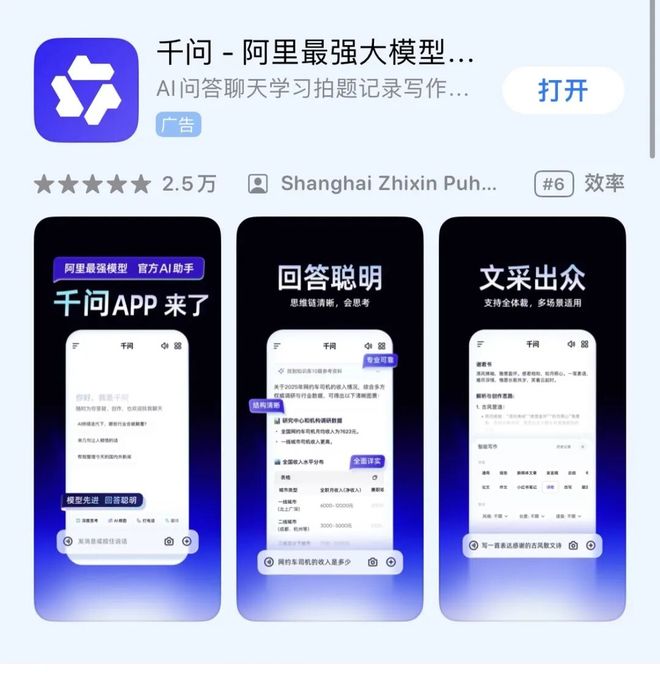
Core Insights - Alibaba officially announced the launch of the "Qianwen" project on November 17, with the public beta version of the Qianwen app now available, aiming to create a personal AI assistant that can chat and perform tasks, marking a strategic move into the AI To C market [1][4][6] Product Features - The Qianwen app is positioned as Alibaba's most powerful AI assistant, featuring capabilities such as conversational Q&A, intelligent writing, and a multi-modal camera function [1][3] - A key upcoming feature is the shopping agent, which will allow users to shop on platforms like Taobao and Tmall using natural language commands [4][5] Strategic Direction - The launch of the Qianwen app is seen as a direct response to ChatGPT, indicating Alibaba's commitment to the consumer application market [6][11] - Alibaba's AI To C strategy includes a range of products from the Qianwen app to AI glasses, all overseen by the president of the Intelligent Information Business Group, Wu Jia [5][6] Market Positioning - The Qwen model series has achieved significant traction, with over 600 million downloads and more than 170,000 derivative models, capturing over 30% of global model downloads on HuggingFace [6][10] - Alibaba's previous AI assistant, the "Tongyi" app, was launched earlier than competitors, but initial efforts in the To C space were limited [6][7] Competitive Landscape - The AI product landscape is shifting towards enhancing model capabilities rather than relying solely on marketing and operations for user acquisition [8][9] - Alibaba is also developing an international version of the Qianwen app to compete directly with ChatGPT in overseas markets [10][11] Future Outlook - The rapid evolution of AI models necessitates a unified branding approach for Alibaba's To C products to effectively capture user engagement and establish a commercial ecosystem [11]


全面对标ChatGPT!传阿里秘密启动“千问”项目 算力、AI Agent等受关注(附概念股)
Zhi Tong Cai Jing· 2025-11-13 23:40
Core Insights - Alibaba has secretly launched the "Qianwen" project, developing a personal AI assistant app named Qianwen, aimed at competing with ChatGPT and monetizing from individual users [1] - The stock performance of Alibaba saw a significant increase, rising over 5% on November 13, following the announcement of this initiative [1] - The Qwen model's development began three years ago, and Alibaba plans to enhance the app with agentic-AI features to support shopping functionalities on its platforms [1] Company Developments - Alibaba has shifted its focus from B2B AI services to B2C, believing the timing is right to enter the consumer market with the Qianwen app [1] - Over a hundred engineers have been assigned to work on the Qianwen project, with dedicated office space established at Alibaba's headquarters in Hangzhou [1] - An international version of the Qianwen app is also in development to compete for overseas users, leveraging the Qwen model's global influence [1] Industry Trends - McKinsey predicts that the global AI To C market will reach $1.3 trillion by 2030, with an annual growth rate exceeding 35%, highlighting the importance of this sector for tech companies [2] - Other companies like ByteDance and Tencent are also making strides in the AI space, with significant user growth reported for their respective AI applications [2] - The industry consensus suggests a dual-driven approach of building brand reputation in B2C while focusing on commercial growth in B2B, emphasizing user acquisition and platform transformation capabilities [2] Related Companies - Baidu showcased various AI advancements at its 2025 World Conference, including the release of the Wenxin model 5.0 and new AI chips, indicating its commitment to AI development [3] - Alibaba's cloud services provided over 10 million CPU cores for the Double 11 shopping festival, demonstrating its robust AI infrastructure capabilities [3] - SenseTime is expected to benefit from the growth of generative AI and has formed strategic partnerships to enhance its AI computing capabilities [4]