文心大模型5.0

Search documents
每日报告精选(2026-03-05 09:00——2026-03-06 15:00)
GUOTAI HAITONG SECURITIES· 2026-03-06 10:00
Macroeconomic Insights - The 2026 economic growth target is set at 4.5-5%, reflecting a shift from speed to quality in growth, with a nominal GDP growth rate of approximately 5.04% implied by the deficit rate of around 4%[3][4] - The inflation target is maintained at around 2%, with an urban unemployment rate target of approximately 5.5% and over 12 million new urban jobs expected to be created[3][4] Fiscal and Monetary Policy - Fiscal spending remains robust, with a planned issuance of 4.4 trillion yuan in new local government bonds and 1.3 trillion yuan in ultra-long special bonds, focusing on consumption and investment in human capital[4][15] - The monetary policy is expected to remain moderately loose, with potential interest rate cuts of up to 20 basis points anticipated within the year[14][15] Domestic Demand and Consumption - The government emphasizes domestic demand as a primary driver, with a new 1 trillion yuan fund to promote consumption and an additional 2.5 trillion yuan in special bonds for consumer goods replacement programs[8][12] - The focus on service consumption is highlighted, with policies aimed at enhancing service quality and expanding consumer spending in sectors like tourism and healthcare[36][37] Industry and Technology Development - The report prioritizes the construction of a modern industrial system, balancing the optimization of traditional industries with the cultivation of emerging sectors, particularly in artificial intelligence and new energy[9][20] - Significant emphasis is placed on fostering high-level technological self-reliance, with a focus on core technologies and the commercialization of AI applications[19][20] Capital Market Reforms - The capital market is set for reforms aimed at improving investor protection and facilitating private equity and venture capital exits, enhancing the overall investment environment[11][12] - The government aims to create a favorable ecosystem for long-term investments, moving beyond mere scale to focus on mechanisms that support sustainable growth[11][12]




百度集团-SW:百度25Q4业绩点评:广告业务有望迎来拐点,看好云业务高增-20260306
Orient Securities· 2026-03-05 10:24
Investment Rating - The report maintains a "Buy" rating for the company with a target price of 141.85 HKD per share, based on a PE valuation method [3][4][7]. Core Insights - The company's traditional online marketing business is experiencing a decline, while AI new business is still in the cultivation phase. The adjusted net profit forecast for 2025-2027 is 189/191/221 billion CNY [3][7]. - The advertising business is expected to see a narrowing of its decline, with AI search commercialization accelerating the potential recovery. The report estimates Q4 2025 advertising revenue at 150 billion CNY, down 16% year-on-year but with a slight improvement from Q3 2025 [6]. - Cloud business is becoming a significant driver of revenue growth, with Q4 2025 intelligent cloud revenue reaching 58 billion CNY, a 38% quarter-on-quarter increase. The demand for AI high-performance computing facilities is expected to sustain cloud growth [6]. Financial Summary - The company's financial projections indicate a revenue of 134,598 million CNY for 2023, with a slight decline to 133,125 million CNY in 2024, and further down to 129,079 million CNY in 2025, before a recovery to 130,748 million CNY in 2026 and 137,623 million CNY in 2027 [3][10]. - The adjusted net profit for 2023 is projected at 28,747 million CNY, decreasing to 27,002 million CNY in 2024, and further down to 18,941 million CNY in 2025, with a slight recovery to 19,142 million CNY in 2026 and 22,052 million CNY in 2027 [3][10]. - The report highlights a gross margin of 52% in 2023, expected to decrease to 50% in 2024 and further down to 44% in 2025, before recovering to 45% in 2026 and 47% in 2027 [3][10].

百度集团-SW(09888):25Q4业绩点评:AI全面发力,云、模型与应用协同提速
GUOTAI HAITONG SECURITIES· 2026-03-05 09:40
Investment Rating - The investment rating for Baidu Group is "Buy" [2][7]. Core Insights - The company's performance is under short-term pressure but better than expected, with profitability stabilizing marginally. AI cloud and large models are driving growth, while applications and autonomous driving open up long-term opportunities [3][4]. - Baidu's total revenue for Q4 2025 was 32.74 billion RMB, a year-on-year decrease of 4.1%, exceeding Bloomberg consensus expectations. Core revenue decreased by 5.7% to 26.11 billion RMB, while iQIYI's revenue increased by 2.7% to 6.79 billion RMB. Adjusted net profit was 3.91 billion RMB, down 41.8% year-on-year, but also above expectations [11][14]. - The company announced a stock repurchase plan of up to 5 billion USD and introduced a dividend policy, enhancing shareholder return mechanisms [11]. Financial Summary - Total revenue projections for 2024 to 2028 are as follows: - 2024: 133.13 billion RMB - 2025: 129.08 billion RMB - 2026: 135.92 billion RMB - 2027: 144.99 billion RMB - 2028: 155.71 billion RMB - Adjusted net profit projections for the same period are: - 2024: 27.00 billion RMB - 2025: 18.23 billion RMB - 2026: 19.49 billion RMB - 2027: 21.93 billion RMB - 2028: 26.79 billion RMB - The adjusted net profit margin is expected to improve from 14.1% in 2025 to 17.2% in 2028 [5][14]. Growth Drivers - AI cloud infrastructure revenue is projected to grow by 34% year-on-year in 2025, with subscription revenue from AI accelerator infrastructure increasing by 143% in Q4 2025. AI-enabled business revenue exceeded 11 billion RMB in Q4, accounting for 43% of Baidu's core revenue [11][14]. - The launch of the Wenxin large model 5.0 and the restructuring of the model team are aimed at optimizing multi-modal understanding and creative writing applications [11]. - The autonomous driving service "Luobo Kuaipao" has accelerated, completing 3.4 million fully autonomous orders in Q4, a year-on-year increase of over 200% [11][14]. Valuation and Price Target - The target price for Baidu Group is adjusted to 151 HKD based on a sum-of-the-parts (SOTP) valuation method, reflecting the company's transition towards AI-driven growth and the expected performance of its various business segments [14][18].
百度集团-SW(09888):25Q4业绩点评:广告业务有望迎来拐点,看好云业务高增
Orient Securities· 2026-03-05 08:19
Investment Rating - The report maintains a "Buy" rating for the company with a target price of 141.85 HKD per share, based on a PE valuation method [4][7]. Core Insights - The company's traditional online marketing business is experiencing a decline, while AI new business is still in the cultivation phase. The adjusted net profit forecast for 2025-2027 is 189/191/221 billion CNY [3][7]. - The advertising business is expected to see a narrowing of its decline, with AI search commercialization accelerating the potential recovery. The report estimates Q4 2025 advertising revenue at 150 billion CNY, down 16% year-on-year but with a slight improvement from Q3 [6]. - Cloud business is becoming a significant driver of revenue growth, with Q4 2025 intelligent cloud revenue reaching 58 billion CNY, a 38% quarter-on-quarter increase [6]. Financial Information - The company's revenue for 2023 is reported at 134,598 million CNY, with a projected decline to 129,079 million CNY in 2025, followed by a slight recovery to 137,623 million CNY in 2027 [3][10]. - The adjusted net profit for 2023 is 28,747 million CNY, expected to decrease to 18,941 million CNY in 2025, before recovering to 22,052 million CNY in 2027 [3][10]. - The gross margin is projected to decline from 52% in 2023 to 44% in 2025, with a slight recovery to 47% by 2027 [3][10].
百度2026年多项事件引关注,股票回购、AI业务成焦点
Jing Ji Guan Cha Wang· 2026-02-13 22:39
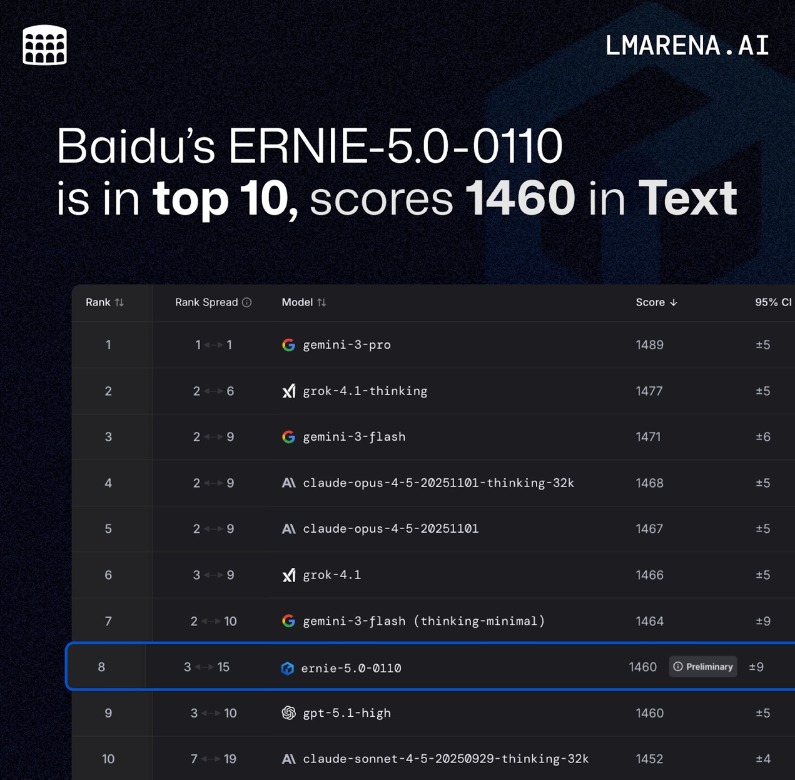
Core Viewpoint - Baidu Group (09888.HK) has several announced events in 2026 that may impact the company's stock price and market attention [1] Funding Movements - A new stock repurchase plan has been authorized with a maximum amount of $5 billion, effective until December 31, 2028, aimed at enhancing shareholder returns [2] - The board has approved a dividend policy, with the first dividend expected to be announced in 2026, potentially during the Q4 2025 earnings report or Q1 2026 earnings report [2] Subsidiary Development - Kunlun Chip, Baidu's AI chip subsidiary, submitted a listing application to the Hong Kong Stock Exchange in early January 2026, which may enhance Baidu's overall valuation and reflect the deepening of its AI stack layout [3] Performance and Operating Conditions - Market forecasts for Baidu's Q4 2025 revenue range from 31.681 to 34.461 billion yuan, with a year-on-year change of -7.2% to 1.0%, and net profit expected to be between 1.013 to 16.244 billion yuan, with a year-on-year change of -80.5% to 212.9% [4] Business Progress - The monthly active users of Wenxin Assistant surpassed 200 million in January 2026, becoming one of the main AI entry points in China, with promotional activities during the Spring Festival [5] - The Apollo Go service saw a year-on-year increase of 212% in order volume in Q3 2025, with plans for expansion into overseas markets like Dubai and Abu Dhabi, aiming for breakeven in more cities by 2026 [5] - Organizational adjustments indicate a focus on the commercialization of AI, with specific revenue targets set for mobile ecology, smart cloud, and autonomous driving [5] Product Development Progress - The official version of Wenxin Model 5.0 was released in January 2026, supporting multimodal interaction and ranking among the top globally [6] - Kunlun Chip plans to launch M100/M300 chips to strengthen its computing power foundation [6]
MiniMax官宣M2.5参战“春节档”,总市值超2000亿
2 1 Shi Ji Jing Ji Bao Dao· 2026-02-13 05:11
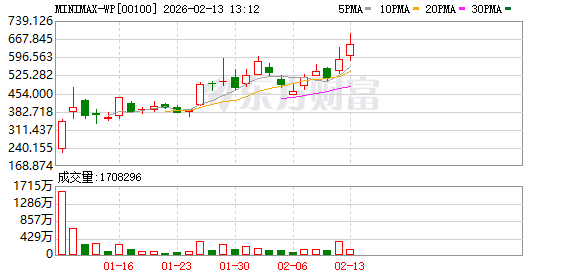
Core Insights - MiniMax launched its new text model MiniMax M2.5 on February 12, 2026, with significant performance improvements leading to a stock price increase of 14.62% on the first day and a market capitalization exceeding 200 billion HKD [2] - The M2.5 model achieved notable scores in programming capabilities, with an 80.2% score on the SWE-Bench Verified and 51.3% on Multi-SWE-Bench, surpassing the previous generation and outperforming competitors [2] - The model's "native Spec capability" allows it to deconstruct architecture and functional planning proactively, mimicking the work patterns of real architects [2] - M2.5 demonstrated a 20% improvement in task performance efficiency compared to its predecessor, particularly in complex task handling [2] Performance and Cost Efficiency - The M2.5-lightning version supports over 100 transactions per second (TPS), doubling the output speed of mainstream models, with input costs around $0.3 per million tokens and output costs approximately $2.4 per million tokens [5] - The operational cost for continuous use is estimated at about $1 per hour when outputting 100 tokens per second, indicating a potential for significant economic scalability in agent deployment [6] Ecosystem Development - Within a day of its launch, over 10,000 experts were created on the MiniMax Agent platform, indicating rapid user adoption and growth [6] - MiniMax aims to build a sustainable and scalable Agent ecosystem, referred to as the Agent Universe, to enhance the penetration of agents across various sectors, including programming, office work, and entertainment [6] Competitive Landscape - On the same day as MiniMax's launch, Zhiyun announced its GLM-5 model, which excels in programming and intelligent workflows, highlighting the competitive nature of the AI model market [6] - The release cycle of major AI models is intensifying, with significant updates from companies like Baidu and Alibaba, indicating a strategic push to capture user attention and developer ecosystems ahead of the Chinese New Year [7]

AI应用进入价值兑现期:钛动科技Navos营销多智能体抢占先机
智通财经网· 2026-02-09 10:22
Core Insights - The AI industry is transitioning from a focus on technical exploration to industrial integration, with a significant emphasis on real-world value delivery [1][3][10] - The launch of advanced AI models by major companies like Baidu and Alibaba indicates a competitive landscape where AI applications are rapidly scaling [1][2] - The rapid increase in China's daily Token consumption, from 100 billion at the beginning of 2024 to over 30 trillion by mid-2025, highlights the swift adoption of AI applications [3] Industry Trends - The AI sector is witnessing a shift towards specialized intelligent systems, moving away from general-purpose chatbots to more capable agents that can execute complex tasks [2][6] - The focus is on creating AI applications that can validate business models and generate real revenue, rather than just showcasing technical capabilities [3][10] - The emergence of intelligent agents marks a new era in AI, where these systems can understand complex objectives and autonomously execute tasks, thus transforming business processes [2][6] Company Developments - Titanium Technology's Navos marketing multi-agent system exemplifies how AI can transition from laboratory settings to practical business applications, integrating deeply into marketing processes [1][4][10] - Navos addresses traditional marketing pain points by creating a collaborative system that enhances efficiency and reduces manual operations across platforms [6][7] - The system includes various intelligent agents that streamline market analysis, creative production, and advertising optimization, forming a comprehensive feedback loop [6][8] Competitive Positioning - Titanium Technology's approach is not merely a trend-following attempt but a strategic move to embed advanced agent capabilities into every aspect of marketing [4][10] - The company leverages extensive real-world data from over 100,000 advertisers, which enhances the decision-making quality of its AI models [8] - As the AI landscape evolves, companies that focus on solving specific business challenges and demonstrating clear commercial pathways will likely emerge as leaders in their respective fields [9][10]
AI业务进入收获期,百度升级AIDU计划称“薪酬无上限”
Bei Jing Ri Bao Ke Hu Duan· 2026-02-08 10:28
Group 1 - Baidu has upgraded its AIDU talent recruitment and training program to a group-level talent development project, emphasizing "unlimited salary" for top talents [1] - The AIDU program, initiated in 2017, aims to attract top technical talents globally to solve cutting-edge AI challenges and has successfully integrated many university graduates into key project leadership roles [1] - The upgraded AIDU program features a comprehensive training system with mentorship from senior executives and a "dual mentorship" model, providing guidance from both technical and business experts [1] Group 2 - Baidu's board has approved a stock buyback plan of up to $5 billion and plans to issue dividends starting in 2026, which has positively impacted its stock price [2] - In 2025, Baidu's stock price increased by 63%, with a remarkable 57% rise in the second half of the year, leading the tech sector [2]
李彦宏的豪赌与无奈:5亿红包砸下去,文心5.0听到了回响吗?
Sou Hu Cai Jing· 2026-02-03 19:30
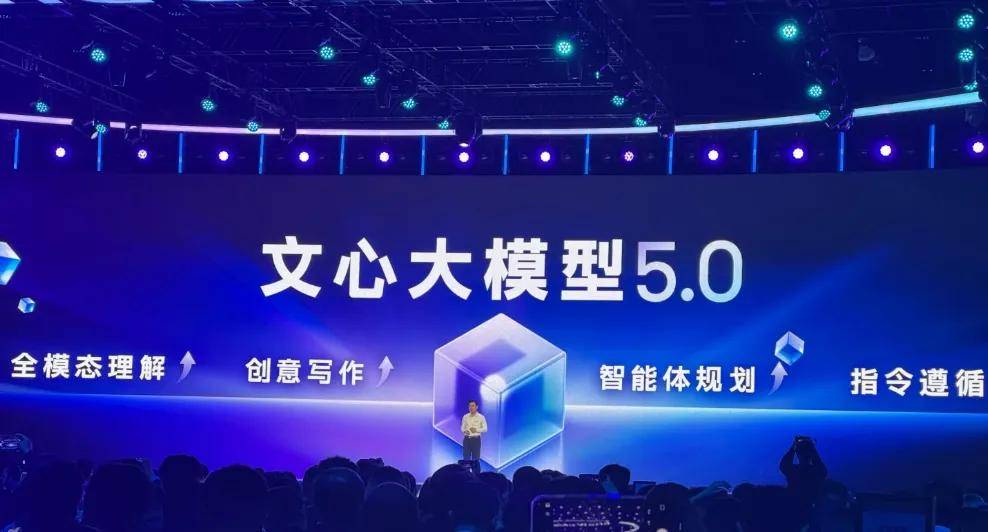
Core Viewpoint - The release of Baidu's Wenxin 5.0 model was expected to be a highlight for its AI business, but market reaction has been tepid, revealing deeper issues in Baidu's AI ecosystem competition [1] Group 1: Technology and Application - Wenxin 5.0 features a native multimodal modeling approach, capable of processing various types of information including text, images, audio, and video, but struggles to deliver practical applications in real user scenarios [3] - In contrast, competitors like Alibaba's Qianwen have developed user-centric applications, enabling seamless AI interactions for tasks such as food delivery and travel bookings without switching apps [3][4] Group 2: Competitive Landscape - Competitors like ByteDance's Doubao and Alibaba's Qianwen have established strong ecosystem loops, with Doubao leveraging platforms like Douyin and Toutiao to maintain the highest monthly active users in the industry [4] - Qianwen integrates multiple core services within a single app, allowing users to perform various tasks efficiently, while Wenxin's reliance on its search tool attributes limits user engagement [4][7] Group 3: Strategic Challenges - Baidu's frequent strategic shifts, including multiple name changes for its app, have led to user confusion and a lack of clear product positioning [4][8] - The decision to distribute cash red envelopes as a marketing strategy is seen as a short-term fix that may not effectively convert users into long-term customers [5][7] Group 4: User Expectations - Users prioritize AI assistants that can genuinely solve problems over short-term incentives like cash rewards, as demonstrated by the practical functionalities offered by Doubao and Qianwen [5] - The limited engagement path for Wenxin's cash activities restricts user retention, suggesting that the 5 billion yuan red envelope initiative may only result in temporary spikes in user activity [7] Group 5: Future Outlook - Baidu's challenges in the AI space stem from a lack of focus and strategic clarity, as highlighted by its founder, who emphasized the need to concentrate resources on solving user problems [8] - Without a clear understanding of user needs and effective integration of its existing resources, Baidu risks further marginalization in the competitive landscape, regardless of technological advancements [8]
领军企业密集推出新技术 AI产业创新步伐加快
Ke Ji Ri Bao· 2026-02-02 05:07
Core Insights - The AI industry in China is experiencing intensified competition as major players like Baidu, Alibaba, and DeepSeek rapidly innovate and release new technologies and products, establishing a three-way competitive landscape [1][9] Group 1: Baidu's Developments - Baidu launched the official version of its Wenxin 5.0 model on January 22, which utilizes a native multimodal architecture for unified modeling, supporting various data types such as text, images, audio, and video [1] - Wenxin 5.0 has achieved top rankings in both domestic and international arenas, being recognized as the leading model in text and visual understanding categories [1][2] - Baidu's new Paddle OCR-VL-1.5 model, released on January 29, features innovative "irregular frame positioning" technology for improved optical character recognition, directly competing with DeepSeek's offerings [4][8] Group 2: Alibaba's Innovations - Alibaba introduced the Qwen3-Max-Thinking reasoning model, which employs a novel testing time extension mechanism to enhance reasoning performance while being more cost-effective [3] - The model leverages its ecosystem by integrating with platforms like Taobao and Alipay, facilitating efficient collaboration between technology and application scenarios [3] Group 3: DeepSeek's Strategy - DeepSeek focuses on open-source advantages and bottom-layer capabilities, releasing the DeepSeek-OCR 2 model that utilizes the DeepEncoder V2 method for smarter image processing [3] - The company emphasizes a full-stack open-source approach, combining model weights, training frameworks, and deployment tools to maximize cost-effectiveness [3] Group 4: Industry Trends - The AI sector in China is transitioning into a new phase of large-scale implementation, with companies demonstrating clear paths of innovation and contributing to industry transformation and broader social benefits [9] - The competition among leading players is characterized by their unique business ecosystems and technological advancements, driving the industry from a "catch-up" phase to a "leading" position [9]