Credit card interest rate cap

Search documents
The 1 Stock I'd Buy Before American Express Right Now
The Motley Fool· 2026-02-21 22:19
Core Viewpoint - American Express and Visa are strong investment options, with Visa being more compelling due to its business model and current valuation [1][11]. Group 1: Company Performance - American Express has increased by 160.4% over the last five years, outperforming the S&P 500's 73.7% gain [1]. - Visa has experienced a decline of 11.2% over the past year, while American Express has consistently outperformed the S&P 500 for five consecutive years [6]. Group 2: Business Models - Visa operates as a payment processor without bearing credit risk, partnering with banks like JPMorgan Chase, which issues cards and assumes credit risk [2]. - American Express functions as both a payment processor and card issuer, making it riskier due to its exposure to credit risk and high costs associated with rewards programs [4]. Group 3: Financial Metrics - Visa is characterized as a capital-light, high-margin business, with expenses primarily related to labor, cybersecurity, and marketing, allowing it to generate profits without significant capital investment [5]. - Visa is currently trading at a discount to its five-year median price-to-earnings (P/E) and price-to-free-cash-flow (FCF) ratios, while American Express is trading at a premium [6]. Group 4: Market Concerns - Visa, Mastercard, and American Express have seen declines between 8.8% and 10.4% year-to-date, attributed to consumer spending concerns and a proposed 10% cap on credit card interest rates [8]. - The proposed cap may lead to limited credit access for consumers with lower credit scores, potentially increasing reliance on higher-interest options like payday loans [9]. Group 5: Investment Appeal - Visa is well-positioned to navigate economic uncertainty and industry policy changes, making its current valuation attractive for investors [11]. - Visa is recognized as a leading card brand globally, with a solid balance sheet and international exposure, appealing to a wide range of investors [12][13].



Jamie Dimon Must Lower Credit Card Interest Rates, Navarro Says
Yahoo Finance· 2026-02-12 14:39
Core Viewpoint - The White House is increasing pressure on JPMorgan Chase's CEO Jamie Dimon to lower credit card interest rates, aligning with President Trump's initiative to address affordability issues for consumers [1][2]. Group 1: Pressure from the White House - White House trade adviser Peter Navarro publicly criticized Jamie Dimon, urging him to reduce credit card interest rates, which currently range from 22% to 30% [2]. - Navarro emphasized that Dimon should refrain from commenting on other public policies until he addresses the interest rate issue [2]. Group 2: Industry Response - Trump's proposal for a yearlong 10% cap on interest rates has faced opposition from major banks and credit card issuers, with Dimon warning that such a move could lead to an "economic disaster" by limiting credit access [3]. - Bank executives argue that imposing an interest rate ceiling would restrict credit availability for consumers with poor credit scores, pushing them towards more expensive alternatives like payday lenders [3]. Group 3: Political Context - President Trump is making various demands on the financial, housing, and food sectors to demonstrate his commitment to addressing cost-of-living concerns ahead of the midterm elections [4]. - Polls indicate that the economy is the primary concern for voters, and dissatisfaction with Trump's economic management could jeopardize Republican control of Congress [4].

Could Buying American Express (AXP) Today Set You Up for Life?
Yahoo Finance· 2026-02-04 16:30
Core Viewpoint - American Express has significantly outperformed the S&P 500 over the past decade, with a total return of 644% compared to the S&P 500's 330%, making it a potentially lucrative investment option today [1]. Group 1: Business Model and Revenue Generation - American Express operates differently from Visa and Mastercard, as it issues its own cards and manages accounts through its own bank, rather than just co-issuing cards with banks [1]. - Unlike Visa and Mastercard, which primarily earn revenue from "swipe fees," American Express generates revenue from both swipe fees and interest income from its issued cards, providing it with greater resilience against economic downturns [2]. Group 2: Interest Rates and Economic Resilience - Higher interest rates generally affect all three companies by reducing consumer spending and swipe fees; however, American Express can mitigate this impact by increasing its net interest income [3]. - The diversification of revenue sources offers American Express better protection against potential caps on swipe fees proposed by regulators [3]. Group 3: Challenges and Competition - Despite its strong business model, American Express faces near-term challenges, including a proposed temporary 10% cap on credit card interest rates, which could significantly reduce its net interest income, although this proposal is unlikely to be enacted soon [4]. - The company also faces competition from other card-issuing banks and diversified fintech platforms [4]. Group 4: Growth Prospects and Valuation - Analysts project that American Express' earnings per share (EPS) will grow at a compound annual growth rate (CAGR) of 14% from 2025 to 2027, supported by a focus on affluent customers, international expansion, and increased travel spending [5]. - The stock is currently valued at 20 times this year's earnings, with a forward yield of 0.9% and a low payout ratio of 21%, indicating potential for future dividend increases [6]. - While not classified as a high-growth stock, American Express is expected to continue outperforming the market and delivering solid long-term gains [6].

American Express CEO says a credit card rate cap wouldn't be good for the economy
Yahoo Finance· 2026-01-30 14:36
Group 1 - The core viewpoint expressed by American Express CEO Stephen Squeri is that a 10% cap on credit card interest rates would lead to a reduction in credit card availability across the U.S., negatively impacting the economy and small businesses [1] - JPMorgan CEO Jamie Dimon stated that such a cap would be an economic disaster, cutting credit access for 80% of Americans, and Wall Street shares this concern [2] - Evercore ISI analyst John Pancari noted that while the gross revenue implications for card lenders would be materially negative, enforcing such a cap would be challenging and has failed in the past [3] Group 2 - American Express reported a full-year net sales increase of 10% to $72.2 billion, with adjusted earnings rising by 15% [3] - For the latest quarter, net sales were $18.98 billion, exceeding estimates of $18.93 billion, and diluted EPS increased by 16% year over year to $3.53, matching estimates [6] - The guidance for 2026 net sales is projected to grow by 9% to 10%, with diluted EPS guidance set between $17.30 and $17.90, compared to an estimate of $17.38 [6]
Trump's Interest Rate Cap And An Activist Short-Seller Report Is Weighing Hard On This BNPL Stock: Momentum Score Nosedives - Affirm Holdings (NASDAQ:AFRM), Klarna (NYSE:KLAR)
Benzinga· 2026-01-30 08:59
Core Insights - Affirm Holdings Inc. is experiencing significant stock pressure, down 15% year-to-date due to sector-wide challenges and company-specific issues [1] - The company's Momentum score in Benzinga's Edge Stock Rankings has sharply declined from 72.68 to 21.46, reflecting the stock's recent downturn [2] Company Performance - Affirm's shares fell by 3.92% on Thursday, closing at $62.80, and dropped another 1.82% overnight, indicating a negative trend [4] - The stock is rated high on Growth but performs poorly on Value and Momentum, with unfavorable price trends across short, medium, and long-term periods [4] Market Sentiment - The decline in Affirm's stock was exacerbated by a short report from activist short-seller Kerrisdale Capital, which criticized the company's credit fundamentals and reliance on financially unstable consumers [3]

2 Bank Stocks That Could Soar in 2026
Yahoo Finance· 2026-01-29 18:12
Group 1: Ally Financial - Ally Financial is the largest all-digital bank in the U.S. and specializes in auto loans, being the largest auto lender not owned by an automaker, with $144 billion in retail deposits [2] - The company has strategically exited non-core businesses to focus on auto loans, insurance, and consumer banking [3] - In 2025, Ally achieved record results, with $43.7 billion in originated loans and an all-time high for written insurance premiums, maintaining a 3.43% net interest margin [4] - Ally trades at eight times forward earnings and is one of the few major banks trading below book value, presenting a potential opportunity for investors [5] Group 2: Capital One - Capital One has seen a decline of about 12% in early 2026, primarily due to investor concerns over potential credit card interest rate caps and skepticism regarding its acquisition of fintech company Brex for $5.15 billion [6][7] - Despite these concerns, Capital One reported strong earnings with increases in credit card, auto, and commercial loans, and has a net interest margin of 8.26%, significantly higher than the average big bank [8] - The bank's valuation is approximately 10.6 times forward earnings, and the potential synergies from the Discover merger have yet to be fully realized, indicating a buying opportunity [8]


Trump says he's 'not a huge fan' of 401(k) withdrawal plan for homebuyers' down payments
Fox Business· 2026-01-24 00:51
Group 1: Proposal Overview - The Trump administration is developing a proposal that would allow prospective homebuyers to withdraw from their 401(k) retirement accounts for a down payment on a home [1][5] - National Economic Council Director Kevin Hassett indicated that the typical monthly payment for homebuyers has doubled, and the required down payment has increased from approximately $15,000 to $32,000 [6][8] Group 2: President's Position - President Trump expressed his disapproval of the 401(k) withdrawal proposal, stating he prefers to keep 401(k) accounts intact due to their strong performance, which has seen increases of 80%-90% [2][3] - Trump emphasized the importance of maintaining the health of 401(k) accounts over using them for home down payments, noting that many individuals report significant gains [3] Group 3: Broader Economic Context - The administration's affordability agenda includes a proposal to cap credit card interest rates at 10% for one year, addressing rising credit card debt as a barrier for Americans saving for down payments [9][12] - Trump's plan to restrict institutional investors from purchasing homes is aimed at addressing rising housing prices, which he claims is unfair to the public [12][14]
Trump UNLOADS on JPMorgan in EXPLOSIVE $5B lawsuit
Youtube· 2026-01-23 13:00
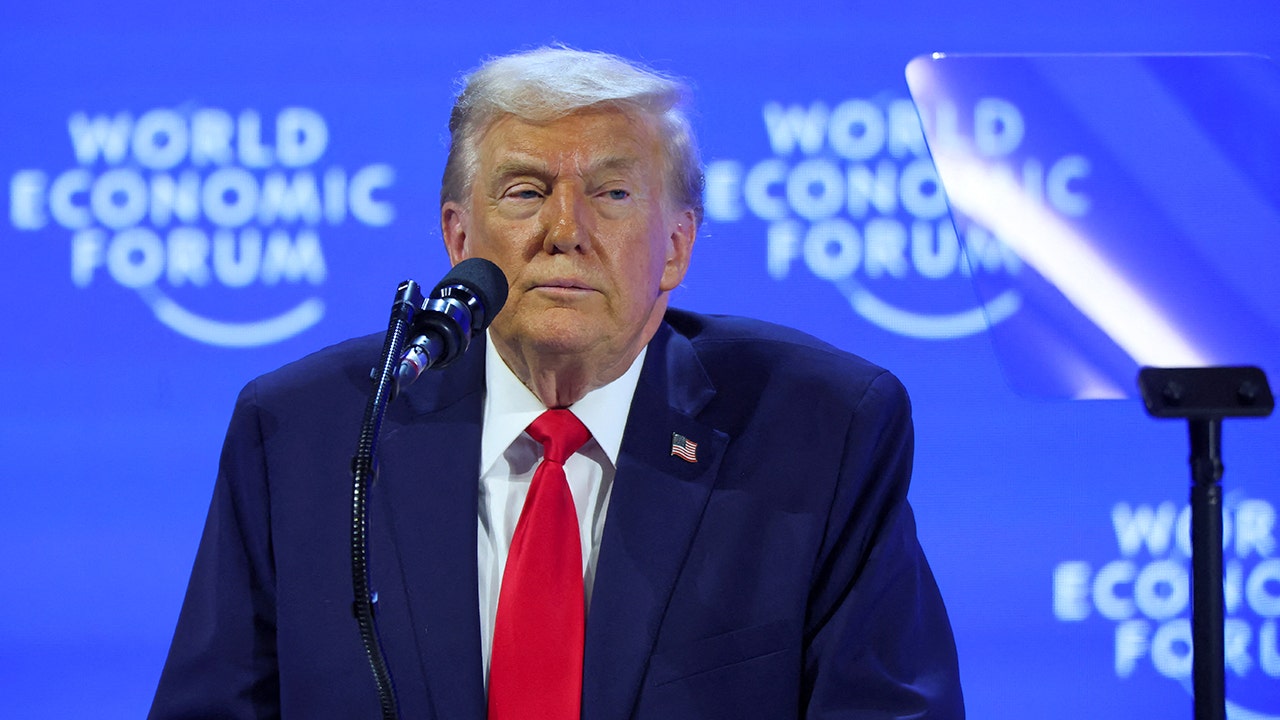
Core Viewpoint - President Trump has filed a $5 billion lawsuit against JP Morgan Chase and CEO Jamie Dimon, claiming that the bank terminated accounts linked to him and his family due to political motivations following the January 6th Capitol riot [1][2]. Group 1: Lawsuit Details - The lawsuit alleges that JP Morgan's actions were driven by "unsubstantiated woke beliefs" to distance itself from Trump and his conservative views [2]. - JP Morgan has responded, stating that the lawsuit lacks merit and that they do not close accounts for political or religious reasons, but rather due to legal or regulatory risks [3][5]. Group 2: Company Position and Regulatory Context - JP Morgan emphasizes that account closures are based on compliance with strict rules and regulations, and they are required to report to the government when subpoenaed [6]. - The bank's CEO, Jamie Dimon, has indicated that they have debanked individuals across the political spectrum, asserting that political affiliation is not a factor in their decision-making [5]. Group 3: Market and Investor Reactions - Analysts suggest that the lawsuit may be a strategic move by Trump for discovery purposes, as debanking for political reasons is not currently illegal [7]. - From an investor perspective, the lawsuit is viewed as noise, with the $5 billion claim considered not significant for JP Morgan [12][13].
Bank of America and Citi Consider Offering Credit Cards With 10% Interest Rate
PYMNTS.com· 2026-01-23 00:23
Core Viewpoint - Bank of America and Citigroup are considering offering credit cards with a 10% interest rate in response to President Trump's demand for a cap on rates, which has raised concerns about its potential impact on consumer spending and credit availability [1][2]. Group 1: Company Responses - Bank of America CEO Brian Moynihan expressed that a 10% interest cap would slow consumer spending and limit credit availability, although he acknowledged the legitimacy of affordability issues behind the proposal [3]. - Citigroup Chair and CEO Jane Fraser stated that the proposed cap would restrict access to credit, potentially benefiting only the wealthy and negatively impacting sectors reliant on credit card spending [4]. - JPMorgan Chase CEO Jamie Dimon warned that a 10% cap would be catastrophic, removing credit access for 80% of Americans who rely on it as backup [5]. Group 2: Industry Reactions - The proposal for a 10% cap on credit card interest rates has faced criticism from various industry groups, including the Bank Policy Institute and the American Bankers Association, highlighting concerns over its implications for credit access and consumer spending [7]. - Trump initially called for the cap in a post on Truth Social, emphasizing the need to protect the public from high-interest rates charged by credit card companies [6].


Intel earnings beat expectations, but stock drops. Why there could be room to cut credit card rates.
Youtube· 2026-01-22 22:24
Market Overview - Stocks closed higher for the second consecutive day, with the Dow up about 300 points or 1.6%, the Nasdaq up almost 1%, and the S&P 500 up about 0.5% or 37 points [2][3] - The Russell 2000 and S&P 600 reached record highs, with the Russell 2000 up 0.7% [3] - The VIX index showed a spike above 20 earlier in the week but has since returned to lower levels, indicating reduced volatility concerns [4] Interest Rates and Yields - The 10-year Treasury yield closed at 4.25%, while the 30-year yield decreased by two basis points to 4.85% [5] - Higher long-term yields have raised concerns about the Federal Reserve's control over the situation, but the recent decline in yields is seen as positive for investors [6] Sector Performance - Mega-cap sectors, including communication services, consumer discretionary, and technology, led the market gains, with notable performances from companies like Alphabet, Meta, Tesla, and Nvidia [7][8] - Financials also showed strength, with large-cap financials up about 0.6% [8] - Underperforming sectors included real estate, utilities, industrials, and staples, all closing in the red [8] Intel's Q4 Earnings - Intel reported Q4 EPS of 15 cents, beating estimates, and revenue of $13.67 billion, also above the expected $13.43 billion [10][11] - Data center and AI revenue for Q4 was $4.74 billion, exceeding the estimate of $4.42 billion, while client computing revenue was slightly below expectations at $8.19 billion [11] - The Q1 revenue forecast is between $11.7 billion and $12.7 billion, which is below the consensus estimate of $12.56 billion, leading to a 5% drop in stock price after the report [11][12] Market Sentiment and Future Outlook - Analysts noted that despite the weak guidance, there are positive signs in the server market and the importance of CPUs in AI compute [19][28] - Concerns remain about manufacturing yields and inventory levels, which could impact future sales and forecasts [21][23] - The overall sentiment towards Intel's core customers in the PC business appears more confident compared to previous years, indicating a potential positive shift [32] Credit Card Interest Rates - Bank of America and Citigroup are reportedly considering new credit cards with a 10% interest rate, amidst discussions on affordability and high credit card rates [34][35] - Former FDIC chair Sheila Blair commented on the high average credit card rates and the potential for banks to lower them without significant risk to credit availability [36][38]