ETF产品更名

Search documents
ETF加上“鹏华”,是专业、更是承诺!27只ETF今日更名
Sou Hu Cai Jing· 2026-01-15 01:58
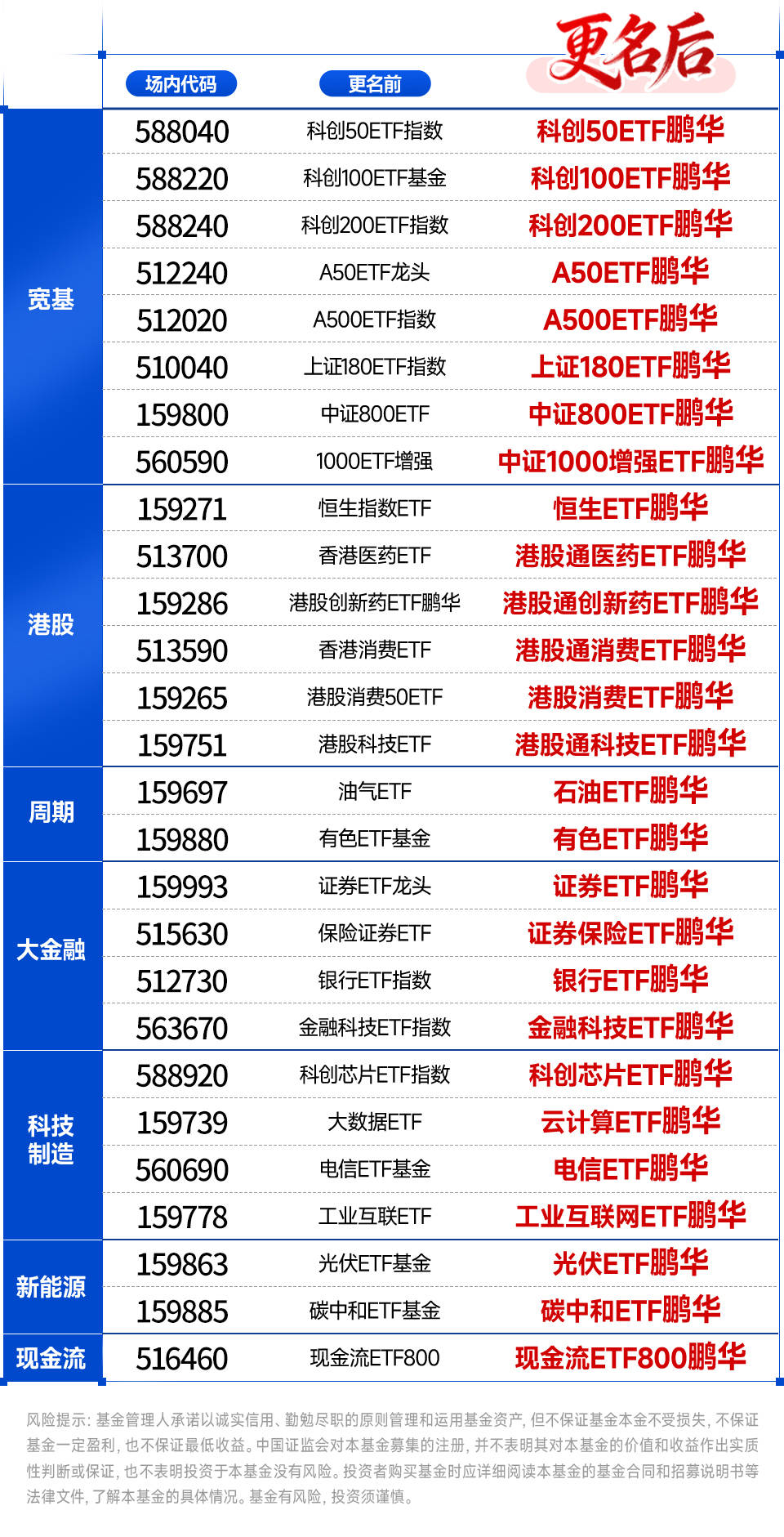
Core Viewpoint - Penghua Fund has renamed 27 of its ETF products to comply with new regulations, marking a shift towards higher quality development in the ETF industry and ending the previous naming chaos [1][2]. Group 1: Regulatory Response - The renaming initiative is a direct and comprehensive response to the new regulations issued by the Shanghai and Shenzhen Stock Exchanges, which require all existing ETFs to adopt a standardized naming structure by March 31, 2026 [1][2]. - The new naming format includes "core elements of the investment target + ETF + Penghua," aiming to reduce confusion and improve investor selection efficiency [1][2]. Group 2: Historical Context - In the early stages of the ETF market, product names were simple and directly related to the indices they tracked, but as the market expanded, this approach led to redundancy and confusion due to the proliferation of similar products [1][2]. - The previous naming conventions allowed for identical abbreviations for ETFs tracking the same index, which became problematic as more products entered the market [1]. Group 3: Product Overview - The renaming includes a diverse range of 27 products, covering various sectors such as technology, finance, and renewable energy, reflecting Penghua Fund's comprehensive and forward-looking product layout [2][3]. - As of January 15, the company manages a total of 65 ETF products, providing a wide array of investment tools for investors [4].

又要见证历史!超5万亿市场,传来大消息!
Zhong Guo Ji Jin Bao· 2025-11-20 10:45
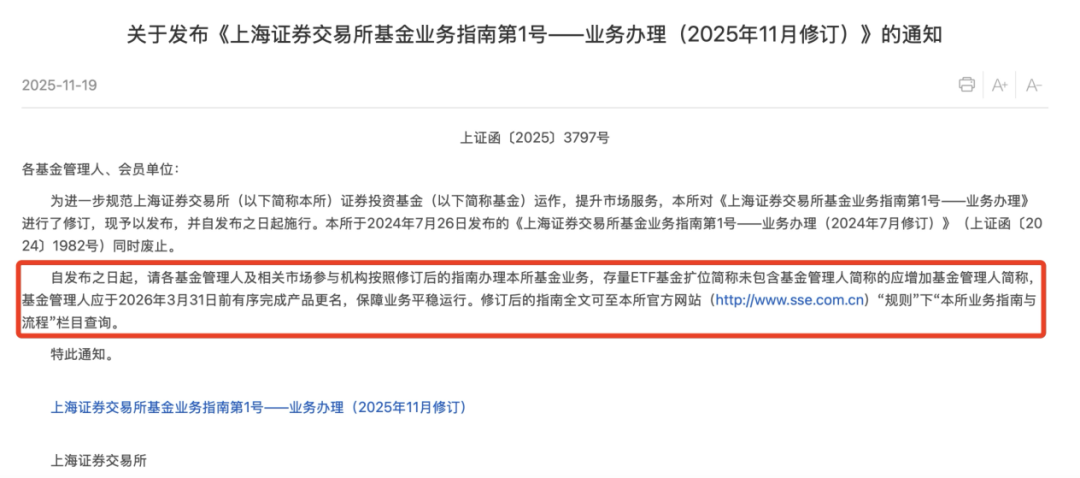
Core Viewpoint - The Shanghai and Shenzhen Stock Exchanges have issued new guidelines to standardize the naming conventions for existing ETFs, aiming to enhance product recognition and investor experience in a rapidly growing market valued at 5.7 trillion yuan [1][2][14]. Summary by Sections ETF Naming Standardization - The new rules require existing ETF names to follow a specific structure: "Core Investment Element + ETF" for standard ETFs and "Core Investment Element + Enhanced + ETF" for enhanced ETFs, both including the fund manager's abbreviation [2][6]. - Fund management companies must complete the renaming process by March 31, 2026, to ensure smooth business operations [7]. Market Impact and Industry Response - The standardization is expected to improve product differentiation and attract more investors, as many ETFs have similar names, leading to confusion [3][10]. - Several fund companies, including E Fund, Huatai-PB, and GF Fund, have already begun renaming their ETFs to align with the new guidelines, enhancing clarity and ease of identification for investors [10][11][12]. Historical Context and Future Outlook - The push for standardized ETF names has been ongoing since 2022, with previous initiatives aimed at improving the management of ETF abbreviations [10]. - The introduction of clearer naming conventions is anticipated to lower search costs for investors and may favor well-known fund companies, potentially increasing competition for smaller firms in the ETF market [13][14].
ETF巨头又有大动作!
Zhong Guo Ji Jin Bao· 2025-07-01 12:58
Group 1 - The core point of the article is the renaming of Huatai-PB CSI A500 ETF to "A500ETF Huatai-PB" to enhance product recognition and decision-making efficiency for investors [2][3][6] - As of June 30, the Huatai-PB CSI A500 ETF has reached a scale of 22.64 billion yuan, making it the largest in its category and the only ETF tracking the CSI A500 index to exceed 20 billion yuan [2][3] - The renaming initiative is part of a broader trend in the ETF industry, where multiple fund companies are adopting standardized naming conventions to improve product identification and attract investors [3][6][8] Group 2 - The rapid expansion of the domestic ETF market has led to over 1,200 listed ETF products in the A-share market, with a total scale exceeding 4.3 trillion yuan [3][7] - The standardization of ETF names is becoming an industry consensus, driven by the need for clearer differentiation among similar products [6][8] - Regulatory bodies like the Shanghai and Shenzhen Stock Exchanges have implemented rules to facilitate the expansion of ETF names, promoting a more organized naming structure [7][8]