Industrial Upgrading

Search documents
南山南、南山北,或将各有一个“粤海街道”
2 1 Shi Ji Jing Ji Bao Dao· 2026-02-27 09:01
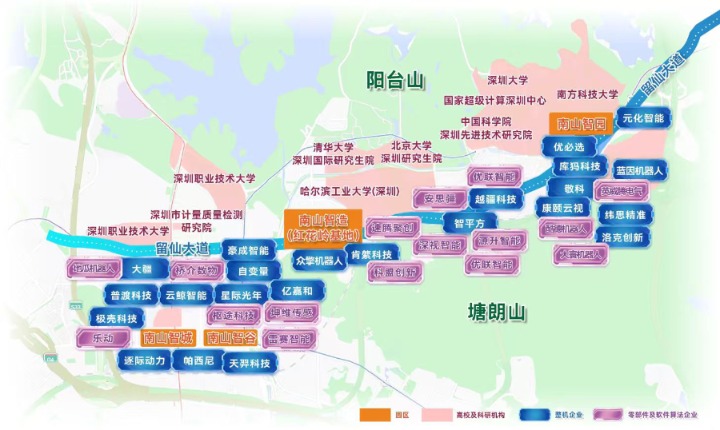
Core Insights - Nanshan District in Shenzhen is emerging as a hub for high-end manufacturing and innovation, with a projected GDP of 1.01 trillion yuan by 2025, making it the first district in China to reach this milestone [1] - The establishment of Nanshan Zhizao and Nanshan Zhicheng parks focuses on the integration of advanced manufacturing and service industries, fostering collaboration among scientists, engineers, and programmers [1][6] - The "vertical factory" concept is being implemented in the Red Flower Ridge base, allowing for high-density industrial development in a space-constrained environment [9] Economic Development - Nanshan District has a GDP exceeding 450 billion yuan, contributing significantly to Shenzhen's overall economic output [1] - The district's industrial structure is evolving, with the second industry accounting for 38.3% of GDP in 2022, marking a recovery after years of decline [5] - By 2025, Shenzhen's industrial output is expected to maintain a leading position nationally, with a stable balance between secondary and tertiary industries [5] Industrial Innovation - The Red Flower Ridge base is home to key enterprises like Zhongqing Robotics and Yuejiang Technology, which are leveraging proximity to R&D centers to enhance production efficiency [8][10] - The base is designed with innovative features such as a spiral ramp for heavy trucks, facilitating efficient logistics and production processes [9] - The integration of various high-tech industries, including robotics and semiconductor manufacturing, is expected to generate a total output value exceeding 183 billion yuan over five years [10] Collaborative Ecosystem - The simultaneous opening of Nanshan Zhizao and Nanshan Zhicheng parks exemplifies the synergy between manufacturing and service sectors, promoting a collaborative ecosystem [11] - The parks provide various platforms for innovation, including AI incubation and biomedicine, enhancing the region's technological capabilities [12] - The development of supportive infrastructure, such as affordable housing for tech talent, aims to create a balanced urban environment that integrates production, living, and ecological spaces [13]

深圳南山跨越万亿关 创新驱动展新篇
Sou Hu Cai Jing· 2026-01-28 10:29
Core Insights - Shenzhen's Nanshan District is set to become the first district in China to surpass a GDP of 1 trillion yuan by 2025, marking a significant milestone in the country's urban economic landscape [1][3] - The economic density of Nanshan has reached an impressive 54 billion yuan per square kilometer, with a per capita GDP exceeding 540,000 yuan, showcasing its economic output comparable to that of a nation [3][4] Economic Growth - Nanshan's GDP has grown from 652.7 billion yuan at the end of the 13th Five-Year Plan to over 1 trillion yuan in just five years, achieving an average annual growth rate of over 5.8% [3][4] - The district has successfully crossed multiple GDP thresholds (700 billion, 800 billion, 900 billion, and 1 trillion yuan) during this period, demonstrating resilience and vitality in its economic structure [3][4] Innovation and Industry - Nanshan has transformed from low-end manufacturing to high-end intelligent manufacturing, becoming a key center for technological innovation and industrial manufacturing in the Guangdong-Hong Kong-Macau Greater Bay Area [4] - The district is home to 218 publicly listed companies and over 5,500 national high-tech enterprises, with significant contributions from industry leaders like Huawei, Tencent, DJI, and others [4] Innovation Ecosystem - By 2025, Nanshan is expected to have over 860 invention patents per 10,000 people, approximately 22.9 times the national average, indicating a robust innovation output [4] - The district has established a comprehensive innovation ecosystem that includes basic research, technological breakthroughs, industrialization of results, financial support for technology, and talent development [4] Strategic Importance - Nanshan benefits from its strategic location adjacent to Hong Kong, the policy advantages of being in a special economic zone, and a long-standing industrial foundation, making it a unique case in regional economic development [5] - The district's development model emphasizes innovation-driven growth, industrial upgrading, reform and opening-up, and an optimized business environment, which can serve as a reference for other regions [5]




温州新晋“万亿之城”,长三角“深水博弈”开场
2 1 Shi Ji Jing Ji Bao Dao· 2026-01-27 12:33
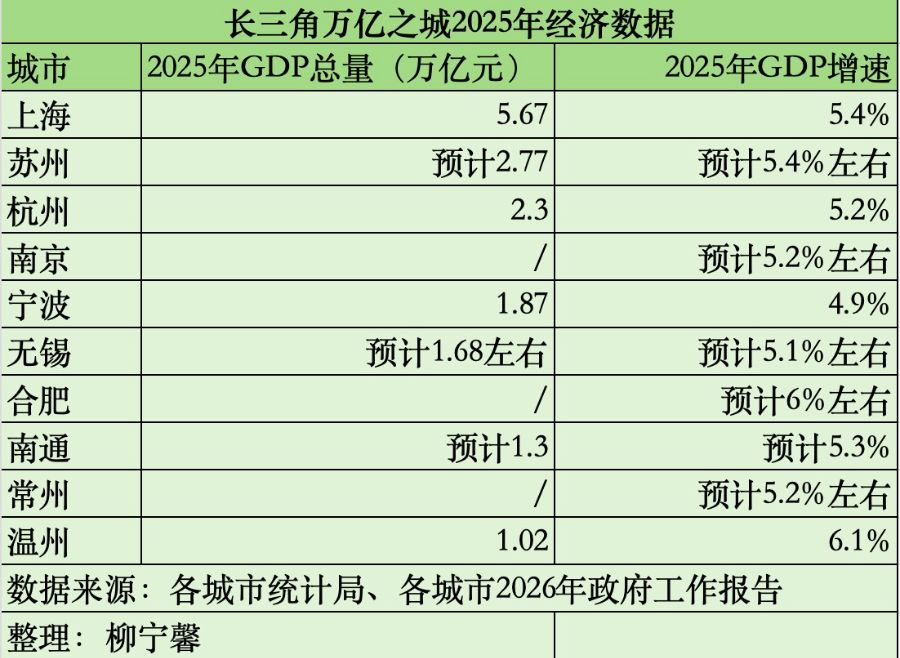
Core Viewpoint - The quality of industries is becoming a longer-term competitive variable for the trillion GDP cities in the Yangtze River Delta region, shifting the focus from mere GDP scale to the quality and sustainability of development [1][4]. Economic Data Summary - In 2025, the total number of trillion GDP cities in the Yangtze River Delta will increase to 10, with Shanghai leading at 5.67 trillion yuan and new entrant Wenzhou reaching 1.02 trillion yuan [2][3]. - Expected GDP growth rates for 2025 include: Suzhou at approximately 5.4%, Hangzhou at 5.2%, Nanjing at around 5.2%, and Ningbo at 4.9% [2][3]. Industry Development Trends - The new industrial layout in the Yangtze River Delta is focusing on high-end industrial clusters and the extension of new tracks based on existing manufacturing strengths [3][10]. - Shanghai's GDP growth is supported by new momentum in industries such as integrated circuits and artificial intelligence, with respective growth rates of 15.1% and 13.6% [5]. - Hangzhou's economy is characterized by a strong service sector, contributing 73.8% to its GDP, with significant growth in the digital economy [6][12]. - Wenzhou's manufacturing sector is evolving towards technology-intensive and intelligent production, with strategic emerging industries growing by 14.4% [8][12]. Long-term Competitiveness Factors - Key variables for long-term competitiveness include the originality and resilience of the industrial ecosystem, innovation efficiency, and the ability to attract and retain talent [13]. - The focus is shifting from GDP scale to the health of industries, innovation density, and sustainable growth metrics as new evaluation criteria for urban competitiveness [10][13].
KraneShares CICC China 5G & Semiconductor Index ETF (KFVG US) - Investment Proposition
ETF Strategy· 2026-01-18 23:02
Core Viewpoint - KraneShares CICC China 5G & Semiconductor Index ETF (KFVG) offers targeted exposure to China's communications hardware and semiconductor sectors, focusing on innovation and capital expenditure cycles [1] Group 1: Investment Strategy - The ETF employs a transparent, rules-based selection process leading to a concentrated portfolio [1] - It emphasizes sectors involved in design, fabrication, equipment, materials, and network infrastructure [1] - Key return drivers include the intensity of 5G rollout, demand for data centers, and localization efforts in critical components [1] Group 2: Risk Factors - Risks associated with the ETF include inventory cycles, export controls, and rapid technological changes [1] - The portfolio is sensitive to investment cycles and credit conditions, with potential challenges during global slowdowns or tighter financial conditions [1] Group 3: Portfolio Characteristics - The ETF is characterized by a growth and quality style, making it suitable for thematic allocators and long-horizon investors [1] - It can serve as a thematic satellite for technology modernization or as a growth sleeve focused on the hardware stack [1] Group 4: Monitoring Considerations - Investors should monitor concentration and supply-chain cyclicality, as these factors can exacerbate drawdowns during downturns [1]

视频丨十年守护换来绿色蝶变 东西协作产业协同释放长江经济带新活力
Yang Shi Xin Wen Ke Hu Duan· 2026-01-09 14:19
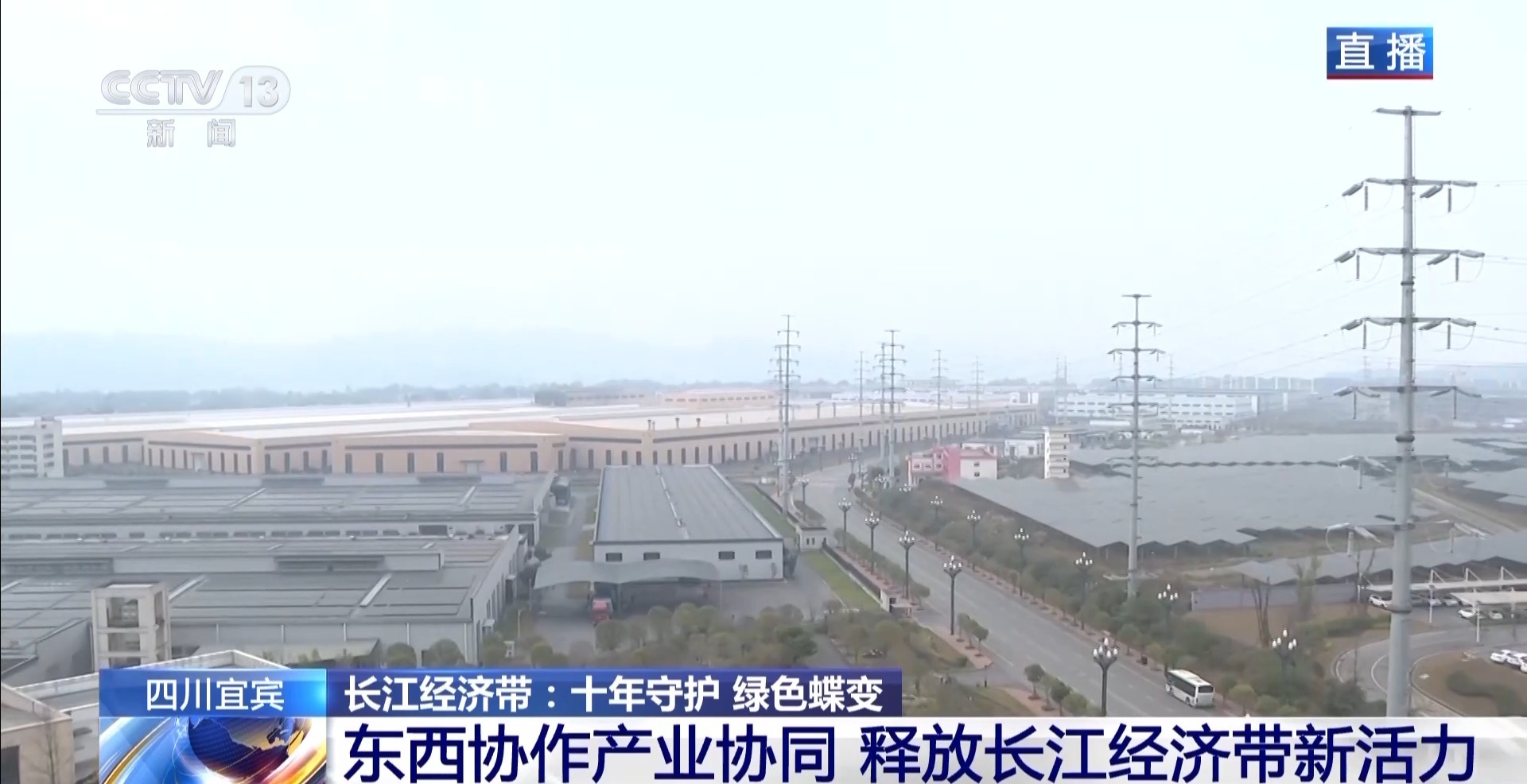
Core Viewpoint - The Yangtze River Economic Belt, covering 11 provinces and cities, accounts for about half of the national population and economic total, emphasizing ecological protection and sustainable development over large-scale exploitation [1]. Group 1: Development Strategy - The development strategy of the Yangtze River Economic Belt has been implemented for ten years, focusing on ecological preservation and sustainable growth [1]. - The "Zhechuan Industrial Cooperation Demonstration Park" in Yibin, Sichuan, has transformed the textile industry into a key component of the Yangtze River Economic Belt, promoting green and coordinated regional development [1]. Group 2: Industrial Growth - The park covers an area of 6.91 square kilometers, with approximately 5 square kilometers completed, housing 39 operational enterprises, 6 under construction, and 1 planned [3]. - The park has established itself with a focus on green development, transitioning the textile industry from labor-intensive to technology-intensive [5][9]. Group 3: Technological Advancements - The enterprises in the park utilize multi-story factory designs to optimize land use and enhance logistics efficiency, while adhering to higher environmental standards for enterprise admission [7]. - Modern production lines exceeding 10,000 square meters require only a small workforce, with innovations and collaborations with educational institutions driving further advancements [11]. Group 4: Collaborative Efforts - The protection of the Yangtze River requires upstream and downstream collaboration, as well as east-west cooperation to develop the economic belt effectively [13].
科技创新+产业升级双联动 解读北京人形机器人故事
Xin Jing Bao· 2025-12-27 02:17
Core Insights - The "14th Five-Year Plan" is unfolding, with technological innovation and industrial upgrading as core driving forces [1] - The humanoid robot industry is experiencing a critical leap from technological breakthroughs to commercial implementation [1] Industry Overview - In 2024, the revenue of Beijing's robot industry is expected to exceed 30 billion yuan, representing a nearly 50% year-on-year growth [1] - The growth rate for the first half of 2025 is projected to remain at 40% [1] Market Transition - The focus of humanoid robots is shifting from "competing for medals" to "serving daily life" [1]

Panzhihua Makes the List of China's Happiest Cities for the Fifth Consecutive Year
Globenewswire· 2025-12-16 13:46
Core Insights - Panzhihua City has been awarded the title of "China's Happiest City (Prefecture-level City)" for five consecutive years, reflecting its unique city spirit characterized by perseverance, innovation, sunshine, and inclusiveness [1] Environmental and Ecological Development - Panzhihua has successfully balanced ecological preservation with economic development, showcasing vibrant colors of "Panzhihua Blue" and "Panzhihua Green" [2] - The city has made significant strides in environmental battles, achieving a harmonious coexistence between its industrial heritage and ecological foundation through green industrial upgrades and resource recycling [3] - The former Majiatian Tailings Pond has undergone ecological restoration, transforming into the Ashuda Four-Season Flower Sea, covering over 1,000 mu [3] Urban Planning and Green Spaces - The urban area features a livable blueprint with a "Mountains, Lakes, and Rivers" layout, including parks and a 30-kilometer floral landscape avenue that blooms year-round [4] - Panzhihua enjoys a favorable climate, making it an attractive destination for those seeking to escape extreme weather and pollution [5] Agricultural and Natural Resources - The city benefits from year-round fresh fruit availability, contributing to a pleasant living environment, and is known as the "City of Flowers" due to its diverse blooming flora [6] Health and Wellness Industry - Panzhihua has pioneered a health and wellness concept that has evolved into a robust development paradigm, enhancing the livelihoods of its residents [7] Industrial Development and Economic Diversification - The city is focused on industrial upgrading while ensuring basic livelihood needs are met, with a focus on traditional industries and new sectors like hydrogen energy and vanadium energy storage [8] Social Security and Public Services - Panzhihua has improved social security and livelihood support, including child-rearing and childcare subsidies, contributing to a fertility-friendly environment [9] - The city has eliminated household registration barriers, providing equal access to education and healthcare for rural residents [10] - A comprehensive dispute resolution platform has been established, enhancing residents' sense of security and satisfaction with public safety [11]
刚果(金)公布钴出口配额实施细则
Shang Wu Bu Wang Zhan· 2025-10-14 15:49
Core Points - The Congolese government has announced the implementation details of cobalt export quotas to regulate export order and promote local value addition of strategic minerals [1] Group 1: Export Quota and Distribution Mechanism - The Strategic Mineral Market Regulatory Bureau has established a basic export quota distribution plan for cobalt in the fourth quarter of 2025, approving 3,625 tons for October, 7,250 tons for November, and 7,250 tons for December [2] - Quotas will be allocated based on each company's export volume from 2022 to 2024 [2] Group 2: Strict Access and Enforcement Standards - Companies with less than 100 tons of cobalt export volume in 2024, without their own refining facilities, or with depleted cobalt reserves are excluded from the quotas [3] - Quotas cannot be transferred or deferred, and any unused portions will be reclaimed starting January 2026 [3] - The Bureau has the authority to revoke quotas from companies that violate regulations, particularly those handling unauthorized artisanal mineral sources or privately transferring quotas [3] Group 3: Establishment of National Strategic Quota - Starting in 2026, a national strategic quota will be established to support industrial and strategic projects of national significance, aimed at extending the cobalt industry chain in Congo [4] - This initiative is intended to support domestic cobalt refining, conversion, and downstream manufacturing, contributing to the development of a local value chain [4] Group 4: Implementation and Supervision - All export operations must occur at designated approved border ports [5] - Companies applying for export quotas must provide environmental and tax compliance certificates, export data from the past three years, and relevant information certified by mining management authorities [5] Group 5: Approved Companies and Implications - A list of 21 companies approved for cobalt export by the end of 2025 has been released, indicating a significant step by the Congolese government in strengthening cobalt resource governance, optimizing export order, and promoting industrial upgrades [6]
Sunrise Awarded 0.59 Million National Science and Technology Development Fund Grant for Advanced Graphite and Carbon Materials Innovation
Globenewswire· 2025-09-25 19:30
Core Insights - Sunrise New Energy Co., Ltd. has been awarded a grant of approximately RMB 4.3 million (USD 0.59 million) under the National Science and Technology Development Fund, aimed at enhancing the development of battery anode materials [1][2]. Company Overview - Sunrise New Energy Co., Ltd. is headquartered in Zibo, Shandong Province, China, and specializes in the manufacturing and sale of graphite anode material for lithium-ion batteries [3]. - The company operates a joint venture that has established a manufacturing facility in Guizhou Province with a production capacity of 50,000 tons, utilizing inexpensive electricity from renewable sources, positioning itself as a low-cost and environmentally friendly producer [3]. - The founder and CEO, Mr. Haiping Hu, has been a pioneer in the graphite anode industry in China since 1999, supported by a management team with extensive experience and a strong track record in the sector [3]. Project Objectives - The project funded by the grant aims to accelerate industrial upgrading in Qianxinan prefecture by promoting advancements in the design, precision control, and large-scale preparation of battery anode materials from various carbon sources [2]. - Sunrise plans to create a comprehensive platform that integrates R&D, technology transfer, incubation, services, industry, and capital to foster innovation in graphite anode technologies and support regional industrial transformation and talent development [2].


6座城市,冲刺千万人口大市!
21世纪经济报道· 2025-03-25 14:53
Core Viewpoint - The race for cities in China to reach a population of ten million is evolving into a "war of attrition," with increasing challenges and a need for cities to enhance their internal development capabilities [3][6]. Group 1: Population Growth Data - As of the end of 2024, Wenzhou's permanent population reached 985.2 thousand, an increase of 91 thousand from the previous year, just 148 thousand short of the ten million mark [4]. - Hefei officially became the 18th city in China to surpass ten million residents, with a population of 10,002 thousand, growing by 149 thousand from the end of 2023, totaling a cumulative increase of 537 thousand over three years [10]. - Six cities, including Wenzhou, Ningbo, Foshan, Nanjing, Jinan, and Shenyang, have populations exceeding 920 thousand and are still experiencing growth, indicating their potential to reach ten million [5]. Group 2: Challenges in Population Growth - The current pace of population growth suggests that by 2025, it may be difficult to see the emergence of the 19th city with a population of ten million [6]. - Many cities with populations around nine million are experiencing a downward trend in population, indicating a significant increase in the threshold for reaching ten million [7]. - The competition among cities is intensifying, with three of the six cities striving for ten million being ordinary prefecture-level cities, which struggle to compete with the public service resources of municipalities and sub-provincial cities [14]. Group 3: Factors Influencing Population Attraction - Urban population attraction is influenced by multiple factors, including housing subsidies, entrepreneurial support, living costs, public service quality, industrial capacity, and employment opportunities [8]. - Hefei's population growth is attributed to its industrial upgrades, which create job opportunities and higher salary levels, supported by a strong talent base from institutions like the University of Science and Technology of China [10][12]. Group 4: Strategies for Population Growth - Cities aiming for ten million populations should focus on industrial upgrades, as demonstrated by Hefei's industrial output growth of 14.8% in 2024, with significant increases in sectors like new energy vehicles and smart equipment [18][19]. - Optimizing living costs and residency policies is crucial, with cities like Shenyang implementing new policies to facilitate the settlement of newcomers [21]. - Improving infrastructure and enhancing livability are essential, as cities are working to address public service gaps, such as education, to attract and retain residents [22].