L2级辅助驾驶

Search documents
自动驾驶“关键一跃”落地,谁将率先跑通商业化?
3 6 Ke· 2025-12-17 04:18
Core Insights - The approval of L3 conditional autonomous driving by the Ministry of Industry and Information Technology marks a significant step towards commercialization, bridging the gap between L2 and L4 levels of driving technology [1][2] - The first two approved models, Changan Deep Blue SL03 and BAIC Arcfox Alpha S (L3 version), will conduct trials in designated areas, indicating a shift from testing to real-world application [1][5] Group 1: Industry Context - The automotive industry has been characterized by a "two extremes" scenario, with companies competing in L2 level assistance and others pursuing L4 level fully autonomous driving [1][2] - L3 conditional autonomous driving is seen as a crucial transitional phase, allowing for a gradual shift from testing personnel to real users, thus accumulating practical experience for a replicable autonomous driving operation system [1][2] Group 2: Technical Developments - The approved vehicles utilize different technological approaches: BAIC's Arcfox Alpha S employs a comprehensive safety architecture with 34 high-performance sensors and a 400 TOPS computing platform, while Changan's SL03 focuses on traffic congestion navigation with a speed limit of 50 km/h [3][4] - Both vehicles are currently limited to specific routes and speeds, with the aim of refining technology and regulatory frameworks through pilot testing [4][5] Group 3: Market Implications - The approval is expected to stimulate the development of new business models, including new mobility and insurance services, contributing to a safer and more efficient industry ecosystem [2][4] - The market response was immediate, with stock prices of related companies rising significantly following the announcement [1] Group 4: Future Outlook - Industry experts express cautious optimism regarding the large-scale commercialization of L3 technology by 2026, with L2 becoming a standard feature in vehicles [6][7] - The transition from L2 to L3 involves significant challenges, particularly in urban environments, and requires clear delineation of legal responsibilities [6][7] - The recent approval is seen as a catalyst for the next phase of competition in the autonomous driving sector, focusing on safety validation, data governance, and user trust [7]


不足半数召回车辆为企业主动
第一财经· 2025-10-20 10:24
Core Insights - The article highlights the increasing trend of vehicle recalls in China, particularly related to advanced driver-assistance systems (ADAS), indicating a shift in focus from rapid technological advancement to prioritizing safety and quality in the automotive industry [3][4]. Group 1: Recall Statistics - As of September 2025, China has implemented 3,230 vehicle recalls, affecting 120 million vehicles, with 652 recalls influenced by the market regulatory authority, accounting for 53.18% of total recalls [3]. - In 2024, recalls due to ADAS issues reached 2.5561 million vehicles, representing 23% of the total recalls for that year [3]. Group 2: Regulatory Developments - Regulatory bodies have been actively introducing policies to enhance the safety and consistency of smart driving technologies, marking a transition from a competitive focus on innovation to a quality-first approach [3][6]. - The Ministry of Industry and Information Technology initiated a supervision check on vehicle production consistency in June 2025, emphasizing the need for rigorous inspections of high-risk models [5]. Group 3: Safety and Quality Initiatives - Recent initiatives include quality enhancement projects for electric vehicles and battery safety, which have led to the identification and resolution of 61 safety issues, thereby mitigating risks associated with new technologies [5]. - The establishment of a defect recall and technical standard development mechanism aims to address common defects identified during recalls, with 19 national standards related to automotive safety and recalls already published [5]. Group 4: Challenges in Smart Vehicle Development - The complexity of software development for smart driving features exceeds that of traditional automotive technologies, leading to an increased risk of software faults as companies rush to meet market demands [8][9]. - Some companies may deploy unverified technologies to gain market share, placing the burden of risk on early adopters [8][9]. Group 5: OTA Recall Management - Over 4.86 billion vehicle instances were reported for OTA upgrades by the end of 2024, with 19 OTA recalls affecting 4.068 million vehicles, a significant increase of 246.8% from the previous year [9]. - The regulatory framework for OTA recalls is being strengthened, with new guidelines requiring companies to halt production of defective vehicles and report any major technical changes [10].


奇瑞终扬眉!上市首日港股沸腾,近2000亿市值狂欢盛宴
Sou Hu Cai Jing· 2025-10-01 03:01
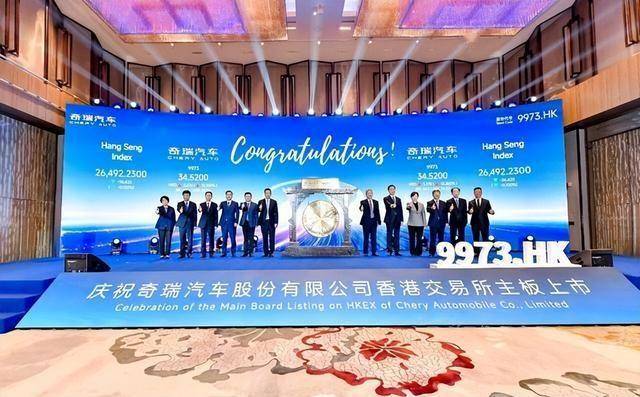
Core Insights - Chery has successfully launched its IPO on the Hong Kong Stock Exchange, achieving a market capitalization of HKD 184 billion, marking it as the largest IPO of a car company in Hong Kong for 2025 [1] - The company has transformed its image from being perceived as low-quality to a competitive player in the global automotive market, with products now recognized for their design and technology [1][3] Design and Aesthetics - Chery's recent models, such as the Starway and Arrizo 8, showcase significant improvements in design, moving from a previously unappealing aesthetic to a more modern and attractive look [1] - Compared to competitors like Geely and Changan, Chery's design transformation has been noted as particularly successful, appealing to younger consumers [1] Interior and Space - The interior of Chery vehicles has evolved, featuring high-quality materials, advanced technology like large central displays, and spacious seating arrangements, making them more family-friendly [3] - The introduction of the Lion Smart Cloud system enhances user experience with quick voice recognition and OTA updates, setting it apart from competitors [3][4] Powertrain and Performance - Chery's 1.6T engine has received accolades for its efficiency and performance, with the Arrizo 8 achieving a 0-100 km/h acceleration in just over 7 seconds [4] - The company is also advancing in hybrid technology, offering models with impressive fuel economy and electric range [4] Technology and Safety - Chery has integrated L2-level driver assistance features across its lineup, including adaptive cruise control and automatic parking, enhancing safety and user confidence [5][7] - The focus on practical and reliable technology implementation positions Chery as a mature player in the automotive industry [7] Global Expansion - Chery has maintained its position as the top Chinese brand in passenger car exports for 21 consecutive years, with plans to allocate 20% of its IPO proceeds to international markets [8] - The company's strategy emphasizes building a strong global presence based on product quality and service rather than resorting to price cuts [8] Market Reaction - The IPO has generated positive sentiment among investors, with the stock price surging on the first day, although some existing customers expressed frustration over the depreciation of older models [8][9] - The rapid product iteration and technological advancements have led to concerns about the resale value of older vehicles, highlighting the competitive nature of the automotive market [9] Conclusion - Chery has successfully navigated a challenging path to establish itself as a formidable player in the automotive industry, characterized by self-research, global expansion, and brand revitalization [11] - The company now boasts a strong portfolio of attractive, technologically advanced vehicles, positioning itself well against established competitors like BYD, Geely, and Changan [11]