
PD - 1/VEGF双特异性抗体

Search documents
荣昌生物(09995):RC148双抗56亿美元出海,协同MNC拓展全球市场
HUAXI Securities· 2026-01-14 15:25
Investment Rating - The investment rating for the company is "Buy" [4] Core Insights - The company has signed an exclusive licensing agreement with AbbVie for its PD-1/VEGF bispecific antibody drug RC148, receiving an upfront payment of $650 million and potential milestone payments up to $4.95 billion, along with double-digit royalties on net sales outside Greater China [1][2] - The collaboration with AbbVie is expected to enhance the company's international clinical development and market expansion, leveraging AbbVie's existing oncology pipeline [2] - Initial clinical data for RC148 shows promising results, with an objective response rate (ORR) of 61.9% for monotherapy and 66.7% for combination therapy, indicating strong potential for further clinical advancement [3] Financial Summary - The company forecasts revenues of 2.75 billion, 3.38 billion, and 4.41 billion CNY for 2025, 2026, and 2027 respectively, reflecting year-on-year growth rates of 60.95%, 22.97%, and 30.40% [7] - The projected net profit for 2026 is expected to be -315.8 million CNY, with a turnaround to a profit of 383.89 million CNY by 2027 [7] - The gross margin is anticipated to remain high, with estimates of 83.65% in 2025 and 82.27% in 2026 [8]
荣昌生物涨超3% 自研RC148实现双路径突破 机构看好后续临床潜力
Zhi Tong Cai Jing· 2025-12-23 02:11
Core Viewpoint - Rongchang Biologics (09995) has seen a stock increase of over 3%, currently at 78.8 HKD, with a trading volume of 98.38 million HKD, following the release of promising clinical trial data for its PD-1/VEGF bispecific antibody RC148 [1] Group 1: Clinical Research and Development - According to Huaxi Securities (002926), the clinical research data for RC148, both as a monotherapy and in combination therapy for non-small cell lung cancer (NSCLC), has demonstrated outstanding clinical efficacy and manageable safety [1] - The early data from the RC148-C001 study has led to the drug receiving Breakthrough Therapy Designation (BTD) in China for the treatment of locally advanced or metastatic NSCLC that has failed prior PD-1/PD-L1 inhibitors and platinum-based chemotherapy [1] - The company is actively advancing its clinical trials, with the Phase II trial for RC148 in combination therapy for first-line NSCLC having completed patient enrollment and plans to initiate a Phase III clinical study [1]

明宇制药冲击IPO,“肿瘤+自免”双轨并行,面临制药巨头的竞争
Ge Long Hui A P P· 2025-11-27 10:25
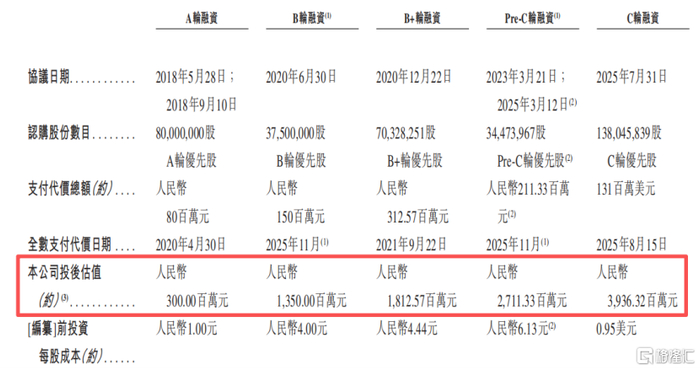
Core Insights - The innovative drug sector is currently focused on GLP-1 weight loss drugs and PD1/VEGF bispecific antibodies, both expected to reach a global market size of over $100 billion [1] - Mingyu Pharmaceutical Co., Ltd. has filed for an IPO on the Hong Kong Stock Exchange, seeking to capitalize on its dual growth engines in oncology and autoimmune diseases [1][2] Company Overview - Mingyu Pharmaceutical was established in March 2018 and operates with dual headquarters in Shanghai and Hangzhou, China [1] - The company has raised approximately $240 million through five rounds of financing, with a post-money valuation of about 3.936 billion yuan ($0.54 billion) as of July 2025 [2][3] Leadership - The largest shareholder group holds approximately 36.27% of voting rights, including founder Dr. Cao Guoqing and his wife [3] - Dr. Cao has over 30 years of experience in drug development and management, previously working at Eli Lilly and Hengrui Medicine [4] Product Pipeline - Mingyu has 13 candidate products, with 10 in clinical stages, including 5 in Phase II or later [4][6] - Key oncology product MHB036C (TROP-2 ADC) has shown a 43% objective response rate in a Phase I trial for triple-negative breast cancer [6] - The TROP-2 ADC market is projected to grow from $1.5 billion in 2024 to $42.5 billion by 2035, with a CAGR of 35.4% [6] Competitive Landscape - The company faces competition from several multinational pharmaceutical companies in the ADC space, with three TROP-2 ADCs already approved globally [6][7] - Mingyu's MHB039A (PD-1/VEGF bispecific antibody) is positioned to potentially replace PD-(L)1 monoclonal antibody therapies, with a projected market size of $12.61 billion by 2035 [11] Financial Performance - Mingyu has not yet commercialized any products, reporting cumulative losses of 587 million yuan ($82 million) over two and a half years [14] - The company recorded revenues of 264 million yuan ($37 million) in the first half of 2025, with significant R&D expenditures [14][15] Future Outlook - The company is focused on advancing its clinical trials and commercialization efforts in both oncology and autoimmune disease sectors, which require substantial funding [19] - The ability to navigate competitive pressures and successfully bring products to market will be critical for the company's future [20]

明慧医药冲刺港股:研发开支激增53.8% 公允价值变动收益暴增3261%背后的财务隐忧
Xin Lang Cai Jing· 2025-11-25 01:33
Core Insights - The company relies heavily on a single client, Qilu Pharmaceutical, for its revenue, with all 2.64 billion RMB in revenue for the first half of 2025 coming from this partnership [1][2][7] - The company has a significant financial risk due to a lack of diversified income sources, with zero revenue reported for 2023 and 2024 [2][7] - The company faces a liquidity crisis, with current liabilities of 15.47 billion RMB against current assets of only 2.34 billion RMB, leading to a net current liability of 13.13 billion RMB [5][6] Financial Performance - The company reported a net profit of 1.02 billion RMB in the first half of 2025, but this was largely due to non-operating gains from convertible preferred shares, with a core operating loss of 2.25 billion RMB when excluding these gains [3][4] - Research and development (R&D) expenses have surged, reaching 2.81 billion RMB in 2024, which is 53.8% higher than in 2023, and accounting for 37.1% of revenue in the first half of 2025 [4][13] - The company has a high cash burn rate, with only 1.5 billion RMB in cash and equivalents as of June 2025, which can only sustain operations for about six months [13] R&D and Product Pipeline - The company has 13 candidate products, with 10 in clinical stages, but none have been commercialized yet, indicating a high risk of sunk costs in R&D [10][14] - The clinical progress of key products is slow, with only one product having submitted a New Drug Application (NDA) and the rest still in early clinical phases [10][14] - The company’s R&D efficiency is below industry averages, with 4.63 billion RMB spent to advance only two products to Phase II trials [13] Client and Supplier Risks - The company has a 100% client concentration risk, relying solely on Qilu Pharmaceutical for its revenue, which poses a significant risk if the partnership is terminated [7][14] - The company is also dependent on a limited number of suppliers for its R&D, with the top five suppliers accounting for over 54% of procurement, raising concerns about supply chain stability [8][14] Governance and Compliance Risks - The company has a concentrated ownership structure, with the controlling family holding 36.27% of voting rights, which may lead to governance issues and potential conflicts of interest [9][14] - Regulatory compliance risks are heightened due to the company's complex financing structure and the need to adhere to both Chinese foreign exchange and data security regulations [11][12]
明宇制药递表港交所 摩根士丹利、美银证券和中信证券为保荐人
Zheng Quan Shi Bao Wang· 2025-11-25 00:36
Core Insights - Mingyu Pharmaceutical has submitted an application to the Hong Kong Stock Exchange, with joint sponsors including Morgan Stanley, Bank of America Securities, and CITIC Securities [1] - The company focuses on developing tumor therapies based on ADC platforms and PD-1/VEGF bispecific antibodies, as well as late-stage clinical assets for autoimmune diseases [1] Pipeline Overview - As of November 16, 2025, the company has 13 candidate products in its pipeline, with 10 already in clinical stages [1] - Key oncology products include MHB036C (TROP2ADC), which is in I/II phase studies for non-small cell lung cancer and breast cancer in combination with MHB039A (PD-1/VEGF bispecific antibody) [1] - Another significant oncology product, MHB088C (B7-H3ADC), is undergoing a Phase III monotherapy trial for small cell lung cancer and a Phase I/II combination trial with MHB039A [1] - Core autoimmune products include MHB018A (potential best-in-class IGF-1R antibody), currently in a Phase III trial for active thyroid eye disease (TED), and MH004 (first-in-class topical JAK inhibitor), which has submitted a new drug application in China for mild to moderate atopic dermatitis (AD) [1] Market Potential - According to Frost & Sullivan, the global TED market is expected to reach $13.4 billion by 2035, while the global atopic dermatitis treatment market is projected to reach $29.5 billion by 2035 [1] Technology Advantage - The company's proprietary SuperTopoi platform offers new ADC payloads that are 5-10 times more effective than the ADC based on Dxd, with superior safety profiles, including lower incidences of severe hematological toxicity and interstitial lung disease [2]

康方生物涨近5%再创新高 依沃西联合方案治疗IO耐药NSCLC三期临床完成首例给药
Zhi Tong Cai Jing· 2025-07-31 03:30
Core Viewpoint - Kangfang Biopharma (09926) has seen a significant stock price increase, reaching a new historical high, driven by the announcement of its innovative PD-1/VEGF bispecific antibody drug, Ivosidenib, entering a pivotal Phase III clinical trial for treating advanced non-small cell lung cancer (NSCLC) [1] Group 1: Company Developments - Kangfang Biopharma's Ivosidenib, a globally first PD-1/VEGF bispecific antibody, has commenced its first patient dosing in a pivotal Phase III clinical study (AK112-305/HARMONi-8A) for patients with locally advanced or metastatic NSCLC who have failed prior PD-1/L1 inhibitors and platinum-based chemotherapy [1] - This marks the seventh Phase III study for Ivosidenib in the lung cancer field, with three of these being international multicenter registrations [1] - Ivosidenib has achieved comprehensive coverage of core indications in the NSCLC field, positioning the company to potentially reshape the overall treatment landscape for advanced NSCLC [1] Group 2: Strategic Importance - Ivosidenib serves as a cornerstone drug in the company's "IO+ADC" 2.0 strategy, focusing on core immuno-oncology indications with a series of ongoing Phase III and Phase II clinical trials [1]

国产抗癌药拿下辉瑞430亿元大单,股价涨超35%
Nan Fang Du Shi Bao· 2025-05-21 11:12
Core Insights - On May 20, 2023, 3SBio announced a significant agreement with Pfizer, granting exclusive global rights (excluding mainland China) for the development, production, and commercialization of its innovative PD-1/VEGF bispecific antibody SSGJ-707 [2] - The deal includes an upfront payment of $1.25 billion, setting a record for upfront payments for domestic innovative drugs, and potential milestone payments totaling up to $4.8 billion, bringing the total potential deal value to $6.05 billion (approximately 43 billion RMB) [2] - Following the announcement, 3SBio's stock surged over 35% on May 20 and continued to rise by over 8% the next day [2] Company Developments - SSGJ-707 has shown excellent efficacy in treating non-small cell lung cancer (NSCLC), with promising objective response rates (ORR) and disease control rates (DCR) in clinical trials [3] - The drug has received breakthrough therapy designation from the National Medical Products Administration (NMPA) for first-line treatment of PD-L1 positive locally advanced or metastatic NSCLC, and has also received IND approval from the FDA [3] - Clinical research for SSGJ-707 is also advancing in the treatment of colorectal cancer and gynecological tumors [3] Market Reactions - The capital market reacted strongly to the announcement, with 3SBio's stock price increasing significantly [2] - Other companies in the PD-1/VEGF bispecific antibody space, such as Kangfang Biologics, experienced stock fluctuations following the news, indicating a competitive landscape [5] Strategic Considerations - Pfizer's interest in the PD-1/VEGF bispecific antibody space is part of a broader strategy, as it has previously engaged in collaborations in this area [4] - The oncology segment of Pfizer is facing challenges with its small molecule drugs, prompting a shift towards ADC (antibody-drug conjugate) strategies, which are becoming a research focus [6] - The combination of ADCs with high-quality bispecific antibodies is seen as a potential avenue for enhancing treatment efficacy in oncology [6]


三生制药(01530.HK)与辉瑞就PD-1/VEGF双抗SSGJ-707达成授权协议
Ge Long Hui· 2025-05-20 00:06
Core Insights - The collaboration between 3SBio and Pfizer marks a significant milestone in the internationalization journey of 3SBio, highlighting the global recognition of SSGJ-707's clinical efficacy and the company's competitive edge in innovation [2][3] Group 1: Agreement Details - 3SBio and its subsidiaries have granted Pfizer exclusive rights to develop, manufacture, and commercialize the innovative PD-1/VEGF bispecific antibody SSGJ-707 globally, excluding mainland China [1] - 3SBio will retain rights for SSGJ-707 in mainland China and grant Pfizer an option for commercialization in that region based on agreed financial terms [1] - The agreement includes a non-refundable upfront payment of $1.25 billion and potential milestone payments of up to $4.8 billion, along with a double-digit percentage sales royalty based on product sales in the licensed territories [1] Group 2: Product Information - SSGJ-707 is developed based on the CLF2 patent platform and targets both PD-1 and VEGF, showing promising objective response rates (ORR) and disease control rates (DCR) in non-small cell lung cancer (NSCLC) patients [2] - The drug has received breakthrough therapy designation from the National Medical Products Administration for first-line treatment of PD-L1 positive locally advanced or metastatic NSCLC and has also obtained IND approval from the FDA [2] - Clinical research for SSGJ-707 is ongoing in other areas, including colorectal cancer and gynecological tumors [2] Group 3: Strategic Implications - This partnership is expected to accelerate the global development and commercialization of SSGJ-707, enhancing 3SBio's global strategy and financial returns [2][3] - The collaboration is anticipated to strengthen 3SBio's position in the oncology treatment field and integrate the company further into the global biopharmaceutical value chain [2][3]