POD模式

Search documents
三墩北首个不限价新盘年后首开 产品卷疯了,价格要冲新高?
Mei Ri Shang Bao· 2026-01-28 23:25
Core Viewpoint - The real estate market in the San Dun North area is experiencing a stark contrast between the new project "Runqi Future City," which is attracting significant buyer interest, and the declining prices of second-hand homes in the same region [1][8]. Group 1: Project Overview - "Runqi Future City" is located above the Lianchi Road station of Metro Line 4 and features a temporary sales office and a model unit [2]. - The project is designed using the POD model, divided into two sections: the North area with 16 high-rise buildings and the South area with smaller buildings and commercial spaces [2]. - The North area includes main unit types of 125, 139, 175, and 235 square meters, while the South area primarily offers 110 square meter four-bedroom units [2]. Group 2: Market Dynamics - The San Dun North area has not seen new housing supply for three years, while surrounding areas continue to launch new projects, creating competitive pressure [5][6]. - The price of high-rise units in nearby projects has been fluctuating, with recent prices around 35,945 yuan per square meter, indicating a downward trend in the market [5][6]. Group 3: Advantages and Disadvantages - Advantages of "Runqi Future City" include direct access to the metro, proximity to a park, and a planned commercial area, which are expected to enhance its appeal [3]. - Disadvantages include potential noise from nearby highways and railways, which may affect the residential experience [3]. Group 4: Product Features - The 110 square meter model unit features a practical layout with four bedrooms and upgraded finishes, including central air conditioning and high-end kitchen appliances [4]. - The design emphasizes storage space and includes various modern amenities, such as a smart toilet and a beauty refrigerator [4]. Group 5: Price Trends - The anticipated pricing for "Runqi Future City" is expected to be in the higher range, with reports suggesting that the price for the 235 square meter unit may reach the 40,000 yuan per square meter mark [7]. - The second-hand home prices in the area have seen a significant decline, with some properties dropping below their original opening prices, indicating a challenging market environment [8][9].
湖北新开24个商业项目,这两大赛道爆了!
3 6 Ke· 2026-01-22 02:30
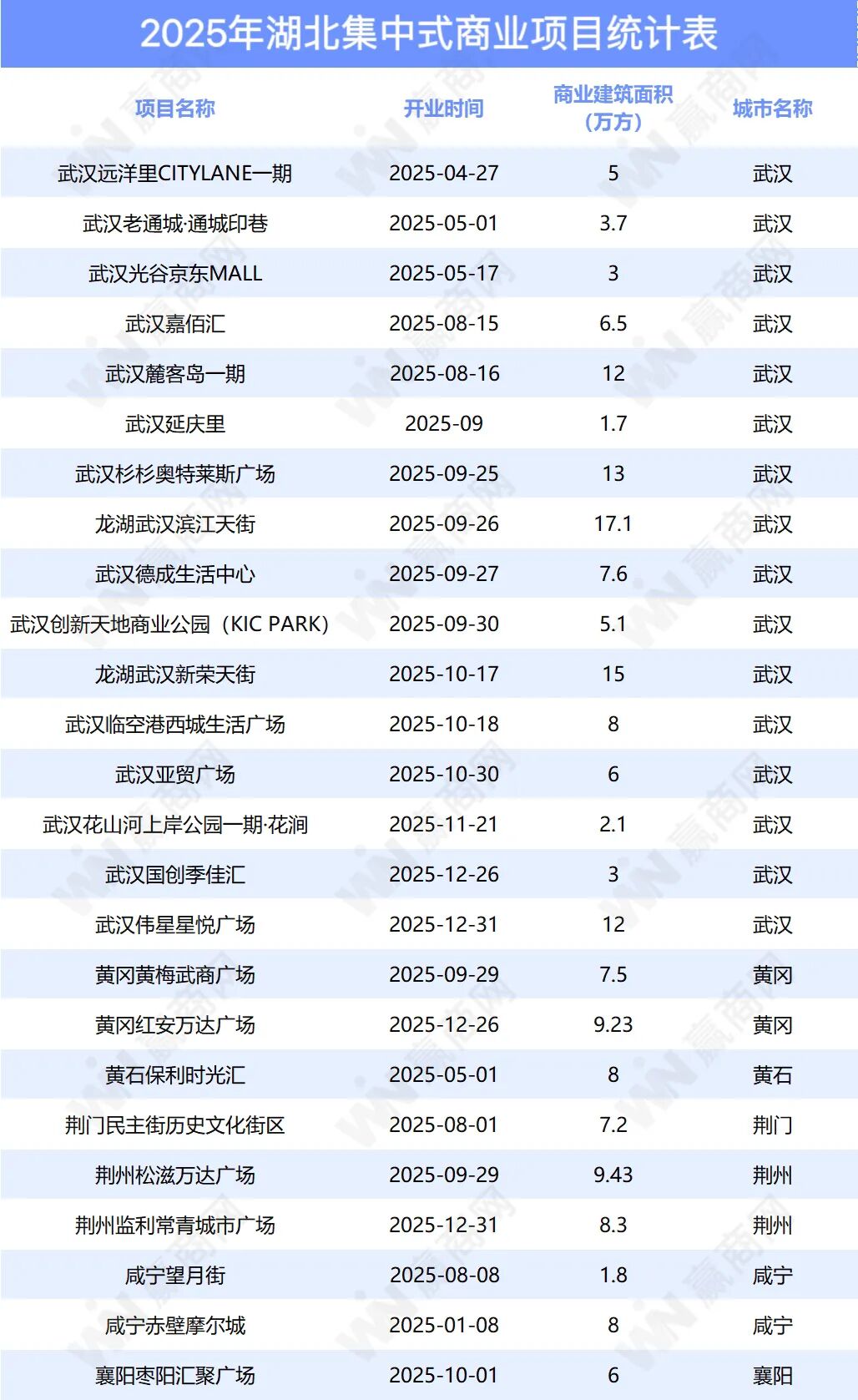
Core Insights - 2025 is a pivotal year for the high-quality development of the commercial market in Hubei Province, with the emergence of new retail commercial properties enhancing the commercial layout and supply level, providing consumers with more diverse choices [1] - The overall transition is moving from "scale expansion" to "quality improvement" and from "homogeneous competition" to "differentiated development," forming a more mature, diverse, and efficient commercial ecosystem [1] Group 1: Commercial Data Overview - In 2025, Hubei is expected to open 25 new centralized commercial projects, with a total commercial area exceeding 1.8625 million square meters, including 22 projects larger than 30,000 square meters [2] - The average building area of these shopping centers is approximately 74,500 square meters, with 14 projects in the medium-sized range of 50,000 to 100,000 square meters [5] Group 2: Regional Distribution - The new projects are distributed across seven cities, with Wuhan being the core city, accounting for 64% of the total new projects and 120.8 million square meters of commercial area [6] - Other cities like Jingzhou, Huanggang, and Xianning are also seeing steady development, with each having new projects that enhance the regional commercial layout [6] Group 3: Operator Landscape - The new projects feature a diverse range of operators, with 22 companies involved, indicating a competitive market landscape [7] - The opening schedule follows seasonal patterns, with September being the peak month for new project openings [7] Group 4: Emerging Business Models - The POD model is gaining traction, focusing on urban park-oriented development, becoming a key highlight in new project promotions [8] Group 5: Urban Renewal - Urban renewal is becoming a significant path for commercial development, with multiple projects revitalizing historical districts and old buildings, blending history with modern commercial vitality [18]

百万方商业体“砸”向武汉,华中消费第一城又“膨胀”了
Sou Hu Cai Jing· 2025-12-11 19:50
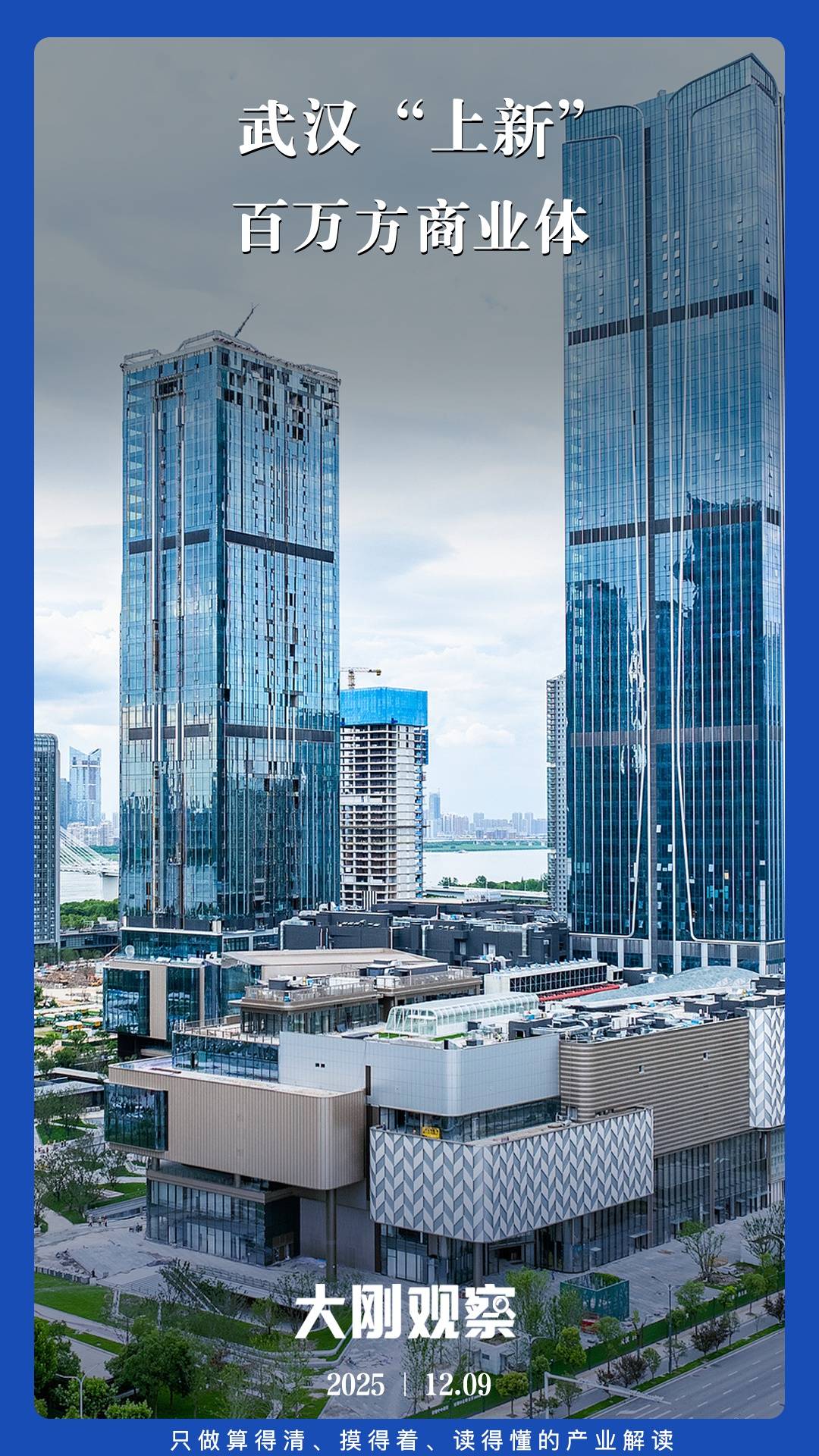
Core Insights - In 2025, Wuhan is set to experience a new wave of consumerism with the launch of significant commercial projects, marking a transformation in the city's commercial landscape [3] - A total of at least 11 key commercial projects will open in Wuhan in 2025, adding over 1.02 million square meters of commercial space [3][18] - The focus of Wuhan's commercial development is shifting from mere scale to a more nuanced approach that emphasizes time and space [3] Project Overview - The opening of major projects includes: - Ocean One CITYLANE Phase I in April 2025, featuring a lifestyle and cultural theme [4] - Old Tongcheng·Tongcheng Impression in May 2025, marking the first of its kind in Central China [4] - Wuhan Shanshan Outlet Plaza in September 2025, hosting over 300 international and domestic brands [4][10] - Wuhan Longfor Binjiang Tianjie, a high-standard shopping center, also opening in September 2025 [9][10] - The commercial projects are strategically located across various districts, including Jiang'an, Wuchang, and East Lake High-tech Zone [4][10] Market Dynamics - The commercial opening schedule shows a "front low, back high" pattern, with most projects launching in the latter half of the year, particularly from September to October [6][9] - The new commercial spaces are breaking traditional market boundaries, indicating a trend towards a "Binhai International Living Circle" in Jiang'an District [11] - The commercial landscape is evolving from large-scale shopping centers to smaller, experience-driven formats, reflecting a shift in consumer preferences [12][19] Economic Context - Wuhan's GDP reached 1,553.78 billion yuan in the first three quarters of 2025, with a year-on-year growth of 5.6%, indicating strong economic resilience [22] - The total retail sales of consumer goods in Wuhan amounted to 629.97 billion yuan, growing by 5.5% year-on-year, showcasing robust consumer demand [22] - The city has a total commercial stock of 14.36 million square meters, with a per capita shopping center area of 1 square meter, ranking it among the top cities in Central China [22] Future Outlook - The commercial landscape in Wuhan is transitioning towards a multi-center, networked structure, with new projects set to enhance the city's commercial vitality [25] - Upcoming projects in 2026, such as Wuhan Good One and Wuhan Weixing·Guanggu Xingyue Plaza, are expected to further enrich the commercial ecosystem [25][26]
150欧免税取消,中国电商如何应战?
Sou Hu Cai Jing· 2025-12-05 02:51
Core Viewpoint - The European cross-border e-commerce market is undergoing significant changes due to new tax policies and increasing scrutiny on Chinese e-commerce platforms like SHEIN and Temu, which face challenges in expanding their market presence in Europe [1][5][19]. Group 1: Regulatory Changes - The European Council has announced the implementation of a small package tax policy, which will take effect in early 2026, eliminating the previous exemption for goods under €150 [1]. - All incoming packages will now incur customs duties, VAT, and a customs inspection fee of approximately €2, which will complicate the logistics for e-commerce platforms [1][5]. - Experts suggest that these changes will shift consumer purchasing decisions from price-driven to value and trust-oriented, increasing the operational costs for sellers due to the need for more detailed customs data [5][21]. Group 2: Market Dynamics - In 2024, the EU is expected to receive 4.6 billion low-value e-commerce packages, with 91% originating from China, equating to approximately 4.186 billion packages [7][8]. - Despite regulatory challenges, Temu and SHEIN have seen substantial user growth in Europe, with Temu's monthly active users reaching 115.7 million in the first half of 2025, a 12.5% increase from the previous year [9]. - The economic downturn in Europe, exacerbated by the Russia-Ukraine conflict, has led consumers to seek more affordable options, benefiting discount retailers and platforms like Temu and SHEIN [10][11][14]. Group 3: Consumer Behavior - European consumers are increasingly turning to discount stores and e-commerce platforms for essential goods, reflecting a shift in spending habits due to inflation and economic uncertainty [10][14]. - The disparity between wealth and poverty in Europe is growing, with many middle-class consumers feeling the pinch and opting for cheaper alternatives like SHEIN [15][16]. - The demand for affordable products is evident, as consumers express a preference for low-cost options over locally produced goods, highlighting a significant market opportunity for Chinese e-commerce [15][16]. Group 4: Strategic Responses - Some sellers are considering shifting to local e-commerce platforms to navigate the new regulatory landscape, but experts argue that this strategy may be outdated due to declining marketing budgets on these platforms [19][21]. - Sellers are still required to pay customs duties regardless of whether they ship directly from China or use local warehouses, complicating the logistics further [21]. - Temu and SHEIN are viewed as the best options for sellers due to their traffic advantages and lower commission rates compared to other platforms [21][22]. Group 5: Brand Development - The long-term solution for sellers lies in building brands rather than relying solely on low-price strategies, which are unsustainable in the European market [28][31]. - Successful brand development requires a focus on product positioning, uniqueness, and alignment with market needs, as demonstrated by the success of brands like Avril Paris [31][33]. - The rise of the Print on Demand (POD) model has shown that Chinese sellers can effectively respond to market trends and consumer demands for personalized products [29][30].

近端履约革命:货达 Pod 如何重构跨境电商的成本与时效优势?
Sou Hu Cai Jing· 2025-09-12 03:11
Core Insights - The new U.S. customs tariff policy has created significant challenges for traditional cross-border e-commerce, leading to a dual pressure of a 25% tariff and a 50% increase in shipping costs, prompting a shift towards a "local production, immediate response" flexible model [1][3] - The global POD (Print on Demand) market is projected to reach $7.49 billion by 2025, with a robust annual growth rate of 11.12%, and 80% of North America's custom production capacity is rapidly shifting towards Chinese supply chains [1] Group 1: Challenges of Traditional Cross-Border E-Commerce - The cancellation of the $800 tax exemption has resulted in a 25%-30% tariff cost that erodes profit margins, while logistics costs have surged by 50% due to the suspension of postal services from 25 countries [3] - Sellers relying on bulk imports, particularly in the 3C and apparel sectors, face a dilemma of either raising prices and losing competitiveness or maintaining prices and incurring losses [3] - Inventory backlog risks have been exacerbated during this policy upheaval, with sellers needing to stock up 3-6 months in advance, while customs clearance times have increased from 5 to 9 days, leading to heightened risks of goods being held [3] Group 2: Consumer Demand and Market Trends - A survey indicates that 96% of consumers are more likely to purchase from brands offering personalized experiences, while 81% ignore irrelevant marketing messages, highlighting a shift towards unique products over standardized mass production [5] Group 3: Innovations in Cross-Border E-Commerce - The "local production + intelligent response" system developed by HuoDa POD is key to overcoming cross-border challenges, integrating localized production networks with digital technology to create a faster, cost-effective, and compliant cross-border supply chain [6] - This model eliminates 25% of import tariffs and reduces logistics costs by 15%-20% through strategic hub placements, ensuring compliance for custom products in local markets [6] - HuoDa POD's U.S. factories can initiate production within one working day of order placement, achieving 95% of orders delivered within 3 days, significantly faster than direct shipping from China [6] Group 4: Cost Structure and Competitive Advantage - The traditional model incurs rigid costs of 45% from tariffs, shipping, and inventory depreciation, while HuoDa POD reduces this to 22% through local production, zero inventory, and optimized logistics [9] - The ability to offer personalized products leads to a 40% increase in average order value and a 25% boost in repeat purchases, creating new revenue opportunities [9] - The transformation signifies a shift in supply chain power from "factories producing what they sell" to "producing what consumers need," enabling small sellers to access large-scale supply chain capabilities [9]