PTA行情触顶

Search documents
PTA行情是否阶段触顶?
Xin Hua Cai Jing· 2025-11-25 01:53
Core Viewpoint - The PTA market has experienced fluctuations, with recent price increases attributed to cost support and inventory reduction, but the outlook suggests a potential peak due to weakening demand and rising inventory levels [1][3][6] Group 1: PTA Market Dynamics - Recent PTA prices have risen, reaching a high not seen since early September, driven by cost support and inventory reduction [1] - The operating rate of PTA production facilities decreased by 4 percentage points from November 10 to November 20, while downstream polyester operating rates only fell by about 1 percentage point, indicating ongoing inventory reduction [1][3] - As of November 20, the average PTA processing fee from July to November was 198 yuan/ton, indicating a production loss situation for PTA [3] Group 2: Future Outlook - The decline in crude oil prices, influenced by geopolitical negotiations, is expected to weaken cost support for PTA, leading to a higher probability of a market peak [3][5][6] - The expectation of increased inventory in January and February 2024 is likely to dominate market sentiment, with historical data showing inventory levels between 830,000 to 900,000 tons during this period [3][6] - Despite four months of continuous inventory reduction, the spot market remains significantly lower than futures prices, indicating a lack of tight supply conditions [3][6] Group 3: Geopolitical Factors - The OPEC+ plan to gradually increase oil production from October 2025 is expected to shift the oil supply outlook from anticipated shortages to actual oversupply, further diminishing upward pressure on oil prices [5] - Concerns remain regarding potential geopolitical tensions affecting oil supply, particularly involving Venezuela, which could impact oil prices if conflicts arise [5]

PTA:行情是否阶段触顶?
Sou Hu Cai Jing· 2025-11-24 09:19
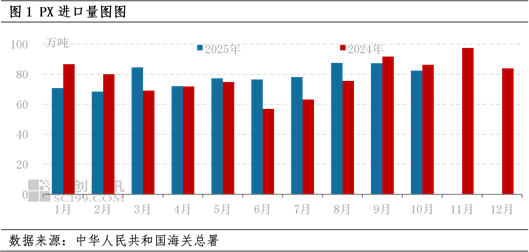
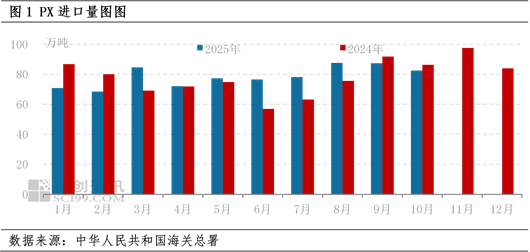
Core Viewpoint - The PTA market is experiencing a potential peak phase, influenced by both cost support and inventory reduction, but is facing downward pressure from falling crude oil prices and rising inventory expectations for January-February 2024 [1][3][4]. Group 1: Market Dynamics - Recent PTA prices reached a high not seen since early September, driven by cost support and inventory reduction efforts [1]. - The operating rate of PTA production facilities decreased by 4 percentage points from November 10 to November 20, while downstream polyester operating rates only fell by about 1 percentage point, indicating ongoing inventory reduction [1][3]. - Concerns over reduced PX imports due to increased Korean exports to the U.S. have led to a temporary strengthening of the PX market, with a reported decrease of approximately 20,000 tons in PX exports from Korea to China from November 1 to 20 compared to October [3]. Group 2: Supply and Demand Factors - Despite four months of continuous inventory reduction, the spot market for PTA remains under pressure, with significant backwardation against futures prices due to weak demand and high inventory expectations for early 2024 [4]. - The traditional demand slump in January-February is expected to lead to an accumulation of 830,000 to 900,000 tons of PTA inventory, further impacting market dynamics [4]. - The average PTA processing fee from July to November was reported at 198 yuan per ton, indicating a production loss situation, which may lead to unplanned production cuts or maintenance of PTA facilities in the future [3]. Group 3: External Influences - The crude oil market is expected to face oversupply as OPEC+ plans to implement a joint production cut of 1.65 million barrels per day starting in October 2025, with a gradual increase in production in the last quarter of 2024 [6]. - Geopolitical tensions, particularly between the U.S. and Venezuela, could impact crude oil supply, as Venezuela holds the largest oil reserves globally, which may influence oil prices positively if conflicts arise [6]. - Overall, the upward trend driven by cost factors in the PTA market is likely to conclude, with demand weakening and inventory levels rising becoming the dominant factors moving forward [6].