
REDD+

Search documents
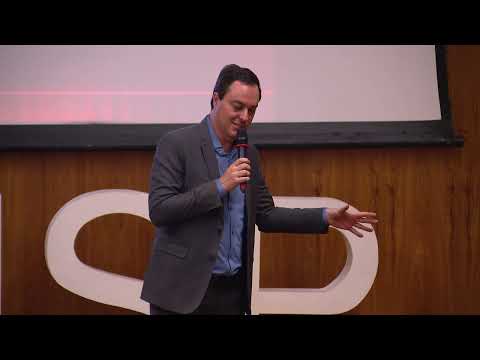
Florestas: a solução está na natureza | David Canassa | TEDxUSP
TEDx Talks· 2026-02-03 17:10
Hum. Será que é possível a floresta em pé valer mais do que a floresta deitada. Em 2008, eu tinha conduzido minha carreira pensando em eficiência.Eu sou engenheiro eletricista de formação e trabalhei em vários processos, em fábricas, eh, trabalhando numa questão muito importante, eh, que é como que você produz mais com menos uso de combustíveis, né. Isso é fundamental pro futuro do planeta. Mas em 2008 eu recebi um convite para pensar mais amplo sobre sustentabilidade.E uma das primeiras coisas que eu fiz, ...

加蓬森林部门碳市场和气候融资战略路线图:优先建议和行动(英)
Shi Jie Yin Hang· 2026-02-03 02:10
Investment Rating - The report does not explicitly provide an investment rating for the carbon market and climate finance in Gabon's forest sector Core Insights - Gabon is positioned to deepen its engagement in international carbon market mechanisms, particularly following the finalization of the Article 6 rulebook of the Paris Agreement at COP29, linking this opportunity to its broader development agenda of transitioning from a hydrocarbon-dependent economy to a diversified, sustainable model [26][27] - The Strategic Roadmap for Climate Finance and Carbon Markets aims to operationalize access to carbon markets and climate finance mechanisms, focusing on the forestry sector where Gabon has a comparative advantage as a High Forest, Low Deforestation (HFLD) country [27][30] - Gabon's forests contain over 8.1 billion tons of carbon, representing almost 86 percent of annual global CO₂ emissions from the energy sector, yet the country currently realizes only a minor share of this value domestically [29][12] - The roadmap outlines immediate priorities for the forest sector to enhance Gabon's involvement in carbon markets and climate finance, emphasizing the need for legal clarity, institutional frameworks, and stakeholder capacity [30][44] Summary by Sections Executive Summary and Recommendations - Gabon is at a critical juncture to engage in international carbon markets, with carbon markets serving as a strategic lever to mobilize climate finance [26] - The roadmap emphasizes the need for readiness in technical systems, institutional frameworks, and legal clarity to operationalize access to carbon markets [27] Background and Objective - The report provides a detailed framework for advancing carbon finance initiatives within Gabon's forest sector, complementing the Gabon Forest Ecosystem Accounts [11] Key Decisions and Requirements for Carbon Markets Participation - The roadmap identifies strategic and regulatory foundations necessary for carbon market participation, including governance, integrity, and reporting [6][7] HFLD Specificities, Forest Offsets Standards and Climate Finance - Gabon aims to mobilize climate finance through results-based payments and participation in international carbon markets under Article 6, particularly through Internationally Transferred Mitigation Outcomes (ITMOs) [34][35] Priority Recommendations and Action Areas - The roadmap outlines six key policy pillars and priority action areas to strengthen participation in results-based payments and leverage climate finance [58][65] - Key actions include establishing a national carbon registry, defining carbon rights, and integrating carbon markets into the Nationally Determined Contributions (NDC) [59][60] Conclusion and Next Steps - The report concludes with a call for immediate actions to address gaps in Gabon's legal and institutional frameworks, emphasizing the importance of stakeholder engagement and capacity building [45][50]
深圳大学发表最新Science论文
生物世界· 2025-10-10 00:00
Core Viewpoint - The effectiveness of REDD+ projects, aimed at reducing emissions from deforestation and degradation, has been questioned recently, leading to a decline in the value of carbon offsets [2][6]. Group 1: REDD+ Project Analysis - A study published in the journal Science analyzed 52 REDD+ projects across 12 countries in South America, Africa, and Southeast Asia, finding that only 19% of these projects met their self-reported emission reduction targets [3][6]. - The study indicates that while the climate benefits of REDD+ projects are higher than previous assessments, the overall effectiveness remains low, with significant regional variations in project success [6][7]. - The research highlights a concerning issue of "over-crediting," where the number of carbon credits issued exceeds the actual emissions reductions achieved [6][7]. Group 2: Recommendations for Improvement - To enhance the credibility and impact of forest carbon offsets, the study suggests improving baseline setting methods and strengthening verification frameworks [7]. - The findings emphasize that while many REDD+ projects are not as effective as claimed, some have achieved tangible results, particularly in Brazil and Africa [7].

创新金融工具及其在管辖REDD发展中的作用+
Shi Jie Yin Hang· 2025-05-08 23:10
Investment Rating - The report does not explicitly provide an investment rating for the industry Core Insights - Achieving global net-zero carbon emissions requires halting deforestation and leveraging tropical forests as carbon sinks, with market mechanisms from REDD+ projects playing a crucial role [4][10] - Current carbon markets are underdeveloped, with existing mechanisms lacking the quality needed to support expanded demand, although efforts to enhance transparency and regulation are accelerating [4][5] - Innovative financial tools are being explored to mobilize investment in REDD+ frameworks, particularly in tropical countries, with significant potential for future development [5][18] Summary by Sections Section 1: Economic Drivers of Deforestation - Deforestation reflects unsustainable economic models in many developing countries, necessitating a fundamental shift towards sustainable growth that aligns economic development with forest conservation [9][10] - Effective policies combining protection and economic incentives are essential to halt deforestation, particularly in the Amazon [9][10] Section 2: JREDD+ Economics - The average price of REDD+ emission reductions (ERs) has increased significantly, from $3.9 per ton in 2019 to $11.21 per ton in 2023, yet the market remains small and insufficient to incentivize deforestation reduction [11][23] - The estimated cost for economically viable REDD+ supply is between $30 to $50 per ton of CO2, indicating a potential for significant cost savings in the transition to net-zero [12] Section 3: Innovative Financial Tools - The report discusses the potential of forest carbon bonds, call options, and put options to lower investment risks and mobilize private capital for REDD+ projects [18][41] - Forest carbon bonds can provide a mechanism for borrowing against future emission reductions, essential for financing necessary investments to curb deforestation [18][41] - Options contracts can help manage risks associated with carbon price fluctuations, allowing for more stable investment environments [54][56] Section 4: Case Study of Brazil - A numerical example from Brazil illustrates how the proposed financial tools can enhance the capacity for private investment and accelerate JREDD+ initiatives [19][20] - The tools discussed could mobilize substantial investment, creating strong policy incentives to prevent deforestation [19][20] Section 5: Future Outlook - The report emphasizes the need for increased private sector participation in the JREDD+ market, both as buyers of carbon credits and as financiers of emission reduction actions [15][16] - The development of financial solutions tailored to the diverse needs of investors is crucial for attracting private capital to the JREDD+ market [18][32]