SerDes技术

Search documents
从智能视觉迈向AI、HPC,龙迅半导体赴港能否开启二次增长曲线?
Zhi Tong Cai Jing· 2026-01-02 13:17
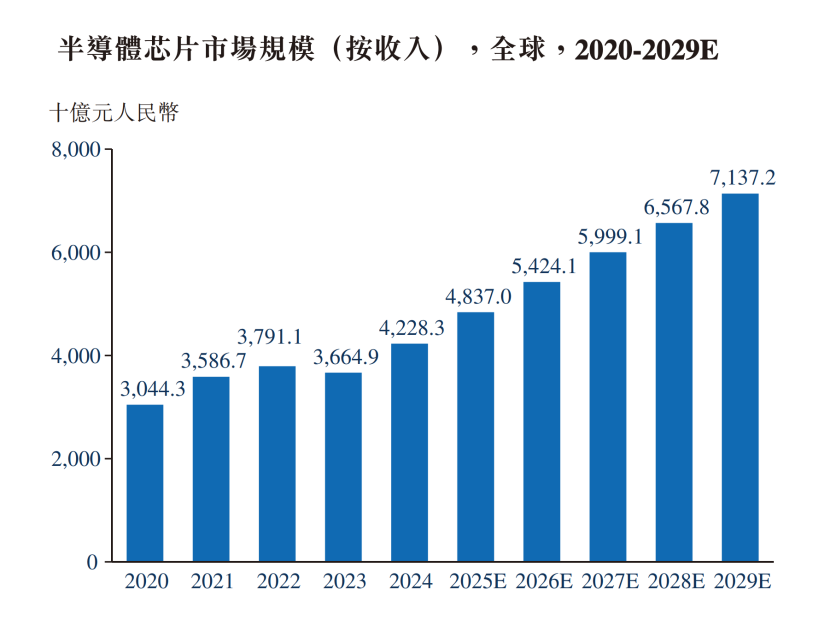
Core Viewpoint - Longxin Semiconductor, a fabless chip design company, has initiated its H-share IPO process to expand its international capital channels amidst a wave of A-share technology companies seeking secondary listings in Hong Kong [1][2]. Company Overview - Longxin Semiconductor focuses on the research and sales of integrated circuits, particularly in the high-growth sectors of smart video chips and high-speed interconnect chips [2]. - The company ranks fifth globally in the video bridging chip market by revenue in 2024 and leads among mainland Chinese manufacturers [2][4]. Financial Performance - Revenue growth from 2022 to 2024 is projected at RMB 2.41 billion, RMB 3.23 billion, and RMB 4.66 billion, with a compound annual growth rate (CAGR) of 39.1% [3]. - For the first nine months of 2025, revenue reached RMB 3.89 billion, a 16.7% increase compared to the same period in 2024 [3]. - Net profit for the same period is expected to grow by 32.5% to RMB 1.25 billion [3]. Market Position and Competitive Advantage - Longxin Semiconductor has established a significant lead in the mixed-signal chip market, ranking first in mainland China and among the top five globally in video bridging chips [4]. - The proprietary ClearEdge technology platform integrates high-bandwidth SerDes, high-speed protocol processing, and video processing, supporting transmission rates of up to 20Gbps, with advancements towards 32Gbps [4]. Product Categories - The company’s products are divided into two main categories: smart video chips and interconnect chips, with smart video chips being the core business [3][5]. - The smart visual terminal segment contributed 79.3% of total revenue in the first nine months of 2025, while the automotive sector has seen rapid growth, with a CAGR of 109.2% [5]. Strategic Initiatives - The company is pursuing a dual capital platform strategy (A+H) to address future uncertainties and enhance its market position [6]. - Longxin Semiconductor aims to leverage the IPO proceeds for increased R&D investment, expansion of overseas business networks, and strategic acquisitions in the global semiconductor industry [10]. Industry Context - The global semiconductor market is expected to grow from RMB 3 trillion in 2020 to RMB 4.2 trillion in 2024, with projections to reach RMB 7.1 trillion by 2029 [7]. - The Chinese government has elevated the integrated circuit industry to a national strategic level, providing significant support for domestic chip design companies like Longxin Semiconductor [10].

买出来的芯片帝国?
半导体行业观察· 2025-06-14 03:09
Group 1 - Qualcomm has built a semiconductor empire through strategic acquisitions, combining technology and patents to dominate various sectors including mobile, automotive, IoT, and AI edge computing [1] - The acquisition of Adreno, a GPU division from ATI, marked a significant turning point for Qualcomm, allowing it to enhance mobile graphics processing capabilities [4][5] - Adreno has evolved from a small team to a leading graphics processing engine, supporting billions of mobile devices and integrating advanced technologies like machine learning and AR/VR applications [6] Group 2 - The release of Apple's M1 chip in 2020 posed a significant challenge to Qualcomm, prompting the company to rethink its reliance on Arm's public core architecture [8][9] - Qualcomm's acquisition of Nuvia for $1.3 billion aimed to bolster its CPU design capabilities, leveraging Nuvia's expertise in high-performance, low-power processors [10][11] - The integration of Nuvia's technology into Qualcomm's CPU design strategy has led to the development of the Oryon CPU core, marking Qualcomm's entry into self-developed CPU architecture [13][14] Group 3 - The acquisition of Atheros for $3.1 billion allowed Qualcomm to enhance its wireless communication capabilities, integrating Wi-Fi and Bluetooth technologies into its mobile solutions [21][22] - Atheros' technology has been pivotal in establishing Qualcomm's dominance in the wireless connectivity market, enabling seamless integration of multiple connection technologies [25][24] - Qualcomm's strategy of deep integration post-acquisition has resulted in a comprehensive communication solution that supports a wide range of devices and applications [23] Group 4 - The acquisition of Autotalks has enabled Qualcomm to enhance its V2X communication capabilities, crucial for the development of smart transportation systems [27][28] - This acquisition allows Qualcomm to integrate V2X technology into its Snapdragon Ride platform, improving the stability and synergy of automotive systems [28] - Qualcomm's strategic moves in V2X technology position it as a leader in the future of intelligent transportation networks [28] Group 5 - Qualcomm's acquisition of Alphawave Semi's SerDes assets reflects its commitment to enhancing high-speed interconnect capabilities, essential for AI and data center applications [29][30] - The integration of SerDes technology is critical for Qualcomm's future in AI and communication systems, enabling efficient data transfer across various platforms [31] - This strategic acquisition positions Qualcomm as a key player in the evolving landscape of high-performance computing and modular chip architectures [31] Group 6 - Qualcomm's success is attributed to its ability to integrate acquired technologies into a cohesive ecosystem, transforming from a chip manufacturer to a comprehensive communication solutions provider [32] - The company's strategic acquisitions have laid the foundation for its semiconductor empire, demonstrating the importance of both capital and technology in achieving industry leadership [32]


买出来的芯片帝国?
半导体行业观察· 2025-06-14 03:05
Group 1: Qualcomm's Strategic Acquisitions - Qualcomm has built a semiconductor empire through targeted acquisitions, combining technology and patents to dominate various sectors including mobile, automotive, IoT, and AI edge computing [1][4][33] - The acquisition of Adreno, a GPU division from ATI, allowed Qualcomm to enhance its mobile graphics capabilities, integrating it into the Snapdragon SoC platform, which improved performance and power management [5][6][4] - The purchase of Nuvia for $1.3 billion was a strategic move to develop proprietary CPU cores, aiming to compete with Apple's M-series chips and enhance Qualcomm's position in high-performance computing [10][11][12] Group 2: Atheros and Connectivity Solutions - The acquisition of Atheros for $3.1 billion enabled Qualcomm to strengthen its position in wireless communication technologies, integrating Wi-Fi and Bluetooth capabilities into its mobile solutions [21][22][24] - Atheros' expertise in RF design and signal processing has been crucial for Qualcomm to provide comprehensive connectivity solutions across various devices, enhancing performance and reducing power consumption [20][23][24] - The integration of Atheros' technology has allowed Qualcomm to dominate the mobile connectivity market, with its solutions being widely adopted in Android devices and IoT applications [24][25] Group 3: V2X and Automotive Innovations - Qualcomm's acquisition of Autotalks enhances its V2X communication capabilities, crucial for the development of smart transportation systems and autonomous driving technologies [27][28] - The integration of V2X technology into Qualcomm's Snapdragon Ride platform signifies a strategic move towards creating a comprehensive automotive ecosystem that includes smart cockpit and autonomous driving solutions [27][28] - This acquisition positions Qualcomm as a key player in the future of intelligent transportation, enabling vehicles to communicate with each other and infrastructure for improved safety and efficiency [26][28] Group 4: SerDes Technology and Data Interconnects - Qualcomm's acquisition of Alphawave Semi's SerDes assets addresses the critical need for high-speed data interconnects in AI, edge computing, and data centers [29][30] - The SerDes technology is essential for enhancing data transmission capabilities within SoCs, particularly as the industry shifts towards Chiplet architectures [30][31] - This strategic move allows Qualcomm to strengthen its position in the evolving landscape of AI and communication systems, ensuring efficient data flow across various platforms [30][31] Group 5: Overall Strategy and Future Outlook - Qualcomm's approach to building its capabilities through acquisitions reflects a broader strategy of integrating diverse technologies into a cohesive platform, enhancing its competitive edge in the semiconductor industry [33][34] - The company's ability to internalize and innovate upon acquired technologies has been pivotal in establishing its dominance across multiple sectors, from mobile devices to automotive solutions [33][34] - Qualcomm's narrative illustrates a successful model of leveraging acquisitions not just for immediate gains, but for long-term strategic positioning in the rapidly evolving tech landscape [33][34]