Trade Protectionism

Search documents
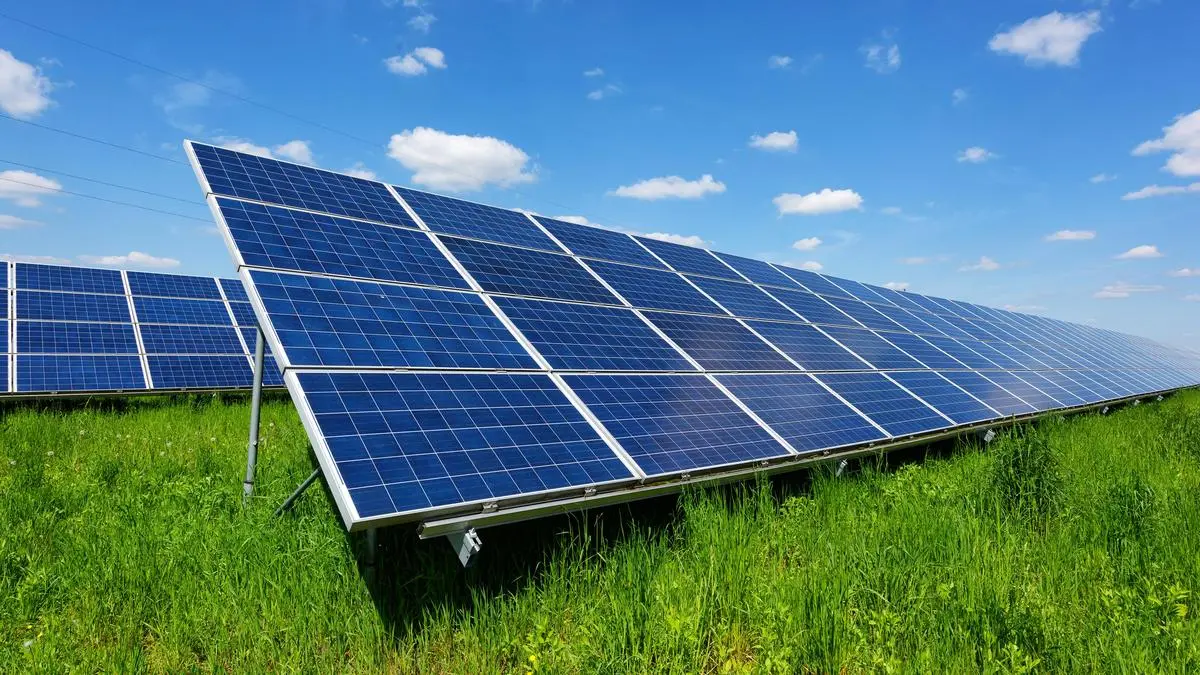
US sets initial duties on Indian solar imports at 126%
BusinessLine· 2026-02-25 04:15
Core Insights - The Trump administration has imposed preliminary duties of 126% on solar imports from India, citing unfair subsidies in manufacturing [1] - Initial levies for Indonesia range from 86% to 143%, while Laos faces a duty of 81% [1] - These tariffs are intended to protect domestic manufacturers but may increase costs for producers and consumers [2] Trade Impact - The new duties differ from previous global tariffs that were recently struck down by the US Supreme Court [3] - India, Indonesia, and Laos accounted for 57% of solar-module imports to the US in the first half of 2025 [3] - Solar imports from India in 2024 were valued at $792.6 million, a significant increase from 2022 [5] Market Dynamics - Chinese solar manufacturers are shifting production to Southeast Asia to maintain access to the US market, but face challenges as those countries also encounter US tariffs [4] - The high levies are expected to limit market access for Indian solar panel manufacturers [6] - The Alliance for American Solar Manufacturing and Trade has called for investigations into subsidies to protect US manufacturing [6] Regulatory Developments - The US International Trade Commission is investigating anti-dumping and countervailing duty claims related to solar imports from the affected countries [5] - A final determination on the investigation is expected by July 6 [7] - The Commerce Department is also conducting an antidumping duty probe of solar cells imported from India, Indonesia, and Laos [7]


Trump: Alternatives Will Be Used to Replace Rejected Tariffs (Full Presser)
Youtube· 2026-02-20 20:30
Core Viewpoint - The Supreme Court's ruling on tariffs is viewed as a setback for national economic security, with a strong emphasis on the need for alternative methods to impose tariffs and protect American interests [1][6][23]. Group 1: Economic Impact of Tariffs - The implementation of tariffs has reportedly led to significant economic growth, with the stock market reaching record highs, including the Dow surpassing 50,000 and the S&P exceeding 7,000 [8][9]. - Tariffs have been utilized to address trade deficits and have reportedly generated hundreds of billions of dollars in revenue for the U.S. [12][57]. - The decision by the Supreme Court is seen as an opportunity to impose even higher tariffs under existing statutes, potentially increasing revenue further [21][28]. Group 2: National Security and Trade Practices - The tariffs are framed as a tool for enhancing national security by reducing the influx of harmful substances, such as fentanyl, by 30% [11][53]. - The ability to impose tariffs is linked to the protection of American industries from unfair foreign competition, with a focus on restoring manufacturing jobs in the U.S. [39][41]. - The Supreme Court's ruling is interpreted as affirming the president's authority to regulate trade and impose tariffs, which could lead to stronger economic protections for American companies [23][28]. Group 3: Political Context and Judicial Influence - There is a strong sentiment that the Supreme Court's decision was influenced by political motivations, with accusations of justices being swayed by foreign interests [4][46]. - The ruling is criticized for being politically motivated rather than based on legal principles, with calls for a more patriotic approach to judicial decisions [3][47]. - The political landscape is described as polarized, with Democrats opposing tariff measures as part of a broader agenda to undermine national strength [2][66].

Seeking shelter from Trump's fury, U.S. trade partners reach deals with each other
Yahoo Finance· 2026-02-03 10:58
Core Insights - U.S. trade partners are increasingly seeking to diversify their economies away from the protectionist policies of the United States, leading to new trade agreements and a shift in global economic dynamics [2][5] - The actions of central banks and global investors, including the selling of U.S. dollars and the purchase of gold, may reduce U.S. influence and contribute to rising interest rates and prices for American consumers [2] - The unpredictability of President Trump's trade policies has led to a realization among U.S. allies that previous trade agreements may not provide the expected security, prompting a rapid acceleration in efforts to reduce dependence on the U.S. [3][5] Trade Dynamics - U.S. allies, including the European Union, Japan, and South Korea, have been pressured into accepting unfavorable trade deals under the threat of tariffs, but these agreements have proven to be unreliable [3][4] - Recent threats of new tariffs from Trump, even after agreements were reached, highlight the volatility of U.S. trade policy and its impact on international relations [4] Economic Implications - The decline in U.S. Treasury note holdings by foreign central banks is viewed as a potential vulnerability for the U.S., with concerns that rivals may seek to challenge the dominance of the U.S. dollar [5][6] - Despite claims from White House officials that the U.S. global standing remains intact, the actions of trading partners suggest a significant shift in the balance of economic power [6]
China Limits Foreign Beef in Hit to Brazil, US Firms
Yahoo Finance· 2025-12-31 15:45
Core Viewpoint - China will implement restrictions on beef imports to protect its domestic farmers and producers, impacting major beef-exporting countries like Brazil and Australia, as well as the US meat industry [1][2]. Group 1: Import Restrictions - A series of quotas will be effective from January 1, with shipments exceeding limits subject to a 55% duty [1]. - Total beef imports to China reached 2.6 million tons through November this year [2]. - The total quotas for imports will gradually increase from 2.69 million tons in 2026 to 2.8 million tons in 2028 [5]. Group 2: Impact on Producers - Brazil is expected to be significantly affected, as China accounts for nearly half of its beef exports, with an allocation of just over 1 million tons per year, down from 1.7 million tons in 2025 [6]. - Major beef producers like JBS NV and Tyson Foods Inc. saw slight declines in their stock prices amid these developments [4]. Group 3: Market Dynamics - The restrictions may benefit consumers outside of China by increasing supply and potentially lowering prices, which have surged due to high demand and limited supply [3]. - Brazil's Agriculture Minister indicated that discussions with China will begin in January to negotiate quota definitions and potential transfers of unused quotas from other countries to Brazil [6].
美国对华芯片关税,官宣延期
半导体行业观察· 2025-12-24 02:16
Core Viewpoint - The U.S. government plans to increase tariffs on semiconductor imports from China by June 2027, while initially setting the tariff rate to zero for the first 18 months, indicating a potential easing of trade tensions between the U.S. and China [1][2]. Group 1: Tariff Implementation - The U.S. will raise tariffs on Chinese semiconductor imports starting June 23, 2027, with the initial tariff rate being zero for the first 18 months [1]. - This decision follows a year-long investigation into China's semiconductor industry, which the U.S. claims has engaged in unfair trade practices [2]. Group 2: U.S. Position and Response - The U.S. Trade Representative's office asserts that China's pursuit of dominance in the semiconductor sector is unreasonable and burdensome to U.S. businesses, justifying potential actions against it [2]. - The Chinese government has expressed strong dissatisfaction with the U.S. investigation, labeling it as unilateral and protectionist, and has previously contested the legality of U.S. tariffs in international trade forums [2][3]. Group 3: Market Dynamics - The U.S. claims to provide substantial subsidies to its domestic semiconductor industry, which holds nearly half of the global market share, while accusing China of "non-market practices" [3]. - According to a recent report, Chinese semiconductor products account for only 1.3% of the U.S. market, with exports from China to the U.S. being significantly lower than imports from the U.S. to China [3].

China's Answer To Tariffs Is A $1T Trade Surplus
Seeking Alpha· 2025-12-09 11:46
Group 1: Industry Developments - China's trade surplus with the world for 2025 has crossed the $1 trillion milestone, indicating the resilience of its manufacturing sector despite rising tariffs and geopolitical tensions [5] - Export volumes from China have continued to increase while imports have remained flat, driven by weak domestic demand, leading to a forecast by Goldman Sachs of an additional 0.6 percentage points annual growth for China in the coming years [6] - The rise of protectionism has resulted in tariffs and trade conflicts, particularly in critical industries, highlighting the challenges of achieving a reliable and verifiable united front among nations [7] Group 2: Economic Outlook - While China's export revenue model provides short-term cushioning, it may lead to long-term economic damage if production is prioritized over household consumption and if subsidies undermine domestic industries [8] - The U.S. is experiencing job losses and factory closures due to manufacturing moving abroad, raising concerns about the sustainability of this trend [8] Group 3: Company-Specific News - Paramount (PSKY) has taken a hostile approach towards Warner Bros. (WBD), while Netflix (NFLX) remains confident about the deal amidst concerns over antitrust issues [3] - President Trump has approved sales of Nvidia's (NVDA) H200 GPUs to China, with the U.S. government taking a percentage from these sales, indicating a shift in policy towards chipmakers [3]

TSMC: AI Resilience Should Keep Bears At Bay
Seeking Alpha· 2025-05-29 15:19
Core Insights - TSMC shareholders have experienced significant volatility in share prices, primarily due to rising trade protectionism and uncertainties surrounding the sustainability of AI capital expenditures [1] Group 1: Market Conditions - Concerns over escalating trade protectionism have negatively impacted TSMC's stock performance [1] - Questions regarding the sustainability of AI capital expenditure have contributed to the decline in TSMC shares [1] Group 2: Investment Perspective - The focus is on identifying market asymmetries that offer a positive reward-to-risk ratio, particularly in high-quality, wide-moat companies that generate strong cash flow [1]


Trump says he doesn't want Apple building products in India: 'I had a little problem with Tim Cook'
CNBC· 2025-05-15 09:17
Core Viewpoint - U.S. President Donald Trump expressed his disapproval of Apple building products in India, urging the company to focus on production in the United States instead [2][4]. Group 1: Trump's Comments on Apple - Trump mentioned a previous conversation with Apple CEO Tim Cook, highlighting his dissatisfaction with Apple's plans to expand production in India while the company has committed to a $500 billion investment in the U.S. [2][4]. - The President emphasized that Apple should prioritize building in the U.S. rather than in India, stating that "we want you to build here" [4]. Group 2: Apple's Production Strategy - Apple is increasing its production in India, aiming to manufacture around 25% of global iPhones in the country in the coming years, as part of its strategy to reduce reliance on China, where approximately 90% of iPhones are currently assembled [3]. - The company has not disclosed specific details regarding the increase in production in the U.S. as mentioned by Trump [4]. Group 3: Trade Relations and Tariffs - Trump discussed broader trade relations with India, labeling it as "one of the highest tariff nations in the world" and mentioning a potential deal where India would charge no tariffs on U.S. goods [5]. - Under the White House's trade protectionist policies, a reciprocal tariff of 26% has been imposed on Indian goods, which has been temporarily lowered until July [5].