V型复苏

Search documents
财经观察:“K型”分化严重,如何影响美国人生活
Huan Qiu Shi Bao· 2025-11-13 22:45
Group 1 - The term "K-shaped economy" describes the significant disparity in economic recovery among different social classes in the U.S., where some experience rapid recovery while others face stagnation or decline [2][7]. - In Seattle, the median household income has risen from $180,000 in 2019 to approximately $230,000 by 2025, while the median home price has surged to $1.6 million, highlighting the growing wealth gap [2][3]. - The consumption patterns of Coca-Cola reflect this economic divide, with sales growth driven by high-end products, while low-income consumers are increasingly shopping at discount stores [5][8]. Group 2 - Fast food chains like McDonald's are witnessing a decline in low-income customer visits, prompting them to introduce more special offers to attract this demographic [5][6]. - The automotive market shows a similar trend, with new car sales averaging over $50,000, while loan defaults and repossessions are rising among lower-income consumers [6][7]. - Airlines and hotel chains report a growing demand for premium services, with Delta Airlines noting that first-class and business-class revenues are expected to surpass economy class [6][7]. Group 3 - The economic policies post-pandemic, including unconventional monetary policies, have exacerbated wealth inequality, benefiting the affluent while low-income families face rising costs [7][10]. - The spending habits of the top 10% of income earners account for 49.7% of total consumer spending, the highest since 1989, indicating a growing reliance on this demographic for economic growth [9][10]. - The current economic climate has led to a pessimistic outlook among the general population regarding employment and the labor market, with concerns about long-term structural inequality [10].


“铜博士”上演“跳水式”暴跌 投资者对经济前景愈发悲观
智通财经网· 2025-04-30 23:12
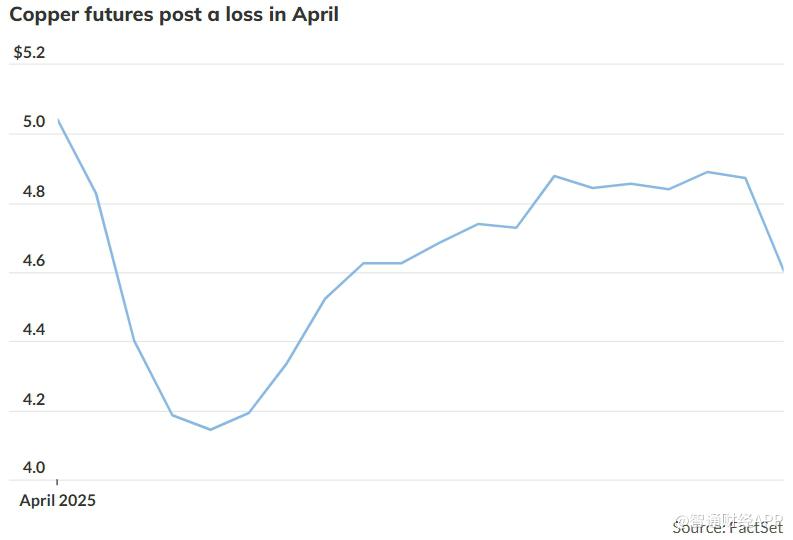
Core Viewpoint - The sharp decline in copper prices is seen as a negative indicator for global economic health, reflecting increasing investor pessimism about economic prospects [1][5]. Group 1: Market Performance - On a single trading day, copper futures for July delivery fell by 5.4%, closing at $4.61 per pound, marking the lowest closing level since April 11 and the largest single-day drop in over three weeks [1]. - In April, copper prices experienced an 8.4% cumulative decline, the largest monthly drop since June 2022, despite a year-to-date increase of 14.5% [4]. Group 2: Economic Indicators - The current market trends suggest a "W-shaped recovery," indicating a potential second downturn after an initial recovery, which poses a more complex challenge than the typical "V-shaped recovery" [4]. - The decline in copper prices is attributed to macroeconomic concerns, including falling U.S. Treasury yields and oil prices, signaling pressure on the global economy [1][5]. Group 3: Trade Relations and Market Sentiment - Market anxiety is heightened by fears of a recession and a lack of substantial progress in U.S.-China trade relations, which are seen as the primary factors suppressing copper prices [5]. - The dramatic price fluctuations are linked to previous tariff discussions initiated by the Trump administration, which initially caused a spike in copper prices [6]. Group 4: Future Outlook - Current support for copper prices is identified at $4.39 per pound, with a potential danger zone if prices fall below $4.03, indicating deeper economic issues [7]. - Optimism remains regarding upcoming trade negotiations, particularly with Japan, India, and South Korea, which could influence copper prices positively [7]. - A rebound in copper prices is contingent on several factors, including tariff relief and improved economic data from the U.S. and China, with projections suggesting a potential rise to $10,000 per metric ton by the end of 2025 [7][8].