医疗器械研发

Search documents
数亿元融资!又一国产脑机接口企业完成C轮
思宇MedTech· 2026-03-16 06:38
Core Viewpoint - Hangzhou Shenluo Medical Technology Co., Ltd. has completed a multi-hundred million RMB Series C financing round, led by Junlian Capital, with participation from existing shareholders including OrbiMed, Boyuan Capital, and Guotou Chuanghe [2]. Company Introduction - Hangzhou Shenluo Medical Technology Co., Ltd. is engaged in the research and development of medical devices related to neuroregulation and brain-computer interfaces, headquartered in Hangzhou, Zhejiang Province [2]. Product and Technology Overview - The company focuses on the development and commercialization of implantable neurostimulation devices and brain-computer interface technologies [2]. 1. **Spinal Cord Stimulation (SCS) System**: Approved by the National Medical Products Administration (NMPA) for chronic pain management, launched in early 2026 [2]. 2. **Peripheral Nerve Stimulation (PNS) System**: Currently in the registration application stage for peripheral nerve regulation treatments [3]. 3. **Tibial Nerve Stimulation (TNS) System**: Targets neuroregulation for urinary function-related diseases, part of the company's wireless micro-neuroregulation technology platform [4]. 4. **Brain-Computer Interface Technology**: Developing a closed-loop brain-computer interface system for applications in neural function recovery, including spinal cord injuries [7]. 5. **Sublingual Nerve Stimulation System**: Under development for the treatment of obstructive sleep apnea [8]. Product Registration Status - The company has received multiple medical device registration certificates from the National Medical Products Administration, including: - Spinal Cord Stimulation External Controller - Implantable Spinal Cord Stimulation Electrodes - Test Stimulator - Patient Controller for Spinal Cord Stimulation [9]. Financing History - The financing history includes: - March 2026: Series C round, amount undisclosed, led by Chengdu Junrongkang Venture Capital [10]. - April 2024: Series B+ round, multi-hundred million RMB, led by OrbiMed [10]. - October 2022: Series B round, approximately hundred million RMB, led by Guotou Chuanghe [10]. - January 2022: Series A round, multi-million RMB, led by Bodin Capital [10]. Patent Situation - The company holds several authorized patents related to neurostimulation devices and methods, including: - Manufacturing methods for stimulation electrodes - Control methods for electrical stimulation devices - Wireless power supply devices for neurostimulators [12].


科研团队开发柔性磁定位贴片系统 助微创手术“精准导航”
Xin Lang Cai Jing· 2026-02-04 13:19
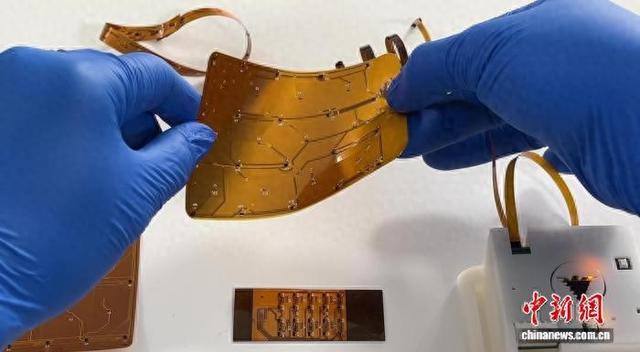
Core Viewpoint - A research team from the Shenzhen Institute of Advanced Technology and Zhejiang University has developed a flexible magnetic positioning patch system that offers high-precision, real-time tracking for medical instruments during minimally invasive surgeries, potentially enhancing surgical safety and efficiency [1][3]. Group 1: Technology Development - The research team created a customizable, attachable flexible magnetic positioning patch based on flexible printed circuit boards, which can be designed in various shapes and sizes to suit specific needs [3]. - This patch can be applied directly to the skin or integrated into medical instruments like endoscopes, providing immediate usability akin to a "flexible GPS" for precise guidance during medical procedures [3]. Group 2: Methodology and Validation - The team developed a dual-stage positioning algorithm that functions similarly to satellite navigation systems, first determining the patch's position in a global coordinate system using an external magnetic field, and then using the patch as a local reference for locating small magnetic targets within the body [3][5]. - Systematic validation of this method showed high-precision positioning capabilities in simulated experiments for brain artery interventions and ERCP guidewire placements, demonstrating its effectiveness in specific medical applications [5]. Group 3: Application Potential - The magnetic positioning strategy has shown good stability and versatility in various clinical scenarios, including surgical navigation and external physiological monitoring, indicating its broad application potential in the medical field [5].
武汉协和医院智能脑机接口研究院将落户车谷院区
Xin Lang Cai Jing· 2026-01-18 23:36
Core Viewpoint - The establishment of the Intelligent Brain-Computer Interface Research Institute at Wuhan Union Hospital aims to advance key technologies in both invasive and non-invasive brain-computer interfaces, marking a significant development in the field [1] Group 1 - The research institute will focus on critical core technology research related to brain-computer interfaces [1] - It will create the first specialized intelligent matrix for brain-computer interfaces in China [1] - The institute plans to build a multimodal brain disease database with a scale of one million entries [1] Group 2 - The initiative includes conducting multiple clinical trials for brain-computer interface medical devices [1] - The goal is to incubate and cultivate a number of technology companies that possess core technologies and have market competitiveness in the brain-computer interface sector [1]
植入式脑机接口助力视觉重建,深眼医团队公开最新研究进展
Nan Fang Du Shi Bao· 2026-01-05 09:14
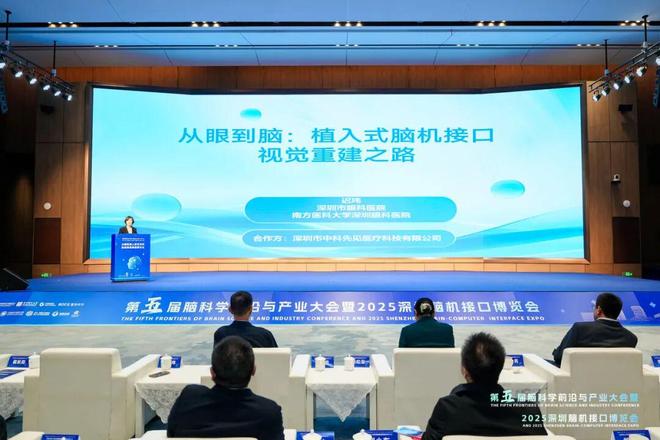
Group 1 - The Shenzhen Eye Hospital, led by Professor Chi Wei, presented a report on "From Eye to Brain: The Path of Implantable Brain-Machine Interface for Visual Reconstruction" at the Fifth Frontier of Brain Science and Industry Conference [1] - The research team successfully implanted a wireless, multi-channel visual cortex prosthesis in non-human primates, marking a significant advancement in brain-machine interface technology [3] - This implant is the smallest semi-invasive brain-machine interface visual implant globally, causing minimal trauma and risk, and it successfully induced neuronal discharge in the visual cortex [3] Group 2 - Since 2020, Shenzhen Eye Hospital has collaborated with Shenzhen Zhongke Xianjian Medical Technology Co., focusing on the development of artificial retinal prostheses and visual cortex prostheses, with successful animal testing [5] - The research is expected to lead to clinical-grade products within the next three years, demonstrating a significant leap from eye to brain technology [5] - The brain-machine interface industry is a key focus area for the Shenzhen Eye Hospital's "Eye-Brain Laboratory," aiming to integrate advancements in brain visual science, artificial intelligence, and biochips [8]
中国微循环学会苏州融合发展中心揭牌
Su Zhou Ri Bao· 2025-11-02 00:23
Core Points - The establishment of the Suzhou Integration Development Center by the Chinese Microcirculation Society aims to enhance the management of chronic diseases and promote innovation in the biomedicine industry in Suzhou [1][2] - The center will focus on technology transfer, professional talent training, and the development of technical standards in the field of chronic disease screening and prevention [1] - The collaboration between the Chinese Microcirculation Society, Suzhou Science and Technology Association, and Southeast University Suzhou Research Institute is aligned with the strategic needs of high-quality development in the biomedicine sector and the "Healthy Suzhou" initiative [1] Group 1 - The center's establishment is expected to gather top expert resources and cutting-edge technological achievements to facilitate breakthroughs in microcirculation-related disease prevention and control, high-end medical device research and development, and optimization of chronic disease management systems [1] - The center aims to significantly enhance the demonstration and leading effect of "Science and Technology Innovation China" in Suzhou [1] - Since its founding in 1993, the Chinese Microcirculation Society has been deeply involved in academic research, clinical transformation, and industry-education integration in the microcirculation field [2] Group 2 - The society has established strong academic foundations and rich expert resources in areas such as cardiovascular and cerebrovascular diseases, diabetic complications, tumor microenvironments, and tissue engineering [2] - In the current year, the society has organized over 60 experts to engage with 39 local biomedicine companies and 24 research institutions and hospitals in Suzhou, resulting in 15 cooperation intentions [2] - The society has also provided professional technical guidance to 10 local enterprises [2]
新型眼部植入系统帮助黄斑变性失明患者恢复视力
Xin Hua She· 2025-10-21 04:18
Core Insights - A new eye implant system has been developed that can help 80% of patients with age-related macular degeneration partially regain their vision [1][2] - Age-related macular degeneration is the leading cause of blindness globally, particularly affecting individuals over 60 years old [1] - The system, named Prima, consists of a retinal implant and augmented reality glasses, designed to replace lost photoreceptor cells due to the disease [2] Group 1 - The Prima system includes a 2mm x 2mm retinal implant that is 30 micrometers thick, which is surgically placed beneath the retina [2] - The augmented reality glasses are equipped with a mini camera that captures images and processes them through a computer to enhance contrast and brightness before projecting them as infrared light onto the retinal implant [2] - Clinical trials involved 38 patients with severe vision impairment, with 32 completing the study [2] Group 2 - After one year of using the Prima system, 81% of participants could read at least 10 more letters on a vision chart, and 78% could read at least 15 more letters [2] - The best-performing participant was able to read 59 additional letters, and 84.4% of participants reported being able to read letters, numbers, and words [2] - A total of 26 serious adverse events were observed among 19 participants, all of which were anticipated risks, including high intraocular pressure and subretinal hemorrhage, with most resolving on their own or through medical intervention [2]
全球首款“骨胶水”研发团队:可实现断骨三分钟黏合
Xin Jing Bao· 2025-09-29 01:45
Core Viewpoint - Zhejiang University School of Medicine's Shao Yifu Hospital has developed the world's first biodegradable bone glue, "Bone 02," inspired by the adhesion mechanism of oysters, which can bond bone fragments effectively in a blood environment [1][2]. Summary by Sections Product Development - "Bone 02" is designed to bond bone fragments in various fracture types, potentially reducing or replacing traditional metal fixation methods [1]. - The development team conducted rigorous clinical trials over eight months, involving over 150 patients, demonstrating good safety and efficacy [1][2]. Technical Aspects - The material consists of a liquid phase and a solid phase, both of which are biocompatible and consist of components already present in the human body [3]. - The adhesive mechanism allows for rapid solidification within three minutes, creating a strong bond with bone tissue [4]. Performance Metrics - Key performance indicators include adhesion strength, operational time, and biocompatibility, which were optimized through extensive testing and iterations [5]. - The final formulation allows for a 3 to 5-minute operational window before solidification begins, ensuring sufficient time for precise application during surgery [5]. Clinical Advantages - Compared to traditional metal fixation, "Bone 02" reduces surgical time, minimizes tissue trauma, and accelerates recovery [11]. - The product's biodegradable nature eliminates the need for secondary surgeries to remove metal implants, thus reducing overall healthcare costs [15]. Future Applications - The technology is expected to shift orthopedic surgery paradigms from mechanical fixation to biological healing, with potential applications in various fields, including dental implants and spinal surgery [19][20]. - "Bone 02" is anticipated to be approved for widespread clinical use within the next two to three years [20]. Emergency Use - The product's simplicity and rapid application make it suitable for emergency situations, such as battlefield or disaster scenarios, where quick stabilization of injuries is critical [18].
打一针“胶水”治疗骨折 浙大研发“骨胶水”实现突破
Xin Hua Wang· 2025-09-10 22:24
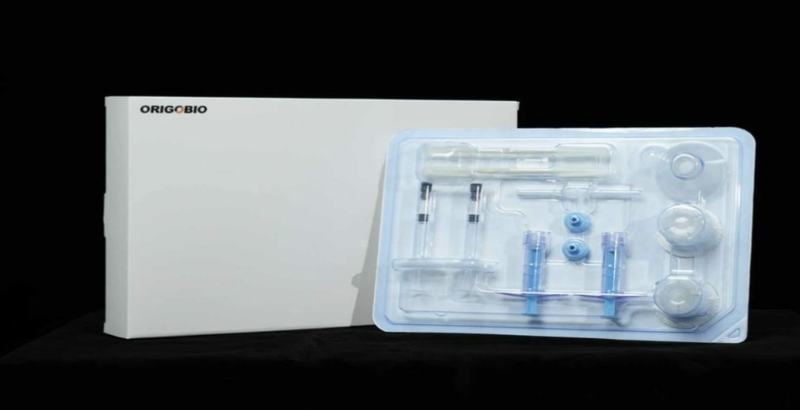
Core Viewpoint - The development of a new bone adhesive material named "Bone 02" by Zhejiang University Shao Yifu Hospital shows promising results in treating comminuted fractures, demonstrating good safety and efficacy in clinical trials involving over 150 patients [1][2]. Group 1: Product Development - The "Bone 02" material was inspired by the biological adhesion mechanism of oysters and underwent over 50 formula iterations and hundreds of tests to overcome key challenges such as biotoxicity and adhesion strength in blood environments [2]. - The maximum adhesive pull force of "Bone 02" can reach over 400 pounds, indicating its potential to replace traditional metal fixation devices while reducing the risk of foreign body reactions and infections [2]. Group 2: Clinical Application - The new adhesive material is applicable for fixing bone fragments of various sizes and can significantly enhance surgical efficiency and reduce trauma during operations, contributing to minimally invasive orthopedic surgeries [2]. - "Bone 02" is expected to be useful in emergency situations such as military operations and disaster rescue, where rapid and effective fracture treatment is critical [2].
零磁介入医学共建实验室在沪揭牌
Zhong Guo Xin Wen Wang· 2025-08-30 00:40
Core Viewpoint - The establishment of the Zero Magnetic Interventional Medicine Laboratory at Fudan University Affiliated Pudong Hospital represents a significant advancement in the integration of zero magnetic medicine and advanced interventional medicine, aiming for early non-invasive diagnosis of diseases with high precision and resolution [1][2]. Group 1: Laboratory Establishment and Collaboration - The Zero Magnetic Interventional Medicine Laboratory is led by Fudan University Affiliated Pudong Hospital and integrates resources from several prestigious hospitals and universities, forming a high-level academic team and a complete innovation transformation chain from theoretical research to technology development and industrial application [1]. - A four-party strategic cooperation agreement was signed among Fudan University Affiliated Pudong Hospital, Beihang University Large Scientific Device Research Institute, Hangzhou Weak Magnetic Field National Major Science and Technology Infrastructure Research Institute, and related enterprises [1]. Group 2: Technological Advancements and Research Focus - Academician Fang Jiancheng emphasized that weak magnetic fields are a new scientific discovery that complements structural imaging technologies, aiming to build a comprehensive health detection system for the human body [2]. - The laboratory will focus on the research and development of intelligent zero magnetic interventional materials and devices, establish clinical technical guidelines, and cultivate high-level talent, ultimately creating a national-level center for the promotion and application of zero magnetic interventional medicine technology [2]. Group 3: Future Directions and Benefits - The laboratory aims to enhance the deep research and application promotion of zero magnetic technology in interventional medicine, strengthening interdisciplinary collaboration and results transformation [3]. - The collaboration is expected to provide better early screening and treatment options for cardiac and brain diseases, benefiting a larger population [2].
数亿元!放疗技术完成Pre-A轮融资
思宇MedTech· 2025-08-26 02:58
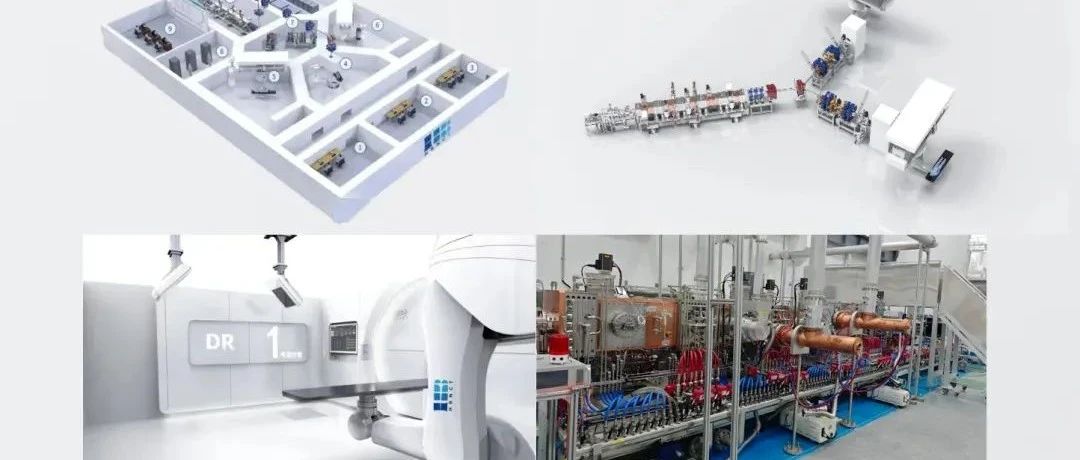
Core Viewpoint - Huaborn Neutron Technology Co., Ltd. has completed a multi-hundred million RMB Pre-A round financing, indicating strong market confidence in Boron Neutron Capture Therapy (BNCT) as a promising treatment method [2][11]. Company Overview - Established in 2023 and headquartered in Hangzhou, Zhejiang, Huaborn Neutron is a national high-tech enterprise focused on the research, production, and application of accelerator-driven BNCT technology [3]. - The company was founded by Wang Sheng, a renowned neutron scientist, and has assembled a team of experts across various disciplines including nuclear physics, software, control, mechanics, pharmacy, clinical medicine, and materials science [3]. Main Products and Technologies - Huaborn Neutron has developed the HyBorSys® BNCT full-process solution, which includes an accelerator neutron source system, boron drugs, and a treatment planning system (TPS), achieving a complete closed-loop for BNCT technology [4]. - The BNCT equipment utilizes a high-current proton RFQ accelerator and long-life solid lithium target technology, ensuring high power stability and a target lifespan that is globally leading (>1500 mA·h) [6]. - The company has established a research and development system for boron drug synthesis, significantly improving product quality and reducing production costs [7]. - The domestically developed TPS can model based on multi-modal imaging data from patients, simulating dose distribution using Monte Carlo particle transport programs for precise prediction and individualized treatment planning [9]. Current Status and Future Prospects - The HyBorSys® demonstration device has completed medical device registration inspection, and the boron drug is about to enter the IND application stage [10]. - BNCT is recognized as a significant breakthrough in the field of radiotherapy, gradually moving towards clinical application, with Huaborn Neutron achieving independent breakthroughs in devices, drugs, and software within two years [11]. - The recent financing round, attracting several hundred million RMB, reflects the capital market's high recognition of BNCT as a cutting-edge therapy [11].