生殖医学

Search documents
烟台山医院生殖医学中心顺利通过人类辅助生殖技术校验评审
Qi Lu Wan Bao· 2026-01-29 01:21
Core Viewpoint - Yantai Mountain Hospital's Reproductive Medicine Center successfully passed a biennial evaluation of human assisted reproductive technology, indicating authoritative recognition of its medical quality, safety management, laboratory operations, and ethical standards, thereby providing a solid technical guarantee for patients [1][4]. Group 1: Evaluation Process - The evaluation was organized by the Shandong Provincial Health Commission, involving a team of nine authoritative experts in reproductive medicine who assessed the center's techniques including artificial insemination (AIH), in vitro fertilization-embryo transfer (IVF-ET), and intracytoplasmic sperm injection (ICSI) [3]. - The expert team conducted a comprehensive review, including clinical visits, laboratory inspections, and examination of medical records and quality control data, focusing on clinical diagnosis, laboratory quality control, ethics, management, and continuous improvement of medical quality [3][4]. Group 2: Expert Feedback - The expert group praised the center's meticulous management and continuous improvement in medical quality, noting the increase in outpatient volume and assisted reproductive cycles despite a general decline in fertility willingness and birth rates [4]. - The evaluation concluded with a unanimous decision, awarding the center a high score of 961 out of 1000, confirming that all major technical indicators met the relevant technical specifications without any violations [4]. Group 3: Future Directions - The Deputy Secretary of the hospital emphasized that the evaluation serves as a comprehensive review and an opportunity to enhance technology, standardize management, and ensure safety [5]. - The hospital plans to take the experts' constructive feedback seriously to promote the standardized and high-quality development of reproductive medicine, aiming to safeguard medical quality and safety while supporting families' reproductive aspirations [5].

中西医协同共创新,生殖健康早保护——东部战区总医院生殖医学科主办首届金陵生殖障碍中西医协作研讨会
Yang Zi Wan Bao Wang· 2026-01-24 12:24
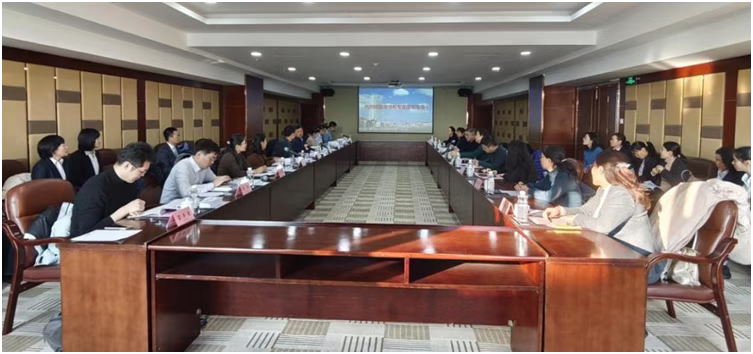
Core Viewpoint - The first "Jinling Reproductive Disorders Traditional Chinese and Western Medicine Collaborative Seminar" was held in Nanjing, marking the launch of a national clinical collaboration project focused on ovarian dysfunction, establishing a platform for integrated treatment in Jiangsu [1][3]. Group 1: Project Overview - The project is jointly initiated by the National Administration of Traditional Chinese Medicine, the National Health Commission, and the Central Military Commission's Logistics Support Department, aiming to address the treatment bottlenecks of ovarian dysfunction [3]. - The collaboration involves the Reproductive Medicine Department of the Eastern Theater General Hospital and the Acupuncture Department of Nanjing University of Chinese Medicine, focusing on creating standardized collaboration mechanisms, intelligent data platforms, and standardized treatment plans [3]. Group 2: Treatment Approaches - Ovarian dysfunction is characterized by infertility and estrogen deficiency symptoms, with Western medicine focusing on hormone regulation, immune intervention, and assisted reproductive technologies, which have limitations such as hormone dependency and side effects [3][4]. - Traditional Chinese Medicine (TCM) employs acupuncture and herbal treatments to regulate organ functions and improve the ovarian microenvironment, offering unique advantages like holistic regulation and fewer side effects, although it faces challenges in standardization and individualization [3][4]. Group 3: Clinical Implementation - The Reproductive Medicine Department has developed a three-pronged intervention approach combining electroacupuncture, moxibustion, and herbal medicine, which has shown to enhance ovarian reserve and improve egg quality [4]. - The department aims to expand the network of TCM and Western medicine collaboration, leveraging national projects to accelerate the translation of basic research into clinical practice, ultimately benefiting more women [4].

锦欣生殖2025年IVF取卵周期数整体降幅进一步收窄至-1.4%
Zhi Tong Cai Jing· 2026-01-05 22:26
Group 1 - The core viewpoint of the articles highlights that the company, Jinxin Reproductive Medicine (01951), has shown resilience in its IVF cycle numbers, with a projected improvement in Q4 2025 compared to Q3 2025, despite an 8.0% decline in H1 2025 compared to H1 2024 [1] - The overall decline in IVF cycles has narrowed from -5.2% in the first three quarters of 2024 to -1.4% for the entire year of 2025, indicating a recovery trend [1] - The flagship hospital in Chengdu has seen a turnaround, with IVF cycles growing by 1.3% in 2025 compared to a decline of -1.9% in the first three quarters of 2025 [1] Group 2 - Looking ahead to 2026 and beyond, the company plans to enhance clinical treatment outcomes, patient care quality, and service supply levels, while accelerating the upgrade of core reproductive medical technologies [2] - The company aims to strengthen its market position in Chengdu and expand its capacity in the Greater Bay Area following the relocation of new facilities, while also addressing overseas policy changes to tap into international market growth potential [2] - The company intends to leverage national fertility support policies and industry development opportunities to solidify its competitiveness and provide high-quality medical services, ultimately creating long-term stable value for shareholders [2]
浙江生殖医学团队援疆记:千里之外托起生命希望
Xin Lang Cai Jing· 2025-12-28 01:56
Core Viewpoint - The introduction of advanced IVF technology in Urumqi aims to assist infertile families in realizing their dreams of parenthood through a collaborative medical aid initiative from Zhejiang University Women's Hospital [1][3]. Group 1: Medical Aid Initiative - The medical aid initiative began in September 2020, focusing on establishing a comprehensive reproductive technology system in Xinjiang, with experts from Zhejiang University Women's Hospital stationed at local hospitals [1][3]. - Over five years, a complete and independent assisted reproductive technology system was developed, providing hope to infertile families [3][10]. Group 2: Success Stories - A case study highlights a patient, referred to as Xiaomin, who underwent successful IVF treatment after losing her fallopian tubes, resulting in a healthy baby born in May 2024 [4][5]. - By the end of 2025, the reproductive medicine department at Xinjiang People's Hospital is expected to have completed over 500 cycles of assisted reproductive technology [5]. Group 3: Systematic Development - The initiative is led by prominent figures such as Academician Huang Hefeng, who emphasizes a systematic approach to building local medical capabilities through training and technology transfer [7][9]. - A "two-location integrated" treatment model was introduced, allowing patients from Akesu and surrounding areas to access advanced medical services in Urumqi [8][9]. Group 4: Training and Capacity Building - Local clinical and nursing teams are receiving hands-on training at Zhejiang University Women's Hospital, ensuring the sustainability of skills and knowledge transfer [9][10]. - The establishment of a remote consultation mechanism allows for real-time expert guidance, enhancing the quality of care provided to patients in Xinjiang [8][10].
深入精子库,为何那么多人生不出孩子
36氪· 2025-12-11 00:01
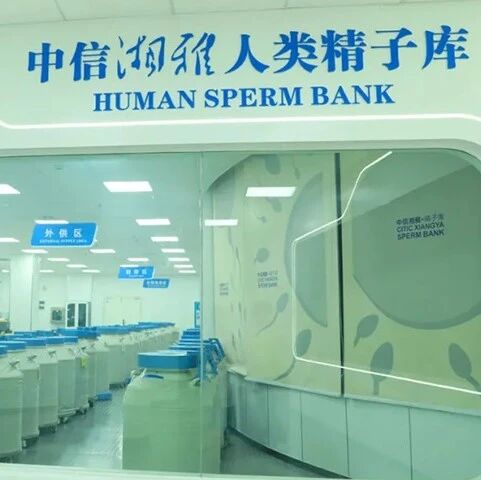
Core Viewpoint - The article discusses the challenges and opportunities in reproductive health, emphasizing the importance of early childbearing and the declining quality of male sperm, while also highlighting the advancements in assisted reproductive technologies [4][5][6]. Group 1: Reproductive Health Challenges - The incidence of infertility in China has increased from 12% in 2007 to 18% in 2020, with male and female factors contributing equally to infertility [9]. - Women over 35 face significant declines in fertility due to reduced egg quantity and quality, while men also experience declining sperm quality with age [8][9]. - The societal trend of late marriage and childbearing is influenced by various factors, including career pressures and educational costs, leading to a rise in high-age pregnancies [9][10]. Group 2: Sperm Quality Decline - Data from the Central South University shows a significant decline in sperm quality, with the acceptance rate for donated sperm dropping from 45.9% in 2006 to around 20% currently [11][12]. - The World Health Organization has revised the normal reference values for sperm parameters, indicating a downward trend in male fertility [11][12]. - Factors such as lifestyle choices, including sleep patterns and stress, significantly impact sperm quality, with younger individuals showing better sperm parameters compared to older students [13][16]. Group 3: Assisted Reproductive Technologies - The Central South University reproductive center has frozen approximately 820,000 embryos, with many serving as a form of "fertility insurance" for couples [28]. - The center emphasizes the importance of sperm donation and the strict regulations surrounding it, including the anonymity of donors and the limitation on the number of births per donor [20][22]. - Advances in reproductive technology are shifting the focus from sperm donation to self-sperm storage and fertility preservation, reflecting a growing trend in the market [23][28].
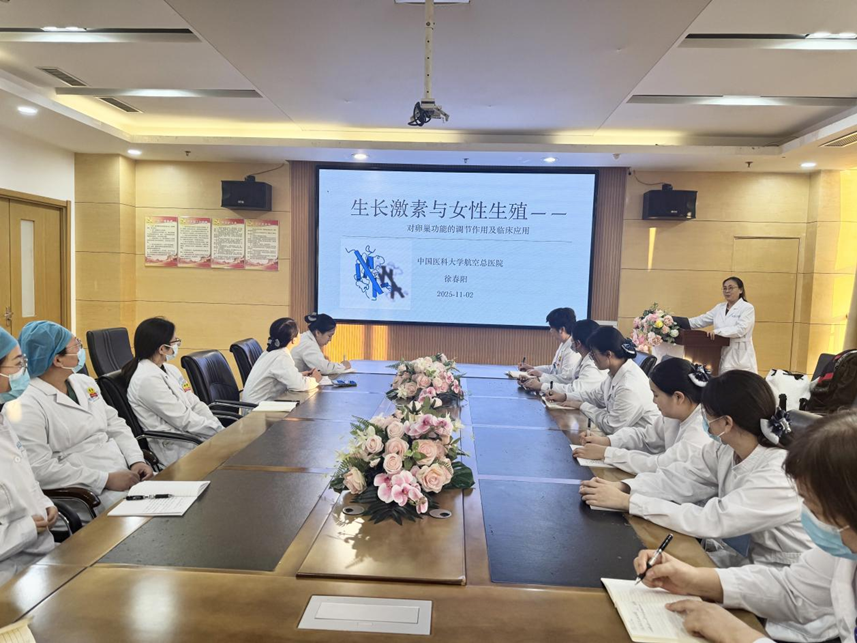
北京三甲名医徐春阳教授在嘉乐生殖分享生长激素临床应用新进展
Qi Lu Wan Bao· 2025-11-26 08:02
Core Insights - The academic exchange focused on the role of growth hormone in regulating ovarian function and its clinical applications in reproductive medicine [1][3][5] Group 1: Expert Insights - Professor Xu Chunyang, a leading expert in reproductive medicine, emphasized the importance of growth hormone in directly affecting ovarian cells and indirectly stimulating the liver to secrete IGF-I, which is crucial for follicle development and embryo implantation [3][5] - The challenges of low ovarian response (POR) and decreased fertility in older women were highlighted as common issues in clinical practice [3][5] Group 2: Clinical Applications - Growth hormone usage should follow the principle of "individualized precision treatment," tailoring treatment plans based on patient age, ovarian reserve function, and specific conditions [5] - The application of growth hormone can enhance ovarian sensitivity to ovulation induction drugs, thereby increasing the yield of quality oocytes, but requires careful monitoring of dosage and timing [5][6] Group 3: Collaborative Learning - Active communication among medical staff regarding complex clinical cases was encouraged, with Professor Xu providing solutions to various challenges faced in practice [6][8] - The hospital aims to regularly conduct high-level academic activities to integrate cutting-edge reproductive medicine technologies with clinical practice, enhancing infertility treatment services [8]
《柳叶刀》:世界首例!AI 助力不孕不育夫妇成功怀孕,20年求子路终见曙光
生物世界· 2025-11-02 09:17
Core Viewpoint - The article discusses a groundbreaking study that introduces an AI-based microfluidic sperm detection and recovery system, named STAR, which successfully enabled clinical pregnancy in a male diagnosed with azoospermia, marking a significant advancement in the treatment of male infertility [3][4][8]. Group 1: Technology and Methodology - The STAR system utilizes high-power imaging technology to scan semen samples from azoospermic males, capable of capturing and analyzing millions of images in under an hour [4]. - The system combines high-speed imaging, microfluidic chips, and deep learning algorithms, processing semen at a flow rate of 400μL per hour and capturing images at 300 frames per second [4]. - A time-consistency filter enhances reliability by confirming sperm detection only if at least three out of ten consecutive frames identify sperm [4]. Group 2: Clinical Application and Results - The STAR system was applied to a couple who had been trying to conceive for nearly 20 years, with the male having undergone multiple sperm retrieval attempts with no success [7]. - Initial manual searches of the male's semen sample showed no sperm, but the STAR system identified 7 sperm (2 active) from 2.5 million images scanned [8]. - The two active sperm were successfully injected into two mature eggs, resulting in a positive pregnancy after 19 years of attempts, demonstrating the potential of AI-guided microfluidic technology in overcoming long-standing barriers in male infertility [8]. Group 3: Implications and Future Research - This breakthrough signifies a potential shift from "no hope" to "hope for parenthood" for many couples facing male infertility challenges [8]. - The research team is planning larger clinical studies to evaluate the reproducibility and effectiveness of the STAR system across a broader patient population [8].

助力女性不孕症精准诊断:我国学者发布卵子与早期胚胎发育潜能缺陷系统分型与遗传图谱
生物世界· 2025-10-17 10:00
Core Insights - The article discusses the significant public health challenge of infertility, affecting 12.6%-17.5% of couples globally, and highlights the role of in vitro fertilization (IVF) as a primary assisted reproductive technology [3] - A recent study published in Nature Medicine introduces the concept of Oocyte and Early Embryo Competence Defects (OECD) and identifies six subtypes based on clinical characteristics, providing new diagnostic standards and genetic mapping for female infertility [4][7] Group 1: OECD Concept and Subtypes - The study systematically proposes the concept of OECD and categorizes it into six subtypes: Empty Follicle, Oocyte Maturation Arrest, Fertilization Failure, Zygote Arrest, Early Embryonic Arrest, and Mixed Phenotype, along with corresponding diagnostic criteria [4][7] - The research involved whole-exome sequencing of 2,140 female OECD infertility patients to explore the genetic landscape and subtype classification [7] Group 2: Genetic Findings and Implications - The research team identified 183 pathogenic or potentially pathogenic mutations across 28 known genes, with varying diagnostic rates among subtypes; for instance, the Empty Follicle subtype had a diagnostic rate of 53% [9] - The study also identified and validated two potential pathogenic genes, MLH3 and CENPH, and suggested nine previously unreported associated genes, providing biological insights into the potential pathogenic mechanisms of ovarian insufficiency [9] - Overall, the genetic findings explain 12.8%-23.1% of OECD cases, offering valuable information for developing diagnostic genetic screening and standardizing subtype classification for OECD patients [9]

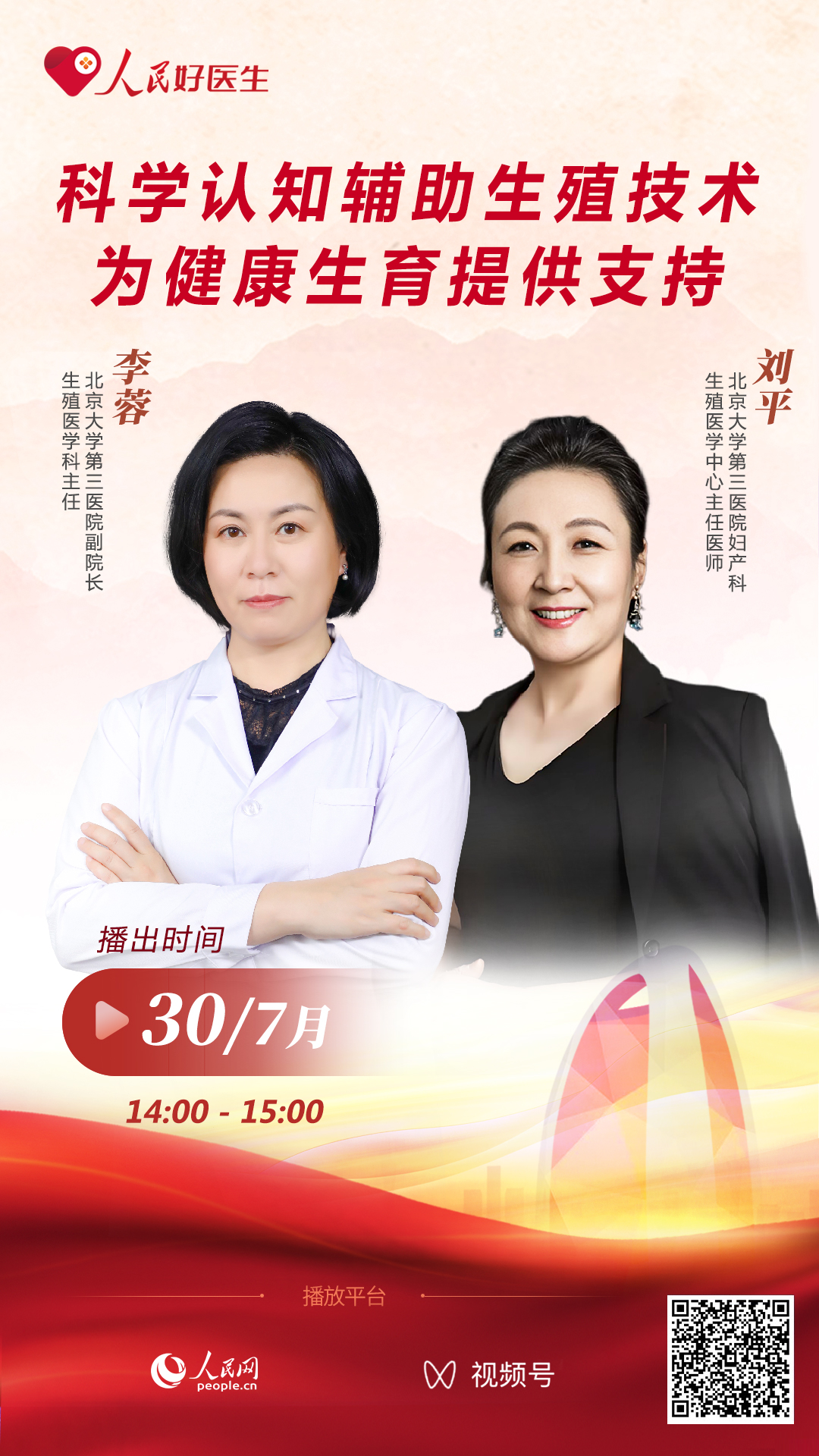
直播预告:科学认知辅助生殖技术为健康生育提供支持
Ren Min Wang· 2025-07-29 05:20
Group 1 - The core viewpoint emphasizes the importance of accelerating and improving the reproductive support policy system to promote high-quality population development [1] - Various regions are progressively including suitable assisted reproductive technologies in medical insurance reimbursement as related policies are implemented [1] - A live discussion featuring experts from Peking University Third Hospital will take place on July 30, focusing on assisted reproductive technologies and their impact on patients and clinical practices [1] Group 2 - Dr. Li Rong, a prominent figure in reproductive medicine, serves as the Deputy Director of Peking University Third Hospital and has received the National Outstanding Youth Science Fund [5] - Dr. Liu Ping, a key contributor to the establishment of assisted reproductive technology in mainland China, is currently the Chief Physician at the Reproductive Medicine Center of Peking University Third Hospital [5] - Both experts hold significant positions in various medical associations related to reproductive health and medicine [5] Group 3 - The event can be accessed through the People's Good Doctor App, where users can find health-related content and live discussions [6] - Users are encouraged to follow the People's Health public WeChat account for additional health information and to download the app for viewing [7]
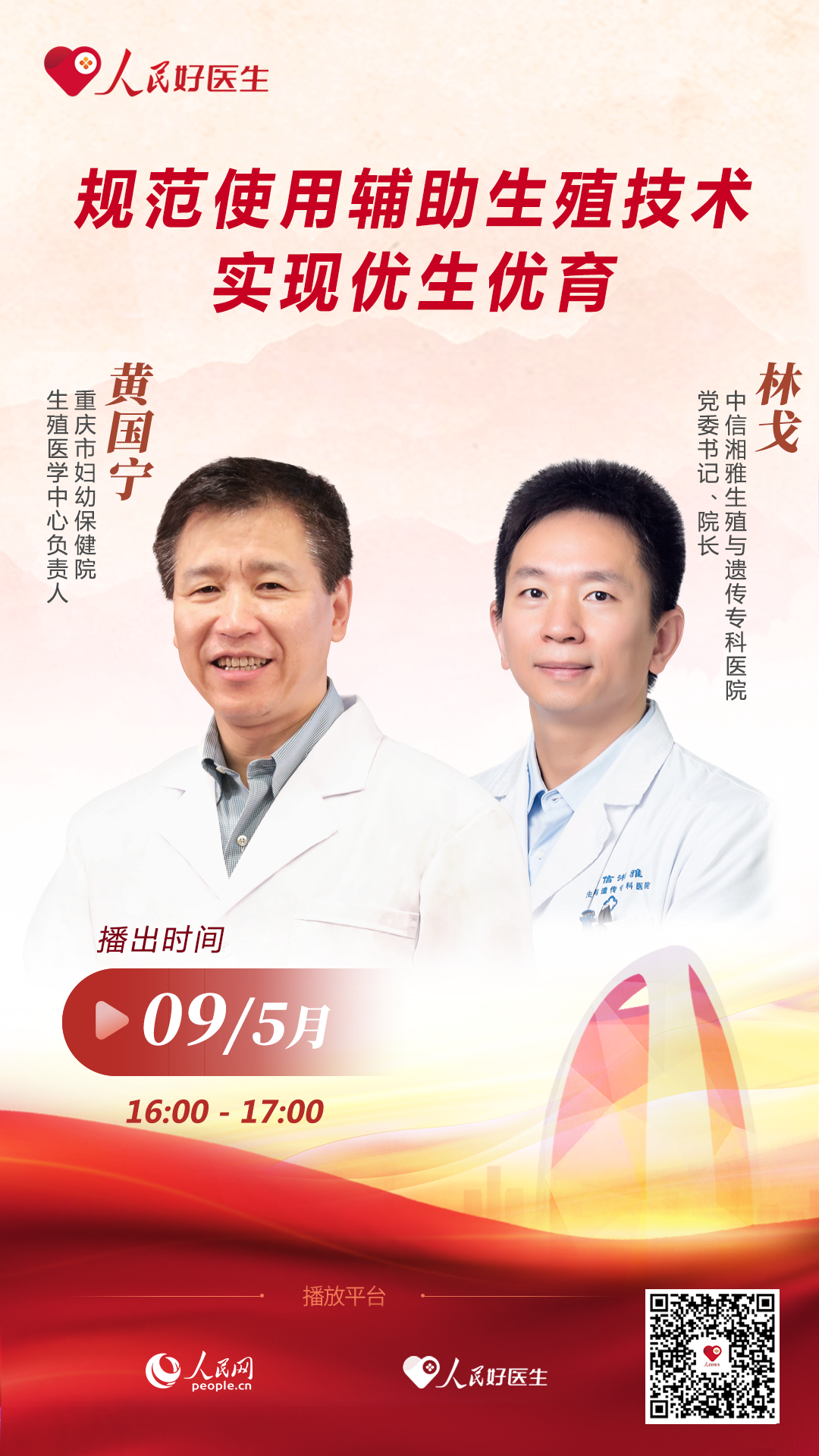
直播预告:规范使用辅助生殖技术 实现优生优育
Ren Min Wang· 2025-04-29 02:30
Core Insights - The increasing prevalence of infertility issues among families is attributed to the fast-paced lifestyle and environmental pressures, leading to a growing reliance on assisted reproductive technologies (ART) [1] - Significant advancements in ART, such as multi-gene screening and fertility preservation, have provided hope for many couples wishing to become parents, marking important progress in the field of reproductive health [1] Group 1: Development and Application of ART - Assisted reproductive technology has evolved from initial in vitro fertilization (IVF) to include breakthroughs like multi-gene screening and fertility preservation [1] - The upcoming live discussion on May 9 will feature experts discussing the development and application of ART, highlighting its role in achieving "优生优育" (optimal birth and nurturing) [1] Group 2: Expert Profiles - Huang Guoning, a leading figure in reproductive medicine, holds multiple prestigious positions, including Director of the Reproductive Medicine Center at Chongqing Maternal and Child Health Hospital and Chair of the Reproductive Medicine Branch of the Chinese Medical Association [5] - Lin Ge, another prominent expert, serves as the President of CITIC Xiyuan Reproductive and Genetic Specialty Hospital and has significant roles in various national committees related to reproductive health and stem cell research [5] Group 3: Viewing Information - The live discussion can be accessed through the People's Good Doctor App, which provides health education content [6] - Users can also follow the People's Health public WeChat account for additional health-related interactions and to download the app [7]