微流控技术

Search documents
博拓生物:2026年营收有望重回增长,战略布局脑机接口未来可期
Zheng Quan Shi Bao Wang· 2026-01-25 15:03
Core Viewpoint - The company, Hangzhou Botao Biotechnology Co., Ltd., anticipates a decline in revenue and net profit for 2025 due to the impact of U.S. tariff policies and cyclical fluctuations in the infectious disease market, but expects steady growth in 2026 with new product registrations and strategic investments in the brain-computer interface (BCI) industry [1][2]. Financial Performance - The company forecasts a significant drop in net profit for 2025, primarily due to revenue declines from U.S. tariffs and cyclical market demand fluctuations, alongside increased R&D and stock incentive costs [2]. - Despite short-term performance pressures, the company is optimistic about 2026 being a turning point for revenue and profit growth, supported by new product registrations and stable tariff conditions [2]. Product Development and Innovation - The company is accelerating the development of its microfluidic technology platform, focusing on cardiac markers, thyroid function, and nutrition-related projects, with breakthroughs in multi-project detection on a single chip [2]. - The company has received FDA510(k) approval for fentanyl testing and is progressing with various microfluidic product registrations in China, the EU, and Southeast Asia [2]. Strategic Expansion in Brain-Computer Interface - The company is actively investing in the BCI sector, aiming to establish it as a second core business through direct investments and partnerships [3]. - A strategic investment in Hangzhou Qingshi Yongjun has been made, focusing on invasive BCI treatments for treatment-resistant depression, with clinical trials already underway [3][4]. - The company has also invested in Hangzhou Haoshi Tianhui, which focuses on non-invasive BCI technologies for mental health assessments, with plans for product promotion and sales in 2026 [5][6]. Industry Ecosystem Development - The company plans to establish a specialized industry fund for the BCI sector, with a total scale of 200 million yuan, to enhance collaboration and development within the medical device ecosystem [6]. - The company is committed to building a synergistic medical device ecosystem in the BCI industry, recognizing it as a long-term investment opportunity in the healthcare sector [6].

喜报频传!成都高新区又一企业获千万元级融资!
Sou Hu Cai Jing· 2025-11-27 08:29
Core Insights - Sichuan Maikelong Biotechnology Co., Ltd. has completed a multi-million Pre-A+ round financing, led by Boyuan Capital, aimed at accelerating technology development and clinical project advancement [1][9] - This financing marks another significant funding achievement for Maikelong within a year, reinforcing its industrialization path in microfluidic technology [1][9] Company Overview - Maikelong is a technology transfer enterprise originating from the Membrane Science and Functional Materials Research Room at Sichuan University, with core competencies built on nearly 20 years of technological accumulation [3] - The company focuses on drug delivery and medical device sectors, leveraging advanced micro-sphere material pilot platforms to extend the application of microfluidic manufacturing technology [9] Technological Advancements - The team has established cutting-edge theories for preparing functional microspheres using microfluidic technology, innovating fluid operation strategies in confined spaces and developing new methods for chip design [5][7] - Maikelong has successfully created a batch production system for microspheres, achieving controlled preparation of hundreds of functional microspheres, thus overcoming critical technological bottlenecks in high-precision microsphere production in China [7] Applications and Market Potential - Microfluidic technology enables precise control of liquid flow at micro and nano scales, facilitating the production of uniform-sized, adjustable-structure, and customized functional microspheres [7] - The applications of microspheres are extensive, particularly in drug delivery, where they can target disease sites accurately, reducing side effects, and in medical devices, where they serve as core materials for diagnostic reagents, enhancing diagnostic accuracy [7][9] Future Plans - Following this round of financing, Maikelong plans to increase R&D investment, expedite clinical validation processes, and optimize market entry strategies [9] - The company aims to promote the industry-wide adoption of microfluidic manufacturing technology, opening new chapters in the development of the microfluidic sector [9] Industry Context - Chengdu High-tech Zone will continue to focus on cutting-edge biomedicine, enhancing the service ecosystem throughout the entire lifecycle and chain to help more companies overcome critical technological challenges [10]


人形机器人又融资了
Sou Hu Cai Jing· 2025-11-22 17:40
Financing Activities - 修实生物医药 completed nearly 100 million RMB Series A financing, focusing on overseas market expansion and R&D investment in peptide synthesis [2] - 百达信生物 successfully raised over 30 million RMB in Pre-A financing to accelerate the construction of a GMP production base for vaccine adjuvants [2] - 迈锐迪 announced the completion of several million RMB angel round financing to develop nuclear medicine projects [3] - 星动纪元 completed nearly 1 billion RMB A+ round financing, focusing on embodied intelligence technology [3] - 蓝点触控 secured over 100 million RMB in C round financing to enhance robot control technology [4] - 鲲石生物 raised 50 million RMB in Series A financing to advance macrophage drug innovation [5] - RockFlow completed several million USD in new financing led by Ant Group, focusing on AI-driven fintech solutions [5] - 中凯信网络 raised 8 million RMB in angel round financing to enhance AI technology integration [6] - 比利信息 completed several million RMB A+ round financing to accelerate the development of a new media platform for the travel industry [6] - 易思旋磁 secured several million RMB in seed round financing to support early-stage R&D in magnetic technology [6] - 融和医疗 completed nearly 100 million RMB in B round financing to promote innovative treatments for chronic obstructive pulmonary disease [7] - 爱鸥光学 raised several million RMB A+ round financing to enhance product development in the optical field [7] - 星尘智能 completed several hundred million RMB A++ round financing, focusing on AI robotics technology [8] - 中合基因 raised several million RMB Pre-A+ round financing to accelerate the commercialization of green DNA synthesis equipment [8] - 商汤医疗 completed several hundred million RMB in strategic financing to enhance medical AI models [9] - 博思芯宇 secured several million RMB angel+ round financing to develop sustainable computing solutions [9] - 灵宇宙 completed 200 million RMB Pre-A round financing to advance AI and consumer robotics [10] - 加速进化 completed over 100 million RMB financing to enhance humanoid robotics development [10] - 基流科技 raised nearly 100 million RMB in B round financing to strengthen AI computing cluster technology [11] - 耀石锂电 completed A round financing to accelerate solid-state battery technology commercialization [12] - 广汽高域 completed 200 million RMB Pre-A round financing to advance flying car technology [12] Investment Funds - 杭州热电 plans to invest 200 million RMB in establishing an industrial investment fund [14] - 恩威医药 announced a 20 million RMB investment in a joint fund focusing on early-stage enterprises [14] - 广东省人工智能与机器人产业投资基金 was established with a total investment of 1 billion RMB [14] - 杭州润苗基金 launched with an initial scale of 2 billion RMB, focusing on early-stage tech startups [14] - 安徽海螺新兴产业股权投资基金 was established with a total investment of 1 billion RMB [14] - 湖南高速 established a 6.5 billion RMB infrastructure investment fund [14] - 农银投资 and 浦东创投 launched a 3.334 billion RMB private equity fund [14] - 烟台夹河幸福新城城市发展母基金 was established with a total investment of 1 billion RMB [14] - 上海中移数字转型私募基金 increased its capital to 6.814 billion RMB, marking a 28% increase [14] - 四川高端能源装备子基金 was established with a scale of 1.5 billion RMB [14] - 市北高新 invested 40 million RMB in a joint investment fund [14]

具有功能性神经网络类脑组织育成 为神经药物检测提供更可控途径
Ke Ji Ri Bao· 2025-11-21 00:43
Core Insights - Scientists have successfully cultivated functional neural networks in brain-like tissue without using any animal-derived materials or biological coatings, marking a significant advancement in neuropharmaceutical testing [1][2] Group 1: Technology and Methodology - The core of this technology is a novel scaffold material made from polyethylene glycol (PEG), known for its chemical inertness, which typically prevents live cells from attaching and growing without animal-derived coatings [1] - The research team utilized an innovative microfluidic technique to create a complex, interconnected porous maze structure that allows donor brain cells to recognize and utilize the inert PEG material, ultimately forming functional neural networks [1][2] Group 2: Biological Environment and Applications - The porous structure not only provides physical support for cell attachment and growth but also efficiently circulates oxygen and nutrients, creating an ideal microenvironment for cell survival, proliferation, and differentiation [2] - Once matured, the cells exhibit donor-specific neural activity, enabling the simulation and study of neurological diseases such as traumatic brain injury, stroke, or Alzheimer's disease, and allowing for direct assessment of drug efficacy and toxicity [2] Group 3: Future Plans - The current brain tissue model measures approximately two millimeters in width and is still in the preliminary stages, with plans to scale up the model to construct more complex brain region models [2] - The research team is also exploring the application of this technology to other organs, with a long-term vision of developing an interconnected organ-level culture system to simulate interactions between different organs in the human body [2]
四川迈锐迪医疗完成数千万元天使轮融资,聚焦肿瘤与神经领域
Sou Hu Cai Jing· 2025-11-20 02:26
Core Insights - Sichuan Mairidi Medical Technology Co., Ltd. has completed several million yuan in angel round financing, primarily supported by various investment entities [1][2] - The funding will be used for the development of a high-load nuclear medicine project and the construction of a radioactive drug pilot platform, leveraging microfluidic technology [1][2] Company Overview - Mairidi focuses on innovation in the fields of oncology and neurology, established by teams from Sichuan University and West China Hospital [1][2] - The company aims to overcome existing technological bottlenecks and pioneer the application of microfluidic technology in nuclear medicine [1][2] Technology and Services - The company plans to build a pilot platform for radioactive drug development, providing services such as product concept validation, technical development, and quality research [2][3] - Microfluidic technology offers significant advantages in the separation and purification of radionuclides, which are characterized by low material quantities and high costs [1][2] Industry Context - The nuclear medicine industry is rapidly emerging as a focal point in global healthcare, with therapeutic nuclear drugs already on the market in Europe and the U.S. [2] - Mairidi's investment reflects recognition of the nuclear medicine industry's growth trajectory and the importance of technology transfer from academic institutions [2][3] Future Development - Mairidi will establish core service capabilities in the radioactive drug industry chain, including platforms for radionuclide separation, labeling technology, and molecular modification [3] - The company will equip facilities that meet international standards for the synthesis and quality control of radioactive drugs [3]
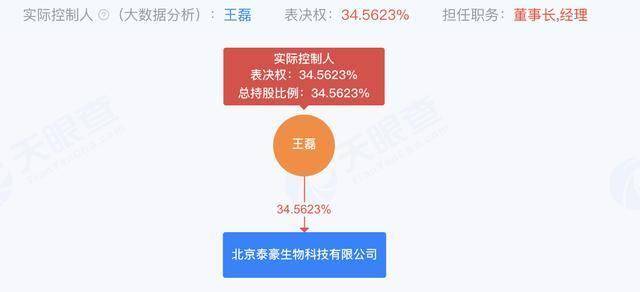
泰豪生物完成新一轮融资,董事长王磊持股35%
Sou Hu Cai Jing· 2025-11-13 02:25
Core Insights - Beijing Taihao Biotechnology Co., Ltd. has successfully completed a new round of financing, exclusively funded by Linyi Linshu Emerging Industry Fund managed by Shanda Investment Management [1] - The raised funds will be primarily used to accelerate the registration application process for the company's core product, a microfluidic nucleic acid rapid detection kit for infectious diseases, and to initiate the construction of a modern production base [1] Company Overview - Taihao Biotechnology was established in 2021, with a registered capital of 1.736 million yuan, and focuses on developing intelligent rapid detection devices in the field of biological molecular detection based on microfluidic technology [1] - The company possesses unique technical routes and experience in the production and manufacturing of microfluidic chips, covering the entire business chain from chip design, reagent and instrument development to production line construction and product manufacturing [1] - The actual controller of Taihao Biotechnology is Wang Lei, who holds a total shareholding ratio of 34.56% and currently serves as the chairman and manager of the company [1]
《柳叶刀》:世界首例!AI 助力不孕不育夫妇成功怀孕,20年求子路终见曙光
生物世界· 2025-11-02 09:17
Core Viewpoint - The article discusses a groundbreaking study that introduces an AI-based microfluidic sperm detection and recovery system, named STAR, which successfully enabled clinical pregnancy in a male diagnosed with azoospermia, marking a significant advancement in the treatment of male infertility [3][4][8]. Group 1: Technology and Methodology - The STAR system utilizes high-power imaging technology to scan semen samples from azoospermic males, capable of capturing and analyzing millions of images in under an hour [4]. - The system combines high-speed imaging, microfluidic chips, and deep learning algorithms, processing semen at a flow rate of 400μL per hour and capturing images at 300 frames per second [4]. - A time-consistency filter enhances reliability by confirming sperm detection only if at least three out of ten consecutive frames identify sperm [4]. Group 2: Clinical Application and Results - The STAR system was applied to a couple who had been trying to conceive for nearly 20 years, with the male having undergone multiple sperm retrieval attempts with no success [7]. - Initial manual searches of the male's semen sample showed no sperm, but the STAR system identified 7 sperm (2 active) from 2.5 million images scanned [8]. - The two active sperm were successfully injected into two mature eggs, resulting in a positive pregnancy after 19 years of attempts, demonstrating the potential of AI-guided microfluidic technology in overcoming long-standing barriers in male infertility [8]. Group 3: Implications and Future Research - This breakthrough signifies a potential shift from "no hope" to "hope for parenthood" for many couples facing male infertility challenges [8]. - The research team is planning larger clinical studies to evaluate the reproducibility and effectiveness of the STAR system across a broader patient population [8].

BCEIA 2025微全分析研讨会在京召开
仪器信息网· 2025-09-14 03:58
Core Viewpoint - The BCEIA 2025 conference, held in Beijing, featured a microfluidics analysis forum that attracted nearly a hundred participants for discussions and presentations on advanced analytical techniques and technologies in the field [2][3]. Forum Overview - The forum was co-hosted by Professor Lin Jinming from Tsinghua University and Professor Kazuma Mawatari from Waseda University, featuring 22 experts from both domestic and international backgrounds who delivered insightful reports [5]. Key Presentations - **Kazuma Mawatari's Report**: Introduced an AI-based concentration device and sensor for microfluidics, addressing the gap between sample volume and analysis volume, and presented a method for converting milliliters to nanoliters [7][8]. - **Mao Sifeng's Report**: Discussed an inclined push-pull probe for in situ cell staining and calcium channel activation, highlighting its advantages over traditional vertical probes in terms of integration and optical imaging [10]. - **Seong Ho Kang's Report**: Presented a multifunctional optical nanoscopy system for super-resolution imaging and tracking in live cells, capable of real-time monitoring of intracellular transport without relying on fluorescence [11]. - **Chen Qiushui's Report**: Focused on on-chip measurement of biological radiation damage in X-ray imaging, showcasing advancements in nanocrystal scintillators for low-dose, high-sensitivity X-ray imaging [14]. - **Multi-Organ-on-a-Chip System**: Introduced a new integrated multi-organ system for assessing prodrug efficacy and toxicity, emphasizing its dual analysis capabilities and potential applications in drug development [15]. - **Wu Zengnan's Report**: Explored open aerosol microfluidics for compartmentalized functionalization of hydrogel particles, demonstrating the potential for customized applications in tissue engineering and drug screening [18]. Networking and Sponsorship - The microfluidics analysis forum was sponsored by Beijing Hongxin Future Technology Co., Ltd., providing a platform for further learning and networking opportunities [20].

研判2025!中国外泌体行业分类、市场规模及重点企业分析:生物技术突破与细胞通讯机制解析推动外泌体技术革新,加速临床诊断与治疗范式升级[图]
Chan Ye Xin Xi Wang· 2025-09-08 01:05
Industry Overview - The exosome industry in China is experiencing strong growth, with a market size projected to reach 2.279 billion yuan in 2024, representing a year-on-year increase of 22.72% [1][7]. - Exosomes are membrane vesicles released from cells that play a crucial role in intercellular communication, containing various biomolecules such as proteins, lipids, and nucleic acids [2][6]. Industry Chain - The upstream of the exosome industry includes sources like animal, plant, and microbial exosomes, along with necessary biological reagents and production equipment [6]. - The midstream focuses on the production and manufacturing of exosomes, while the downstream applications span medical, aesthetic, and research services [6]. Key Applications - In the medical field, exosomes are utilized for tumor treatment by modulating the tumor microenvironment and delivering drugs [7]. - Exosomes serve as ideal biomarkers for liquid biopsies due to their high stability, enabling dynamic monitoring of tumor progression [7]. - In the aesthetic sector, exosomes are leveraged for anti-aging products due to their active components and low immunogenicity [7]. Market Size - The continuous advancement in biotechnology and exploration of intercellular communication mechanisms have led to significant developments in emerging technologies like engineered exosomes and microfluidics [1][11]. - The exosome market in China is projected to grow significantly, with a market size of 2.279 billion yuan expected in 2024, reflecting a 22.72% increase from the previous year [1][11]. Key Companies - Beijing Enze Kangtai Biotechnology Co., Ltd. has established a leading position in the engineered exosome sector with its GMP production facility and extensive collaborations [8]. - Guodian (Beijing) Pharmaceutical Technology Co., Ltd. focuses on innovative drug development using iPS cells and exosomes, particularly for neurological and immune-related diseases [9]. Industry Development Trends - Technological innovations are expected to enhance the efficiency and precision of exosome extraction, purification, and detection, facilitating large-scale production [11]. - The application of exosomes in disease diagnosis and treatment is anticipated to expand, with specific biomarkers being utilized for early diagnosis and therapeutic delivery [12]. - Increased government support and the establishment of industry standards will lead to stricter quality control and production practices in the exosome sector [13].

2025年中国微流控行业相关政策、市场规模及趋势分析
Sou Hu Cai Jing· 2025-09-01 06:36
Core Viewpoint - The Chinese microfluidics industry is experiencing rapid growth, supported by favorable government policies aimed at promoting innovation and expansion among domestic companies [2][4][6]. Policy Support - A series of supportive policies have been introduced by the government to foster the development of the microfluidics industry, encouraging innovation and growth among domestic enterprises [2]. - Key policies include: - December 2023: Guidelines for establishing resource-sharing centers in county-level medical services [4]. - March 2023: Notification on centralized procurement and price management for medical consumables [4]. - May 2022: "14th Five-Year" plan promoting advanced biopharmaceuticals, including microfluidic technologies [4]. - March 2021: National economic and social development plan emphasizing disease prevention and control [4]. - February 2021: Development plan for new in vitro diagnostic equipment [4]. Market Growth - The global microfluidics market has grown from $9 billion in 2017 to $26.1 billion in 2023, with a compound annual growth rate (CAGR) of 19.42% [4]. - The Chinese microfluidics market has expanded from approximately $55.2 million in 2017 to $2.41 billion in 2023, reflecting a CAGR of about 27.84% [6]. Industry Applications - The primary application of microfluidics technology is in in vitro diagnostics, accounting for approximately 83% of its usage, with other applications including cell capture and counting [6]. Research Methodology - The research team utilized a combination of desktop research, quantitative surveys, and qualitative analysis to assess the microfluidics industry's market capacity, industry chain, operational characteristics, profitability, and business models [8].