罐头食品

Search documents
《罐头食品加工工》国家职业技能标准通过终审
Xiao Fei Ri Bao Wang· 2026-02-11 00:40
Core Viewpoint - The approval of the national vocational skill standard for canned food processing workers marks a significant step towards standardizing and professionalizing the canned food industry in China, addressing the urgent need for skilled personnel in product innovation and market expansion [1][2]. Group 1: Standard Development - The national vocational skill standard for canned food processing workers was finalized in Beijing, providing a unified and standardized basis for skill evaluation in the industry [1]. - The standard was developed by the China Light Industry Federation and the China Canned Food Industry Association, involving extensive industry research and input from leading enterprises, research institutions, and vocational schools [1][2]. Group 2: Content of the Standard - The standard defines the profession of canned food processing workers, outlining skill levels, training requirements, and evaluation criteria, categorizing the theoretical knowledge and operational skills required for different levels of personnel [2]. - Experts reviewed the standard rigorously, providing professional feedback on aspects such as level settings, skill requirements, and evaluation norms, leading to the finalization of the standard [2]. Group 3: Industry Impact - The successful finalization of the standard is seen as a crucial measure to meet the national requirements for building a high-skilled talent workforce, filling a gap in the canned food industry's vocational skill standard system [2]. - The establishment and refinement of the standard are expected to promote the standardization and professional development of the canned food industry, fostering a high-quality talent pool and injecting strong momentum into the industry's growth [2].
食品饮料行业周度市场观察-20260204
Ai Rui Zi Xun· 2026-02-04 06:40
Investment Rating - The report does not explicitly provide an investment rating for the food and beverage industry Core Insights - The food and beverage industry is experiencing significant trends, including the rise of canned foods, the expansion of herbal drinks, and the increasing popularity of low-sugar and functional beverages. The market is also seeing a shift towards health-conscious products and innovative marketing strategies to attract younger consumers [1][4][10] Industry Environment - Canned Foods: Recent regulatory updates aim to enhance the standards for canned foods, which are currently perceived as affordable but lack innovation to attract younger consumers. The industry is focusing on product diversification and premium offerings to drive growth [2] - Herbal Drinks: The market for traditional herbal drinks is booming, with sales expected to exceed 10 billion yuan. This growth is driven by rising health awareness among consumers and the entry of new brands [4] - Beverage Market: The beverage sector is witnessing a clear trend towards health-oriented products, with low-sugar and functional drinks gaining traction. Traditional brands are facing challenges as they adapt to these changes [4][10] Top Brand News - Dongpeng Beverage has successfully captured a significant market share in the ready-to-drink coffee segment, leveraging its cost-effective strategies and strong distribution network [18] - The brand "BASAO," founded by the creator of Yinlu, is entering the tea market with a focus on high-end products and cultural experiences [16] - The company "Three Squirrels" is expanding into the community discount supermarket sector, aiming to leverage its brand and supply chain capabilities to capture market share [21]
2026年第5周:食品饮料行业周度市场观察
艾瑞咨询· 2026-02-04 03:25
Group 1: Canned Food Industry - The State Administration for Market Regulation has released three draft national standards for canned food to enhance industry standards and applicability [3] - The canned food industry in China is diverse but lacks innovation, particularly in attracting younger consumers [3][4] - Canned food prices are generally affordable, benefiting from economies of scale and technological advancements, with the industry upgrading through self-heating products and high-end categories [3][4] Group 2: New Beverage Trends - The sugar water shop model has gained popularity among franchisees, with brands like Mai Ji Milk rapidly expanding, but faces challenges such as high costs and low-frequency consumption [5] - The market for traditional Chinese health drinks is booming, with products like red bean and barley water seeing increased sales, driven by young consumers' health consciousness [6] - The beverage market is experiencing a shift towards health-oriented products, with low-sugar and functional drinks becoming mainstream, while traditional brands face declining sales [7] Group 3: Functional and Innovative Products - Vitamin drinks are becoming essential for young consumers, especially during flu seasons, with brands like Nongfu Spring seeing significant sales growth [9] - The introduction of banana-flavored drinks by major brands reflects a trend towards health-conscious and innovative beverage offerings [10] - The global nutrition and health industry is witnessing a peak in raw material innovation, with a focus on standardized and stable ingredients [11] Group 4: Market Dynamics and Brand Strategies - The "medicinal food" trend is emerging, with a market size projected to reach 370 billion yuan, driven by policy support and technological advancements [12] - The rise of Chinese-style health drinks is creating a competitive landscape, with brands needing to address issues of standardization and supply chain integration [14] - The dairy industry is shifting focus from consumer markets to B2B opportunities, driven by the growth of new consumption formats like tea and coffee [15] Group 5: Brand Developments and Challenges - The beverage brand COMMUNE is preparing for an IPO, aiming to expand its presence despite facing challenges in same-store sales and rising costs [24] - The acquisition of the domestic soda brand Dayao by KKR marks a shift towards capitalizing on efficiency over emotional branding [25] - Dongpeng's coffee brand has rapidly gained market share, positioning itself among the top three in the ready-to-drink coffee market through strategic pricing and targeted marketing [26] Group 6: New Market Entrants and Innovations - The launch of Baoshifu's first bread store in Wuhan indicates its entry into the competitive bakery market, focusing on fresh and affordable products [27] - The Mexican baking group Bimbo is increasing investment in the Chinese market, leveraging local strategies and brand acquisitions to enhance market presence [28] - The recent leadership change at China Resources Beverage aims to optimize costs and drive new business growth amid evolving consumer trends [29]


欢乐家2025年业绩预告 净利润预计下滑约7成
Xi Niu Cai Jing· 2026-01-30 08:55
Core Viewpoint - The company Huanlejia (300997.SZ) has issued a profit forecast for 2025, expecting a net profit attributable to shareholders of between 35 million to 50 million yuan, representing a year-on-year decline of 66.07% to 76.25% compared to 147.38 million yuan in 2024 [2][4]. Financial Performance Summary - The forecasted net profit for 2025 is between 35 million yuan and 50 million yuan, a significant drop from 147.38 million yuan in 2024 [2][3]. - The net profit after deducting non-recurring losses is projected to be between 30 million yuan and 45 million yuan, down 68.92% to 79.28% from 144.80 million yuan in the previous year [3][4]. - In the first half of 2025, the company reported revenue of 775 million yuan, a year-on-year decline of 20.90%, and a net profit of 18.55 million yuan, down 77.50% [4]. - By the third quarter of 2025, revenue further decreased by 25.47% to 294 million yuan, with net profit plummeting by 713.87% to 8.03 million yuan [4]. Business Environment and Challenges - The company attributes its performance decline to a challenging consumer environment and intense industry competition, leading to decreased sales in its main distribution channels [4]. - The newly developed snack specialty chain and coconut raw material processing businesses have lower overall gross margins and have not yet achieved significant economies of scale [4][6]. - The coconut juice business, which became the largest revenue source, is facing growth pressure due to increased industry homogenization and competition from cross-industry players [5][6]. Future Outlook - The company plans to continue improving quality and efficiency, enhance market expansion efforts, and explore new products, business types, and channels to broaden revenue and profit sources [4].

三合海鲜误发存在肉毒杆菌风险的鲔鱼罐头
Xin Lang Cai Jing· 2026-01-21 15:56
Group 1 - Tri-Union Seafoods announced that previously recalled Genova brand canned tuna was inadvertently distributed to some retailers [1][2] - Affected stores include Safeway, which is under Albertsons (ACI), and the company is urging consumers to discard or return the products [1][2]
2025年上海市罐头制品商品包装物减量(过度包装)监督抽查结果公布
Zhong Guo Zhi Liang Xin Wen Wang· 2026-01-15 08:57
Core Insights - In 2025, the Shanghai Municipal Market Supervision Administration conducted a supervision and sampling inspection of canned products, revealing that 10 out of 30 batches were non-compliant with packaging standards [2]. Group 1: Compliance Results - The inspection was based on GB 23350-2021 standards, focusing on packaging void ratio and number of packaging layers [2]. - A list of compliant canned products was provided, including brands such as SPAM, 娃哈哈, and others, with various specifications and production dates [2]. Group 2: Non-compliance Results - The inspection identified several non-compliant products, including 整颗炖梨罐头 and 缤纷果捞, primarily due to excessive packaging void ratios [4]. - Specific details of non-compliant products included their brands, specifications, production dates, and the retailers involved, highlighting issues with packaging standards [4].
山东平邑:一次危机倒逼产业升级
Qi Lu Wan Bao· 2026-01-12 03:06
Core Viewpoint - The article discusses the transformation of the canned food industry in Pingyi County, which faced a crisis due to a video exposing violations in production practices. The county has since taken significant steps to revitalize the industry and ensure high-quality development, earning recognition for its efforts [1][2][5]. Group 1: Crisis Response - Following the exposure of violations, Pingyi County's government held an emergency meeting, adopting a clear stance of accountability and transparency, emphasizing the need to address underlying issues in the industry [2]. - The crisis was seen as both a severe challenge and an opportunity for industrial transformation, prompting the county to take decisive action to rectify the situation [2]. Group 2: Reform Measures - Pingyi County implemented a comprehensive reform strategy combining immediate corrective actions with long-term structural improvements, focusing on establishing standards, enhancing regulatory oversight, and empowering industry transformation [3][4]. - The county developed 106 rectification standards across 32 key dimensions of production, ensuring rigorous compliance and accountability among 61 related enterprises [3]. - A "smart regulation" model was introduced, utilizing technology for real-time monitoring of production processes, which has led to the identification and resolution of 124 safety hazards since its implementation [3]. Group 3: Industry Transformation - The county established a special task force to enforce compliance and promote a cultural shift among enterprises from "wanting compliance" to "having to comply" [4]. - Initiatives included the creation of specialized industrial parks and the introduction of a public brand management system for "Pingyi Canned Goods," aimed at elevating the industry from low-end competition to higher value chains [4]. - The canned food industry in Pingyi is projected to produce 600,000 tons of fruit and vegetable cans by 2025, with a model that increases farmers' income by over 2,000 yuan per acre annually [4]. Group 4: Future Commitment - The county emphasizes that food safety is paramount, stating that without it, all other achievements are meaningless, marking a shift from scale expansion to quality improvement [5]. - The transformation journey from crisis to revitalization serves as a model for high-quality economic development in county-level economies, with a commitment to making Pingyi's canned goods a recognized brand both domestically and internationally [5].
研判2025!中国牛肉罐头生产工艺、政策、市场现状、竞争格局及发展趋势分析:低盐、低脂、无添加的健康化产品更受消费者欢迎[图]
Chan Ye Xin Xi Wang· 2025-12-31 02:24
Core Insights - The demand for convenient food products, such as canned beef, is increasing due to fast-paced urban lifestyles, catering to office workers, students, and outdoor enthusiasts [1][5] - The canned beef market in China is projected to reach a scale of 4.658 billion yuan in 2024, with a year-on-year growth of 5.5% [1][8] - Health-conscious consumers are increasingly favoring organic, low-salt, low-fat, and additive-free products, creating new growth opportunities for the canned beef industry [1][8] Overview - Canned beef is produced from fresh or frozen beef through processes such as pre-treatment, marination, pre-cooking, canning, sealing, and sterilization, allowing for long-term storage and convenient consumption [2][4] - Canned beef retains nutritional value and is a rich source of protein, vitamins, and minerals, making it suitable for emergency food reserves [2][4] Market Policies - Recent policies in China emphasize food safety, requiring strict quality control and management across all production, processing, and distribution stages of canned beef [5] - These regulations aim to promote a standardized, green, and high-quality development of the canned beef industry [5] Industry Chain - The upstream of the canned beef industry includes beef, seasonings, packaging materials, and production equipment, while the midstream consists of canned beef manufacturers [4][6] - Downstream channels include supermarkets, convenience stores, restaurants, and e-commerce platforms, with traditional retail remaining the primary sales channel [4][6] Current Development - The consumption scenarios for canned beef have expanded from traditional family meals and outdoor activities to include ready-to-eat meals and industrial catering, further increasing market demand [1][5] - The industry is experiencing a shift towards health-oriented products, with a focus on low-salt, low-fat, and zero-additive options [1][8] Competitive Landscape - The canned beef industry in China is characterized by a fragmented market with many small to medium-sized enterprises, while major players include companies like Shanghai Bright Meat Group and Henan Shuanghui Investment & Development Co., Ltd. [2][9] - These leading companies leverage scale, technological innovation, and brand strength to maintain competitive advantages [9] Development Trends - Health-focused product development is becoming a core direction, with companies moving towards clean label and functional products [12] - Flavor and form diversification is expected, with companies introducing regional and international flavors and new product forms [13] - Environmental sustainability in production and packaging is gaining importance, with a shift towards biodegradable and recyclable materials [14] - Vertical integration within the industry is deepening, with leading companies establishing long-term partnerships with beef suppliers and enhancing logistics and sales channels [15]


兽药超标一倍!“梅林牌”罐头港澳紧急下架,光明火速撇清,中粮持续沉默
Xin Lang Cai Jing· 2025-12-11 10:57
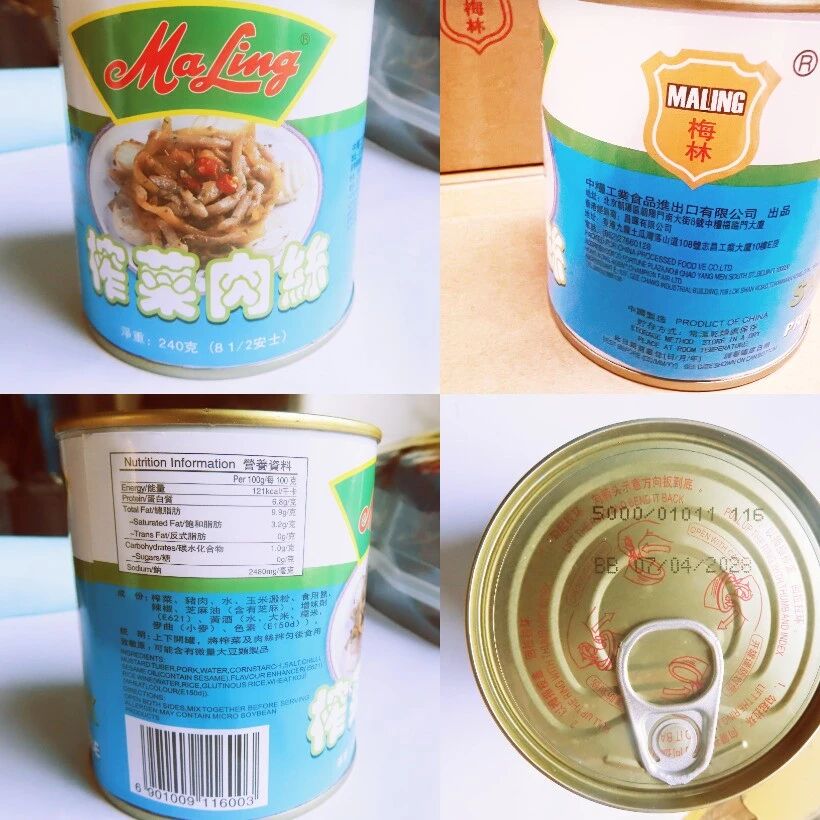
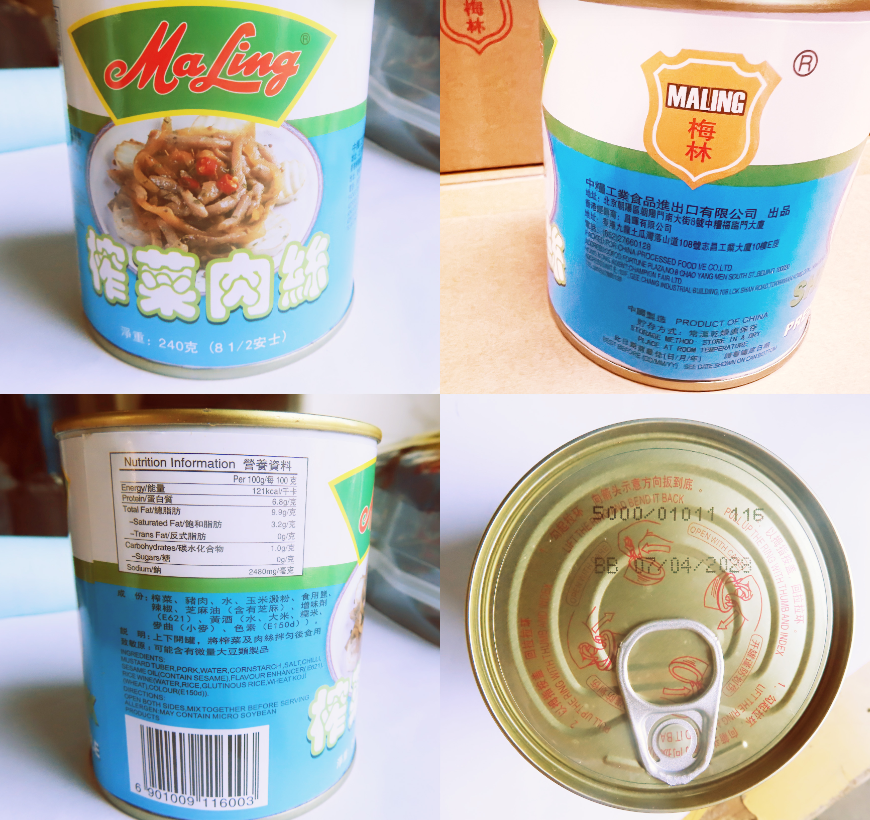
Group 1 - The Macau Municipal Authority announced a suspension of the import of "Meilin" pickled vegetable and shredded meat canned food due to excessive levels of sulfamethazine, a veterinary drug [2][3] - The affected product has not entered the Macau market, and Hong Kong has initiated a comprehensive recall and removal process [3] - The product in question is identified as "Meilin" pickled vegetable and shredded meat canned food, with a best before date of April 7, 2028, and a net weight of 240 grams. The detected sulfamethazine level was 204 μg/kg, exceeding the maximum residue limit set by Macau regulations by more than one time [3][5] Group 2 - The Macau Municipal Authority stated that under normal consumption conditions, the detected sulfamethazine levels would generally not pose adverse health effects to the public [5] - Long-term excessive intake of sulfamethazine can lead to allergic reactions and urinary system damage [5] - According to China's maximum residue limits for veterinary drugs in food, the allowable limit for sulfamethazine is 100 μg/kg [5][6] Group 3 - Bright Food Group clarified that the affected "Meilin" brand is not under its ownership but is operated by COFCO Group, which produces the "Meilin" canned food [2][7] - The two "Meilin" brands have historical ties, with the brand being authorized to COFCO for export purposes in the mid-20th century, leading to confusion in the market [11] - Consumers expressed concerns about the need for clearer brand differentiation to avoid confusion regarding product safety [11] Group 4 - COFCO Group has faced multiple complaints regarding food safety issues, including reports of foreign objects in canned products and quality concerns [12][14] - The official COFCO Meilin store has been criticized for selling products that do not meet safety standards, leading to a decline in consumer trust [14] - The company has not responded adequately to inquiries regarding the safety of the affected products and the status of their recall efforts [12][14]
兽药超标一倍!“梅林牌”罐头港澳紧急下架,光明火速撇清,中粮持续沉默
新浪财经· 2025-12-11 10:20
Core Viewpoint - The article discusses the suspension of the import of "Meilin" brand pickled vegetable and shredded meat canned food due to excessive levels of sulfanilamide, a veterinary drug, which poses potential health risks [2][6][9]. Group 1: Incident Overview - The Macau Municipal Authority announced the suspension of the import of "Meilin" brand pickled vegetable and shredded meat canned food after detecting sulfanilamide residue exceeding the limit [2][6]. - The product in question has not entered the Macau market, and Hong Kong has initiated a comprehensive recall and removal process [2][6]. - The specific product details include a best-before date of April 7, 2028, a processing plant number of 5000/01011, a net weight of 240 grams, and a detected sulfanilamide content of 204 μg/kg, which exceeds the maximum residue limit by more than one time [6][9]. Group 2: Brand Clarification - The "Meilin" brand involved in the incident is operated by COFCO Group, not Guangming Meat Group, which clarified that they do not produce the implicated canned product [3][11]. - The two "Meilin" brands have historical ties, with the Shanghai Meilin brand having authorized COFCO to export canned products in the mid-20th century, leading to confusion in the market [15]. Group 3: Company Performance - Guangming Meat Group reported a revenue of 16.854 billion yuan for the first three quarters of the year, a year-on-year increase of 2.87%, but faced a significant decline in net profit, down 55.94% to 168 million yuan [13]. - The company experienced a net loss of 8.02 million yuan in the third quarter, indicating substantial performance pressure [13]. Group 4: Consumer Concerns - There have been multiple complaints regarding food safety issues related to COFCO Meilin products, including reports of foreign objects in canned food and concerns about product quality [17][18]. - Consumers have expressed dissatisfaction with the company's response to these complaints, which may erode trust in the brand [18].