
植物蛋白饮料

Search documents
卖不动的“六个核桃”,押注半导体能行吗?
Xin Lang Cai Jing· 2026-02-27 02:37
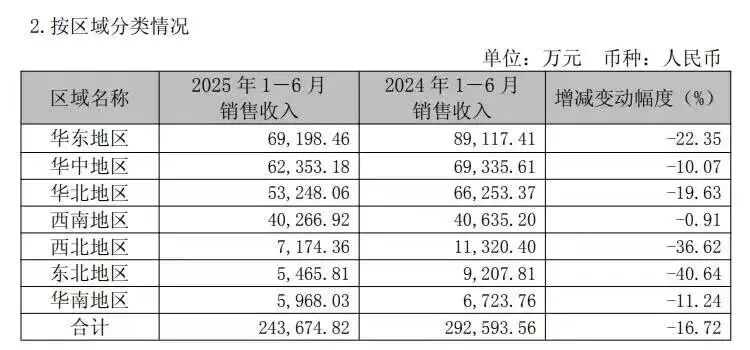
Core Viewpoint - The company behind "Six Walnuts," Yangyuan Beverage, has experienced a dramatic rise and subsequent decline in sales, facing challenges such as stagnant revenue and declining profits, prompting a shift towards cross-industry investments to seek new growth opportunities [1][2][17]. Financial Performance - Yangyuan Beverage's revenue from 2018 to 2024 showed fluctuations: 81.44 billion, 74.59 billion, 44.27 billion, 69.06 billion, 59.23 billion, 61.62 billion, and 60.58 billion, with a total decline of 20.86 billion over six years [1]. - In the first half of 2025, the company reported a revenue of 24.65 billion, a year-on-year decrease of 16.19%, and a net profit of 7.44 billion, down 27.76%, marking the first instance of simultaneous revenue and profit decline [2][3]. Regional Sales Decline - Sales revenue across all seven major regions (East China, Central China, North China, Southwest, Northwest, Northeast, and South China) experienced declines in the first half of 2025, with total sales dropping by 16.72% compared to the same period in 2024 [2][3]. Cross-Industry Investments - To counteract declining sales, Yangyuan Beverage has begun cross-industry investments, including a 1.6 billion investment in Changjiang Storage Technology and previous investments in AI and lithium battery companies [4][17]. - The company has shifted from conservative investments to more aggressive strategies, investing in sectors like semiconductors and new energy, although these investments have shown mixed results [18][19]. Market Position and Challenges - The brand "Six Walnuts" has faced criticism for misleading advertising, leading to a decline in consumer trust and sales, with the product's actual walnut content being significantly lower than implied [9][11]. - The competitive landscape for plant-based protein beverages has intensified, with new entrants and established brands launching products that align better with health trends, further challenging Yangyuan Beverage's market position [11][12]. Historical Context - Yangyuan Beverage's turnaround began in 1999 when it focused on walnut milk, leveraging traditional Chinese health beliefs to create a strong brand identity, which led to significant market share and revenue growth [5][6][7]. - Despite past successes, the company has struggled to adapt to changing consumer preferences and market dynamics, leading to a decline in its core product's sales volume from 85.68 million tons in 2018 to 56.53 million tons in 2024 [12][18].


东吴证券晨会纪要2026-02-12-20260212
Soochow Securities· 2026-02-11 23:30
Macro Strategy - The core viewpoint indicates that January's CPI was lower than expected due to the Spring Festival's timing, but the overall trend of rising prices remains unchanged, with CPI and PPI both showing signs of recovery [1][10][11] - CPI in January increased by 0.2% month-on-month and year-on-year, while PPI rose by 0.4% month-on-month but fell by 1.4% year-on-year, aligning with market expectations [1][10] - Looking ahead, CPI is expected to rise above 1% starting in February, and PPI may turn positive around June to July, indicating a more optimistic outlook for 2026 [1][10][11] Fixed Income Report - The report emphasizes the importance of a diversified financing system for supporting technology companies, particularly those in rapid growth and significant technology investment phases [2][12] - It highlights the potential for private technology companies in China to utilize the bond market for financing, as the current bond market is heavily concentrated on state-owned enterprises [2][12] - The focus is on the AI industry, which is experiencing unprecedented investment and R&D spending, making debt financing a critical tool for leading companies to balance cash flow and support strategic expansion [2][12] Company Analysis Xinzhou Bang (300037) - The company is expected to achieve a revenue of 9.64 billion yuan in 2025, with a year-on-year increase of 22.8%, and a net profit of 1.1 billion yuan, reflecting a 16.6% increase [5][15] - The price increase of hexafluoropropylene and VC is expected to contribute significantly to profit recovery, with a projected net profit of 2.4 billion yuan in 2026 [5][15] - The target price for 2026 is set at 79.8 yuan, maintaining a "buy" rating based on expected profit growth [5][15] Jiufang Zhitu Holdings (09636.HK) - The company anticipates a revenue of approximately 3.43 billion yuan for 2025, with a net profit forecast of 1 billion to 1.03 billion yuan, significantly higher than the previous year [6][17] - Despite regulatory challenges, the company is expected to maintain strong customer retention and growth in overseas business, supporting a "buy" rating [6][17] Huichuan Technology (300124) - The company forecasts a revenue of 42.97 to 46.67 billion yuan for 2025, with a net profit of 4.97 to 5.4 billion yuan, indicating a year-on-year growth of 16% to 26% [7][17] - The demand for industrial control is recovering, and strategic investments in robotics and digital energy are expected to enhance profitability [7][17] - The target price for 2026 is set at 94.1 yuan, maintaining a "buy" rating based on anticipated growth in various sectors [7][17] Yangyuan Beverage (603156) - The company is expected to achieve revenues of 5.281 billion yuan in 2025, with a projected net profit of 1.322 billion yuan, reflecting a year-on-year decrease of 23.3% [9][17] - The company is focusing on technology investments that may lead to an IPO exit, providing a safety margin through high dividends [9][17]


养元饮品《高品质核桃乳加工关键技术创新与产业化》项目,荣获河北省科技进步一等奖
Zhong Guo Shi Pin Wang· 2026-02-06 07:24
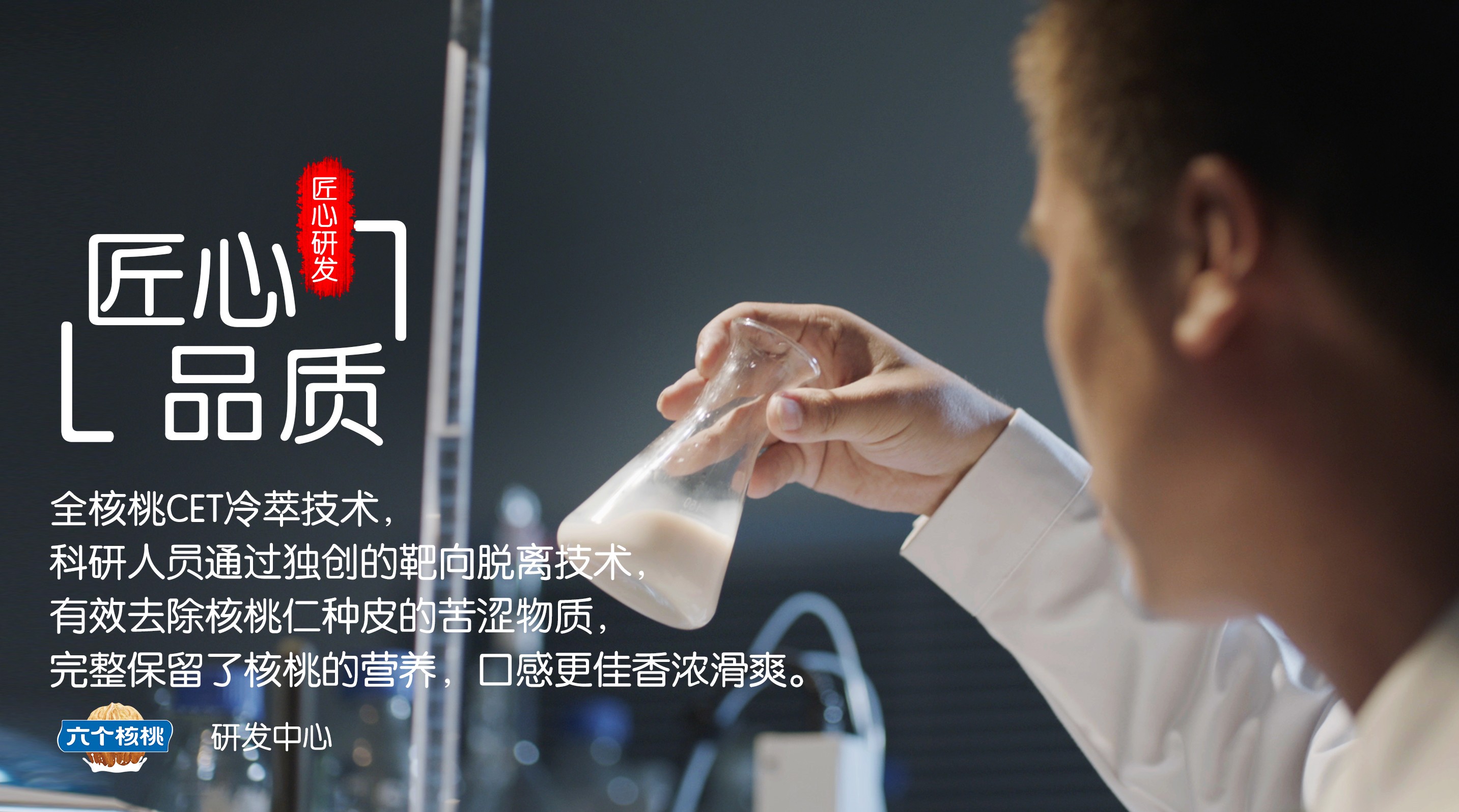
Core Insights - Hebei Yangyuan Zhihui Beverage Co., Ltd. (known as "Six Walnuts") won the first prize of the Hebei Provincial Science and Technology Progress Award for its project on "Key Technology Innovation and Industrialization of High-Quality Walnut Milk Processing," highlighting significant technological advancements and industrial application results [1][3] Group 1: Technological Innovation - The project represents a major breakthrough in the walnut deep processing industry, showcasing the company's commitment to continuous innovation and its ability to solve key technical challenges [1][3] - Six Walnuts has established a deep integration of production, education, and research through platforms like the "Key Laboratory of Walnut Beverage in China's Light Industry" and a postdoctoral research station, enhancing its technological capabilities [3][6] Group 2: Industry Impact - The recognition of Six Walnuts sets a benchmark for the entire plant protein beverage industry, promoting a shift towards technological, green, and health-oriented development [4] - The company's innovations directly enhance consumer experience by improving taste, nutritional value, and product quality, thereby benefiting both consumers and the industry [4][6] Group 3: Key Technologies - The "5·3·28" production process, introduced in 2005, integrates five patents, three key technologies, and 28 production steps, effectively addressing the common taste issues in traditional walnut milk [5] - The full walnut CET cold extraction process maximizes the retention of walnut's original flavor and nutritional essence, achieving a nutrient absorption rate exceeding 97% [5] - The five-stage fine grinding technology reduces the average particle size of walnut milk to the nanoscale, ensuring the integrity of walnut nutrition and enhancing absorption by the human body [5]
经销商跑光、连亏6年,"豆奶大王"的护城河,怎么说塌就塌了?
Sou Hu Cai Jing· 2025-12-16 11:47
Core Viewpoint - The article discusses the decline of Weiwei Soy Milk, highlighting the challenges faced by the brand in a changing market where younger consumers prefer convenience over traditional products. The brand's reliance on nostalgia is insufficient to regain market share as it struggles with declining sales and increasing competition from newer brands like Douben Dou and Vitasoy [1][4][12]. Group 1: Sales and Distribution Challenges - Weiwei has experienced a continuous decline in revenue for six consecutive years, with 345 distributors leaving the market in the first three quarters of 2025 due to unprofitability [1][10]. - The profit margins for distributors have decreased significantly, with rebates dropping from 8% to below 5%, making it less attractive for them to continue selling Weiwei products [1][3]. - The inventory turnover for Weiwei products has slowed, with stock remaining unsold for nearly a month longer than before, leading to further distributor withdrawals [3][6]. Group 2: Brand and Market Position - The brand's advertising strategy has not adapted to current trends, with minimal presence in digital marketing and social media, resulting in a significant drop in e-commerce revenue, which is less than 3% compared to competitors like Douben Dou, which exceeds 15% [4][12]. - Weiwei's product offerings have become outdated, with a lack of innovation in popular formats like ready-to-drink soy milk, while competitors have successfully captured market share through modern marketing strategies [4][12]. - Despite a significant investment from Xuzhou State-owned New Sheng Group in 2021, which acquired nearly 31% of the company, revenue has continued to decline from over 4.5 billion to less than 3.7 billion in recent years [9][10]. Group 3: Historical Context and Strategic Missteps - Weiwei has diversified into various sectors, including dairy, liquor, and real estate, but these ventures have not yielded sustainable success, leading to a dilution of focus on its core soy milk business [6][8]. - The company missed opportunities for product upgrades and market adaptation, particularly in the shift towards liquid soy milk, allowing competitors to dominate the market [8][12]. - The nostalgic appeal of the brand is waning, as consumers increasingly opt for more convenient beverage options, reflecting a broader shift in consumer preferences away from traditional products [1][13].

植物奶可替代牛奶?记者调查:超八成样本蛋白质含量不及牛奶
Xin Jing Bao· 2025-11-25 07:24
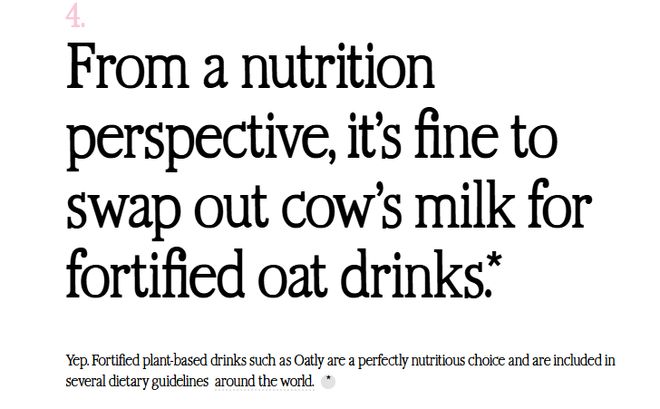
Core Insights - Oatly, the world's largest oat drink company, reported its first profitable quarter since going public in Q3 2025, highlighting strong growth in the Greater China region despite a challenging consumer environment [1][3] - The plant-based milk market in China has cooled since its peak in 2021, with investment and financing stagnating, and a decline in market share for plant-based milk products [1][3] - Oatly's marketing strategy emphasizes its products as "milk alternatives," but the nutritional content of many plant-based milks falls short compared to traditional cow's milk [2][11] Company Performance - Oatly achieved profitability for the first time in Q3 2025, marking a significant milestone for the company [1][3] - The company has expanded rapidly since entering the Chinese market in 2018, with over 9,500 retail and food service points by the end of 2020, reflecting a growth rate exceeding 450% [3] - Despite recent profitability, Oatly has faced challenges in maintaining market share and has been criticized for its marketing claims regarding nutritional superiority over cow's milk [22][24] Market Trends - The plant-based milk market in China has seen a decline in growth and investment since 2022, with many brands still positioning their products as "milk alternatives" [1][3] - A recent analysis of 23 plant-based milk products revealed that over 80% had lower protein content than cow's milk, and nearly 40% contained added oils and salts [2][11][20] - The nutritional content of plant-based milks often does not meet the standards set by cow's milk, particularly in terms of protein and calcium [11][17][24] Nutritional Analysis - Most plant-based milks analyzed contained less protein than cow's milk, with only 4 out of 23 products meeting or exceeding the protein content standard of cow's milk [11][12] - The calcium content in plant-based milks is often artificially added, and only 5 out of 23 products indicated calcium content, with many falling short of cow's milk levels [17][19] - Experts emphasize that while plant-based milks can serve as alternatives for those with lactose intolerance or dietary restrictions, they cannot fully replace the nutritional benefits of cow's milk for the general population [24][25]
“六个核桃”不好卖,养元饮品前三季度营利双降
Shen Zhen Shang Bao· 2025-11-03 04:09
Core Viewpoint - Yangyuan Beverage's Q3 2025 report shows a decline in overall revenue and net profit, indicating ongoing challenges in its core product, "Six Walnuts," while the company is exploring new growth avenues through investments in the semiconductor industry [1][5][6]. Financial Performance Summary - The company's total revenue for Q3 2025 was 3.91 billion yuan, a year-on-year decrease of 7.64% [1][2]. - The net profit attributable to shareholders was 1.12 billion yuan, down 8.95% year-on-year [1][2]. - The net profit excluding non-recurring items was 959 million yuan, a slight decrease of 0.81% [1][2]. - The net cash flow from operating activities was -165 million yuan [1][2]. Q3 Performance Highlights - In Q3 2025, the company reported a revenue of 1.44 billion yuan, an increase of 11.88% year-on-year [3][4]. - The net profit attributable to shareholders for Q3 was 375 million yuan, up 88.20% year-on-year [3][4]. - The net profit excluding non-recurring items for Q3 was 332 million yuan, an increase of 72.52% [3][4]. - The improvement in Q3 performance was attributed to reduced losses from joint ventures and increased sales revenue compared to the previous year [3][4]. Product and Market Insights - "Six Walnuts" remains the core product, contributing 88% to 98% of total revenue historically [4]. - However, since 2016, sales of "Six Walnuts" have been declining, with a significant drop in sales volume from 856,800 tons in 2018 to 565,300 tons in 2024, a decrease of 34% [5]. - The company faces competition from other plant-based beverages like coconut water and oat milk, which are gaining popularity among younger consumers [5]. Strategic Initiatives - The company is exploring a "second growth curve" through investments, including a recent 1.6 billion yuan investment in Yangtze Memory Technologies, a leading semiconductor company [6][7]. - This investment represents nearly 93% of the company's net profit for 2024 and is aimed at diversifying revenue sources [6][7]. - The semiconductor industry is characterized by rapid technological changes and significant capital requirements, presenting potential risks for the company [6].

养元饮品存货降18.6%单季净利增88% 10亿加码私募已投新潮传媒长江存储
Chang Jiang Shang Bao· 2025-10-27 23:57
Core Viewpoint - Yangyuan Beverage (603156.SH) is experiencing a rapid recovery in performance, with significant growth in revenue and net profit in the third quarter of 2025 compared to the same period last year [1][3]. Financial Performance - In Q3 2025, Yangyuan Beverage achieved revenue of 1.44 billion yuan, a year-on-year increase of 11.88%, and a net profit of 375 million yuan, up 88.2% year-on-year [1][3]. - For the first three quarters of 2025, the company reported total revenue of 3.905 billion yuan, a decrease of 7.64% year-on-year, and a net profit of 1.119 billion yuan, down 8.95% year-on-year [3]. - The company's non-recurring net profit for Q3 increased by 72.52% year-on-year, reaching 332 million yuan [3]. Inventory and Investment - As of the end of Q3 2025, Yangyuan Beverage's inventory stood at 426 million yuan, a significant decrease of 18.6% year-on-year [2][5]. - The company has increased its investment in the private equity fund Qianhong Investment by 1 billion yuan, raising its total commitment to 3.997 billion yuan, which now accounts for 99.925% of the fund [7]. Product Strategy - Yangyuan Beverage focuses on developing, producing, and selling plant protein beverages made from walnut kernels, with a diverse product matrix that includes various series targeting different consumer needs [2][3]. - The company aims to meet the demands of different consumer groups by offering products across multiple price ranges, including sugar-free options and products tailored for festive occasions [3]. Market Position - The walnut milk beverage segment is entering a mature phase after a period of rapid growth, leading to increased competition from other manufacturers [4]. - Despite the competitive landscape, Yangyuan Beverage maintains a first-mover advantage in the market [4].
亏损200亿!靠六个核桃登上河北首富,如今败也因“六个”核桃
Sou Hu Cai Jing· 2025-10-26 10:22
Core Insights - The article discusses the rise and fall of Yangyuan Beverage and its flagship product "Six Walnuts," highlighting the company's journey from peak sales to significant losses and market decline [1][20]. Company Overview - Yangyuan Beverage was founded in 1999, initially struggling with debts of 9 million and nearly unable to pay employee salaries [3]. - The company gained prominence with "Six Walnuts," which became a popular gift beverage, achieving sales of 91.17 billion in 2015, equating to 25 billion cans sold that year [11]. Product Development - The initial product was unpalatable, prompting the founder to invest time in improving the taste to make it more appealing to consumers [7]. - The marketing strategy included positioning "Six Walnuts" as a nutritious gift, leveraging high-profile advertising campaigns, including a 158 million sponsorship of the show "The Brain" [9]. Market Strategy - The company adopted a "rural encirclement of cities" strategy, focusing on smaller markets before expanding nationwide [11]. - By 2017, the company went public, with a share price of 78.73, leading to a market valuation peak of 500 billion [13]. Challenges and Decline - The product faced criticism for misleading labeling regarding its nutritional content, leading to a loss of consumer trust [15]. - The beverage market evolved, with competitors introducing innovative products, while "Six Walnuts" stagnated in development, focusing more on advertising than product improvement [17]. - The COVID-19 pandemic severely impacted sales, with revenue dropping to 44.27 billion in 2020, less than half of 2015's figures [20]. Current Status - By 2023, the company faced further issues, including a significant financial loss due to a distributor's fraud, leading to a market value drop of over 200 billion [22]. - Despite maintaining around 60 billion in revenue, the company struggles to regain its former market position [22]. Future Prospects - The founder's recent investment in the semiconductor industry raises questions about the company's direction and potential for recovery [26].

“滞销”的中国罐头大王,被挤下了餐桌
3 6 Ke· 2025-10-22 08:33
Core Viewpoint - The article discusses the decline of the Chinese canned food giant, Huanlejia, highlighting its significant revenue and profit drops, as well as the changing consumer preferences that have led to its current struggles in the market [5][8][36]. Group 1: Company Performance - Huanlejia's revenue for 2024 is projected to be 1.855 billion yuan, a year-on-year decrease of 3.53%, with net profit plummeting by 47.06% to 147 million yuan [5]. - In Q1 2025, the company reported revenue of 449 million yuan, down 18.52%, and a net profit of only 34.25 million yuan, a staggering decline of 58.27% [5]. - The company's market value has halved from its peak, dropping to 7 billion yuan, indicating a severe loss of investor confidence [8]. Group 2: Market Position and Competition - Huanlejia was once a leading player in the canned fruit market, competing with brands like Linjiapuzi and Zhenxin, but now faces intense competition as the market has become saturated with numerous brands [7][24]. - The canned food industry in China has seen a decline in production since its peak in 2016, with the market size for canned fruit dropping from 11.57 billion yuan to 8.1 billion yuan between 2017 and 2021 [36]. Group 3: Consumer Trends - There is a noticeable shift in consumer preferences, with younger generations moving away from canned products due to health concerns and a desire for less sugary options [35][37]. - The rise of the "no sugar" trend has led to a decline in demand for traditional canned fruits, which are often perceived as unhealthy due to their high sugar content and artificial additives [37]. Group 4: Strategic Responses - Huanlejia is attempting to adapt by exploring overseas markets and investing in production capabilities, such as a recent investment in Indonesia to enhance its supply chain [39][42]. - The company is also focusing on integrating its supply chain and diversifying its product offerings to meet changing consumer demands, including healthier options [42][45].
养元饮品10亿元加码私募投资 主业“失血”下能靠投资驱动增长吗?
Xin Lang Cai Jing· 2025-10-17 10:13
Core Viewpoint - Yangyuan Beverage is increasing its investment in private equity through a 1 billion yuan capital increase to its subsidiary fund, despite a decline in its main business revenue and profit [1][2]. Group 1: Investment Strategy - The 1 billion yuan capital increase will be used for new project investments, not for existing projects [2]. - Yangyuan Beverage's private equity fund, Qianhong Investment, was established in May 2021 with an initial size of 3 billion yuan, with Yangyuan contributing 2.997 billion yuan [2]. - Qianhong Investment has invested a total of 2.954 billion yuan in seven companies, with a significant 1.6 billion yuan investment in Changjiang Storage, representing 54% of the total investment [2][3]. Group 2: Financial Performance - In the first half of 2025, Yangyuan Beverage reported revenue of 2.465 billion yuan, a year-on-year decline of 16.19%, and a net profit of 744 million yuan, down 27.76% [1][6]. - The core product, walnut milk, accounts for 89% of revenue, with sales dropping from 765,200 tons in 2019 to 565,300 tons in 2024 [6]. - The company has seen negative growth across all major sales regions, with the exception of the Southwest region, where sales have declined by double digits [6][7]. Group 3: Market Challenges - The plant protein beverage industry is experiencing a decline, with a 3.94% drop in sales from 2019 to 2023, facing competition from dairy products and other beverage categories [6]. - Yangyuan Beverage's reliance on a single product has weakened its risk resilience, prompting a shift towards cross-industry investments [7]. - New product revenues remain small and have limited contribution to overall growth, despite an increase in the number of distributors [7].