
草业

Search documents
打造农畜产品新标杆
Xin Lang Cai Jing· 2026-02-06 19:58
Core Insights - Inner Mongolia's agricultural sector achieved significant milestones in 2025, with grain production reaching 840.7 billion jin, ranking fifth nationally, and leading in beef, mutton, milk, and other livestock products [1][3] Group 1: Agricultural Production Achievements - Grain planting area remained stable at over 10 million acres, marking the 22nd consecutive year of increased production [1] - Inner Mongolia is recognized as a crucial production base for grain and livestock, contributing significantly to national food security [1][3] - The region's beef production reached 1.017 million tons in 2025, maintaining its position as the top producer in the country [6] Group 2: Policy Recommendations and Industry Development - Local representatives proposed increasing support for foundational beef cattle breeding to enhance quality and quantity, suggesting broader coverage of subsidy policies [2] - A focus on developing a diversified forage supply system was emphasized to improve production efficiency and reduce costs [2] - Recommendations included establishing a tiered branding system for agricultural products to enhance market value and support farmers [6] Group 3: Technological Advancements and Innovations - Emphasis on leveraging technology for agricultural transformation, particularly in the dairy sector, where Inner Mongolia accounts for about 20% of national milk production [4][5] - Initiatives to enhance soybean production through technological innovation and support for breeding projects were highlighted [5] - The establishment of a "pyramid" breeding system for livestock was suggested to strengthen high-end breeds and optimize local breed structures [7]

这个科技小院,在藏北高原“种草”
Xin Lang Cai Jing· 2026-02-04 10:16
Core Viewpoint - The article emphasizes the importance of promoting agricultural technology and ecological restoration in the high-altitude grasslands of Tibet, particularly in the Naqu region, to enhance productivity and biodiversity while supporting local pastoral livelihoods [1][4]. Group 1: Agricultural Technology Promotion - The Central Government's policy aims to reform and build grassroots agricultural technology promotion systems, facilitating the transfer of agricultural scientific achievements to rural areas [1]. - The establishment of the Naqu Grassland Technology Center in 2022 focuses on ecological research and technology promotion to protect and restore the fragile high-altitude grassland ecosystem [3][4]. - The center has initiated various comparative experiments to understand the growth characteristics of local vegetation, with a focus on cultivating native grass species suitable for the region [5][6][7]. Group 2: Ecological Restoration Efforts - The Naqu region has experienced significant grassland degradation due to climate change and unsustainable pastoral practices, impacting local farmers' livelihoods [4]. - Research has led to the collection of 50 native grass seed varieties, with 16 identified as advantageous and 8 cultivated for their strong adaptability [7]. - Successful restoration efforts in villages like Gaqing have transformed previously barren lands into lush pastures, demonstrating the effectiveness of the implemented techniques [7]. Group 3: Knowledge Transfer to Local Farmers - The technology center emphasizes the importance of educating local farmers about suitable grass species and planting techniques tailored to specific environmental conditions [9]. - The promotion of scientific grazing methods, such as extended grazing cycles, aims to balance ecological protection with livestock productivity [10]. - The center's initiatives not only focus on production value but also on ecological sustainability, highlighting the need for responsible pastoral practices [9][10]. Group 4: Talent Development - Conducting research in the challenging high-altitude environment requires dedicated personnel, with graduate students actively participating in fieldwork to gain practical experience [11][12]. - The unique natural environment of the region offers significant opportunities for research and discovery, attracting students to contribute to grassland productivity studies [11][12]. - The center aims to cultivate more talent to support local development and enhance the ecological and economic value of the high-altitude grasslands [12].
修复高寒草原生态 藏北高原有个草业科技小院
Ren Min Ri Bao· 2026-02-04 07:01
Core Insights - The central theme of the article is the establishment and efforts of the Tibet Naqu Grass Industry Technology Courtyard to promote ecological research and technology in high-altitude grassland areas, aiming to enhance grassland productivity and biodiversity while supporting the sustainable development of pastoralism in the region [4][12]. Group 1: Ecological Research and Challenges - The fragile ecosystem of the Tibetan Plateau has faced degradation due to climate change and pastoral development, impacting local livelihoods [5]. - The Naqu Grass Industry Technology Courtyard was established in 2022 to explore better ways to protect and restore high-altitude grasslands [4][6]. - Research has led to the collection of 50 native wild grass seed varieties, with 16 promising species identified and 8 domesticated varieties cultivated for better adaptability [6][8]. Group 2: Restoration Efforts and Results - Initial restoration efforts in villages like Gaqing have shown positive results, transforming previously barren lands into lush pastures [7]. - The introduction of pest control and water-saving irrigation techniques has contributed to the recovery of degraded grasslands [6][8]. Group 3: Technology Promotion and Education - The technology courtyard emphasizes the importance of educating local herders about suitable grass species and planting techniques to meet livestock feed demands [8][9]. - A scientific grazing method has been developed, balancing ecological protection with livestock growth, involving a grazing cycle of 10 days of grazing followed by 20 days of rest [9]. Group 4: Talent Development and Future Goals - The harsh conditions of the Tibetan Plateau present challenges for ongoing research, but they also provide unique opportunities for discovery [11]. - The technology courtyard aims to cultivate more talent to support local development and transform the region's natural resources into economic benefits [12].

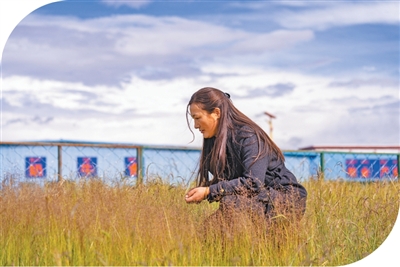
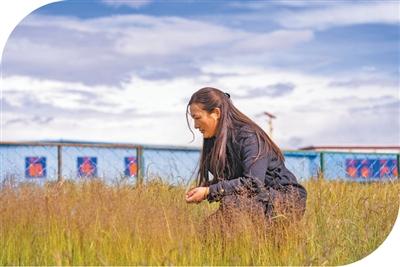
美丽中国|藏北高原有个草业科技小院
Xin Lang Cai Jing· 2026-02-04 06:05
Core Insights - The central government has emphasized the need to reform and build grassroots agricultural technology promotion systems, aiming to bring agricultural scientific achievements to rural areas [4] Group 1: Ecological Research and Grassland Restoration - The Tibet Naqu Grass Industry Technology Institute is focused on ecological research in high-altitude grasslands to enhance productivity and biodiversity [4][6] - The region has faced grassland degradation due to climate change and livestock development, impacting local livelihoods [6] - The institute has collected 50 native wild grass seed varieties and identified 16 advantageous species for cultivation [8] Group 2: Technological Promotion and Community Engagement - The technology institute is actively promoting new grass species and farming techniques to local herders, emphasizing the importance of tailored planting strategies [9] - A successful grassland restoration project in Gaqing Village has transformed barren land into productive pastures, attracting livestock back to the area [8][9] Group 3: Sustainable Grazing Practices - Research has led to the development of a "long-cycle, low-frequency" grazing method, balancing ecological protection with livestock productivity [11] - This method involves grazing for 10 days followed by a 20-day rest period, which has shown positive effects on grassland recovery and biodiversity [11] Group 4: Talent Development and Research Continuity - The harsh conditions of the Tibetan plateau present challenges for ongoing research, but they also provide unique opportunities for discovery [12] - The institute aims to cultivate more talent in the field of grassland ecology to support local development and ecological protection [12][13]
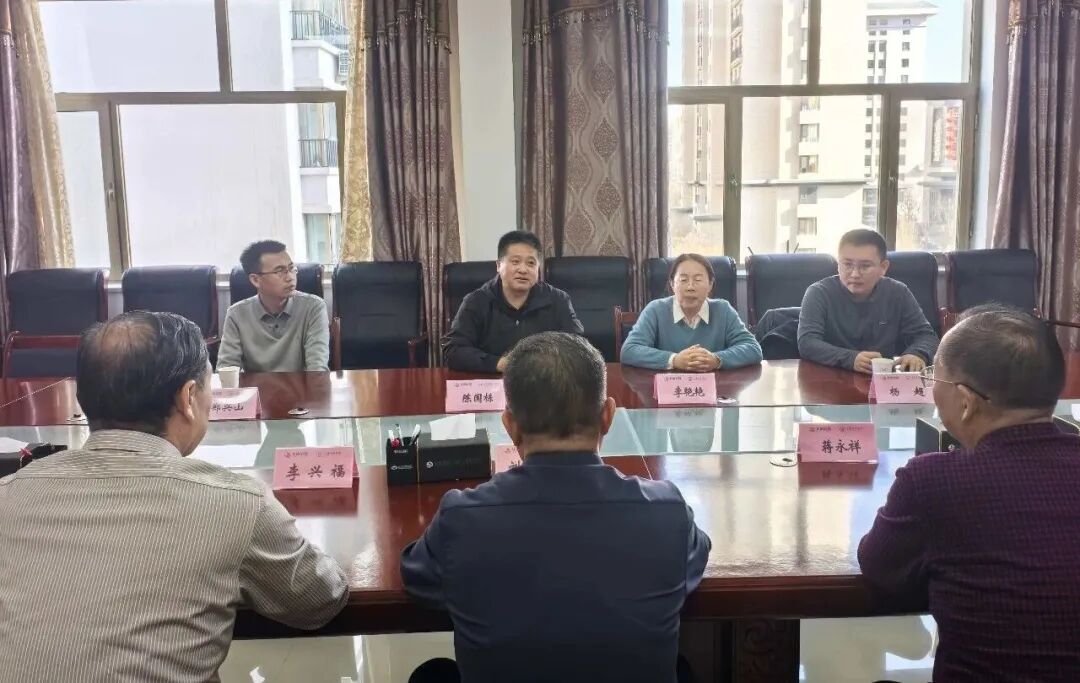
宁夏农垦茂盛草业公司党委书记、董事长陈国栋一行到亚盛田园牧歌草业集团考察交流
Xin Lang Cai Jing· 2026-02-03 12:52
Core Viewpoint - The meeting between Ningxia Agricultural Reclamation Maosheng Grass Industry Company and Yasheng Tianyuan牧歌草业 Group focused on core business areas such as forage planting, supply assurance, and processing storage, highlighting the potential for collaboration in the grass industry [1][4]. Group 1: Company Overview - The company representatives welcomed Chen Guodong and provided a detailed introduction to their development history, business layout, core production capacity, and market competitiveness, emphasizing advantages in large-scale planting of high-quality forage, standardized production, and a full-chain supply layout [3][6]. - Chen Guodong shared insights on the development status, business characteristics, and cooperation demands of Ningxia Agricultural Reclamation Maosheng Grass Industry, along with experiences in grass-livestock integration and supply-demand integrated operations [3][6]. Group 2: Collaboration and Future Plans - Both parties exchanged in-depth opinions on industry development trends, technological innovation applications, and resource optimization, reaching a broad consensus on their complementary strengths in the grass industry and the promising prospects for cooperation [3][6]. - The companies aim to establish a regular communication bridge, leveraging technical exchanges, resource sharing, and channel connectivity to achieve complementary advantages and deepen their engagement in the grass-livestock industry, contributing to a high-quality industrial ecosystem [3][6]. - Next steps include accelerating the implementation of cooperation initiatives to expand new spaces for industrial development through deep resource integration, fostering a collaborative and mutually beneficial new pattern in the grass-livestock industry [3][6].
圣牧草业荣获第十五届公益节暨2025ESG影响力年会两项重量级大奖
Xin Lang Cai Jing· 2026-01-27 20:00
Core Insights - The company, Shengmu Grass Industry, received two prestigious awards at the 15th Public Welfare Festival and the 2025 ESG Impact Annual Conference, recognizing its contributions to environmental sustainability and social responsibility [1] - The awards highlight the company's significant achievements in ecological restoration, social impact, and its commitment to the "business for good" philosophy [1] Environmental Initiatives - Since its establishment in the Ulan Buh Desert in 2010, Shengmu Grass Industry has invested a total of 1.3 billion yuan, planting over 6,200 acres of protective forest belts and constructing 193 kilometers of roads [2] - The company has successfully transformed over 200 square kilometers of desert into green land, with a vegetation coverage rate exceeding 99% in its organic park [2] - The total area of the Ulan Buh Desert has decreased by 96.54 square kilometers, and regional precipitation has increased from over 80 millimeters to approximately 150 millimeters, significantly improving biodiversity [2] Economic Empowerment - Shengmu Grass Industry has developed a "company + cooperative + farmer" model, directly creating employment for over 2,000 farmers and benefiting more than 20,000 farmers with an average annual income increase of over 50,000 yuan [3] - This model addresses agricultural challenges and promotes a transition from traditional farming to more intelligent farming practices, facilitating the large-scale, mechanized, and standardized cultivation of high-quality organic forage [3] - The company’s approach fosters a virtuous cycle of ecological restoration, industrial development, and farmer prosperity, contributing to rural revitalization [3] Social Responsibility - The company adheres to the value of "originating from society and returning to society," actively engaging in public welfare initiatives, including poverty alleviation and educational support, with over 10 million yuan donated to various causes in the past three years [4] - The recent awards not only recognize past achievements but also set expectations for the company's future role in sustainable development and contributions to modern Chinese construction [4] - Shengmu Grass Industry aims to continue its efforts in desert management and deepen industrial integration to support common prosperity [4]
草业国家技术创新中心落地内蒙古
Zheng Quan Ri Bao Wang· 2026-01-26 06:20
Core Viewpoint - The establishment of the National Technology Innovation Center for Grass Industry aims to address major strategic needs related to ecological and food security, focusing on high-quality development in the grass industry and promoting technological breakthroughs and industrialization of key technologies [1][3]. Group 1: Center Establishment and Structure - The center is organized by the Inner Mongolia Autonomous Region government, with Mongolian Grass Ecological Environment (Group) Co., Ltd. as the leading construction unit, collaborating with nine enterprises and six research institutions [2]. - The center will operate under a "4+5" model, establishing a headquarters in Hohhot and four research institutes focused on various aspects of grass production and utilization, along with five regional centers across different climatic zones in China [2]. Group 2: Research Focus and Goals - The center will tackle significant technical challenges in grass seed safety, food security, ecological restoration, and autonomous equipment, aiming to develop new varieties of grass and improve production efficiency [3]. - By 2030, the center plans to have a research team of 500 people, achieving international leadership in grass breeding technology and enhancing the intelligence of grass industry equipment [3]. - By 2035, the goal is to establish a comprehensive technical system covering the entire grass industry chain, promoting large-scale growth and supporting the emergence of influential technology-leading enterprises in the grass industry [3]. Group 3: Regional Innovation Platform Development - The Inner Mongolia Science and Technology Department has been enhancing the innovation platform layout, creating a system that integrates national strategic forces, innovation platforms, and regional support [4]. - As of now, the number of national-level innovation platforms in Inner Mongolia has expanded to 10, focusing on key industry sectors [4].
蒙草生态牵头建设的草业国家技术创新中心获批
Quan Jing Wang· 2026-01-25 23:13
Core Insights - The establishment of the National Technology Innovation Center for Grass Industry aims to enhance the quality and safety of grass production in China, focusing on ecological security and food safety [1][3] Group 1: Center Establishment and Structure - The center is supported by the Ministry of Science and Technology, the Ministry of Agriculture and Rural Affairs, and the National Forestry and Grassland Administration, with the Inner Mongolia Autonomous Region government as the organizing unit [1] - Mongolian Grass Ecology (300355) is the leading construction unit, collaborating with nine enterprises and six research institutions, including the Chinese Academy of Sciences and China Agricultural University [1] - The center will operate under a "4+5" model, establishing a headquarters in Hohhot and four research institutes focused on key areas of grass production and ecological restoration, along with five regional centers across China [1] Group 2: Research Focus and Goals - The center will address major technical challenges in grass seed safety, forage and food security, and ecological restoration, aiming to develop key technologies in seed breeding, efficient forage production, and intelligent equipment [2] - By 2030, the center plans to have a research team of 500 people, achieving international leadership in grass breeding technology and promoting the domestic replacement of high-quality forage [2] - By 2035, the goal is to establish a comprehensive technology system covering the entire grass industry chain, facilitating the growth of grass enterprises into internationally influential technology leaders [2] Group 3: Strategic Importance - The center's establishment aligns with the directives of Xi Jinping and the strategic goals outlined in the 20th National Congress of the Communist Party, emphasizing the importance of high-quality development in China's grass industry [3] - The Inner Mongolia Autonomous Region has already laid a solid foundation for this initiative by establishing a local grass technology innovation center and supporting the development of superior grass varieties and demonstration bases [3]

国家级创新平台+1!草业国家技术创新中心落地内蒙古
Zheng Quan Shi Bao Wang· 2026-01-25 09:32
Core Insights - The establishment of the National Technology Innovation Center for Grass Industry aims to address major strategic needs related to national ecological security and food security, focusing on high-quality development in the grass industry [1][2] - The center will operate under a collaborative model involving various enterprises and research institutions, with a goal to innovate and transform key technologies in the grass industry [1][2] Group 1: Center Establishment and Structure - The center is supported by the Ministry of Science and Technology, the Ministry of Agriculture and Rural Affairs, and the National Forestry and Grassland Administration, with the Inner Mongolia Autonomous Region government as the organizing unit [1] - The leading construction unit is Mongolian Grass Ecological Environment (Group) Co., Ltd., collaborating with nine enterprises and six research institutions [1] - The center will establish a physical operation entity named Grass Industry National Technology Innovation Center (Inner Mongolia) Co., Ltd., with a headquarters in Hohhot and four research institutes focusing on various aspects of grass production and utilization [1] Group 2: Research Focus and Goals - The center will tackle significant technical challenges in grass seed safety, fodder and food security, ecological restoration, and autonomous equipment in the grass industry [2] - Key areas of research include breeding new varieties of forage, efficient planting techniques, ecological restoration, and digitalization of grass industry equipment [2] - By 2030, the center aims to develop a research team of 500 people, achieve international leadership in grass breeding technology, and enhance the domestic production of quality forage [2] - By 2035, the goal is to establish a comprehensive technical system covering the entire grass industry chain, promoting large-scale growth and supporting the emergence of internationally influential grass industry enterprises [2] Group 3: Innovation Platform Development - The Inner Mongolia Autonomous Region's Science and Technology Department has been enhancing the innovation platform layout, creating a system that integrates national strategic forces and innovation platforms [3] - The region has expanded its national-level innovation platforms to ten, focusing on a full-chain innovation process from basic research to technology transfer [3]
内蒙古以知产为支撑筑牢北方生态安全屏障
Xin Lang Cai Jing· 2026-01-20 03:29
Group 1 - The Inner Mongolia Intellectual Property Protection Center aims to empower ecological productivity through intellectual property in areas such as patent navigation, rapid pre-examination, achievement transformation, and rights protection by 2025, supporting the "Three North" shelter forest system and regional ecological security [1] - The center collaborates with the Ministry of Water Resources to implement a patent navigation project focused on water resource conservation and ecological safety in pastoral areas, contributing to national water-saving actions and sustainable water resource utilization [1] - The center has processed 607 patent applications related to the grass industry, with 238 passing pre-examination and 106 being authorized, helping companies quickly secure rights and gain competitive advantages [1] Group 2 - The center has supported Mengcao Group in obtaining 22 patents through its pre-examination services, facilitating over 40 projects related to the "Three North" initiative, covering an area of more than 330,000 hectares [1] - The center focuses on building an innovation system for grass seed industries and has developed a dual-dimensional analysis model combining "patents + industry" to promote the establishment of a national-level grass technology innovation center and intellectual property operation center [1] - In response to patent infringement disputes arising from the rapid development of the agricultural machinery industry in Inner Mongolia, the center enhances technical support and improves the capacity for quick resolution of disputes to protect the legitimate rights of farmers [2]