
纺织服装

Search documents
在正视差距中缩小差距(评论员观察)
Ren Min Ri Bao· 2025-09-28 22:28
Group 1 - The article emphasizes the importance of recognizing and addressing disparities in urban-rural, regional, and income levels as a means to drive high-quality development [1] - It highlights that gaps represent both shortcomings and potential opportunities for growth, motivating efforts to bridge these differences [1] Group 2 - The relationship between emerging and traditional industries is crucial for fostering a robust industrial ecosystem, where traditional industries can incubate new high-quality production capabilities [2] - The article cites examples of companies, such as Anhui Xinhai High Conductivity, which evolved from traditional copper manufacturing to high-end materials, showcasing the potential of traditional industries to innovate and adapt [2] Group 3 - The need for innovation in traditional industries is underscored, with examples like the textile industry in Ningbo transitioning from scale manufacturing to smart fashion manufacturing, demonstrating the vitality of innovation [3] - The integration of old and new industries is essential for creating competitive and resilient supply chains, as seen in Jiangsu's Shenghong Holding Group's shift from petrochemicals to green energy [3] Group 4 - The article discusses the challenges faced by traditional industries, particularly in regions like Shanxi, where a dual approach of green mining and clean utilization is being implemented to modernize the coal industry [4] - It emphasizes the role of government and larger enterprises in supporting small and micro enterprises during their transformation, highlighting initiatives like Hunan's database for digital transformation [4] - The transformation of traditional industries is critical for building a modern industrial system, with a focus on technological innovation to enhance competitiveness and unlock new growth drivers [4]
十五五系列报告:畅想十五五,生活文娱软消费全球崭露头角
Yin He Zheng Quan· 2025-09-28 13:10
Investment Rating - The report suggests a positive investment outlook for the consumer sector, particularly in food and beverage, social services, agriculture, apparel, light industry, and home appliances [6]. Core Insights - The "15th Five-Year Plan" is expected to shift focus from production to a balanced emphasis on production and consumption, enhancing the international competitiveness of China's soft consumption sectors, particularly in lifestyle and entertainment [5][9]. - The report highlights the rapid internationalization of China's hard consumption sectors, such as home appliances and automotive, while soft consumption sectors like internet services and cultural products are beginning to gain global traction [5][9]. - The report emphasizes the potential for Chinese brands in the ready-to-drink beverage market to emerge as global leaders, similar to Starbucks, due to the rapid growth and expansion of the industry [29][32]. Summary by Sections Encouraging Consumption Industry to Go Global - The report discusses the need for innovation-driven development to enhance China's position in the global value chain, focusing on high-end manufacturing and cultural exports [9][11]. - It outlines the importance of building a comprehensive technological innovation system to support the transition to high-value production [11][12]. Globalization of Chinese Dining and Ready-to-Drink Beverages - The report notes that the ready-to-drink beverage market has reached a size of $779.1 billion in 2023, with a projected CAGR of 7.2% from 2023 to 2028 [29][30]. - It highlights the potential for Chinese brands to establish a significant presence in the global market, particularly in Southeast Asia, where cultural similarities and low brand saturation provide ample opportunities [40]. Global Retail and Chinese Models - The report indicates that Chinese retail models, such as Miniso, are successfully internationalizing, demonstrating the adaptability and competitiveness of Chinese brands in the global market [5][9]. Cultural Content Going Global - The report emphasizes the increasing international competitiveness of Chinese cultural products, particularly in the fields of gaming and internet content, with notable successes in global markets [5][9][22]. - It discusses the supportive policies from the Chinese government aimed at promoting cultural exports and enhancing the global presence of Chinese brands [22][23]. Consumer Sector Valuation and Allocation - The report provides insights into the market performance and institutional allocation within the consumer sector, indicating a favorable outlook for various segments [6][8].
一文读懂美国外贸需要的认证,建议收藏
Sou Hu Cai Jing· 2025-09-28 10:27
Core Viewpoint - The article discusses the various certifications required for products exported from China to the United States, highlighting the importance of compliance with U.S. standards to ensure market access and safety. Certification Overview - **FCC Certification**: Implemented by the Federal Communications Commission to ensure compliance and electromagnetic compatibility for wireless devices, covering products that generate electromagnetic radiation [3][4]. - **UL Certification**: A widely recognized voluntary safety certification in the U.S. for a range of products, including industrial machinery and consumer electronics, requiring extensive testing and documentation [4][5]. - **FDA Certification**: Overseen by the Food and Drug Administration, this certification ensures that products meet U.S. safety standards for food, drugs, and medical devices [5]. - **CPSC Certification**: Enforced by the Consumer Product Safety Commission, this certification focuses on the safety of consumer products, particularly those intended for children [6][12]. - **DOT Certification**: A mandatory safety certification for motor vehicles and their components, ensuring compliance with federal safety standards [13][14]. - **DOE Energy Efficiency Certification**: Issued by the Department of Energy, this certification ensures that electronic and electrical products meet energy efficiency standards [17]. - **CEC Certification**: A California-specific energy efficiency certification aimed at reducing energy consumption and greenhouse gas emissions [18]. - **Energy Star Certification**: A voluntary certification promoting energy-efficient products to reduce energy consumption and emissions [19]. - **California Proposition 65 Certification**: A regulation requiring products sold in California to meet safety standards regarding harmful substances [21]. - **ETL Certification**: A product safety certification indicating compliance with North American safety standards, similar in effect to UL certification [23]. Product Categories - **Products Requiring FCC Certification**: Includes all electrically powered products with wireless capabilities, such as medical devices and consumer electronics [3][4]. - **Products Requiring UL Certification**: Encompasses a wide range of products from large machinery to small components [4][5]. - **FDA Regulated Products**: Covers pharmaceuticals, food items, cosmetics, and medical devices [5]. - **CPSC Regulated Products**: Includes toys, clothing, furniture, and school supplies intended for children [6][7][8][9][10][11]. - **DOT Regulated Products**: Involves vehicles and their components, ensuring they meet safety standards [13][14][15][16]. - **DOE Regulated Products**: Targets household appliances, lighting products, and electronic devices [17]. - **CEC Regulated Products**: Focuses on various electrical and electronic products to enhance energy efficiency [18]. - **Energy Star Products**: Includes appliances, heating/cooling equipment, and lighting products [19]. - **California Proposition 65 Products**: Affects a broad range of products sold in California, including textiles and electronics [21]. - **ETL Certified Products**: Applies to a variety of electrical and electronic devices, ensuring safety compliance [23].


年内降息预期再提利好出口链;FILA加码中网看好垂类赛道发展
SINOLINK SECURITIES· 2025-09-28 09:14
Investment Rating - The report suggests a positive outlook for the export chain due to anticipated interest rate cuts by the Federal Reserve, with a recommendation to actively monitor this sector [1][12][13]. Core Insights - The expectation of further interest rate cuts in the U.S. is likely to boost overseas demand, benefiting the manufacturing sector, particularly leading apparel manufacturers who maintain pricing power due to limited capacity [1][12]. - FILA's strategic partnership with the China Open and its multi-brand strategy highlight its resilience against market risks, with continued investment in elite sports expected to enhance brand recognition and market share [2][18]. - Retail data indicates a recovery in clothing sales, with a 3.1% year-on-year increase in August, driven by seasonal promotions and improved consumer demand [3][20]. Summary by Sections Industry Investment Rating - The report indicates a favorable investment environment for the apparel and cosmetics sectors, with specific recommendations for leading companies within these industries [4][33]. Core Insights - The Federal Reserve's anticipated interest rate cuts are expected to positively impact the export chain, with a high probability of two additional cuts this year [1][12]. - FILA's renewal of its sponsorship with the China Open and its appointment of a top tennis player as a brand ambassador are expected to strengthen its market position [2][17]. - August retail data shows a 3.1% increase in clothing sales, indicating a recovery in consumer spending [3][20]. Industry Data Tracking - August saw a 5.1% year-on-year increase in cosmetics retail sales, reflecting a positive trend in consumer spending [27][30]. - The report notes stable raw material prices, with cotton prices showing slight declines, which may impact production costs [22][23]. Investment Recommendations - The report recommends focusing on leading companies in the apparel sector, such as Shenzhou International and Anta, which are expected to benefit from market recovery and strategic initiatives [4][33]. - In the beauty sector, brands with strong recognition and quality, such as Mao Ge Ping, are highlighted for their potential growth [4][34]. Market Review - The report reviews market performance, noting a decline in the textile manufacturing sector, while highlighting individual stock performances within the apparel and beauty industries [5][35].
纺织服饰:始祖鸟/萨洛蒙8月线上同比翻倍——25W39周观点-20250928
Huafu Securities· 2025-09-28 07:02
Investment Rating - The industry rating is "Outperform the Market" [8] Core Viewpoints - The report highlights that the outdoor apparel brands Arc'teryx and Salomon saw a doubling of online sales on Tmall in August compared to the previous year [2][12] - The report indicates a divergence in performance among major e-commerce platforms for sports apparel, with Tmall showing a significant improvement in August, while JD.com and Douyin experienced declines [3][12] - The report suggests that the domestic demand is expected to recover due to policy support, with specific investment recommendations across various sectors including home appliances and sportswear [5][19][20] Summary by Sections Sales Performance - In August, Tmall, JD.com, and Douyin reported year-on-year growth rates of +13%, -11%, and +1% respectively for sports apparel, with Tmall showing a notable improvement compared to Q2 [3][12] - Outdoor apparel on Tmall and Douyin continued to show high growth trends, with Tmall reporting a +50% increase, while JD.com saw a -20% decline [3][12] Brand Performance - Among sports brands, Lululemon and Adidas showed improved growth rates on Tmall in August, while brands like Fila, Xtep, and Li Ning maintained a growth trend [14] - High-end outdoor brands such as Kailas, Salomon, and Arc'teryx experienced significant sales growth on Tmall, with increases of 247%, 141%, and 115% respectively [14] Investment Recommendations - The report recommends focusing on several sectors for potential investment, including: 1. Home appliances benefiting from trade-in programs, with specific companies like Midea Group and Haier Smart Home highlighted [5][19] 2. The pet industry, which is expected to remain resilient against economic cycles, with companies like Guibao Pet and Zhongchong Co. suggested [5][19] 3. Small appliances and branded apparel, which may see demand recovery from a low base, with recommendations for leading companies in these sectors [5][19] 4. Electric two-wheelers, which are expected to improve in domestic sales, with companies like Ninebot and Yadea highlighted [5][20] Market Trends - The report notes that the home appliance sector experienced a decline of -0.8% this week, with specific segments like white goods and small appliances also showing negative trends [4][21] - The textile and apparel sector saw a decline of -2.59% this week, with cotton prices and other raw material prices also reflecting downward trends [4][24]
消费行业十五五系列报告:畅想十五五,生活文娱软消费全球崭露头角-银河证券
Sou Hu Cai Jing· 2025-09-28 02:28
Group 1 - The report by Galaxy Securities focuses on the development of the consumption industry during the "14th Five-Year Plan" period, highlighting the global competitiveness of the soft consumption sector in lifestyle and entertainment [1][2] - In the global retail landscape, leading companies are primarily from the US, Europe, and Japan, with Walmart topping the list at $676 billion in revenue and 10,692 stores by 2025 [1][2] - Chinese retail brands are rapidly expanding, with notable examples including Mixue Ice City with over 41,000 stores and Luckin Coffee with over 21,000 stores, indicating strong market penetration of local brands [1][2] Group 2 - The soft consumption sector, particularly in entertainment, has shown significant international expansion, with Chinese productions like "Ne Zha" being featured on platforms like Netflix and Disney+ [2][11] - The domestic consumption-related sectors have experienced varied performance since 2025, with indices like the CSI 300 and Hang Seng showing different trends in non-essential and essential consumption [2][11] - Valuation disparities exist across different consumption segments, with sectors like food and beverage, home appliances, and social services showing fluctuations around industry averages [2][11] Group 3 - The report anticipates continued growth in the lifestyle and entertainment soft consumption sector during the "14th Five-Year Plan," driven by domestic consumption upgrades and globalization efforts [2][11] - Digitalization and localized operations are identified as key strategies for enhancing competitiveness among domestic brands in the global market [2][11] - The report emphasizes the importance of cultural exports in enhancing China's cultural influence globally, with policies supporting the internationalization of cultural products and services [31][32]

中央代表团在新疆多地看望慰问各族干部群众 王沪宁参加活动后带领一分团返京
Xin Hua She· 2025-09-27 16:07
Group 1 - The central government emphasizes the importance of social stability and long-term peace in Xinjiang, focusing on various aspects such as legal governance, cultural integration, and economic development [1][2][3] - The representatives are tasked with promoting ethnic unity and improving the living standards of local communities, ensuring that development benefits all ethnic groups [3][4][5] - There is a strong push for enhancing tourism and cultural resources in Xinjiang, aiming to make it a desirable destination for domestic and international tourists [2][5] Group 2 - The representatives are exploring various sectors including border defense, rural tourism, and ecological protection, highlighting the need for innovative social governance [2][6] - The focus is on fostering a sense of community among different ethnic groups, promoting a shared national identity, and ensuring economic and social development aligns with local needs [3][4][6] - The government aims to strengthen grassroots governance and infrastructure, which is essential for achieving high-quality development and social stability in the region [5][7]
工商银行:普惠“穿针引线” 产业“身披锦衣”
Zheng Quan Ri Bao Zhi Sheng· 2025-09-27 15:39
Group 1 - Industrial Bank has been innovating products and services to meet the financial needs of private clothing enterprises, enhancing the vitality of the garment manufacturing industry [1] - The "Su Chao" sports event has led to a surge in demand for sports apparel, with a local sports goods company reporting a daily shipment of 15,000 pieces [1] - The company faced challenges in raw material procurement funding, prompting Industrial Bank to provide a tailored financing solution, successfully issuing over 9 million yuan in loans [1] Group 2 - The Fumian Ecological Textile and Apparel Industrial Park in Guangxi has developed into a renowned denim production base, known as the "World Pants Capital" [2] - A local entrepreneur faced funding issues during a critical production period, which led to a temporary halt in operations [2] - Industrial Bank's timely intervention through the "Industrial e-loan" product provided nearly 10 million yuan in loans within a week, resolving the entrepreneur's urgent financial needs [2] Group 3 - The shoe manufacturing industry in Yanshi District, Henan, is being supported for technological innovation and product development [3] - A shoe factory has invested in automated knitting machines to enhance production efficiency, but faced financial pressure due to increasing order volumes [3] - Industrial Bank introduced the "Shoe and Hat Knitting Loan" to address the company's funding needs, resulting in a loan of 3 million yuan that boosted the company's confidence in product development [3]

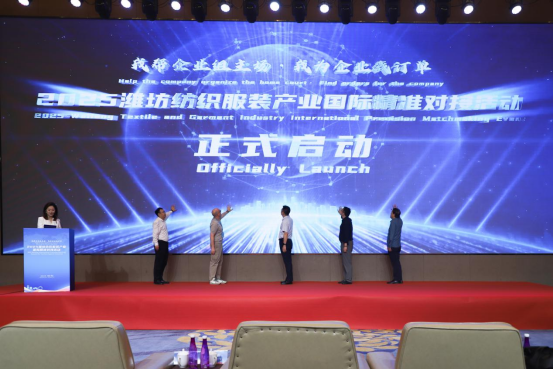
企业新市场何处寻?潍坊这场产业国际精准对接会送来“及时雨”
Qi Lu Wan Bao Wang· 2025-09-27 14:00
Core Insights - The event held on September 26, 2025, in Weifang aimed to create an efficient international procurement platform for local textile and apparel companies to connect with global buyers [1] - The event included various activities such as international procurement matchmaking and on-site company visits, facilitating direct connections between suppliers and buyers [1] Group 1: Event Overview - The theme of the event was "I help enterprises take the lead. I find orders for enterprises," focusing on enhancing cooperation between local textile companies and international buyers [1] - A total of 30 foreign buyers from 20 countries, including Spain, Russia, and the United States, participated in the event, with 44 local suppliers actively involved [8] Group 2: Business Opportunities - The event resulted in 38 intended orders with a transaction value of approximately 34 million yuan [8] - Local companies, such as Weifang Jinrund Trade Co., expressed the need to explore new markets due to saturation in the Japanese market, highlighting the importance of this event for opening new market opportunities [3] Group 3: Buyer Feedback - International buyers, like Pero Blazheski from North Macedonia, reported positive experiences, noting the quality and design of local products, which align with market trends in their home countries [5][6] - The event facilitated initial cooperation intentions between buyers and several local suppliers, indicating a successful matchmaking process [5][6] Group 4: Future Prospects - The event is seen as a significant step for Weifang's enterprises to secure new orders and enhance international competitiveness, with plans for continued support from local authorities to optimize the business environment [9]
青山遮不住
Ren Min Ri Bao· 2025-09-27 02:42
Core Viewpoint - The ongoing trade tensions between the US and China, characterized by tariffs and export controls, have not hindered the growth of trade between the two nations, with China's exports to the US increasing by 22.7% in the first eight months of the year [1][2]. Group 1: Trade Dynamics - Despite tariffs, China's exports to the US have shown resilience, with a reported growth of 30.3% in the first eight months of the year for certain sectors [2]. - Since the imposition of tariffs in July 2018, the overall trade volume between the US and China has generally been on an upward trend, with a notable increase of 8.8% in 2020 [2][11]. - The demand for "Made in China" products remains strong in the US, as evidenced by consumer experiences during the pandemic [4][5]. Group 2: Economic Interdependence - The economic structures of the US and China are highly complementary, with significant mutual benefits derived from trade [6][8]. - In 2020, Chinese goods accounted for 19% of total US imports, with a substantial portion of essential medical supplies sourced from China [6][8]. - The cost advantages of Chinese manufacturing, including lower labor costs and efficient supply chains, continue to attract US companies [7][10]. Group 3: Investment Trends - Despite a decline in US investment in China in certain sectors, there is a growing interest among US companies to expand their operations in China, with 85% of surveyed companies indicating no plans to relocate manufacturing outside of China [13][20]. - The influx of foreign investment into China has been robust, with significant increases from European and ASEAN countries, highlighting China's appeal as a market [13][14]. - The Chinese market's size and growth potential are key factors driving multinational companies to establish or expand their presence in the country [15][16]. Group 4: Innovation and Technology - China's commitment to technological self-reliance and innovation is evident, with increasing investments in research and development [21][23]. - The country is transitioning from a technology follower to a leader in several high-tech fields, demonstrating resilience against external pressures [24][29]. - Collaboration in technology and innovation remains crucial, as both nations benefit from shared advancements and market opportunities [26][30].
