
脑机接口

Search documents
全球市场十年增4倍 脑机接口概念股冲高 核心受益股曝光
Zhi Tong Cai Jing· 2025-12-18 08:01
Core Insights - The brain-computer interface (BCI) sector in China has made significant advancements, enabling paralyzed patients to control wheelchairs and robotic dogs through thought [1] - The market for brain-computer interfaces is projected to grow substantially, with estimates of 3.2 billion yuan in 2024 and reaching 6.14 billion yuan by 2028 in China [2] - The global BCI market is expected to grow from approximately 2.62 billion USD in 2024 to 12.4 billion USD by 2034, with a compound annual growth rate (CAGR) of 17.35% over the next decade [2] Industry Developments - The Chinese Academy of Sciences has achieved breakthroughs in invasive BCI technology, improving signal extraction efficiency by 15% to 20% in noisy environments [1] - The end-to-end latency for the new BCI system has been reduced to under 100 milliseconds, enhancing user experience compared to the natural physiological delay of 200 milliseconds [1] - The BCI industry is expected to benefit from policy support, technological innovation, and increased capital investment, leading to significant growth opportunities in healthcare and consumer markets [2] Company Highlights - Innovation Medical (002173) is involved in the only invasive BCI system in China that has reached Phase III clinical trials, comparable to Neuralink [3] - iFlytek (002230) leverages AI technology to develop BCI applications in collaboration with universities, expanding into the healthcare sector [3] - Lenovo (00992) has launched the world's first consumer-grade BCI headset, achieving a thought input speed of 12-15 words per minute with over 85% accuracy [3] - Sanbo Brain Science (301293) has conducted the first invasive BCI trial in China, providing new treatment options for stroke and paraplegic patients [3] - Gaode Infrared (002414) is developing a 65,000-channel implantable chip, significantly increasing channel density compared to Neuralink [3] - Tom Cat (300459) is exploring the intersection of AI and brain science in children's education and rehabilitation [4] - Hanwei Technology (300007) has a subsidiary involved in flexible electrodes and brain signal acquisition technology, showing potential for technology transfer [4]
国产6.5万通道脑机芯片落地 脑机接口概念股冲高 核心受益股曝光
Ge Long Hui· 2025-12-18 07:44
Group 1: Industry Overview - The brain-computer interface (BCI) market in China is projected to reach 3.2 billion yuan in 2024 and is expected to grow to 6.14 billion yuan by 2028 [2] - The global BCI market is estimated to be approximately 2.62 billion USD in 2024, with a forecasted increase to 2.94 billion USD in 2025, and a potential growth to 12.4 billion USD by 2034, reflecting a compound annual growth rate (CAGR) of 17.35% over ten years [2] - The BCI industry is anticipated to benefit from dual drivers of policy and technology, presenting significant opportunities for growth [2] Group 2: Technological Advancements - Recent breakthroughs in invasive BCI technology have enabled a high-level paraplegic patient to control a smart wheelchair and robotic dog using brain signals, achieving a 15% to 20% improvement in brain control performance [1] - The new system developed by the research team has reduced end-to-end latency to under 100 milliseconds, which is lower than the physiological delay of 200 milliseconds in natural neural pathways, enhancing user experience [1] Group 3: Company Developments - Innovation Medical holds a 40% stake in Bole Medical and leads the only invasive BCI system (BCI-4000) in China that has entered Phase III clinical trials, comparable to Neuralink [3] - iFlytek leverages its AI technology to collaborate with universities on BCI applications, expanding into the healthcare sector [3] - Lenovo has launched the world's first consumer-grade BCI headset, "Lenovo Mind X1," which can achieve a typing speed of 12-15 characters per minute with over 85% accuracy, marking a significant step towards practical BCI applications [3] - Sanbo Neuroscience has completed China's first invasive BCI trial, providing new treatment options for stroke and paraplegic patients through wireless brain signal acquisition [3] - Gaode Infrared's subsidiary has developed a 65,000-channel implantable chip, which has a channel density 20 times that of Neuralink, enabling bidirectional information read/write capabilities [3] Group 4: Emerging Applications - Tom Cat is exploring the integration of BCI technology in children's education and rehabilitation, aiming to create a new model of "AI + brain science" [4] - Hanwei Technology's subsidiary is involved in flexible electrodes and brain signal acquisition technology, showing potential for technology commercialization [4]
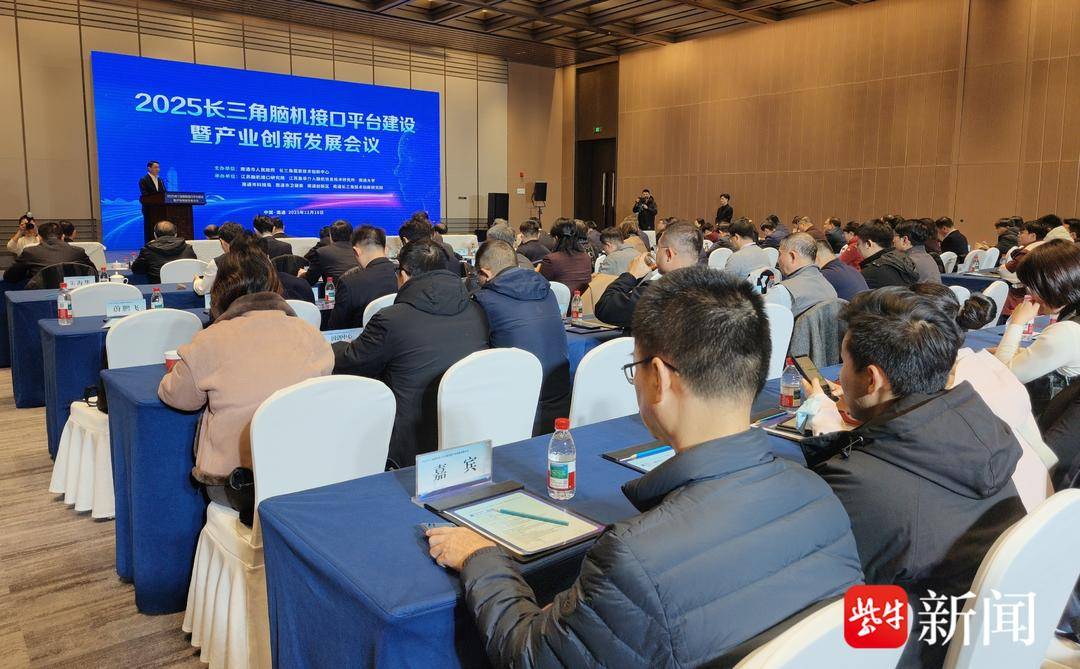
南通创新区再迎科创盛会!长三角脑机接口产业创新发展会议启幕
Yang Zi Wan Bao Wang· 2025-12-18 07:34
扬子晚报网讯(记者吴佳笑)12月18日,2025长三角脑机接口平台建设暨产业创新发展会议在南通创新区举办。这场由南通市人民政府、长三角国家技术创 新中心联合主办的行业盛会,吸引了国内院士专家、投资机构及头部企业代表百余人齐聚一堂,共同为脑机接口产业发展献策,助力南通创新区产业生态 提质升级,推动长三角脑科学创新资源高效协同。 "脑机接口作为生命健康领域的新兴赛道,蕴藏着万亿级蓝海市场。"南通市副市长熊俊在致辞中表示,近年来南通锚定生命健康产业发展方向,通过集聚 龙头企业、搭建公共服务平台、打造特色产业园区等一系列举措,加速构建现代化产业体系。他指出,南通将以此次会议为契机,以创新区生命健康产业 为支点,深化产学研用合作,推动脑机接口技术从实验室走向临床一线,既成为科技突破的标杆,更化作惠及民生的福祉,在江海之滨书写脑科学与产业 融合发展的新篇章。 "临床研究是脑机接口落地应用的核心关键。"南开大学杰出教授、江苏集萃介入脑机信息技术研究所所长段峰表示,创新联合体的成立打通了技术研发与 产业转化的壁垒。他透露,团队将与江苏省人民医院开展深度合作,共建临床研究中心,围绕介入式脑机接口的原创研究成果,探索更多临床应用 ...

试验成功!我国脑机接口领域取得新突破
Huan Qiu Wang Zi Xun· 2025-12-18 03:18
Core Insights - The Chinese Academy of Sciences' Center for Excellence in Brain Science and Intelligent Technology has made significant advancements in the field of invasive brain-machine interfaces (BMIs) [1] - A research team successfully completed the second clinical trial of an invasive BMI, enabling a high-level paraplegic patient to control a smart wheelchair and robotic dog using brain signals in real-life scenarios [1] Technical Breakthroughs - The research achieved a series of breakthroughs in key technologies, improving the brain control performance by 15% to 20% even in noisy environments [2] - The team overcame challenges related to signal instability caused by environmental noise and the physiological and psychological fluctuations of patients [2] - Patients can now adjust decoding parameters in real-time during daily use without interrupting their operations for calibration [2] Response Time Improvement - The study introduced a custom communication protocol that reduced the end-to-end latency from signal acquisition to command execution to under 100 milliseconds [3] - This latency is lower than the physiological delay of 200 milliseconds in human neural pathways, resulting in a smoother and more natural control experience for patients [3]
【新华社】拓展患者现实生活!脑机接口临床试验新进展
Xin Hua She· 2025-12-18 03:11
Core Insights - The recent clinical trial by the Chinese Academy of Sciences has successfully demonstrated a brain-computer interface (BCI) that allows a quadriplegic patient to control a smart wheelchair and a robotic dog using only their thoughts, marking a significant advancement in rehabilitation technology [2][4]. Group 1: Technological Advancements - The BCI technology aims to establish a direct communication channel between the brain and external devices, overcoming previous challenges in integrating technology into patients' daily lives [4]. - The research team achieved a breakthrough from "2D interaction" to "3D expansion," enhancing the practical application of BCI in real-world scenarios [4]. - A series of technical breakthroughs were made, including the development of high-compression, high-fidelity neural data compression technology and a hybrid decoding model that improves brain control performance by over 15% even in noisy environments [4]. Group 2: Clinical Application and Future Prospects - The clinical trial, set to continue until 2025, is a collaboration between the Chinese Academy of Sciences, Fudan University Huashan Hospital, and related enterprises, indicating a strong commitment to advancing BCI technology [4]. - The introduction of "neural manifold alignment technology" allows for the extraction of stable features representing core intentions from variable neural signals, enhancing the system's reliability in everyday use [4]. - The ongoing development of BCI technology is supported by national policies and ethical guidelines, paving the way for a safer and more effective integration of BCI into clinical applications [5].
【大涨解读】医药:“蚂蚁阿福\"冲榜点燃市场,AI健康应用爆发,有望重构医疗服务流程
Xuan Gu Bao· 2025-12-18 02:43
Group 1: AI Healthcare and Medical Technology - The AI healthcare sector is experiencing significant growth, with companies like Meinian Health and Luyuan Pharmaceutical seeing consecutive gains, indicating strong market interest and potential [1] - Ant Group's AI health application "Antifufu" has been upgraded, achieving over 15 million monthly active users and ranking third on the Apple app store, showcasing the consumer market's potential for AI healthcare applications [3] - The National Health Commission of China has outlined plans for the development of AI in healthcare, aiming for widespread implementation of intelligent assistance in grassroots medical services by 2030 [3] Group 2: Brain-Computer Interface (BCI) Developments - The second clinical trial of an invasive brain-computer interface has shown progress, achieving a breakthrough in three-dimensional interaction with a latency of under 100 milliseconds, which is crucial for practical applications [3] - The global orthopedic robotics market is projected to reach 56.74 billion yuan by 2030, with a rapid growth rate in the domestic market, indicating a strong future for BCI technology in rehabilitation and treatment of neurological disorders [4] - The integration of BCI technology with AI is expected to create significant growth opportunities, benefiting various segments of the supply chain, including neural sensors and rehabilitation devices [4] Group 3: Market Trends and Investment Opportunities - The medical health sector is witnessing a recovery in procurement amounts, with a 34% year-on-year increase in the first three quarters of 2025, indicating a positive trend for industry performance [4] - AI healthcare and brain-computer interfaces are emerging as attractive investment opportunities, supported by favorable policies and capital interest, allowing companies to capture market share through technological advantages [4]


港股异动 脑机接口概念股集体高开 我国已完成三例侵入式脑机接口临床试验
Jin Rong Jie· 2025-12-18 02:01
Core Viewpoint - The brain-machine interface (BMI) sector is experiencing significant advancements, with recent clinical trials demonstrating practical applications that could lead to commercial opportunities in the healthcare industry [1]. Industry Summary - The brain-machine concept stocks opened high, with notable increases in share prices for companies such as Brainhole Aurora (06681) rising by 10.35% to HKD 6.29 and Nanjing Panda Electronics (00553) increasing by 1.63% to HKD 4.36 [1]. - A research team from the Chinese Academy of Sciences has successfully completed three invasive brain-machine interface clinical trials, achieving breakthroughs in real-life applications [1]. - In the second clinical trial, a high-level paraplegic patient was able to control a smart wheelchair and robotic dog using brain signals, demonstrating the potential for independent mobility and object retrieval in real-life scenarios [1]. Company Summary - CITIC Securities believes that advancements in the midstream technology of the brain-machine interface industry are leading to breakthroughs in downstream applications, particularly in medical fields such as motor recovery, communication, and hearing restoration [1]. - The Chinese government and various regions have introduced multiple policies to accelerate the development of the industry, including a recent announcement from the National Healthcare Security Administration to separately list pricing for new brain-machine interface technologies [1]. - With technological innovations and policy incentives, domestic brain-machine interface companies are expected to gradually achieve commercial applications [1].
港股脑机接口概念股集体高开
Mei Ri Jing Ji Xin Wen· 2025-12-18 01:48
每经AI快讯,港股脑机概念股集体高开。截至发稿,脑洞极光(06681.HK)涨10.35%,报6.29港元;南京 熊猫电子股份(00553.HK)涨1.63%,报4.36港元。 ...
脑机接口概念股集体高开 我国已完成三例侵入式脑机接口临床试验
Zhi Tong Cai Jing· 2025-12-18 01:36
Core Viewpoint - The brain-computer interface (BCI) sector is experiencing significant advancements, with recent clinical trials demonstrating practical applications that could lead to commercial opportunities in the healthcare industry [1] Industry Developments - The brain-computer concept stocks opened high, with notable increases such as Brainhole Aurora (06681) rising by 10.35% to HKD 6.29 and Nanjing Panda Electronics (600775) increasing by 1.63% to HKD 4.36 [1] - A research team from the Chinese Academy of Sciences has completed three invasive BCI clinical trials in collaboration with hospitals and enterprises, achieving breakthroughs in real-life applications [1] Clinical Trial Highlights - In the second clinical trial, a high-level paraplegic patient was able to control a smart wheelchair and robotic dog using brain signals, demonstrating the potential for autonomous movement and object retrieval in real-life scenarios [1] Market Outlook - CITIC Securities believes that technological advancements in the midstream of the BCI industry are leading to breakthroughs in downstream applications, with significant milestones in medical fields such as motor recovery, communication, and hearing restoration [1] - National and regional policies are being introduced to accelerate industry development, including a recent announcement from the National Healthcare Security Administration to establish a separate pricing item for new BCI technologies, paving the way for clinical application service charges [1] - With technological innovations and policy support, domestic BCI companies are expected to gradually achieve commercialization [1]


港股异动 | 脑机接口概念股集体高开 我国已完成三例侵入式脑机接口临床试验
智通财经网· 2025-12-18 01:34
Core Viewpoint - The brain-machine interface (BMI) sector is experiencing significant advancements, with recent clinical trials demonstrating practical applications that could lead to commercial opportunities in the healthcare industry [1] Industry Developments - The brain-machine concept stocks opened high, with notable increases in share prices: Brainhole Aurora (06681) up 10.35% to HKD 6.29 and Nanjing Panda Electronics (00553) up 1.63% to HKD 4.36 [1] - A research team from the Chinese Academy of Sciences has completed three invasive BMI clinical trials, achieving breakthroughs in real-life applications [1] Clinical Trial Achievements - In the second clinical trial, a high-level paraplegic patient was able to control a smart wheelchair and robotic dog using brain signals, demonstrating the potential for independent mobility and object retrieval in real-life scenarios [1] Market Outlook - CITIC Securities believes that technological advancements in the upstream BMI industry are leading to breakthroughs in downstream applications, particularly in rehabilitation, communication, and hearing restoration [1] - The Chinese government and various regions are implementing policies to accelerate the industry's development, including the National Healthcare Security Administration's recent decision to separately list pricing for new BMI technologies [1] - With technological innovations and policy support, domestic BMI companies are expected to gradually achieve commercial applications [1]