
创新药研发

Search documents
首批!新注册科创成长层新股来了!核心要点一文速览
证券时报· 2025-10-14 23:54
Core Viewpoint - The article discusses the first batch of newly registered companies entering the Sci-Tech Innovation Growth Tier, highlighting their current unprofitable status and the implications for investors and the market [1][3]. Group 1: Newly Registered Companies - Three companies, He Yuan Bio, Xi'an Yicai, and Biobetter, are set to enter the Sci-Tech Innovation Growth Tier, with their respective issuance prices and subscription limits detailed [1][4]. - As of the prospectus disclosure date, all three companies are unprofitable, with losses reported for the first half of 2025: He Yuan Bio at 81.63 million yuan, Biobetter at 73.89 million yuan, and Xi'an Yicai at 340 million yuan [5]. Group 2: Listing Standards and Approval - He Yuan Bio and Biobetter are listed under the fifth set of standards, while Xi'an Yicai follows the fourth set. He Yuan Bio is noted as the first company to initiate the issuance process after the reactivation of the fifth set of standards [4]. - Xi'an Yicai is recognized as the first unprofitable company to be accepted and approved under the "Eight Articles of Sci-Tech Innovation Board" [4]. Group 3: Subscription and Investor Participation - He Yuan Bio's online issuance saw approximately 3.36 million effective subscription accounts, with an initial winning rate of about 0.036%, which increased to approximately 0.054% after a mechanism was triggered due to high subscription multiples [10][11]. - As of September 22, 500 million investors have opened trading permissions for the Sci-Tech Innovation Growth Tier, with special identifiers added to distinguish new registered stocks [12]. Group 4: Lock-up and Allocation Arrangements - The three companies are the first to adopt differentiated lock-up and allocation arrangements for offline issuance, encouraging professional institutions to play a larger role in new stock pricing [7][8]. - Specific lock-up ratios and periods are set for each company, with He Yuan Bio having a maximum lock-up ratio of 70% for the highest subscription tier [7].


鞍石生物科创板“赶考记”:单药扛营收、商誉压顶,IPO能否解资金困局
Hua Xia Shi Bao· 2025-10-14 06:33
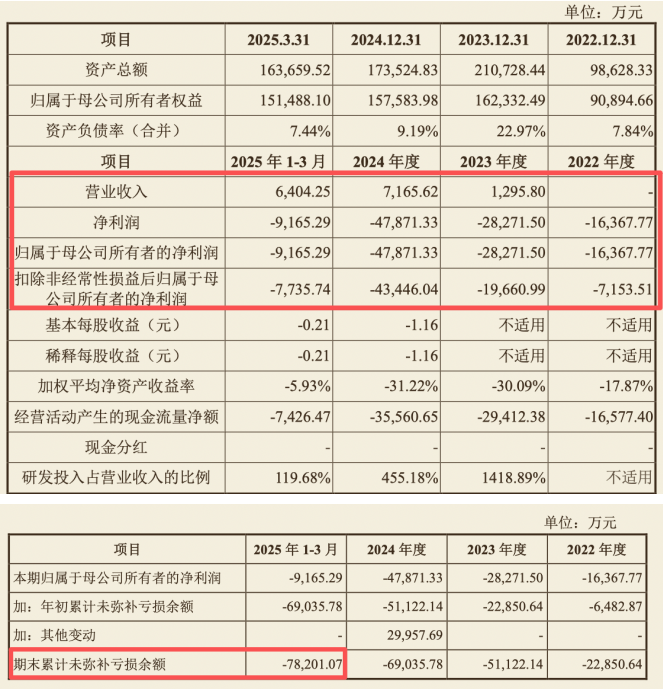
Core Viewpoint - Ansh Biotech is facing significant financial challenges despite rapid revenue growth from its core product, Beruatinib, which has been listed and included in the medical insurance catalog. The company is heavily reliant on external financing to sustain operations due to ongoing losses and cash flow pressures [1][12]. Financial Performance - Ansh Biotech's revenue has shown a sharp increase, from 12.96 million yuan in 2023 to 71.66 million yuan in 2024, and 64.04 million yuan in the first quarter of 2025. However, the company has reported continuous net losses, with figures of -1.64 billion yuan, -2.83 billion yuan, -4.79 billion yuan, and -916.53 million yuan for the respective periods [2][3]. - Cumulative losses reached 7.82 billion yuan by the end of the first quarter of 2025, indicating a severe financial strain [2][4]. Cost Structure - The company has been experiencing high costs in both research and sales. R&D expenses increased from 145 million yuan in 2022 to 326 million yuan in 2024, with a significant portion of costs attributed to clinical trial services and employee salaries [6][10]. - Sales expenses surged from 3.61 million yuan in 2022 to 102 million yuan in 2024, reflecting aggressive marketing strategies [6][10]. Cash Flow and Financing - Operating cash flow has consistently been negative, with figures of -166 million yuan, -294 million yuan, -356 million yuan, and -74 million yuan over the reporting periods, indicating reliance on external financing [10][12]. - As of March 2025, the company had cash reserves of 529 million yuan, which may only sustain operations for one to two years at the current loss rate [10]. Inventory and Sales Efficiency - The company faces challenges in sales efficiency, with a sales expense of 102 million yuan in 2024, significantly exceeding the revenue of 71.66 million yuan for that year. The accounts receivable turnover rate was only 3.94 times, below the industry average of 7.02 times [11][12]. - High inventory levels have been noted, with inventory amounting to 74.65 million yuan by the end of 2024, representing 4.3% of total assets, compared to just 0.3% in 2022 [13][14]. Market Strategy and Risks - The company's strategy of "price for volume" has led to a significant price reduction of over 60% for Beruatinib, which has resulted in increased sales volume but has also compressed profit margins, with gross margins declining from 84.93% to 80.28% [13][14]. - Ansh Biotech is also facing competition from multiple approved MET-TKI drugs in the market, which could further impact its market share and revenue potential [15]. Goodwill and Financial Health - The company has a substantial goodwill of 927 million yuan, which constitutes 56.64% of total assets. This raises concerns about potential impairment risks that could adversely affect financial performance [15].
从必贝特医药IPO发行看中国一类创新药的破晓之路
Zheng Quan Shi Bao Wang· 2025-10-14 02:45
Core Insights - The IPO of Bibet Pharmaceuticals on the Sci-Tech Innovation Board reflects a significant shift in the Chinese capital market towards evaluating future potential, intellectual property, and national strategic importance rather than historical performance [1][9] - Bibet Pharmaceuticals serves as a case study for investors to assess the value of "hard technology" in the biopharmaceutical sector [1] Group 1: FIC Drug Development - FIC (First-in-Class) drugs represent a scientific breakthrough with unique mechanisms targeting unmet clinical needs, setting a high innovation threshold [2] - The proportion of FIC drugs approved by the NMPA is less than 5%, compared to 36% to 54% by the FDA from 2020 to 2024, indicating a significant gap in source innovation between China and the U.S. [2] - Bridging this "innovation quality gap" is crucial for China's transition from a pharmaceutical manufacturing powerhouse to an innovation-driven leader [2] Group 2: Financial Aspects of Bibet Pharmaceuticals - The average cost to develop a new drug ranges from $1.4 billion to $2.6 billion, with a success rate of only 12%, explaining the substantial R&D investments by companies like Bibet before generating revenue [3] - Bibet's R&D expenses for 2022, 2023, and 2024 were approximately 166.74 million, 157.65 million, and 120.29 million CNY, respectively, with net losses of approximately -188.34 million, -172.76 million, and -55.99 million CNY, reflecting ongoing investment in high-value R&D pipelines [4] Group 3: Product Pipeline and Market Potential - Bibet has one FIC drug, BEBT-908, approved for relapsed/refractory diffuse large B-cell lymphoma, showing a high response rate in difficult-to-treat patient populations [5] - Two additional FIC drugs, BEBT-209 and BEBT-109, are in Phase III clinical trials, indicating reduced risk and potential for significant market impact [5] - The company is also developing siRNA drugs, expanding its technological capabilities and market reach [6] Group 4: Valuation Methodology - Traditional valuation metrics like P/E or P/S are unsuitable for pre-revenue biotech firms; instead, the risk-adjusted Net Present Value (rNPV) model is used to assess future potential [7] - The rNPV of BEBT-908 contributes significantly to the company's overall valuation, alongside the rNPV of drugs in later clinical stages [8] Group 5: Regulatory Environment and Strategic Importance - The success of Bibet's IPO is attributed to the forward-looking and inclusive design of the Sci-Tech Innovation Board's listing standards, which cater to the unique characteristics of innovative drug companies [9][10] - The fifth set of listing standards aims to alleviate financing bottlenecks in strategic emerging industries, aligning with national strategies to foster local innovation capabilities [10]
西安交大教授夫妇创业,公司估值26亿,冲刺港股IPO
2 1 Shi Ji Jing Ji Bao Dao· 2025-10-13 09:39
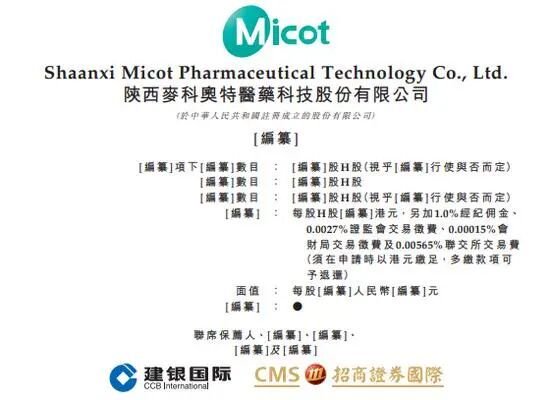
Core Viewpoint - The company, Maikaote Pharmaceutical Technology Co., Ltd., is seeking to go public on the Hong Kong Stock Exchange despite being unprofitable, with a current valuation of 2.636 billion RMB and a focus on developing peptide drugs for specific medical conditions [1][3][11]. Company Overview - Maikaote is co-controlled by professors Wang Bing and Wang Mei from Xi'an Jiaotong University, holding 53% of the company [3][4]. - The company has raised 236 million RMB in its latest funding round, pushing its post-investment valuation to 2.636 billion RMB [3][5]. - The core product, MT1013, is in Phase III clinical trials targeting secondary hyperparathyroidism (SHPT) [3][11]. Financial Performance - The company has accumulated losses exceeding 300 million RMB over the past two and a half years, with no product sales revenue to date [3][5]. - Financial data shows minimal other income, primarily from government subsidies and bank interest, with significant losses reported: 195.4 million RMB in 2023, 156.8 million RMB in 2024, and 49.9 million RMB in the first half of 2025 [7][8]. - R&D expenditures are substantial, amounting to 870 million RMB in 2023, 1.07 billion RMB in 2024, and 400 million RMB in the first half of 2025 [8][10]. Market Potential and Competition - The SHPT drug market in China is projected to reach 14.1 billion RMB by 2035, with a compound annual growth rate (CAGR) of 20.5%, while the obesity drug market could explode to 102.6 billion RMB with a CAGR of 36.1% [11]. - However, the competitive landscape is intense, with existing players in the SHPT field and a monopolistic situation in the obesity drug market, raising concerns about market share [11][12]. Commercialization Strategy - The company plans to adopt a dual-track commercialization model involving domestic third-party contract sales organizations (CSO) and international licensing to minimize initial investment [12]. - The success of this model heavily relies on the capabilities and commitment of partners, making market education and promotion critical for success [12][13]. Future Outlook - The ability to launch MT1013 by 2028 and capture market share amidst fierce competition will be crucial for the company's transition from a "story" to a "value" proposition [11][13]. - The ongoing evolution of the Hong Kong Stock Exchange's listing rules is facilitating the entry of unprofitable biotech firms, with Maikaote's journey reflecting broader trends in the industry [13].

西安交大教授夫妇创业,公司估值26亿,冲刺港股IPO
21世纪经济报道· 2025-10-13 09:37
Core Viewpoint - The article discusses the upcoming IPO of Shaanxi Maike Aote Pharmaceutical Technology Co., Ltd. on the Hong Kong Stock Exchange, highlighting its status as an unprofitable biotech company with significant losses and a focus on developing peptide drugs [1][3][10]. Company Overview - Shaanxi Maike Aote is co-controlled by professors Wang Bing and Wang Mei from Xi'an Jiaotong University, holding 53% of the company [3][4]. - The company has recently completed a financing round of 236 million RMB, achieving a post-money valuation of 2.636 billion RMB [3]. - The core product, MT1013, targets secondary hyperparathyroidism (SHPT) and is currently in Phase III clinical trials [3][10]. Financial Performance - The company has incurred cumulative losses exceeding 300 million RMB over the past two and a half years, with no product sales revenue to date [3][6]. - Financial data shows that other income for 2023, 2024, and the first half of 2025 was 6.969 million RMB, 4.002 million RMB, and 1.222 million RMB, respectively, primarily from government grants and bank interest [6][7]. - R&D expenses for the same periods were 87.013 million RMB, 107.022 million RMB, and 40.432 million RMB, indicating a high investment typical of biotech firms [8]. Market Potential and Challenges - The company is targeting a market with significant growth potential, with the SHPT drug market projected to reach 14.1 billion RMB by 2035, growing at a CAGR of 20.5%, and the obesity drug market expected to explode to 102.6 billion RMB with a 36.1% annual growth rate [10]. - However, the competitive landscape is intense, with existing players in the SHPT space and major companies dominating the obesity market, posing risks to market share [10][11]. Commercialization Strategy - Maike Aote plans to adopt a dual-track commercialization model involving domestic third-party contract sales organizations (CSO) and international licensing, which aims to minimize initial investment [11]. - The success of this model heavily relies on the capabilities and commitment of partners, making market education and promotion critical for success [11]. Conclusion - The company's journey reflects a broader trend in China's biotech sector, where academic entrepreneurs leverage capital to pursue IPOs despite being unprofitable [11]. - The ability to transition from R&D to commercialization, particularly with the launch of MT1013 in 2028, will be crucial for the company's valuation and market presence [11].
西安交大教授夫妇创26亿估值企业,冲刺港股IPO
2 1 Shi Ji Jing Ji Bao Dao· 2025-10-13 06:31
Core Viewpoint - The company, Maikaote Pharmaceutical Technology Co., Ltd., is seeking to list on the Hong Kong Stock Exchange despite being unprofitable, highlighting the trend of biotech firms pursuing capital markets under the 18A listing rules [1][9]. Financial Performance - The company has accumulated losses exceeding 300 million yuan over the past two and a half years, with projected revenues of only 1.22 million yuan in the first half of 2025, reflecting the high investment and long cycle typical of innovative drug companies [2][3][6]. - In 2023, 2024, and the first half of 2025, the company reported other income of 6.969 million yuan, 4.002 million yuan, and 1.222 million yuan, primarily from government subsidies and bank interest, with corresponding losses of 195 million yuan, 157 million yuan, and 49.9 million yuan [6][7]. - As of June 30, 2025, the company held cash and cash equivalents of 107 million yuan, indicating significant cash flow pressure given its average annual losses exceeding 100 million yuan [6][7]. Product Pipeline and Market Potential - The company focuses on a dual-specificity/multi-specificity peptide drug platform, with its core product MT1013 targeting secondary hyperparathyroidism (SHPT) expected to be commercialized by early 2028 [7][8]. - The SHPT drug market in China is projected to reach 14.1 billion yuan by 2035, with a compound annual growth rate (CAGR) of 20.5%, while the obesity drug market is expected to explode to 102.6 billion yuan, growing at a CAGR of 36.1% [8]. Competitive Landscape - The SHPT field has multiple competitors with approved CaSR agonists, and the obesity market is dominated by major players, raising concerns about market share limitations for the company [8]. - The company plans to adopt a dual-track commercialization model involving domestic third-party contract sales organizations (CSO) and international licensing, which relies heavily on the capabilities and investment of partners [8]. Investment and Valuation - The company has achieved a post-financing valuation of 2.636 billion yuan, supported by institutional investors, despite its unprofitability [2][9]. - The shift in investor focus from "story" to "realization" emphasizes the need for a clear commercialization timeline and achievement of research milestones [8][9].
百利天恒子公司与百时美施贵宝合作协议触发里程碑付款条件
Zheng Quan Shi Bao Wang· 2025-10-12 11:56
Core Insights - 百利天恒 has secured a significant collaboration with Bristol-Myers Squibb (BMS) for the drug izabren, receiving an upfront payment of $800 million and potential milestone payments totaling up to $7.1 billion [1] - The company has received approval for its innovative drug BL-ARC001, which utilizes advanced targeted delivery technology for enhanced tumor specificity and efficacy [2] - 百利天恒 successfully raised 3.764 billion yuan through a private placement to accelerate its drug development pipeline, particularly in the ADC and multi-specific antibody platforms [3] Group 1 - 百利天恒's subsidiary SystImmune entered into an exclusive licensing agreement with BMS for the drug izabren, triggering an initial milestone payment of $250 million due to the advancement of a key clinical trial [1] - The company is advancing its clinical trials in the U.S. and China, with several indications recognized as breakthrough therapies by regulatory agencies [4] - The company aims to commercialize izabren in China by 2026, with expectations for global approval starting in 2029 [4] Group 2 - The innovative drug BL-ARC001 has received clinical trial approval from the National Medical Products Administration (NMPA), showcasing the company's commitment to addressing unmet clinical needs [2] - The funds raised from the recent private placement will be directed entirely towards the development of innovative drug projects, enhancing the company's product pipeline [3] - 百利天恒 is conducting multiple clinical trials for various cancer types, including triple-negative breast cancer and EGFR-mutant non-small cell lung cancer [4]

首药控股上半年亏1.04亿 2022上市募15亿中信建投保荐
Zhong Guo Jing Ji Wang· 2025-10-09 02:56
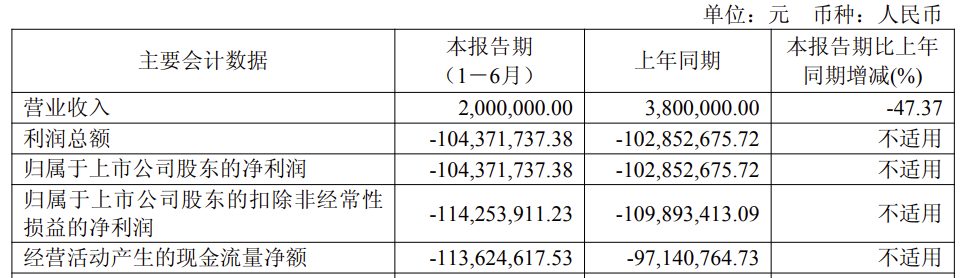
Core Viewpoint - Shouyao Holdings (688197.SH) reported a significant decline in revenue and continued net losses for the first half of 2025, indicating ongoing financial challenges for the company [1]. Financial Performance - The company achieved a revenue of 2 million yuan in the first half of 2025, representing a year-on-year decrease of 47.37% from 3.8 million yuan in the same period last year [3]. - The net profit attributable to shareholders was -104.37 million yuan, slightly worsening from -102.85 million yuan in the previous year [3]. - The net profit attributable to shareholders after deducting non-recurring gains and losses was -114.25 million yuan, compared to -109.89 million yuan in the same period last year [3]. - The net cash flow from operating activities was -113.62 million yuan, compared to -97.14 million yuan in the same period last year [3]. Company Background - Shouyao Holdings was listed on the Shanghai Stock Exchange's Sci-Tech Innovation Board on March 23, 2022, with an initial offering price of 39.90 yuan per share [4]. - The total amount raised during the IPO was 1.483 billion yuan, with a net amount of 1.374 billion yuan after deducting issuance costs [4]. - The company intended to use the raised funds for innovative drug research and development projects, establishing a new drug R&D and industrialization base, and supplementing working capital [4].


必贝特(688759) - 必贝特首次公开发行股票并在科创板上市招股意向书附录
2025-10-08 10:30
广州必贝特医药股份有限公司 深圳市福田区中心三路 8 号卓越时代广场(二期)北座 1 首次公开发行股票并在科创板上市 招股意向书附录 | 序号 | 文件名称 | 页码 | | --- | --- | --- | | 1 | 发行保荐书 | 1-40 | | 2 | 财务报表及审计报告 | 41-211 | | 3 | 内部控制审计报告 | 212-220 | | 4 | 经注册会计师核验的非经常性损益明细表 | 221-230 | | 5 | 法律意见书 | 231-587 | | 6 | 律师工作报告 | 588-809 | | 7 | 发行人公司章程(草案) | 810-861 | | 8 | 中国证监会同意本次发行注册的文件 | 862-863 | 中信证券股份有限公司 关于 广州必贝特医药股份有限公司 首次公开发行股票并在科创板上市之 发行保荐书 保荐人(主承销商) | 目 录 1 | | --- | | 声 明 2 | | 第一节 本次证券发行基本情况 3 | | 一、保荐人名称 3 | | 二、保荐代表人、项目协办人及其它项目组成员情况 3 | | 三、发行人基本情况 4 | | 四、本次推荐发行 ...
专注于创新药自主研发的生物医药企业必贝特拟于科创板IPO上市
Zhi Tong Cai Jing· 2025-10-08 07:55
Core Points - The company, Bibet (688759.SH), has released its prospectus for an initial public offering (IPO) on the Sci-Tech Innovation Board, planning to issue 90 million shares, which will account for approximately 20.00% of the total share capital post-issuance [1] - The IPO will consist entirely of new shares, with no existing shareholders selling shares [1] - The initial strategic placement will involve 18 million shares, representing 20.00% of the total issuance, with final placement amounts to be determined after the pricing on October 15, 2025 [1] Company Overview - Bibet is a biopharmaceutical company focused on innovative drug development, particularly in the fields of oncology, autoimmune diseases, and metabolic diseases [1] - The company aims to develop First-in-Class drugs and innovative medications to meet unmet clinical needs, emphasizing independent innovation and global intellectual property rights [1] Research Pipeline - As of the signing date of the prospectus, the company has one Class 1 innovative drug, BEBT-908, approved for market, while BEBT-209 is in Phase III clinical trials, and BEBT-109 has been approved to start Phase III trials [2] - Five additional products are currently in Phase I clinical trials [2] Fund Utilization - The net proceeds from the IPO, after deducting issuance costs, will be allocated as follows: 949 million yuan for new drug research and development projects, 555 million yuan for the construction of a research and development center and formulation industrialization base in Qingyuan, and 500 million yuan for working capital [2]