银发经济

Search documents
焦点访谈|千磨万击还坚劲 现代服务业为中国经济注入新动能
Yang Shi Wang· 2025-04-12 13:42
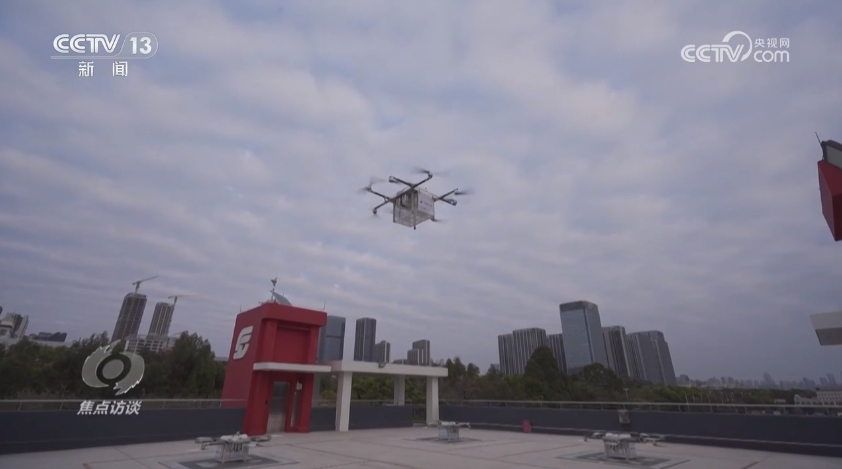
Core Viewpoint - The article emphasizes that China's economy remains resilient and robust despite external pressures, particularly highlighting the growth and potential of the modern service industry as a key driver of economic development [1][10]. Group 1: Economic Resilience and Growth - The unilateral tariffs imposed by the U.S. violate international trade rules and disrupt the global economy, yet China's economic foundation is stable and resilient [1]. - The service sector's contribution to GDP has been increasing, showcasing its role as a primary engine for economic growth [1][7]. - In 2024, China's service industry added value reached 76.56 trillion yuan, growing by 5.0% year-on-year, contributing 56.2% to national economic growth [7]. Group 2: Modern Logistics and Technological Advancements - China is the largest logistics market globally, with over 10,000 A-level logistics companies and more than 2,700 large-scale logistics parks [5]. - The integration of drones and smart logistics systems has significantly improved delivery efficiency, achieving a fourfold increase compared to traditional ground transportation [3]. - The logistics industry is undergoing rapid smart transformation, with advancements in low-altitude transportation and cold chain logistics reflecting the sector's growth potential [6][12]. Group 3: Consumer Market and Domestic Demand - With a population of 1.4 billion, China has the world's largest consumer market, which is increasingly being stimulated by high-quality development initiatives [9]. - The silver economy, driven by the aging population, is projected to grow from 7 trillion yuan to 30 trillion yuan by 2035, indicating a significant market opportunity [26]. - The cultural tourism sector is thriving, with innovative consumption scenarios and integration of various industries contributing to economic vitality [19][21]. Group 4: Policy Support and Future Outlook - The Chinese government is actively promoting policies to boost consumption and investment, with a focus on expanding domestic demand [22]. - The development of modern service industries is supported by national strategies aimed at enhancing market connectivity and technological integration [15][17]. - The continuous evolution of the service sector, including e-commerce and financial technology, is expected to drive substantial economic growth and job creation [17][27].

38.6亿元省级驻镇帮镇扶村资金下达 | “百千万”周周见
Nan Fang Nong Cun Bao· 2025-03-25 09:34
Core Points - The Guangdong provincial government has allocated 3.86 billion yuan for the "Help Towns and Villages" initiative, aimed at promoting high-quality development in rural areas [6][18][26]. Group 1: Funding Allocation - The funding includes 1 billion yuan from the central government for rural revitalization and 2.86 billion yuan for comprehensive capacity building in rural areas [27][28]. - Specific allocations for various cities include Shantou 95.47 million yuan, Shaoguan 301.34 million yuan, and Zhaoqing 279.15 million yuan, among others [29][30][31]. Group 2: Development Initiatives - The province is promoting new industries, with the first ten "Cross-border E-commerce + Industrial Belt" pilot projects officially announced [11][37]. - A set of 20 measures has been introduced to enhance the tourism sector, aiming for over 950 million annual visitors and 1.3 trillion yuan in tourism revenue by 2027 [42][44]. Group 3: Infrastructure and Environmental Projects - Initiatives include the construction of over 100 beautiful rivers and lakes in Zhongshan and the enhancement of the landscape along railway lines in Zhaoqing [15][17][130]. - The Huizhou region is focusing on developing rural hotels, with 14 cultural tourism projects signed during a recent conference [90][93]. Group 4: Economic Development Plans - The Nanhai District aims to create a silver economy industry cluster worth over 50 billion yuan by 2027, with specific tasks outlined in a recent action plan [100][102]. - The Zhaoqing High-Quality Development Plan emphasizes the integration of renewable energy and storage projects, targeting an increase of 1 million kilowatts in installed capacity by 2025 [138][147].

职业打假30年:争议未退,哨声不断
和讯· 2025-03-14 08:50
Core Viewpoint - The article discusses the evolution of consumer rights protection in China, highlighting the ongoing challenges and the role of whistleblowers like Wang Hai in combating fraud and protecting consumer interests [1][2][3]. Group 1: Consumer Rights and Protection - The consumer rights protection landscape in China has evolved over the past 30 years, expanding from product consumption to service consumption, with technological advancements making some infringement behaviors more sophisticated and hidden [2]. - In 2024, the National Consumer Association received 1.76 million complaints, a 30% increase from the previous year, with rising complaints related to safety, false advertising, and quality issues [4]. - The 2024 implementation of the Consumer Rights Protection Law emphasizes the need for a comprehensive governance system combining legal compliance, industry self-discipline, consumer participation, government regulation, and social oversight [2][4]. Group 2: Vulnerable Consumer Groups - Certain consumer groups, such as the elderly and farmers, are particularly vulnerable and require special protection in legal disputes, especially in the context of the emerging silver economy [4]. - The article highlights fraudulent practices targeting the elderly, such as misleading marketing tactics in private domain e-commerce, which exploit their health anxieties [3][4]. Group 3: Challenges in Consumer Protection - The article identifies a paradox in the platform economy where operators exploit their advantages, leading to a phenomenon of reverse elimination in traditional consumption, with counterfeit products dominating the market [5]. - The growth of service retail in 2024 was 6.2%, outpacing goods retail, indicating a shift in consumer spending patterns, but also a rise in fraudulent activities in service consumption [5]. Group 4: Legal and Regulatory Framework - The 2024 Consumer Rights Protection Law encourages social supervision of consumer rights violations, but the costs associated with whistleblowing and legal actions are often underestimated [6][10]. - The article discusses the ongoing debates regarding punitive damages in consumer protection, with calls for clearer standards and practices to ensure fair compensation for consumers [10][11]. Group 5: Future Directions - The 2025-2027 Action Plan for Optimizing the Consumption Environment aims to enhance consumer rights protection through collective and public interest litigation, as well as improving the efficiency of consumer dispute resolution [11]. - Wang Hai's ongoing commitment to consumer rights protection indicates that the fight against fraud and the need for consumer advocacy will continue to be relevant in the evolving market landscape [12].