
Shipping

Search documents
Builders FirstSource: Building A New Position May Work Despite Evident Technical Risks (Rating Upgrade) (NYSE:BLDR)
Seeking Alpha· 2025-11-02 15:40
Core Insights - The logistics sector has seen significant engagement from investors, particularly in the ASEAN and US markets, highlighting its growth potential and diversification opportunities [1] - The popularity of insurance companies in the Philippines since 2014 has influenced investment strategies, leading to a broader portfolio that includes various industries and market capitalizations [1] - The entry into the US market in 2020 has allowed for comparative analysis between US and ASEAN markets, particularly in sectors like banking, hotels, and logistics [1] Investment Strategies - Initial investments were focused on blue-chip companies, but the strategy has evolved to include a mix of holdings for retirement and trading profits [1] - The encouragement to diversify investments beyond traditional savings in banks and properties has led to a more dynamic investment approach [1] - The use of platforms like Seeking Alpha has facilitated knowledge sharing and enhanced market awareness, particularly for newer investors in the US market [1] Market Focus - The primary sectors of interest include banking, telecommunications, logistics, and hotels, indicating a strategic focus on essential services and infrastructure [1] - The logistics industry is particularly emphasized, reflecting its critical role in both ASEAN and US markets [1] - The ongoing analysis of market trends and company performance in these sectors is crucial for informed investment decisions [1]



Shake Shack: Robust Fundamentals And Attractive Valuation Should Heat Up Momentum (SHAK)
Seeking Alpha· 2025-10-31 14:55
Core Insights - The logistics sector has seen significant engagement from investors, particularly in the ASEAN and US markets, highlighting its growth potential and diversification opportunities [1] Group 1: Investment Focus - The company has diversified its investments across various sectors including banking, telecommunications, logistics, and hotels, indicating a strategic approach to portfolio management [1] - The entry into the US market in 2020 reflects a growing interest in international investment opportunities, particularly in sectors like banks, hotels, and logistics [1] Group 2: Market Trends - The popularity of insurance companies in the Philippines since 2014 suggests a shift in investment preferences among local investors, moving towards more diversified financial products [1] - The trend of using stock markets for portfolio diversification rather than relying solely on traditional savings methods indicates a broader acceptance of equity investments among investors [1]

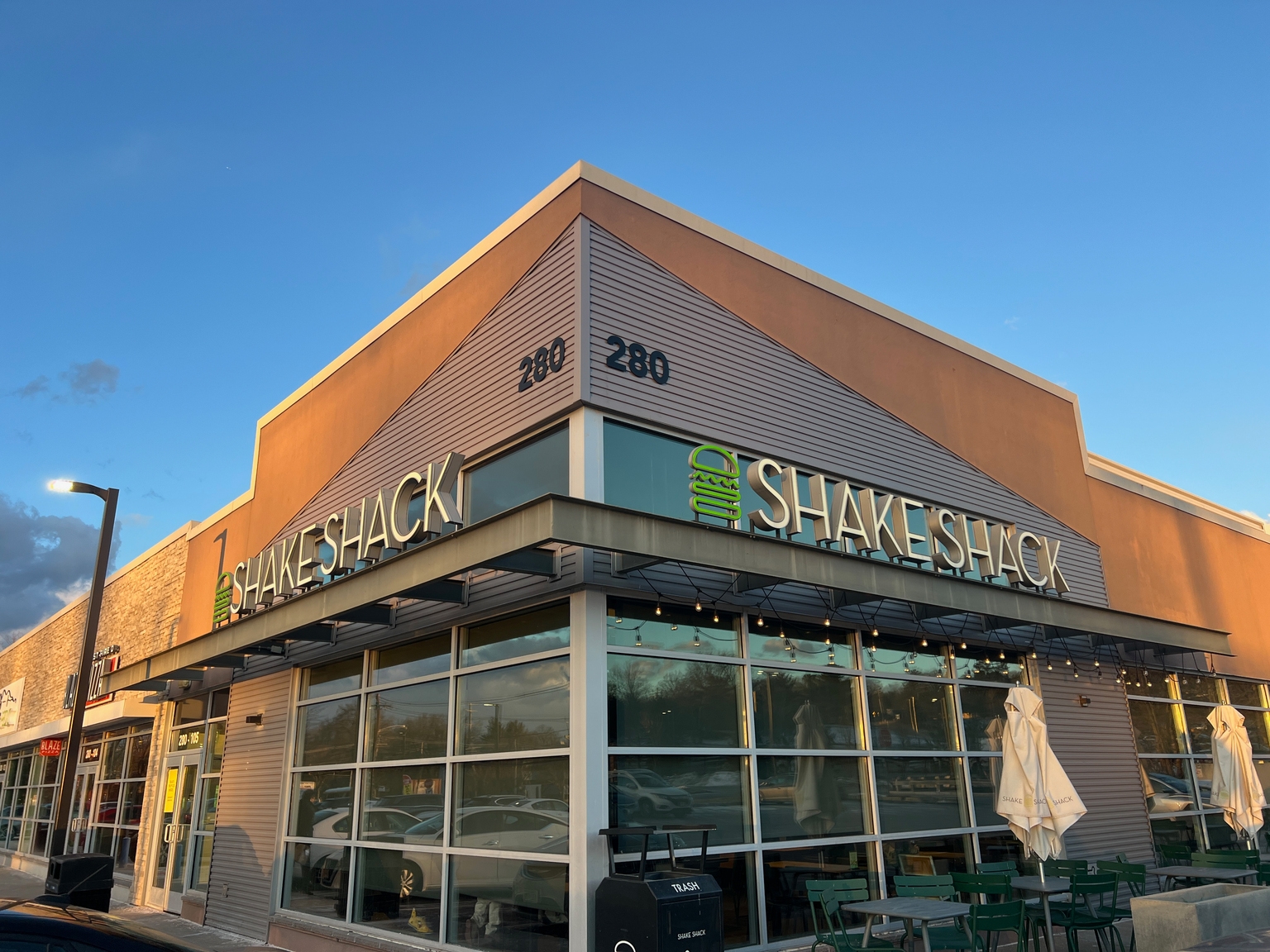
Shake Shack: Robust Fundamentals And Attractive Valuation Should Heat Up Momentum
Seeking Alpha· 2025-10-31 14:55
Core Insights - The logistics sector has seen significant engagement from investors, particularly in the ASEAN and US markets, highlighting its growth potential and diversification opportunities [1] Investment Focus - The company has diversified its investments across various sectors including banking, telecommunications, logistics, and hotels, indicating a strategic approach to portfolio management [1] - The entry into the US market in 2020 reflects a growing interest in international investment opportunities, particularly in sectors like banks, hotels, and logistics [1] Market Trends - The popularity of insurance companies in the Philippines since 2014 suggests a shift in investment preferences among local investors, moving towards more diversified financial products [1] - The trend of using platforms like Seeking Alpha for market analysis indicates a growing reliance on analytical tools for informed investment decisions [1]

Costamare Inc. Sets the Date for Its Third Quarter 2025 Results Release, Conference Call and Webcast
Globenewswire· 2025-10-31 11:05
Core Viewpoint - Costamare Inc. is set to release its third-quarter financial results on November 4, 2025, before the market opens in New York [1] Conference Call Details - A conference call will be held on November 4, 2025, at 8:30 a.m. ET to discuss the financial results, with participants advised to dial in 10 minutes early [2] - The replay of the conference call will be available until November 11, 2025, with specific numbers provided for both US and international participants [3] Live Webcast - A live webcast of the conference call will be available on the Costamare Inc. website, with registration recommended 10 minutes prior to the start [4] Company Overview - Costamare Inc. is a leading owner and provider of containerships for charter, with a history of 51 years in the international shipping industry and a fleet of 68 containerships totaling approximately 513,000 TEU capacity [5] - The company has four newbuild containerships under construction with a total capacity of 12,400 TEU and also participates in a leasing business [5] - The company's common stock and preferred stocks trade on the New York Stock Exchange under various symbols [5]


中国工业_跟踪美国对华关税变化下的贸易流向(第 43 周)_ China Industrials _Tracking trade flows amid changing...__ Tracking trade flows amid changing US tariffs on China (week 43)
2025-10-31 00:59
Summary of Key Points from the Conference Call Industry Overview - **Industry**: China Industrials and Shipping - **Focus**: Trade flows amid changing US tariffs on China, including shipping, shipbuilding, ports, international freight flights, and land transportation [2][3][4] Core Insights 1. **Container Throughput Decline**: - Container throughput at key ports in China decreased by 8% week-over-week (WoW) and increased by 2% year-over-year (YoY) [3][6] - Port of Los Angeles reported an 11% decrease in import volume WoW, with flat YoY growth for week 45, following a 13% YoY increase in week 44 [3][9] 2. **Freight Rate Trends**: - The Shanghai Containerized Freight Index (SCFI) increased by 7% WoW, marking the highest level since early September [4][13] - Specific rates for Shanghai to US West Coast and East Coast increased by 11% and 6% respectively [4][13] 3. **Chartering Market Dynamics**: - Containership charter rates remain firm, with demand outpacing available tonnage, particularly in the 2,500-4,200 TEU range [4][29] - The Asia feeder ship availability index decreased by 1% WoW, indicating tighter supply [4][33] 4. **Port Congestion and Fees**: - Port congestion persists, with an average vessel waiting time of approximately 3.4 days at the Port of Antwerp [5][31] - 4% of container ship port calls in the US since mid-October may have incurred additional fees, down from 7% in Q1 [5] 5. **International Freight Flights**: - The number of international freight flights increased by 11% YoY last week, indicating a recovery in air freight capacity [3][35] 6. **Railway Express Volumes**: - Outbound volume for the China-Europe and China-Asia Railway Express recorded a decline of 7% and an increase of 31% YoY respectively in September [3][27] Additional Important Insights - **Trade Flow Monitoring**: The report utilizes high-frequency data from various sources, including UBS Evidence Lab and the Ministry of Transport, to track trade flows and shipping dynamics [2][4] - **Macroeconomic Risks**: Investment downsizing at the macroeconomic level poses a risk for China's industrial sector, with potential impacts on demand for industrial goods and import/export volumes [43] - **Future Outlook**: The report suggests that if preferential policies for high-tech companies are canceled, it could negatively affect earnings, alongside intense competition impacting market share [43] This summary encapsulates the key points discussed in the conference call, providing a comprehensive overview of the current state and outlook of the China industrial and shipping sectors.
Global Ship Lease (GSL): Compelling Deep-value Opportunity In The Transportation Sector
Acquirersmultiple· 2025-10-30 23:22
Core Insights - Global Ship Lease, Inc. (GSL) is highlighted as a potentially undervalued stock in the shipping sector, benefiting from long-term, fixed-rate contracts that provide stable cash flows [1][11] Business Overview - GSL is headquartered in London and owns a diversified fleet of mid-sized and smaller containerships, chartering them on long-term contracts to leading liner companies, which offers multi-year revenue visibility and protection from spot-rate volatility [2] - The company is positioned to compound value through fleet expansion and vessel acquisitions during market downturns [2] Valuation Metrics - GSL's Intrinsic Value to Price (IV/P) is 1.70, indicating its intrinsic value is approximately 70% higher than its current market price, suggesting strong potential undervaluation [3][11] - The market capitalization of GSL is around $1.017 billion, with an enterprise value of approximately $1.288 billion [4] - GSL generates about $142 million in free cash flow, resulting in an 11% free cash flow yield and an Acquirer's Multiple of 3.3, reflecting strong cash generation relative to its valuation [4] Revenue & Profitability - GSL has maintained robust profitability supported by long-term charters that secure high-margin contracts, even as freight markets have cooled [5] - The company reported a revenue of $730 million and an operating income of $381 million, with an operating margin of approximately 52% [9] Balance Sheet Strength - GSL possesses a solid balance sheet with strong equity backing and sufficient liquidity relative to its vessel commitments, allowing for future fleet expansion and shareholder returns [6] - The company has total debt of approximately $684 million and net debt of about $533 million, with shareholder equity around $1.46 billion [9] Capital Returns - GSL continues to return capital to shareholders through a growing dividend while also reinvesting in its fleet, demonstrating disciplined capital allocation [10] - The dividend yield is estimated to be between 6% and 7%, with total dividends paid amounting to approximately $76 million [9] Conclusion - GSL represents a compelling deep-value opportunity in the transportation sector, characterized by strong earnings visibility, high cash generation, and shareholder-friendly capital returns [12]


Dr. Nikolas P. Tsakos Honored for His Contribution to the Maritime Industry and Philanthropy
Globenewswire· 2025-10-30 18:20
Company Overview - Tsakos Energy Navigation ("TEN") is a well-established public shipping company, founded in 1993, celebrating 32 years as a public entity [7] - The company operates a diversified energy fleet consisting of 82 vessels, including various types of tankers and carriers, totaling approximately 11 million deadweight tonnage (dwt) [7] Philanthropic Contributions - Dr. Nikolas P. Tsakos, the Founder & CEO of TEN, was honored for his contributions to the maritime industry and philanthropy at the "Chrysanthemum Ball" Gala in New York [2][3] - The Tsakos family established the Maria Tsakos Public Benefit Foundation in 2010, which focuses on maritime research and education [4] - The Foundation has financed the education of over 500 students across Greece, South America, and West Africa, and opened the Tsakos Merchant Marine Academy in September 2024, the first non-state, non-profit merchant marine academy in Greece [5]


Capital Clean Energy Carriers Corp.(CCEC) - 2025 Q3 - Earnings Call Presentation
2025-10-30 14:00
Financial Performance & Highlights - Net income from continuing operations for Q3 2025 was $23.1 million[7] - The company has an average remaining charter duration of 6.9 years[7] with 100% charter coverage for 2025 and 79% for 2026[7] - Contracted revenue backlog exceeds $3.0 billion[7], with 93% or $2.8 billion from gas assets[7, 20] - Cash position is solid with $332.3 million[13, 46] (including restricted cash) as of September 30, 2025[23, 46] - Q3 2025 dividend is $0.15 per share[7] Strategic Updates - Secured employment of up to 10 years for one newbuilding LNG/Cs[7] - Financing completed for all DF MGCs and LCO2/multi-gas carriers[7] - Completed the sale of a 13,300 TEU container carrier in October 2025[7, 13] - The LNG time charter book has a contracted backlog of 93 years at an average TCE of $87,006[17], or approximately $2.8 billion of LNG/C charter revenue[17] LNG Market Dynamics - There has been a surge of Final Investment Decisions (FIDs) in 2025, with three new FIDs in Q3 and seven in total year-to-date[25] - The EU is moving towards a full ban on Russian LNG imports, potentially benefiting shipping as Russian LNG is rerouted to China and US LNG fills the gap in Europe[28, 30] - The EU imported about 17.8 million tons of Russian LNG in 2024[30] - Assuming Russian flows to China travel via Suez in winter and the Northern Sea Route in summer, the split is roughly 50:50, global LNG shipping could gain around 2% on 2024's total ton-miles[30]
Capital Clean Energy Carriers Corp. Announces Third Quarter 2025 Financial Results
Globenewswire· 2025-10-30 12:30
Core Insights - Capital Clean Energy Carriers Corp. (CCEC) reported a strategic shift towards gas transportation, focusing on LNG and new commodities related to energy transition, alongside the acquisition of new vessels and divestment of container vessels [3][4][26]. Financial Performance - For Q3 2025, CCEC's revenues were $99.5 million, a decrease of 2.8% from $102.4 million in Q3 2024. Expenses increased by 5.5% to $49.5 million from $46.9 million [6][17]. - Net income for Q3 2025 was $23.1 million, up 43.5% from $16.1 million in Q3 2024 [6][16]. - Interest expense and finance costs decreased by 30.7% to $26.9 million from $38.8 million year-over-year [6][19]. Strategic Developments - CCEC has secured long-term employment for an LNG carrier under construction, contributing to a total contract backlog of 6.9 years and $3.0 billion in contracted revenues [8][15]. - The company completed the sale of 13 container vessels since December 2023, generating gross proceeds of approximately $694.2 million [26]. Fleet and Operations - The current fleet includes 14 vessels, with 12 being the latest generation LNG carriers and two Neo-Panamax container vessels [4][48]. - CCEC's under-construction fleet consists of six LNG carriers and additional gas carriers, with expected capital expenditures totaling $1,767.1 million [27][29]. Market Context - The LNG shipping market is evolving, with modern two-stroke vessels commanding higher earnings compared to older steam turbine vessels. CCEC's fleet is insulated from spot market conditions until Q3 2026 [38][39]. - The global LNG fleet supply is tightening, with a low orderbook to fleet ratio of 41.2%, indicating a favorable environment for modern LNG carriers [39][41]. Corporate Governance - Recent changes in the Board of Directors include the retirement of Abel Rasterhoff and the appointment of Martin Houston, who brings extensive experience in the LNG market [11][42]. Dividend and Shareholder Engagement - CCEC declared a cash dividend of $0.15 per share for Q3 2025, payable on November 13, 2025 [9][37]. - The company has implemented a Dividend Reinvestment Plan, allowing shareholders to reinvest dividends into common shares [36]. Financing Activities - CCEC secured financing for its under-construction fleet, including a $310.1 million arrangement for six dual-fuel medium gas carriers and a $101.7 million agreement for two LCO2 carriers [31][32]. - As of September 30, 2025, total cash amounted to $332.3 million, with total debt at $2,440.8 million [20][22].

Scorpio Tankers Inc. Announces Financial Results for the Third Quarter of 2025 and an Increase to Its Quarterly Dividend
Globenewswire· 2025-10-30 10:45
Core Viewpoint - Scorpio Tankers Inc. reported a net income of $84.5 million for Q3 2025, a significant decrease from $158.7 million in Q3 2024, attributed to lower Time Charter Equivalent (TCE) revenue and changes in market conditions [2][4][39]. Financial Performance - For the three months ended September 30, 2025, the company had a net income of $84.5 million, translating to $1.81 basic and $1.73 diluted earnings per share [2][4]. - Adjusted net income for the same period was $72.7 million, or $1.56 basic and $1.49 diluted earnings per share, excluding a fair value gain and a loss on debt extinguishment [3]. - In comparison, for Q3 2024, the company reported a net income of $158.7 million, or $3.31 basic and $3.16 diluted earnings per share [4]. Revenue and Expenses - TCE revenue for Q3 2025 was $232.9 million, down from $258.2 million in Q3 2024, reflecting a decrease of $25.3 million [39]. - Average daily TCE revenue decreased to $26,231 per vessel in Q3 2025 from $28,488 per vessel in Q3 2024 [39]. - Vessel operating costs decreased to $74.3 million in Q3 2025 from $80.9 million in Q3 2024, driven by a reduction in the average number of vessels [39]. Dividend Declaration - The Board of Directors declared a quarterly cash dividend of $0.42 per common share, with a payment date set for December 5, 2025 [10]. Debt and Liquidity - As of October 28, 2025, the company had $626.7 million in unrestricted cash and cash equivalents, along with $788.3 million of undrawn revolver capacity [20]. - The company reached agreements for unscheduled prepayments totaling $154.6 million on certain secured credit facilities, expected to occur in Q4 2025 [33]. Recent Transactions - The company entered into a time charter-out agreement for an LR2 product tanker at a rate of $35,000 per day and sold two scrubber-fitted LR2 product tankers for $61.2 million each [14]. - The company sold 4,778,000 common shares of DHT Holdings Inc. at an average price of $12.50 per share during Q3 2025 [14].

