
Robotics

Search documents
预告︱机器人及人工智能领域近期相关活动预告
机器人圈· 2026-01-12 09:29
机器人产业蓬勃发展,正极大改变着人类生产和生活方式,为经济社会发展注入强劲动能。2023年年初, 工业和信息化部联合十六大部委印发《"机器人+"应用行动实施方案》,目标到2025年,制造业机器人密 度较2020年实现翻番,服务机器人、特种机器人行业应用深度和广度显著提升,机器人促进经济社会高质 量发展的能力明显增强。11月12日工业和信息化部又印发《人形机器人创新发展指导意见》,提出人形机 器人有望成为继计算机、智能手机、新能源汽车后的颠覆性产品,并明确2025年实现批量生产。 各项政策加持,热度非凡,行业活动也层出不穷,小编通过网络搜集整理了 未来两周国内外机器人及人工 智能领域行业活动活动榜单 ,供大家参考。 2025.01.12-01.25 机器人及人工智能相关活动预告 1 2026人形机器人与具身智能产业大会 2 2026年大湾区具身智能论坛暨珠海市计算机学会年会 3 第二届人工智能与计算机网络技术国际学术会议(ICAICN 2026) 时间: 2026.01.15-01.16 地点: 上海市 时间: 2026.01.16-01.18 地点: 中山大学珠海校区 主办单位: 珠海市计算机学会、珠海复旦创 ...


字节,阿里,美团三大互联网大厂组团投了这家企业!
机器人圈· 2026-01-12 09:29
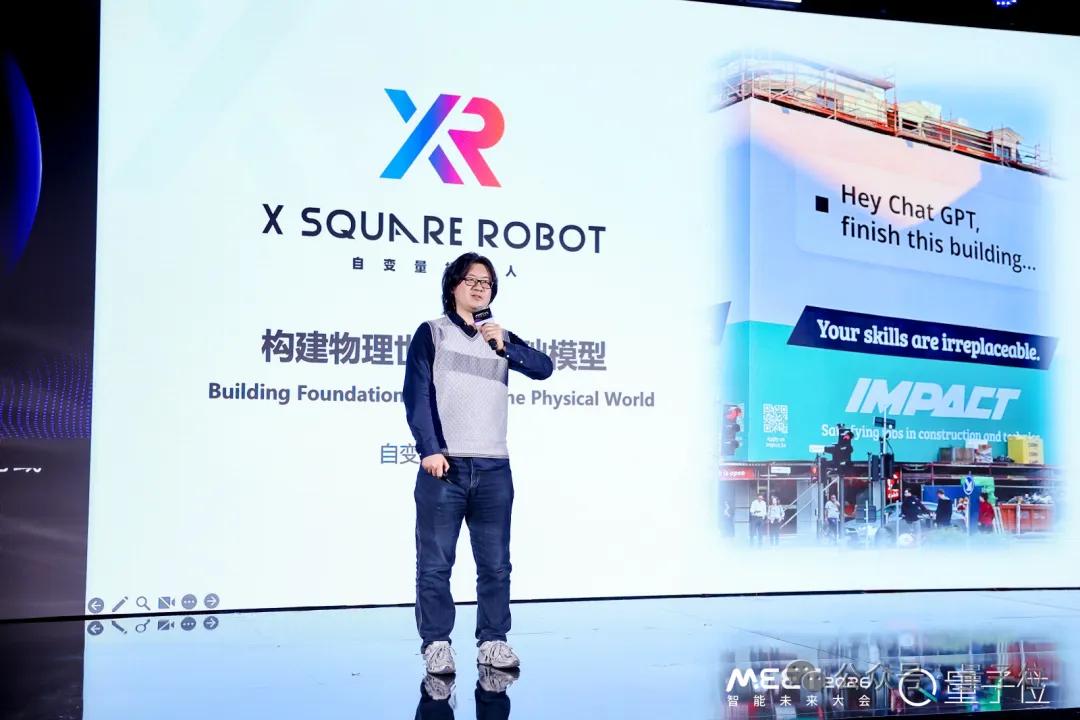
Core Insights - The article highlights the completion of a 1 billion RMB A++ funding round by Zivariable Robotics, with investments from top-tier institutions including ByteDance, Sequoia China, and others, marking a significant recognition of the company's technological leadership and growth potential [2] - The focus of the robotics industry is shifting from hardware performance to the intelligence of systems, emphasizing the need for robots to understand physical world dynamics and handle complex tasks [2][3] Group 1: Investment and Market Position - Zivariable Robotics is the only embodied intelligence company in China to receive investments from major internet giants like Meituan and Alibaba, showcasing its unique market position [2] - The collaborative investment from diverse capital sources reflects a collective consensus on the importance of embodied foundational models in the capital market [2] Group 2: Technological Advancements - The company's embodied foundational model integrates multimodal sensory inputs (visual, tactile, auditory) to create a complete intelligent feedback loop, enabling real-time processing of unstructured and dynamic tasks [3] - Zivariable's proprietary WALL-A model combines world modeling with multimodal input-output architecture, significantly enhancing the robot's zero-shot generalization capabilities in unstructured environments [3][4] Group 3: Data-Driven Model Evolution - Zivariable emphasizes a closed-loop iteration of hardware, data, and models, being one of the first in China to scale real-world data collection for model breakthroughs [4] - The company has developed a data pipeline that processes data through generation, filtering, enhancement, and annotation, ensuring a continuous output of high-quality data for model evolution [4] Group 4: Real-World Applications - Zivariable's robots demonstrate strong adaptability in real-world scenarios, successfully completing tasks like food delivery and package recycling under challenging conditions [5] - The evolution of the foundational model has unlocked the potential for high-freedom dexterous hands, enabling robots to perform complex tasks requiring fine motor skills [5] Group 5: Industry Ecosystem and Future Plans - Zivariable plans to open-source its end-to-end embodied foundational model WALL-OSS by September 2025, promoting the open dissemination of embodied intelligence technology [6] - The company aims to lead in the field of embodied intelligence by focusing on model iteration, data pipelines, and hardware development, driving technological value in various industries [6]
维他动力Vbot超能机器狗预订单6540台、销售额近亿元,刷新具身智能行业新纪录
IPO早知道· 2026-01-12 08:04
Core Insights - Vbot, a consumer-grade embodied intelligent product, achieved impressive sales with 6,540 units ordered and nearly 100 million yuan in pre-sales revenue during its launch period, setting records in the industry for both unit sales and revenue for products priced at over 10,000 yuan [7][11] - The product's launch reflects a significant shift in consumer acceptance of embodied intelligent products, indicating a new phase where users are willing to pay for such technology [15][16] Company Overview - Vbot was founded by a team of industry experts, including CEO Yu Yinan, who previously held senior positions at Horizon Robotics, and co-founders Song Wei and Zhao Zhelun, who have extensive backgrounds in intelligent driving and product development [8][11] - The company secured a total of 300 million yuan in funding through multiple financing rounds, with notable investors including Hillhouse Capital, Baidu Ventures, and Lenovo Capital [8] Product Features - The Vbot super intelligent dog is the world's first intelligent robot that operates without remote control, designed to integrate seamlessly into daily life by performing tasks such as carrying items and following users [11][12] - The product is built on three core components: body intelligence, spatial intelligence, and agent intelligence, enabling it to operate effectively in various environments and understand complex tasks [14][15] - Vbot features innovative design elements, such as a 1:1 size leg design for stability on different terrains and a self-developed spatial model that combines visual and radar inputs for comprehensive spatial understanding [15] User Engagement and Experience - Vbot prioritized user experience by establishing a robust service system, achieving over 93% connection rate with customers during the pre-sale period, and addressing 69,000 inquiries through direct communication [16] - The successful pre-sale not only highlights the market potential for consumer-grade embodied intelligent products but also demonstrates Vbot's commitment to product innovation and systematic user service [16]

具身智能开年最大融资,字节红杉领投10亿
3 6 Ke· 2026-01-12 07:39
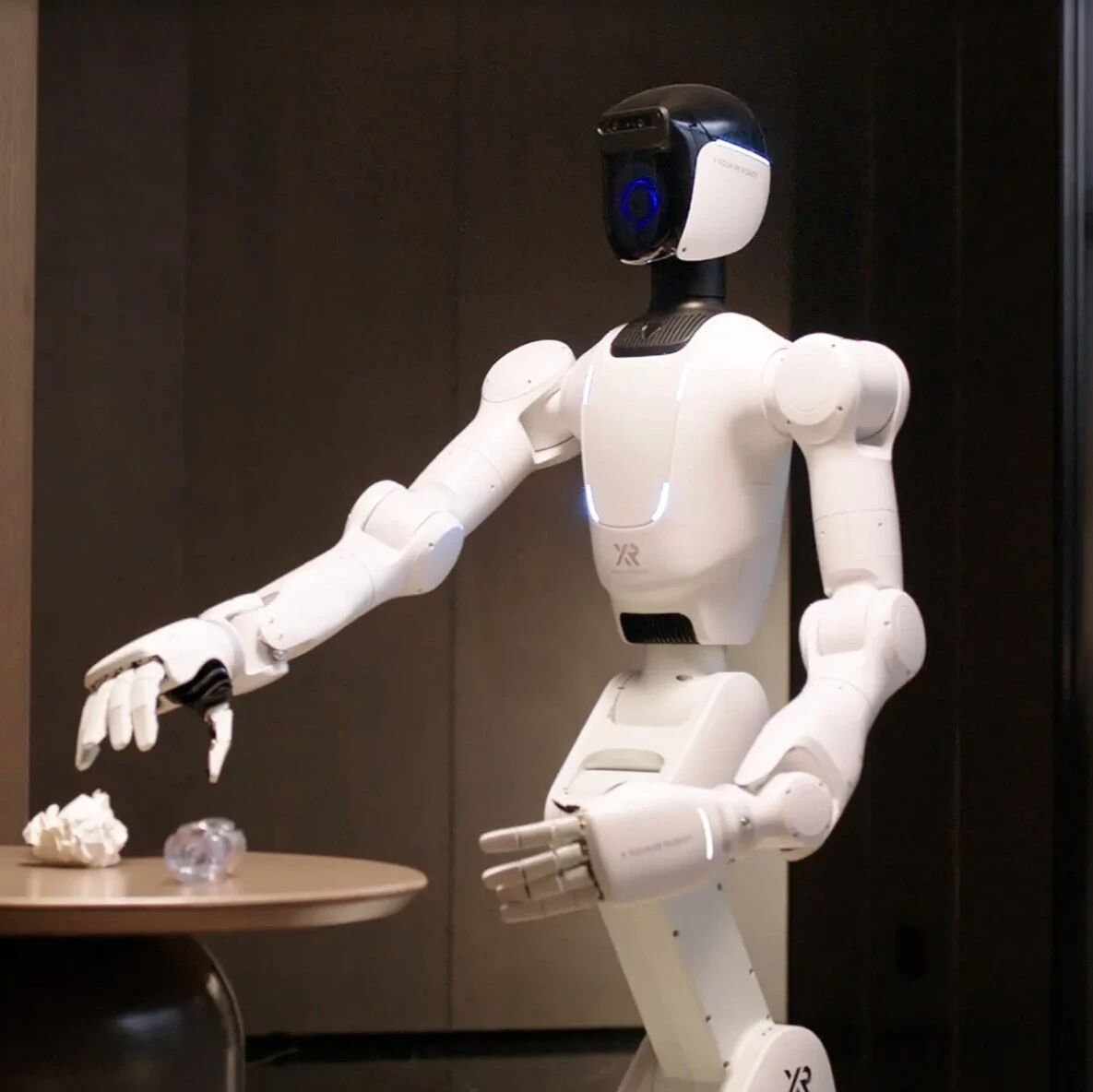
Group 1 - The core viewpoint of the article highlights the ongoing investment interest in embodied intelligence, with a focus on the recent completion of a 1 billion yuan A++ financing round by X Square Robot, led by ByteDance and Sequoia China [2][5][12] - X Square Robot has successfully completed multiple financing rounds within a year, indicating a clear upward trend in funding as the technology and products advance [3][5] - The financing will primarily support the continuous training of self-developed general embodied intelligence models, hardware product development, and the advancement of the open-source embodied large model WALL-A [5][12] Group 2 - X Square Robot was founded in December 2023, focusing on self-research of general embodied intelligence models, led by CEO Wang Qian and CTO Wang Hao, both with strong academic backgrounds [6][8] - The company emphasizes that embodied intelligence models are independent foundational models parallel to language models, addressing real physical environments and their complexities [8][12] - The WALL-A series of models integrates perception, understanding, decision-making, and action output into an end-to-end model, aiming to overcome limitations of traditional modular architectures [8][10]
自主水下机器人:在“深海盲盒”中开辟最优航路
机器人大讲堂· 2026-01-12 06:42
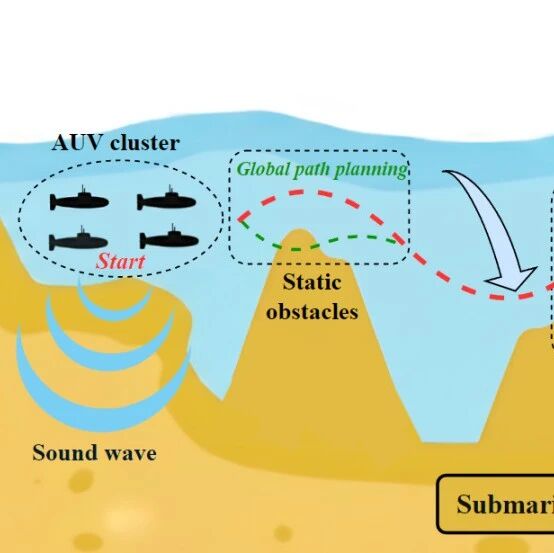
Core Viewpoint - The article discusses the advancements in Autonomous Underwater Vehicles (AUVs) and their path planning capabilities in complex underwater environments, emphasizing the transition from traditional methods to intelligent, data-driven approaches [1][4]. Group 1: AUV Path Planning Framework - A comprehensive path planning framework for AUVs must consider three key elements: AUV motion characteristics, external environment modeling, and task optimization strategies [7]. - AUVs are modeled as six degrees of freedom (6-DoF) rigid body systems, utilizing computational fluid dynamics (CFD) combined with semi-empirical or data-driven methods to balance efficiency and accuracy in motion constraints [7][8]. Group 2: Environmental Modeling and Task Optimization - High-precision external environment modeling is crucial for path planning, with deep learning techniques effectively addressing data sparsity in underwater terrain reconstruction [8]. - Task optimization strategies focus on minimizing energy consumption for single AUVs and optimizing task allocation and communication in multi-AUV scenarios, utilizing distributed reinforcement learning and game theory to enhance collaborative operations [9]. Group 3: Traditional Algorithms in Path Planning - Traditional algorithms for AUV path planning are categorized into global and local planning, each with strengths and limitations. Global planning methods like Dijkstra and A* are effective in known environments but face challenges in high-dimensional spaces [10][11]. - Local path planning methods, such as Artificial Potential Field (APF) and Dynamic Window Approach (DWA), provide real-time obstacle avoidance but may struggle with local minima and global coherence in complex terrains [11]. Group 4: Machine Learning in AUV Navigation - The evolution of AUV path planning is shifting from rule-based to data-driven paradigms, with machine learning significantly enhancing autonomous decision-making capabilities in dynamic marine environments [12]. - Supervised learning is used for environmental feature extraction, while unsupervised learning aids in task allocation for multi-AUV systems, improving computational efficiency in resource optimization [12][13]. Group 5: Future Directions for AUV Technology - Future research aims to enhance AUV capabilities through meta-learning and lifelong learning mechanisms, enabling rapid adaptation to new environments with minimal data [16]. - The integration of multimodal perception technologies and lightweight models with edge computing is expected to improve environmental modeling reliability and real-time path planning efficiency [17].
集齐字节、阿里、美团投资!自变量机器人获10亿元新融资
Nan Fang Du Shi Bao· 2026-01-12 06:40
Group 1 - The core point of the article highlights that the financing record in the embodied intelligence sector continues to be refreshed, with the company "Self-Variable Robotics" completing a 1 billion yuan A++ round of financing [2] - The financing round was led by top investment institutions including ByteDance, Sequoia China, and others, marking the first investment by the Shenzhen Capital Group's AI fund since its establishment [2] - Self-Variable Robotics is the only company in China to receive strategic investments from major internet giants such as Meituan, Alibaba, and ByteDance, indicating a collective consensus among large companies on the foundational model of embodied intelligence [2] Group 2 - The company focuses on developing an end-to-end general embodied large model, aiming to create a unified "brain-cerebellum" system, differing from the traditional layered architecture of "large language models + action modules" [3] - Self-Variable Robotics has established initial barriers in hardware development and data collection, having released two high-performance robot models and achieved comprehensive self-research on core components [3] - The company emphasizes real physical interaction data over simulation data, utilizing self-developed equipment for large-scale data collection and establishing a model-driven data pipeline [3] Group 3 - The competition in the embodied intelligence industry is shifting focus from "limbs" to "brains," with the ability to understand the physical world and make autonomous decisions being crucial for robots to enter factories and homes [4] - The next stage of competition in embodied intelligence is fundamentally about the competition of foundational models and model evolution capabilities based on data closed-loop construction [4] - Despite the industry's growing interest, challenges remain, particularly in ensuring stability and low-cost deployment in complex real-world environments, which will be a significant hurdle for leading players by 2026 [4]

具身智能开年最大融资,字节红杉领投10亿
量子位· 2026-01-12 06:25
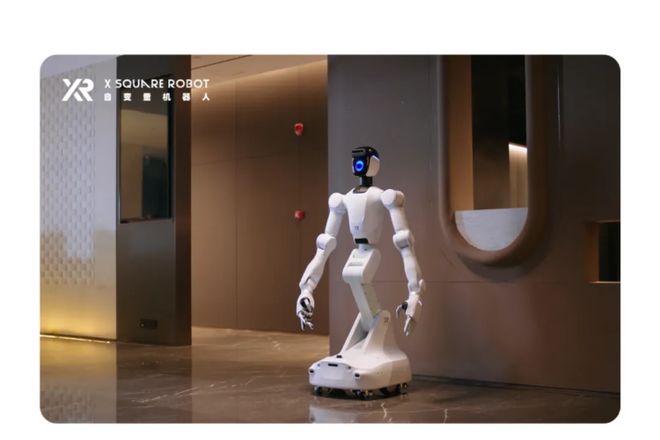
Core Viewpoint - The article highlights the ongoing momentum in the field of embodied intelligence, particularly focusing on the recent A++ funding round of X Square Robot, which raised 1 billion yuan, indicating strong investor confidence in the company's technology and market potential [2][8]. Funding and Investment - X Square Robot recently completed a 1 billion yuan A++ funding round led by ByteDance and Sequoia China, with participation from top institutions and local platforms [2]. - The company has received investments from major players like Meituan and Alibaba, making it the only embodied intelligence company backed by these three internet giants [3]. - Over the past year, X Square Robot has completed multiple funding rounds, including A+, A, Pre-A++ and Pre-A+++ rounds, showcasing a clear upward trend in financing as technology and products advance [4][5]. - The total funding raised by X Square Robot has exceeded 3 billion yuan across 9 rounds since its establishment, reflecting strong recognition of its independent foundational model technology in embodied intelligence [15]. Technology and Product Development - X Square Robot focuses on self-developed "general embodied intelligence models," with a clear technological path established from the outset [16][17]. - The company has developed the WALL-A series of VLA operational models, integrating perception, understanding, decision-making, and action output into an end-to-end model [20][21]. - The WALL-A model was released in October 2024 and became one of the largest end-to-end unified embodied intelligence models globally, with the WALL-OSS model ranking third in a recent RoboChallenge [22]. - On the hardware side, X Square Robot is advancing two generations of embodied robots, Quantum One and Quantum Two, designed for different operational capabilities [23][25]. Business Strategy - The company adopts a sustainable evolution approach, focusing on building a foundational model that learns in the real physical world, with hardware supporting the model and data feeding back into model iterations [27]. - This strategy has garnered continuous attention and investment from the capital market and industry, indicating a strong belief in the company's long-term vision and capabilities [28].


午评:深成指、创业板指均涨超1% AI应用板块集体走强
Xin Hua Cai Jing· 2026-01-12 06:18
Market Performance - A-shares experienced a strong rebound on January 12, with the Shanghai Composite Index rising by 0.75% to 4151.14 points and the Shenzhen Component Index increasing by 1.31% to 14305.10 points, while the ChiNext Index rose by 1.17% to 3366.71 points [1] - The total trading volume in the Shanghai and Shenzhen markets reached 2.31 trillion yuan, an increase of 245.5 billion yuan compared to the previous trading day [1] Sector Highlights - AI applications continued to surge, with stocks like Worth Buying and Guangyun Technology hitting the daily limit [1] - The commercial aerospace sector remained strong, with companies like Luxin Investment achieving 10 consecutive trading limits [1] - The photovoltaic sector was active, with Dongfang Risheng reaching a 20% limit up [1] - Retail concepts also saw gains, with Maoye Commercial and Sanjiang Shopping both hitting the daily limit [1] - In contrast, sectors such as oil and gas, and coal experienced significant declines [2] Institutional Insights - Huatai Securities noted that the A-share market continued to rise with increased trading volume, indicating a spring rally driven by heightened risk appetite [3] - The report suggested focusing on high-cost performance sectors, particularly in gaming, duty-free, batteries, engineering machinery, and agricultural chemicals [3] - CITIC Construction emphasized the rapid development of the AI industry, highlighting the potential for new application waves driven by advancements in model capabilities [3][4] Government Policy - The National Development and Reform Commission issued guidelines for government investment funds, marking the first systematic regulation on fund allocation and investment direction [5] - The guidelines emphasize supporting major strategic areas and fostering new pillar industries while avoiding investments in restricted or obsolete sectors [5] Storage Market Outlook - Counterpoint Research reported that the storage market has entered a "super bull market," with prices expected to rise by 40%-50% in Q1 2026 and an additional 20% in Q2 2026 due to surging demand from AI and server capacities [6][7]

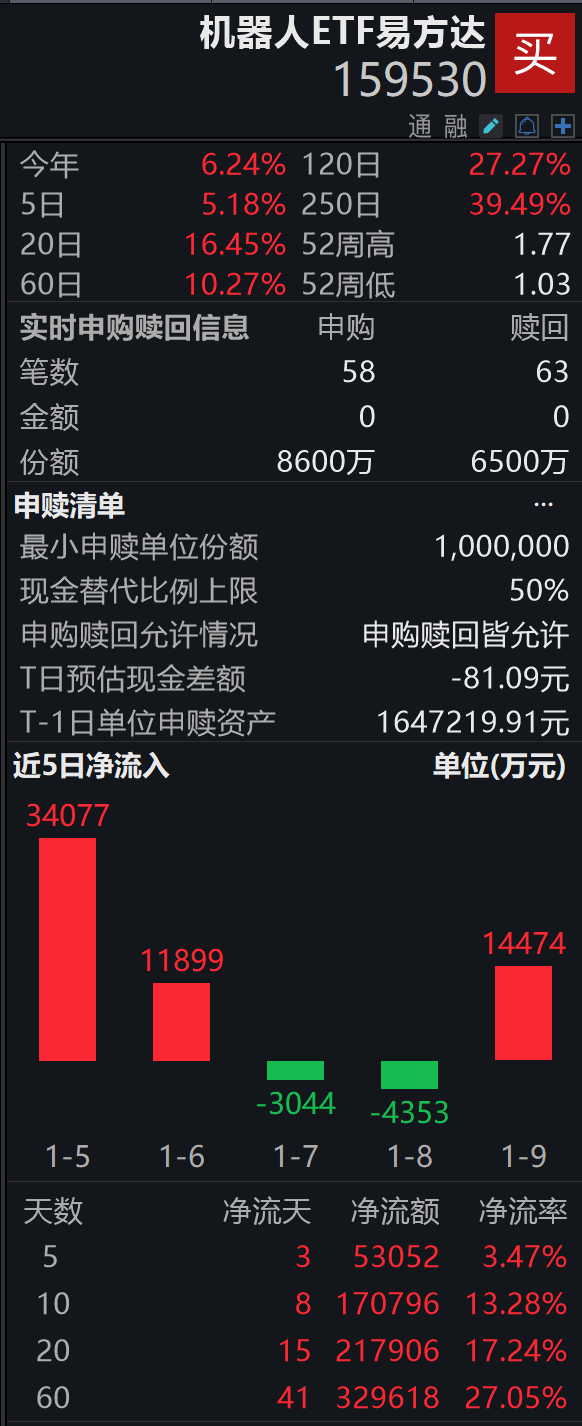
又一机器人企业获得10亿融资;机器人ETF易方达(159530)盘中获净申购2100万份
Sou Hu Cai Jing· 2026-01-12 04:26
相关产品: 机器人ETF易方达(159530)通过跟踪国证机器人产业指数,为投资者提供一键布局机器人全产业链的 高效工具。 消息面上,自变量机器人已于近期完成10亿元A++轮融资。本轮融资由字节跳动、红杉中国、北京信息 产业发展基金、深创投、南山战新投、锡创投等顶级投资机构及多元地方平台联合投资。 华源证券认为,2026年人形机器人行业进入量产加速期,国内外路径呈现分化:特斯拉等海外龙头以工 厂内部验证为主,而优必选、宇树科技等国内厂商已实现千万级订单交付,率先进入商业化兑现阶段。 国证机器人产业指数特点鲜明:1.指数人形机器人含量居首:指数中人形机器人相关公司权重显著高于 同类指数;2.指数聚焦高成长龙头:前十大权重股占比约40%,涵盖汇川技术、科大讯飞、石头科技等 细分领域龙头,技术壁垒高、市场竞争力强。 截至中午收盘,国证机器人产业指数(980022)涨2.33%,成分股中,昊志机电涨12.11%、航天智装涨 10.41%、科大讯飞涨8.38%,震裕科技跌2.29%、奥比中光跌1.69%、拓普集团跌1.29%。 资金方面,机器人ETF易方达(159530)跟踪国证机器人产业指数,持续受资金青睐,近5日" ...
睿尔曼亮相CES 2026 展出超轻量仿人机械臂
Feng Huang Wang· 2026-01-12 04:24
Core Insights - The company, Ruiman Intelligent, showcased its core capabilities of "hardware + data + remote operation network" at CES 2026, positioning itself as a system-level infrastructure platform for the era of embodied intelligence [1] - The company revealed its self-developed integrated joint module and ultra-lightweight humanoid robotic arm, which has an average fault-free operation time of 50,000 hours and has passed relevant compliance certifications [1] - A seven-degree-of-freedom humanoid robotic arm (RX series) has a rated load capacity of 5 kilograms and a maximum load capacity of 9 kilograms [1] - The highlight of the exhibition was the first public demonstration of the remote operation network (GLN), enabling real-time remote operation from Beijing to Las Vegas, allowing operators to control robots for tasks like item delivery [1] - The GLN aims to transform human operational capabilities into a networked service that can be scheduled and quality-checked, facilitating cross-temporal and spatial allocation of labor resources while accumulating real-world scenario data for technological iteration [1] - The immersive remote operation interface allows operators to command robots in real-time for various tasks, ranging from simple tasks like folding towels to specialized operations like corridor inspections and power management [1] Data and Production Capacity - The company has accumulated tens of millions of trajectory data segments at its humanoid robot data training center in Beijing and announced the open-sourcing of related real machine datasets [2] - To support global delivery of its hardware products, the company plans to achieve an annual production capacity of one million joint modules by 2026 [2] - The company's business has expanded globally, establishing partnerships with major firms such as Samsung and Amazon [2]
