水利工程建设

Search documents
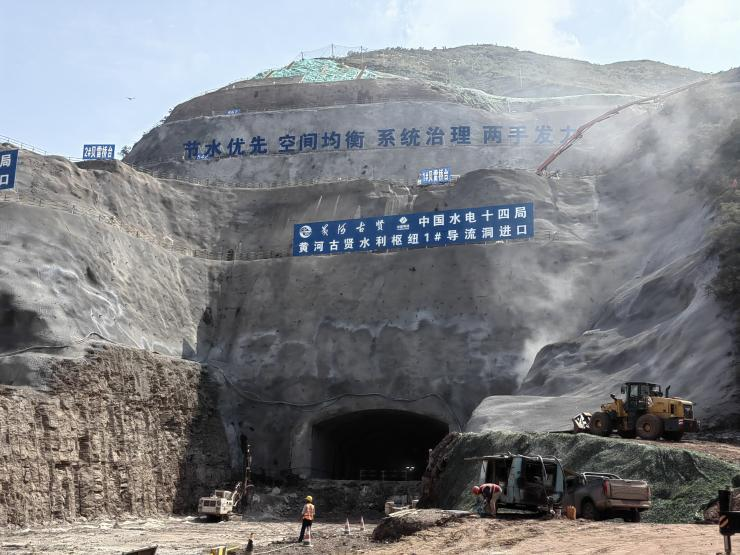
向祖国报告|古贤水利枢纽工程建设驶入“快车道” 筑牢守护黄河安澜“新基石”
Yang Guang Wang· 2025-10-02 11:24
Core Viewpoint - The Huanghe Guxian Water Conservancy Hub Project is a significant infrastructure initiative aimed at addressing sediment control and water resource management in the Yellow River basin, with construction progressing rapidly and innovative technologies being employed to enhance efficiency and safety [1][5][7]. Group 1: Project Overview - The Guxian Water Conservancy Hub is a major water conservancy project located approximately 10 kilometers upstream from the Hukou Waterfall, designed to work in conjunction with the Xiaolangdi Reservoir to mitigate sediment accumulation in the Yellow River [3][4]. - The project is part of a broader national strategy to optimize water resource management and enhance ecological protection in the Yellow River basin, which includes seven key engineering projects [4][5]. Group 2: Construction Progress - As of the recent reports, the excavation of the lower section of the diversion tunnel has reached approximately 60% completion, with plans to achieve full tunnel connectivity by mid-December, ahead of schedule by 2.5 months [2][7]. - During the National Day holiday, over 1,400 workers were on-site to ensure the project progressed smoothly, focusing on the second layer of the diversion tunnel excavation and preparations for concrete lining [3][7]. Group 3: Technological Innovations - Advanced equipment such as intelligent rock drilling rigs is being utilized, which can automatically position drill holes with an accuracy of less than 5 millimeters, improving efficiency by over 30% compared to traditional methods [1][5]. - The project is also implementing a "digital twin" system to monitor and manage the construction process in real-time, enhancing safety and operational efficiency [5][6]. Group 4: Environmental and Economic Impact - Upon completion, the Guxian project is expected to significantly reduce sediment accumulation in the lower Yellow River, ensuring the riverbed remains stable and supporting sustainable water resource management [4][5]. - The project aims to promote high-quality economic and social development in the Yellow River basin, contributing to ecological protection and the overall health of the river system [4][5].

国庆出行“加速度” 多地工程建设加紧推进
Yang Shi Xin Wen· 2025-10-01 18:32
Group 1 - The construction of the Baolan Railway expansion project from Yinchuan to Zhongwei has commenced, which is part of the national "14th Five-Year" plan and a significant railway project [3] - The project spans 123 kilometers and is expected to be completed in 3.5 years, connecting with the Baozhong Railway to facilitate direct train service from Yinchuan to Guyuan, reducing travel time to approximately 3 hours [3] Group 2 - The Dashi Gorge Water Conservancy Hub project in the Aksu region of Xinjiang has a maximum dam height of 247 meters and has been under construction since November 2019, with the main structure completed [6] - The project is expected to be operational by October 2026, providing water regulation to improve the conditions of the Tarim River and ensuring water supply for over 6.8 million acres of farmland and large areas of poplar forest in the region [8]
中企承建的毛里塔尼亚原水预处理项目举行竣工仪式
Xin Hua Wang· 2025-10-01 01:41
Core Viewpoint - The completion of the Benin Najib raw water pretreatment project in Mauritania, constructed by a Chinese enterprise, highlights the effectiveness and commitment of Chinese companies in addressing local water supply challenges caused by climate change [1] Group 1: Project Overview - The Benin Najib raw water pretreatment project was inaugurated on September 29, with over 300 attendees including Mauritania's President Ghazouani and representatives from Chinese enterprises [1] - The project was completed in just seven months, showcasing the construction team's exceptional capabilities and determination [1] Group 2: Technical Specifications - The project is designed to handle high turbidity raw water, featuring six high-density sedimentation tanks with a daily processing capacity of 255,000 cubic meters [1] - It employs multiple key technologies to ensure stable operation in high-temperature and dusty environments, effectively alleviating drinking water shortages in Nouakchott [1] Group 3: Impact and Future Cooperation - The project is expected to significantly reduce waterborne diseases and serve as a reference for high turbidity raw water treatment in arid regions of Africa [1] - The Chinese ambassador to Mauritania expressed a commitment to deepening cooperation across various fields, aiming to enhance the relationship between China and Mauritania through beneficial projects for the local population [1]

淮河入海水道二期滨海枢纽工程南、北船闸水下工程通过验收
Xin Hua Ri Bao· 2025-09-30 22:25
滨海枢纽工程是淮河入海水道二期工程的第四级枢纽建筑物,位于滨海县城南约6千米、入海水道与通 榆河交汇处,主要建设任务是在一期地涵北侧新建二期立交地涵,新建南、北船闸及导航道,上下游引 河扩挖6千米,深泓防护10.6千米,加固堤防等。工程建成后,上游洪泽湖洪水及渠北地区涝水将穿越 通榆河顺利下泄,同时围绕"水运江苏"战略,协同推进现代水网和航道网建设,解决入海水道、总渠与 通榆河间通航问题,为建设入海水道二级航道,连通连申线航道奠定基础。 本报讯(记者吴琼)9月30日,淮河入海水道二期滨海枢纽工程南、北船闸水下工程顺利通过验收,为项 目实现通水通航目标打下坚实基础,成为淮河入海水道二期工程建设的又一重大里程碑。 据省水利工程建设局工务处负责同志介绍,滨海枢纽工程建设通过构建枢纽工程全专业BIM(建造信息 管理)模型,对实体工程进行数字映射和精准模拟,打造"数字大脑",实现建设管理精细化;在全国水 利行业中首次运用格栅混凝土地连墙,采用异形槽孔导墙、异形槽孔成槽等8项新技术,解决了格栅混 凝土地连墙施工易塌方、成槽难度大等难题,有效保证了工程质量;在施工现场布设各类传感器、采集 装置,实时精准感知建筑物的应力、变 ...
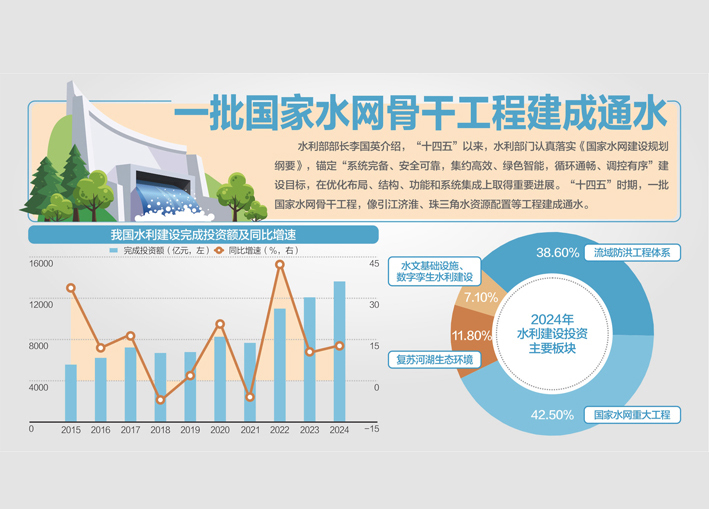
我国水安全保障能力全面提升——“十四五”以来新开工重大水利工程172项
Jing Ji Ri Bao· 2025-09-30 02:50
Core Insights - The Chinese government has made significant progress in water conservancy development during the "14th Five-Year Plan" period, with investments exceeding 5.4 trillion yuan, marking a 1.6 times increase compared to the "13th Five-Year Plan" [1] Group 1: Investment and Infrastructure - Water conservancy construction investment reached over 1 trillion yuan for the first time in 2022, continuing a three-year trend of breaking historical records [1] - A total of 172 major water conservancy projects have been initiated since the start of the "14th Five-Year Plan" [1] - By the end of last year, China had built 95,000 reservoirs, 200 large and medium-sized water diversion projects, and 6,924 large and medium-sized irrigation areas, forming the world's largest and most comprehensive water conservancy infrastructure system [1] Group 2: Flood Control and Disaster Management - The water and drought disaster prevention system has been continuously improved, successfully managing floods on 3,981 rivers that exceeded warning levels [1] - The proportion of flood disaster losses to GDP decreased from 0.28% during the "13th Five-Year Plan" to 0.18% [1] Group 3: Agricultural Support and Food Security - The water conservancy sector has strengthened water security for food production, focusing on major grain-producing areas with 30 significant water diversion and key water source projects [2] - Over the past five years, 1,959 large and medium-sized irrigation areas have undergone modernization, adding and restoring over 20 million acres of irrigated land [2] Group 4: Ecological Restoration and Community Benefits - The "Mother River Revival Action" has been implemented, restoring several rivers that had been dry for decades, achieving a 98.6% compliance rate for ecological flow standards in key rivers and lakes [2] - The water conservancy department has supported 122 happiness river and lake construction projects, creating green industrial chains and ecological agriculture, enhancing community welfare [3] - The Hu Creek watershed in Zhejiang has seen a revenue increase of over 13 billion yuan, growing by 18.7% year-on-year due to the integration of water and tourism [3]
我国形成世界上规模最大水利基础设施体系
Ren Min Ri Bao· 2025-09-30 00:13
Core Insights - The article highlights the significant achievements in China's water conservancy development during the "14th Five-Year Plan" period, emphasizing improvements in flood control, water supply, food security, and ecological safety [2][3]. Investment and Infrastructure - Water conservancy investment has reached a historical high, with over 1 trillion yuan invested annually for three consecutive years, totaling 13,529 billion yuan in 2024, which is 1.6 times that of the previous five-year plan [3]. - By the end of 2024, China will have built 95,000 reservoirs, 200 major water diversion projects, and 31.8 million kilometers of embankments, establishing the world's largest and most comprehensive water conservancy infrastructure system [3]. Disaster Management and Response - The proportion of flood disaster losses to GDP has decreased from 0.28% during the "13th Five-Year Plan" to 0.18% during the current plan [3]. - The capacity for flood control in reservoirs is 185.6 billion cubic meters, protecting 660 million people, and the country has effectively managed severe droughts in major river basins [3]. Water Resource Management - The total water usage has achieved zero growth despite significant economic growth, with water usage per unit of GDP and industrial output decreasing by 17.7% and 23.6% respectively compared to 2020 [5]. - The area of effective irrigation has increased to 6.38 million acres, with unconventional water usage reaching 25.1 billion cubic meters [5]. Agricultural Support - Modern irrigation districts have been developed to enhance grain production, with significant investments in water source projects and irrigation area improvements [6]. - The area of irrigated farmland is expected to reach 109 million acres by the end of the "14th Five-Year Plan" [5]. Rural Water Supply - The rural water supply standardization model aims for a 96% coverage rate of tap water in rural areas by the end of the current plan [7]. Ecological Restoration - The area affected by soil erosion in the Loess Plateau has been reduced by over half, with significant improvements in river and lake ecosystems [8][9]. - The implementation of the "Mother River Revival Action" has led to the restoration of several historically significant rivers, with a focus on ecological flow standards [8].
我国水安全保障能力全面提升 “十四五”以来新开工重大水利工程172项
Jing Ji Ri Bao· 2025-09-29 22:17
Core Insights - The "14th Five-Year Plan" has led to significant advancements in China's water conservancy sector, with investments exceeding 1 trillion yuan in 2022, marking a historical record and a projected total investment of over 5.4 trillion yuan during the plan period, which is 1.6 times that of the previous five years [1] Investment and Infrastructure Development - The number of major water conservancy projects initiated during the "14th Five-Year Plan" reached 172, optimizing the layout, structure, function, and system integration of water infrastructure [1] - By the end of last year, China had constructed 95,000 reservoirs, 200 large and medium-sized water diversion projects, 6,924 large and medium-sized irrigation areas, and 318,000 kilometers of embankments, creating the world's largest and most comprehensive water conservancy infrastructure system [1] Flood Control and Disaster Management - The water and drought disaster prevention system has been continuously improved, successfully managing floods on 3,981 rivers that exceeded warning levels, reducing the economic loss from flood disasters as a percentage of GDP from 0.28% during the "13th Five-Year Plan" to 0.18% [1] Agricultural Support and Food Security - The water conservancy sector has reinforced water security for food production, focusing on major grain-producing areas with the construction of 30 significant water diversion and key water source projects, along with the modernization of 1,959 large and medium-sized irrigation areas, adding over 20 million acres of irrigated land [2] Ecological Restoration and Environmental Protection - The "Mother River Revival Action" has been implemented, restoring several rivers that had been dry for decades, achieving a compliance rate of 98.6% for ecological flow in key rivers and lakes [2] - The normalization of the "Four Chaos" rectification in rivers and lakes has addressed 140,000 issues related to illegal occupation, mining, dumping, and construction, effectively maintaining the flood storage capacity of rivers and lakes [2] Economic Impact and Community Benefits - The implementation of 122 "Happy Rivers and Lakes" construction projects has fostered green industrial chains and ecological agriculture, enhancing the quality of life for communities, as evidenced by the 18.7% year-on-year revenue growth in the Huxi River Basin, which exceeded 13 billion yuan last year [3]
保障防洪安全、供水安全、粮食安全、生态安全 我国形成世界上规模最大水利基础设施体系(权威发布·高质量完成“十四五”规划)
Ren Min Ri Bao· 2025-09-29 21:58
Core Insights - The Chinese government has made significant progress in water resources management and infrastructure development during the "14th Five-Year Plan" period, focusing on flood control, water supply, food security, and ecological safety [1][2]. Investment and Infrastructure Development - Water infrastructure investment has exceeded 1 trillion yuan for three consecutive years, reaching a historical high of 1.3529 trillion yuan in 2024, with a total expected investment of 5.4 trillion yuan during the "14th Five-Year Plan," which is 1.6 times that of the previous five-year period [2]. - A total of 172 major water conservancy projects have commenced since the beginning of the "14th Five-Year Plan," with 95,000 reservoirs, 200 large and medium-sized water diversion projects, and 31,800 kilometers of embankments constructed by the end of 2024 [2]. Flood and Drought Management - The proportion of flood disaster losses to GDP has decreased from 0.28% during the "13th Five-Year Plan" to 0.18% during the current period, with flood control capacity significantly enhanced [2]. - The water storage capacity of reservoirs is 185.6 billion cubic meters, protecting 660 million people, and the country has effectively managed severe droughts in major river basins [2]. Water Resource Allocation - The national water network coverage is expected to reach 80.3% by the end of this year, with significant projects like the South-to-North Water Diversion and other major water diversion projects enhancing water resource allocation [3]. - The East and Middle Line of the South-to-North Water Diversion Project has delivered over 83 billion cubic meters of water, benefiting 195 million people in 48 major cities [3]. Water Conservation and Efficiency - Water usage has achieved zero growth despite economic expansion, with water efficiency improving significantly; water consumption per unit of GDP and industrial output has decreased by 17.7% and 23.6% respectively compared to 2020 [4]. - The area of water-saving irrigation has reached 63.8 million acres, with the effective utilization coefficient of irrigation water increasing to 0.58 [4]. Agricultural Support and Rural Water Supply - The government has focused on modernizing irrigation systems and enhancing agricultural water efficiency, with over 2 million acres of irrigation area restored or improved [5]. - Rural water supply initiatives aim for a 96% coverage rate of tap water by the end of the "14th Five-Year Plan," implementing standardized construction and management models [5]. Ecological Restoration - The ecological environment of rivers and lakes has improved, with a 98.6% compliance rate for ecological flow standards in key rivers and lakes [7]. - The area affected by soil erosion on the Loess Plateau has been reduced by over half, with significant investments in soil conservation measures [8].
今年底中国国家水网覆盖率预计将达80.3%
Zhong Guo Xin Wen Wang· 2025-09-29 13:55
Core Insights - The construction of China's national water network has made significant progress since the start of the 14th Five-Year Plan, with an expected coverage rate of 80.3% by the end of this year [1][2] Group 1: Water Resource Allocation - The "South-North Water Diversion" project has transferred over 83 billion cubic meters of water, benefiting 195 million people in 48 major cities along the route [1] - The water transfer capacity of the South-North water diversion channels has reached 81.9 billion cubic meters, while the East-West diversion channels have a capacity of 73.4 billion cubic meters [1] Group 2: Major Projects and Investments - Since the beginning of the 14th Five-Year Plan, 15 major water diversion projects have been initiated, including the South-North Water Diversion Middle Line and the Jiangsu-Hubei Water Diversion [1] - A total of 12 major water diversion projects have been completed, with 34 out of 40 planned key water transfer channels either built or under construction [1] - Investment in water conservancy construction is projected to exceed 5.4 trillion yuan during the 14th Five-Year Plan, which is 1.6 times that of the 13th Five-Year Plan [2]
预计“十四五”水利建设完成投资超5.4万亿元
Mei Ri Jing Ji Xin Wen· 2025-09-29 13:48
Core Insights - The Chinese government has made significant progress in water conservancy infrastructure during the "14th Five-Year Plan" period, with investments expected to exceed 5.4 trillion yuan, which is 1.6 times that of the "13th Five-Year Plan" [1][2][3] Investment and Infrastructure Development - In 2022, water conservancy construction investments surpassed 1 trillion yuan for the first time and have broken historical records for three consecutive years, with an expected investment of 1.3529 trillion yuan in 2024 [1][2] - By the end of 2023, the national water network coverage rate is projected to reach 80.3% [1][2] Optimization of Water Resource Management - The water conservancy department has focused on optimizing layout, structure, function, and system integration, achieving important progress in major water resource allocation projects [2][3] - Key projects include the South-to-North Water Diversion and Pearl River Delta water resource allocation, which have been completed and are operational [2][3] Enhancements in Agricultural Water Security - The water conservancy department has implemented measures to enhance food security through modern irrigation systems, with 30 major water source projects and 191 new irrigation areas established in key grain-producing regions [6][7] - The modernization of 1,959 medium and large irrigation areas has increased the irrigated area by over 49 million mu by the end of 2024, with over 80% of grain production coming from irrigated land [6][7] Disaster Mitigation and Efficiency Improvements - The department has adopted precise measures to mitigate the impact of droughts and floods on agricultural production, ensuring the stability of crop yields [6][7] - By the end of 2024, the area of water-saving irrigation is expected to reach 63.8 million mu, a 12.5% increase from the end of the "13th Five-Year Plan," with a reduction in average water usage per mu [6][7]