铁路运输

Search documents
15元一份的现炒绿皮火车餐,正在春运路上消失
3 6 Ke· 2026-02-02 01:56
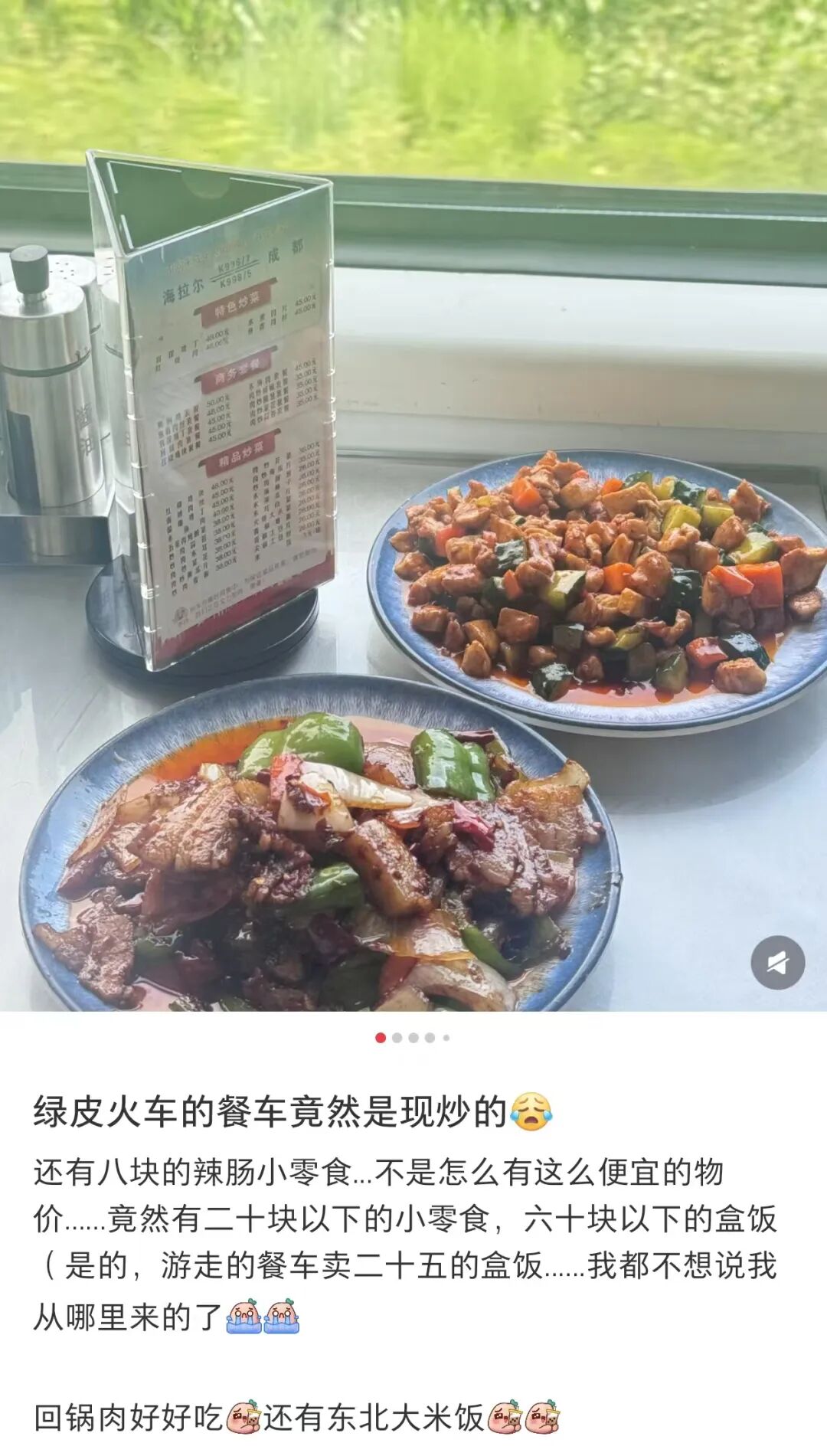
Core Viewpoint - The nostalgic appeal of traditional green train dining experiences is fading as high-speed rail becomes the dominant mode of travel, leading to a decline in the availability of affordable and freshly prepared meals on trains [1][2][11]. Group 1: Changes in Train Dining Experience - The recent railway schedule adjustments have led to the phasing out of green trains, which are known for their affordable and freshly cooked meals, in favor of high-speed trains [1][5]. - Passengers have reported finding meals on green trains, such as freshly stir-fried dishes priced below 60 yuan, which contrasts sharply with the more expensive and less appealing pre-packaged meals offered on high-speed trains [5][20]. - The green train dining experience is characterized by a sense of community and shared enjoyment, which is often absent in the high-speed rail environment where passengers are more isolated [21]. Group 2: Quality and Variety of Meals - The most renowned green train dining service is on the Z99/100 route between Shanghai and Guangzhou, which has maintained a reputation for quality home-style dishes despite changes in train service [5][6]. - The introduction of self-service dining options on certain routes, such as the K128/125 train, has provided passengers with a unique dining experience that is not typically available on high-speed trains [6][8]. - The quality of meals on green trains has been noted to be superior to the pre-packaged options found on high-speed trains, with many passengers expressing a preference for the freshly prepared dishes [10][20]. Group 3: Cultural and Emotional Significance - The decline of green trains and their dining services represents a loss of a slower, more communal travel experience that many passengers cherish [11][21]. - The nostalgia associated with green train meals reflects a broader longing for simpler, more authentic experiences in a fast-paced world [1][11]. - The exploration of traditional food and the appreciation for local flavors on green trains contrasts with the impersonal nature of high-speed rail dining, highlighting a cultural shift in travel experiences [21][22].

厦门城际铁路资产运营公司登记成立,注册资本约74.8亿
Zhong Guo Neng Yuan Wang· 2026-02-02 01:24
天眼查App显示,1月30日,厦门城际铁路资产运营有限公司成立,法定代表人为张晟玚,注册资本约 74.8亿人民币,经营范围包括自有资金投资的资产管理服务、以自有资金从事投资活动、工程管理服 务、非居住房地产租赁等,由厦门城际铁路投资有限公司、福建省铁路投资基金有限公司共同持股。 ...
出行路上如何快速找到充电设施?高铁充电指南→
Yang Shi Xin Wen· 2026-02-02 01:20
Group 1 - The core focus of the news is on the upgrades made to charging facilities at train stations across China to accommodate the increasing demand for charging electronic devices during the Spring Festival travel season [1] - The China National Railway Group has initiated a charging facility upgrade project targeting nearly 500 major train stations nationwide to meet the rising needs of travelers [1] - In Kunming, 54 key passenger stations have been equipped with 108 charging devices, which are becoming standard features at major train stations [3] Group 2 - New charging stations now include USB and Type-C ports to support fast charging, alongside traditional power outlets [3] - Some stations, like Guangzhou Baiyun Station, have integrated charging facilities into aesthetically pleasing designs, such as petal-shaped charging light poles and charging benches [5] - The distribution of power outlets on trains is closely related to the train model and seating arrangement, with specific placements for different classes of seats [5][7] Group 3 - On the Fuxing smart trains, both first and second-class seats have independent USB and Type-C charging ports, with some business class seats featuring wireless charging panels [7] - Passengers can locate charging outlets by scanning a QR code on the seat armrest, which provides information on the outlet's location [9] - The railway department advises passengers to use only low-power devices and to ensure that power banks comply with regulations, specifically not exceeding 100 watt-hours [11]

今年铁路春运新变化
Huan Qiu Wang· 2026-02-02 00:57
Core Viewpoint - The 2026 Spring Festival travel season officially starts on February 2, lasting for 40 days, with an expected passenger volume of 540 million, averaging 13.48 million passengers daily, representing a 5.0% year-on-year increase [1] Group 1: New High-Speed Rail Lines - A total of 22 new high-speed rail lines spanning 3,109 kilometers will be operational during this Spring Festival, with over 50 passenger stations participating for the first time [2] - New high-speed rail connections include: - Xi'an to Yan'an, facilitating travel for residents in several counties [2] - Shenyang to Jiamusi, marking the entry of cities into the high-speed rail network [2] - Baotou to Yinchuan, connecting Inner Mongolia to Ningxia [2] - Hefei to Xinyi, enhancing connectivity in Anhui province [2] - Hangzhou to Quzhou, further densifying the regional rail network [2] - Xiangyang to Jingmen, establishing Hubei's first high-speed rail loop [2] - Wuhan to Yichang, adding six new stations [3] - Chongqing to Qianjiang, integrating more areas into the national high-speed rail network [3] - Other notable lines include Nanning to Pingxiang and Guangzhou to Zhanjiang, enhancing connectivity in southern China [3] Group 2: Increased Capacity and Services - The national railway system can operate over 14,000 passenger trains daily, with a 5.3% increase in passenger capacity [4] - Night trains will be arranged on major high-speed rail lines, with nearly 1,000 night trains scheduled [4] - Flexible and differentiated pricing strategies will be implemented, with discounts of up to 80% on less popular routes [4] Group 3: New Passenger Services - New services introduced include: - "Snow" service for ski equipment on select trains [5] - "Exchange" service allowing ticket redemption using loyalty points [5] - "Quiet" carriages available on over 8,000 trains [5] - "Pet" service for pet transportation on 110 high-speed stations and 170 trains [5]
2026年春运正式启动
Yang Guang Wang· 2026-02-02 00:47
国铁上海局杭州站杭州东站值班站长顾焰燚:我们将动态跟踪旅客出行及增开列车情况,杭州东 站、杭州西站将适时与杭州站、杭州南站同步启动通宵运营模式。及时协调地方交通部门做好旅客接驳 运输工作,采取延长地铁运营服务时间、加大公交运力供给等多种方式,共同保障到达旅客接驳"最后 一公里"。 央广网北京2月2日消息(记者郭淼)据中央广播电视总台中国之声《新闻和报纸摘要》报道,2026 年春运今天(2日)零点正式启动,交通部门全面提升运力,保障群众出行。 2026年春运今天开始,40天里跨区域人员流动将达95亿人次。国铁集团方面表示,自1月19日春运 火车票开始发售至昨天16时,已累计发售春运期间火车票6461万张。铁路部门加大客运能力投放。积极 挖掘运输潜力,在京广、京沪、沪昆、京哈等主要高铁干线通道增开夜间高铁。 春运期间,自驾出行仍将是主体方式,占比约八成。新能源车出行总量有望创历史同期新高,达 3.8亿辆次。交通部门在全国高速服务区会新增超过1万个充电枪,其中四分之一以上都为大功率。 全国民航预计春运期间日均保障航班19400班,同比增长5%。三亚凤凰国际机场T3航站楼昨天投入 试运行,保障进出海南岛旅客顺利出行。 ...
中国交通强国建设跑出加速度 预计年完成交通固定投资超3.6万亿
Chang Jiang Shang Bao· 2026-02-02 00:42
Core Insights - The transportation sector in China is expected to maintain stable economic operations with growth in various metrics by 2025, including an increase in freight volume, port throughput, and cross-regional passenger flow [1][2][3] Group 1: Economic Performance - The total freight volume is projected to reach 587 billion tons in 2025, marking a year-on-year increase of 3.2% [2] - Port cargo throughput is expected to reach 183.4 billion tons, with a year-on-year growth of 4.2%, while container throughput is anticipated to grow by 6.8% to 35 million TEUs [2][3] - Cross-regional passenger flow is forecasted to hit 668.6 billion person-times, reflecting a 3.5% increase compared to the previous year [3] Group 2: Investment and Infrastructure - Transportation fixed asset investment is projected to exceed 3.6 trillion yuan, with significant allocations to railways (901.5 billion yuan), highways and waterways (over 2.6 trillion yuan), and civil aviation (120 billion yuan) [3] - The completion rate of the national comprehensive transportation network framework has surpassed 90%, with over 2,000 kilometers of new high-speed railways and approximately 8,000 kilometers of new highways added [1] Group 3: Future Developments - The "14th Five-Year Plan" has shown significant progress in building a strong transportation nation, with plans for further integration, safety enhancements, smart upgrades, and green transformations in the "15th Five-Year Plan" [1][8] - The Ministry of Transport aims to establish 100 forward-looking scientific and technological innovation platforms by 2026, focusing on key areas such as artificial intelligence and transportation [6][7] - The new platforms will enhance the capabilities of the transportation sector, fostering collaboration between academia, research institutions, and enterprises to drive innovation and address technological challenges [7][8]
新春走基层丨在春运,看见行进的中国
Xin Hua She· 2026-02-02 00:37
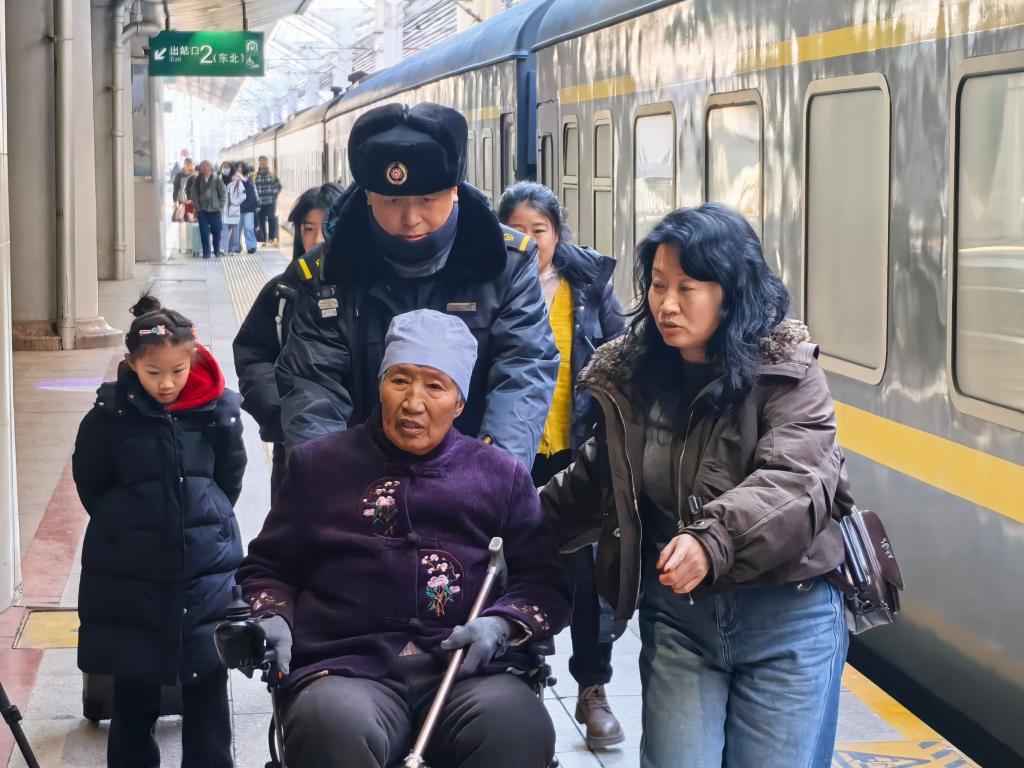
Core Viewpoint - The 2026 Spring Festival travel season marks the beginning of a new chapter in the world's largest population migration, with a focus on safe and smooth travel for the public [4]. Group 1: Transportation Infrastructure - Beijing West Railway Station has evolved significantly since its opening in 1996, expanding from 2 railway lines to 11, and increasing train operations from 27 pairs to 193 pairs by 2025 [5]. - Passenger volume at Beijing West Station has surged from 8.26 million in 1996 to an expected 65.39 million in 2025, reflecting the growth of China's railway network from 22,000 kilometers in 1949 to 165,000 kilometers today, with high-speed rail exceeding 50,000 kilometers [5]. Group 2: Technological Advancements - The introduction of online ticketing has transformed the ticket purchasing process, with online sales accounting for over 90% of transactions during the 2026 Spring Festival, compared to 78% in 2015 [6]. - The use of big data and AI technology in railway operations has improved efficiency in passenger flow management and customer service, making travel more convenient and personalized [10]. Group 3: Service Evolution - The demographic of travelers has shifted, with an increasing number of elderly passengers requiring more personalized assistance, leading to a focus on individualized service [9]. - The railway staff's approach has evolved from a focus on speed to providing patient and detailed assistance to travelers, particularly the elderly, enhancing the overall travel experience [9].
最低2折!国铁南宁局春运68趟列车有优惠
Xin Lang Cai Jing· 2026-02-02 00:29
铁路部门提示,更多具体优惠票价车次,可通过铁路12306平台查询,或关注各地铁路部门发布的动态 信息、各大火车站公告,以便合理安排行程。 春运期间,国铁南宁局充分发挥以南宁为中心的"1—3—6小时高铁交通圈"路网优势,激发文旅消费活 力。2月2日至16日,对广西南宁、桂林、贵港等城市开往广东珠海的D4669次等5趟高铁列车实行全程 票价优惠、最低至2折。2月17日至3月13日,对广州南开往阳朔的D4364次、D4366次高铁列车实行全程 票价优惠,全席别低至2折;对广州南开往北海的D4352次实行票价优惠,其中南宁至广州区段全席别 低至5折,便利旅客乘高铁前往珠海长隆、桂林阳朔、北海银滩等知名景区进行"快旅慢游"体验。 同时,国铁南宁局坚持开好"绿皮车""慢火车",方便大家跨省区走亲访友、"漫游"祖国山河。2月17日 至3月13日,对广州开往南宁K4154次、杭州开往南宁K4235次、南京开往湛江K4251次、长沙开往南宁 K4423次共计4趟次普速列车实行全程票价优惠,其中K4154次硬座低至2折。 本报讯(记者黎兆齐 通讯员韦增乐)2月1日,记者从国铁南宁局获悉,2月2日至3月13日春运期间,国 铁南宁局 ...
全国铁路春运今日启动
Yang Shi Wang· 2026-02-02 00:27
记者从中国国家铁路集团有限公司(以下简称"国铁集团")获悉,2026年铁路春运今日启动,自2月2日 至3月13日结束,为期40天,全国铁路预计发送旅客5.4亿人次,日均发送1348万人次、同比增长5.0%。 六是保障重点旅客出行。积极落实学生、儿童、伤残军警等重点群体各项优惠措施,学生预约购票服务 保持常态化运行,为2026届高校毕业生新增2次单程学生优惠票,方便前往异地求职,助力稳就业。铁 路12306手机客户端上线务工人员春运预约购票服务,务工人员可预约购买春运期间部分列车的往返车 票。铁路12306客服中心推出老年旅客电话订票服务,为老年旅客购票提供便利。落实重点旅客运输服 务规则,提高线上线下预约响应效率,主要客运车站设置绿色通道、母婴候车室和车站医疗点,为老幼 病残孕等重点旅客提供温馨服务。 七是提升站车服务水平。加强乘降组织,优化进出站流线,动态增加安检验证通道,提供智能导航、免 费充电等人性化服务,在全国500余个客流较大车站增设站台座椅。"静音车厢"服务拓展至超8000列动 车组列车,铁路畅行码覆盖所有动车组列车,全国120个车站可实现便捷换乘,互联网订餐站点达91 个,丰富餐饮品类,提升口感 ...
组图|春运开启!深圳首趟列车今天凌晨驶出
证券时报· 2026-02-02 00:10
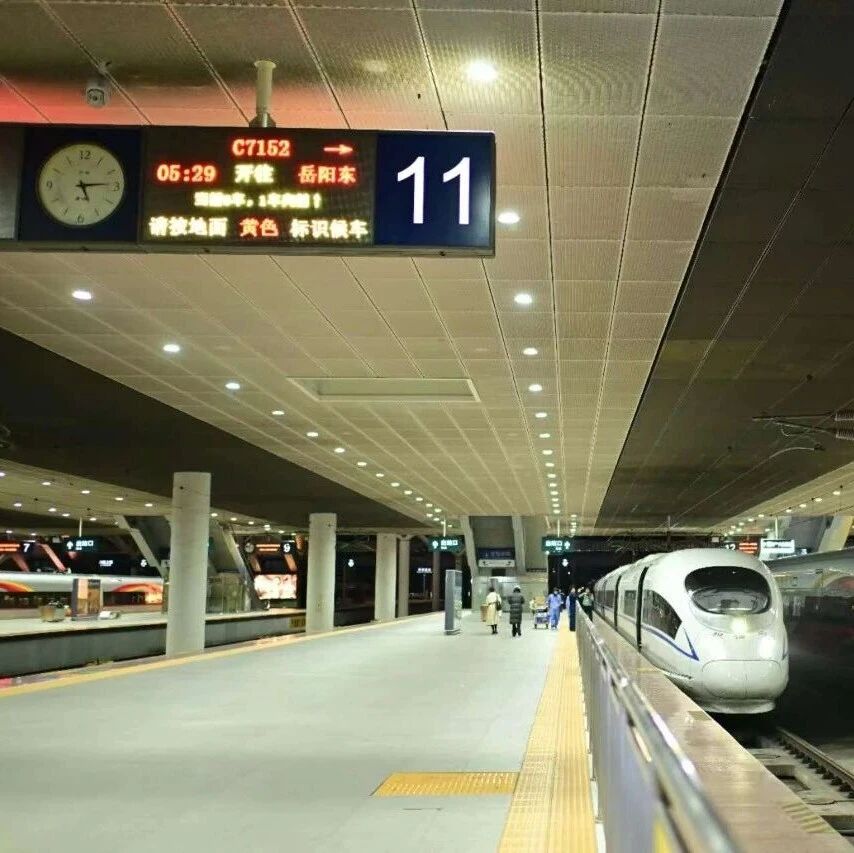
● . . 316 . 和 追 al 四 L TTILL all N and 4 . . e 1 . 庫則北站攻略 11 12 皆 号 (5), P 84 . ● . ● d 70 pa (8) 9 re S 37 责编:叶舒筠 校对:高源 2026年2月2日,2026年春运正式启动。 凌晨5时29分,随着C7152次深圳北开往岳阳东的列车缓缓驶出深圳北站,今年春运深圳地区的首趟旅客列车正式启程。 TD E 20 Fa ትሄ at 67 c -111 . ● . . ● . 2 19 Ad y H 23 转载与合作可联系证券时报小助理,微信ID:SecuritiesTimes END 点击关键字可查看 潜望系列深度报道丨 股事会专栏 丨 投资小红书 丨 e公司调查 丨 时报会客厅 丨 十大明星私募访谈 丨 三大运营商,集体公告! 丨 突发!300071,实控人 被留置! 丨 暴涨超400%!2只大牛股,明日复牌! 丨 王石朋友圈发文 丨 重大进展!特朗普发声,多个协议或谈判即将达成 丨 凌晨突发!比特币暴跌, 超42万人爆仓! 丨 网传金额明显夸大!黄金平台杰我睿"跑路"事件,最新通报:已启动兑付! 丨 周末 ...