
储能

Search documents
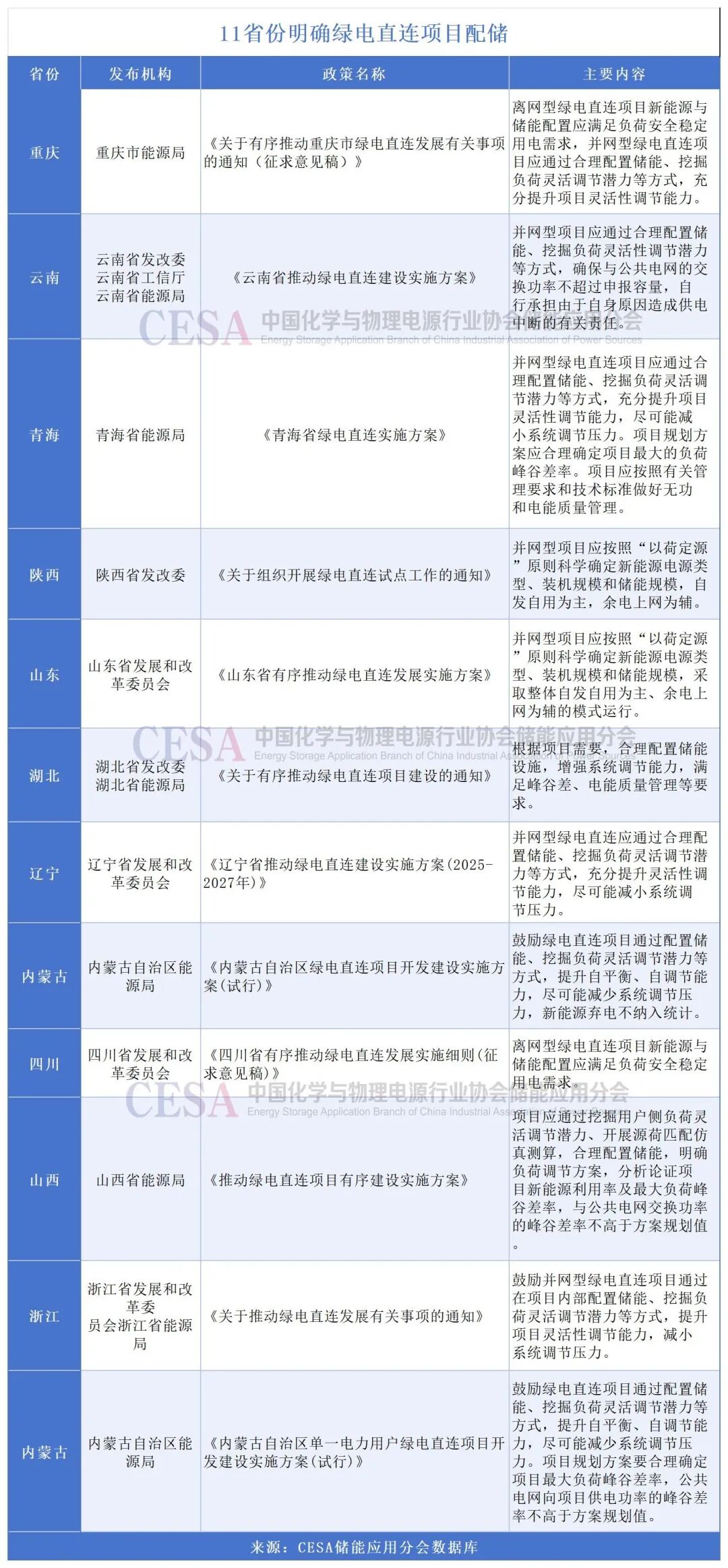
配储或成并网型绿电直连项目“标配”,11省份已发文明确
Xin Lang Cai Jing· 2026-01-21 10:25
Core Viewpoint - The green electricity direct connection model is becoming an effective solution to address challenges in energy transition, with 11 provinces in China now mandating energy storage configurations for green electricity direct connection projects [4][15][22]. Policy Developments - As of now, 15 provinces have released formal documents or drafts regarding green electricity direct connection, with 11 provinces explicitly requiring energy storage configurations [4][15]. - The core principle established by the National Development and Reform Commission and the National Energy Administration emphasizes enhancing flexibility through reasonable energy storage configurations [4][15]. Common Requirements - All provinces adhere to the "source determined by load" principle, mandating that the annual self-consumption of renewable energy must account for at least 60% of the total available generation, with a target of 35% by 2030 [16][22]. - The policies reflect a combination of common baseline requirements and innovative local adaptations, ensuring projects achieve source-load balance through energy storage [16][22]. Regional Innovations - Different provinces are adopting unique paths; for instance, Zhejiang mandates a minimum energy storage duration of 4 hours and allows energy storage projects equal market trading rights [5][16]. - Inner Mongolia integrates energy storage with green hydrogen and zero-carbon park development, while Shandong and Hubei leverage electricity spot market advantages to allow energy storage participation in peak-valley arbitrage [6][16]. Market Response - The policies from 11 provinces are a precise response to market demands and industry pain points, as global carbon constraints shift from initiatives to hard regulations [17][18]. - The renewable energy installed capacity in China reached 2.22 billion kilowatts by October 2025, increasing pressure on traditional grid consumption [17]. Case Studies - The green electricity direct connection model has shown significant benefits, such as a 15%-20% reduction in production costs for the green aluminum industry in Yunnan, enhancing its competitiveness in international markets [20]. - The first "point-to-point" direct supply data center in Inner Mongolia achieved over 85% green electricity usage, demonstrating the model's effectiveness in reducing carbon emissions [20]. Technological Advancements - The proliferation of various energy storage technologies, such as all-vanadium flow batteries and sodium-ion batteries, is expanding application boundaries and improving economic viability [21][22]. - The global price of energy storage systems is projected to decrease by 31% by 2025, further supporting the economic feasibility of energy storage configurations [21]. Future Outlook - As pilot explorations begin in cities like Beijing and Shanghai, the green electricity direct connection model is expected to see broader implementation across more provinces [23]. - With improvements in electricity market mechanisms and energy storage pricing policies, energy storage will become a standard feature of green electricity direct connection projects, facilitating large-scale deployment [23].

汇川技术拟赴港IPO:毛利率连续6年下滑 补充弹药或为豪赌储能
Xin Lang Cai Jing· 2026-01-21 09:55
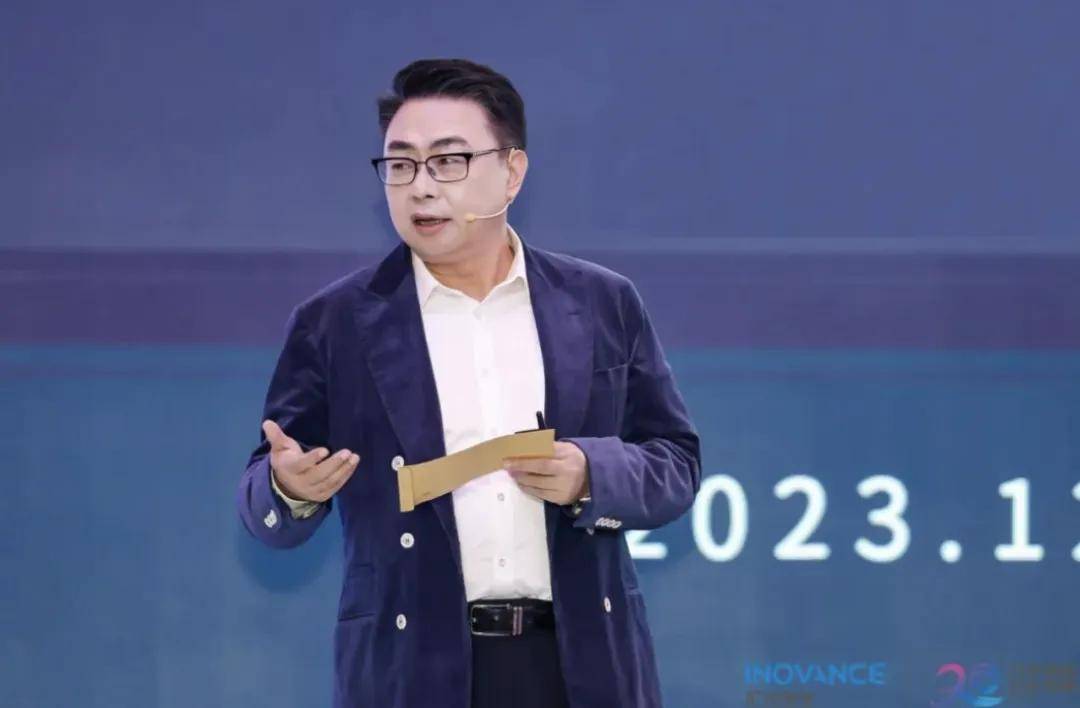
Core Viewpoint - Huichuan Technology is planning to issue H-shares and list on the Hong Kong Stock Exchange to support its expansion in emerging fields, particularly in the energy storage sector, despite facing significant pricing pressures in the industry [1][2]. Group 1: Company Developments - Huichuan Technology's business is divided into four main segments: general automation, new energy vehicles, smart elevators, and rail transit [1]. - The company has made substantial investments in the energy storage sector, including launching significant products and establishing a storage base in Xi'an with a total investment of 1 billion yuan and an annual design capacity of 50 GW [1]. - In Q3 2025, Huichuan Technology reported revenue of 11.15 billion yuan, a year-on-year increase of 21%, but the net profit attributable to shareholders was only 1.29 billion yuan, up 4% year-on-year [2][3]. Group 2: Industry Challenges - The energy storage industry is experiencing unprecedented price declines, with the average bidding price for 0.5C lithium iron phosphate energy storage systems dropping by 27% year-on-year to 558.28 yuan/kWh, and the 0.25C systems seeing a staggering 69% decline to 448.31 yuan/kWh [1][2]. - The industry is facing a paradox of increasing revenue without profit, as over 30 small and medium-sized integrators have exited the market, and leading companies are seeing net profit margins fall below 3% [2]. - The competitive landscape is intensifying, with the average gross margin for Huichuan Technology declining to 27.51%, down 2.18 percentage points year-on-year, marking the sixth consecutive year of decline since its peak in 2020 [3]. Group 3: Regulatory and Market Dynamics - The implementation of the first mandatory national standard for energy storage systems in China aims to establish safety benchmarks for the industry [3]. - The domestic lithium battery storage cell production capacity has exceeded 2,100 GWh, while global annual installation demand is only about 40 GWh, indicating a utilization rate of less than 50% [4]. - Huichuan Technology's decision to enter the energy storage sector amid intense competition and seek financing in Hong Kong reflects both its ambition and the associated risks [4].

前岳阳首富押注储能!携2000亿A股龙头冲刺港股IPO
Sou Hu Cai Jing· 2026-01-21 09:53
Core Viewpoint - Huichuan Technology is advancing its internationalization strategy by planning an H-share IPO on the Hong Kong Stock Exchange, aiming to establish a dual financing platform and enhance its global brand influence [3][4]. Group 1: Company Overview - Founded in 2003 by Zhu Xingming and a group of partners, Huichuan Technology has evolved from a single product focus on variable frequency drives to a leader in various sectors, including industrial automation, new energy electric control, and robotics [9][11]. - The company reported a revenue of 31.663 billion yuan in the first three quarters of 2025, marking a year-on-year growth of 24.67%, with a net profit of 4.254 billion yuan, up 26.84% [4]. Group 2: Strategic Moves - The planned H-share IPO is seen as a critical step in Huichuan's strategy to create a dual financing platform and expand its international presence [4][20]. - The company aims to leverage its expertise in power electronics and automation to accelerate its energy storage business, which is currently a small segment of its overall revenue, contributing only 0.6% [13][18]. Group 3: Market Position and Challenges - Huichuan Technology's growth has slowed, with a projected growth rate of 21.77% for 2024, down from over 50% in previous years, reflecting increasing market pressures [13][22]. - The company faces challenges in its general automation business due to market saturation and competition from foreign giants like Siemens, while the new energy vehicle sector is also experiencing profit margin pressures [11][12]. Group 4: Energy Storage Business - The energy storage sector is viewed as a potential "third growth curve" for Huichuan Technology, with plans to achieve a scale of over 1 billion yuan in this segment [13][18]. - The company has made significant strides in energy storage, including a major contract for 4.3GW of PCS equipment, positioning it among the top 10 global suppliers in terms of shipment volume [16][18]. Group 5: Future Goals - Huichuan Technology has set ambitious targets for its energy storage business, aiming for a market share of over 5% by 2026 and to be among the top three global players by 2028 [20][21]. - The company is also focusing on integrating hardware and software solutions to create a comprehensive digital energy ecosystem, emphasizing the importance of energy flow and information flow convergence [18][20].
威腾电气中标大型电网侧储能项目
Xin Lang Cai Jing· 2026-01-21 09:49
近期,威腾电气成功中标全椒县椒阳100MW/200MWh电网侧储能项目(EPC),该项目采用磷酸铁锂 技术路线,配套建设110kV升压站,单次循环可释放近20万千瓦时电量,相当于为数万户家庭提供1小 时峰值用电保障。(人民财讯) ...

招商!鑫椤资讯2026中国储能产业分布图
鑫椤锂电· 2026-01-21 08:19
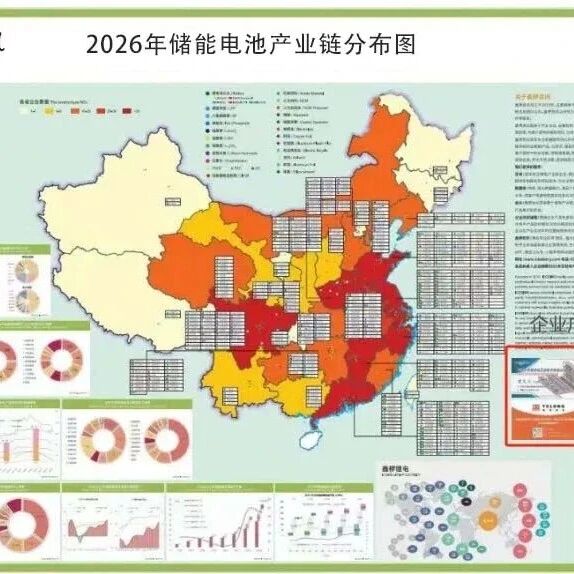
Group 1 - The article emphasizes the importance of a distribution map for energy storage companies, serving as a targeted advertisement to decision-makers in the industry [1][3] - The map will be distributed to over 30,000 key personnel in the energy storage supply chain, acting as an invitation to enter core circles [1] - It highlights the regional layout heat map, which marks leading enterprises and industrial clusters in key provinces and cities across the country [4] Group 2 - The article outlines a comprehensive industry chain map covering the entire supply chain from lithium mining to application, including core enterprises in each segment [4] - It provides a policy heat index that clearly shows subsidy intensity, storage requirements, and electricity pricing policies across different provinces [5] - The article mentions various sponsorship opportunities for companies to display their logos and information on the distribution map [8]
全国最大用户侧储能项目并网!鹏辉能源&四川中孚打造绿色水电铝标杆项目
鑫椤锂电· 2026-01-21 08:19
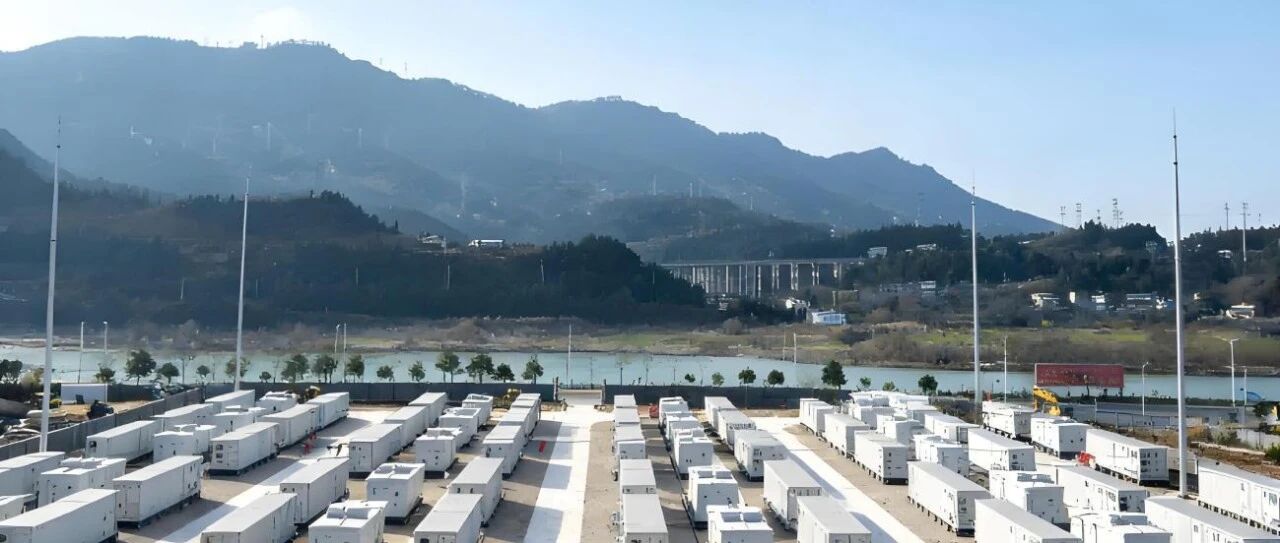
关注公众号,点击公众号主页右上角" ··· ",设置星标 "⭐" ,关注 鑫椤锂电 资讯~ 本文来源:鹏辉能源 ICC 鑫椤资讯年终盘点: 2025年碳酸锂市场盘点: 2025年电解液市场盘点: 2025年铜箔市场盘点: 2025年钴酸锂市场盘点: 2025年三元材料市场盘点: 2025年磷酸铁锂市场盘点: 2025年三元前驱体市场盘点: 2025年六氟磷酸锂市场盘点: 2025年磷酸铁市场盘点: 2025年添加剂VC市场盘点: 2025年钠离子电池市场盘点: 2025年储能电池市场盘点: 2025年储能系统市场盘点: 1月16 日, 鹏辉能源 携手 四川中孚 打造的 全国最大用户侧储能项目 正式并网投运! 该项目规模 107.12MW/428.48MWh,亦是 电解铝行业首个大型用户侧储能项目 , 并网投运后,将助力园区显著降低用电 成本、提高供电可靠性, 为四川广元乃至全国高耗能产业绿色低碳转型树立标杆案例。 2025年新型锂盐LIFSI市场盘点: 2025年隔膜市场盘点: 2025年锂电池市场盘点: 2025年铝箔市场盘点: 该 用户侧储能项目中, 鹏辉能源为项目建构 了 可靠耐用、智慧高效的储能电站整 ...

非洲储能掘金者生存图鉴:40%暴利,杀猪盘与极致博弈
投中网· 2026-01-21 06:47
Core Viewpoint - The article highlights the lucrative opportunities in the African renewable energy market, particularly in energy storage, while also addressing the significant risks and challenges faced by investors in this region [5][8][10]. Group 1: Market Potential - Africa's energy storage market is experiencing rapid growth, with installed capacity reaching 1.64 GWh in 2024, a nearly tenfold increase year-on-year [12][14]. - The extreme electricity shortages in Africa, exemplified by Zambia experiencing up to 20 hours of power outages daily, create a pressing demand for energy solutions [20][21]. - The profit margins for energy storage projects in Africa can reach 40% to 50%, significantly higher than in domestic markets [11][19]. Group 2: Investment Challenges - The primary challenge for investors in Africa is securing financing, as local financial systems are weak and expensive, with interest rates for loans often between 15% and 18% [41][39]. - Cultural barriers and a general distrust of loans complicate the financing landscape, making it difficult for projects to secure necessary funding [43][40]. - The lack of a standardized pricing mechanism for electricity in Africa adds to the investment risk, as contracts are often negotiated on a case-by-case basis [62]. Group 3: Innovative Financing Solutions - Companies are exploring innovative financing methods, such as installment payments and barter systems, to navigate the local market's challenges [49][52]. - The establishment of investment funds that involve partnerships with local and international financial entities is a strategy being employed to secure capital for projects [46][47]. - The integration of energy projects with local mining operations allows for creative financing solutions, linking electricity payments to mineral outputs [52]. Group 4: Operational Challenges - Establishing a local team in Africa poses significant challenges due to cultural differences and high operational costs [56][57]. - Companies must adopt meticulous management practices to ensure project success, as local employees may have different work habits and expectations [60][58]. - The political and economic instability in various African regions can pose additional risks to project execution and profitability [61][64]. Group 5: Future Outlook - Despite the challenges, there is a strong belief among industry players that Africa represents a vast market opportunity, particularly as global demand for renewable energy solutions continues to grow [66][68]. - The shift from merely supplying equipment to providing comprehensive solutions and local operational management is seen as essential for success in the African market [69][68].

20cm速递|创业板新能源ETF国泰(159387)涨超2%,近5日资金净流入超1.4亿元,技术迭代与需求扩张引关注
Mei Ri Jing Ji Xin Wen· 2026-01-21 04:35
Group 1 - The core viewpoint of the news highlights the significant growth and investment in the new energy sector, particularly in power equipment and battery technology, driven by national policies and increasing demand [1][2]. - The State Grid's "14th Five-Year" plan anticipates a fixed asset investment of 4 trillion yuan, marking a historical high and a 40% increase compared to the previous plan, aimed at fostering high-quality development in the new power system industry [1]. - In the battery sector, the total production of power and energy storage batteries is projected to reach 1,755.6 GWh in 2025, reflecting a year-on-year growth of 60.1%, with sales expected to hit 1,700.5 GWh, a 63.6% increase, and energy storage battery sales are forecasted to grow by 101.3% [1]. Group 2 - The ETF tracking the innovative energy index focuses on technology innovation companies in the new energy sector, including clean energy, new energy vehicles, and energy storage technologies, emphasizing high growth and technological innovation [2]. - The index has a daily price fluctuation limit of 20%, reflecting the volatility and potential for significant returns in the new energy market [2].

风-光-储-电网年度投资策略
2026-01-21 02:57
Summary of Key Points from Conference Call Records Industry Overview - The global energy storage market is experiencing rapid growth, with an expected new installed capacity of 233 GWh by 2026 and a compound annual growth rate (CAGR) exceeding 37% over the next three years. Independent storage accounts for approximately 78% of this capacity, primarily located in Ningxia and Shanxi [1][8][9]. - North America’s AIDC (Artificial Intelligence Data Center) storage demand is projected to surge from 8.9 GWh in 2025 to 190 GWh by 2030, with a remarkable CAGR of 84%. The green electricity direct connection model is favored for its quick delivery and economic benefits [1][12]. - The European energy storage market is driven by both large-scale and commercial storage, with an anticipated overall installed capacity of 29.7 GWh by 2025, representing a 30% year-on-year increase, and expected to reach 118 GWh by 2029 [1][13]. - Domestic grid investment is expected to exceed 1 trillion yuan annually, while international investment is projected to reach 4 trillion yuan. The acceleration of ultra-high voltage projects in 2026 will enhance the main distribution network's performance [1][3]. Investment Recommendations - The preferred investment order in the wind, solar, storage, and grid sectors is: storage, grid, wind, and solar. Storage is primarily driven by strong domestic and international policies and market demand [2]. - Large-scale storage is identified as a core growth area, with significant projects expected to materialize in North America and Europe within the next 3-5 years [2]. Key Developments in Specific Sectors Energy Storage - The internal rate of return (IRR) for independent storage remains attractive, with a projected IRR of 18% under standard assumptions [1][9]. - The demand for commercial and industrial storage is shifting from traditional pricing arbitrage to a multi-revenue model, including spot market trading and capacity compensation [10]. Wind Power - The wind power industry is expected to maintain a favorable competitive landscape, with a continued trend of rising volume and price in 2026. Both offshore and overseas wind power markets present significant opportunities [1][6]. - The global wind power sector is projected to grow at a CAGR of 27% from 2025 to 2030, with China and Europe leading the way [18]. Solar Power - The solar industry is focusing on countering internal competition and the impact of rising component prices, with some prices reaching 0.8 yuan per watt. Technological breakthroughs such as perovskite and reduced silver usage are expected to accelerate cost reductions [4][7]. - The cancellation of export tax rebates in April 2026 is anticipated to increase export costs for companies, potentially reducing internal competition among Chinese firms [22]. Emerging Markets and Global Trends - Emerging markets, particularly in Australia, are receiving policy support for renewable energy and storage, with a target of 82% renewable energy by 2030 [15]. - Chinese companies are accelerating their international expansion, with expected shipments of energy storage systems reaching 400 GWh by 2025, a 60% increase year-on-year [16]. Conclusion - The energy sector is poised for significant growth driven by technological advancements, favorable policies, and increasing demand across various markets. Key players in storage, wind, and solar sectors are recommended for investment consideration, particularly those with strong international expansion strategies.
包头稀土高新区国家级零碳园区启建
Zhong Guo Hua Gong Bao· 2026-01-21 02:43
Core Viewpoint - The Baotou Rare Earth High-tech Zone has initiated the construction of China's first batch of zero-carbon parks, aiming to systematically address carbon reduction challenges in heavy industrial clusters and provide a replicable "Baotou solution" [1] Group 1: Project Overview - The zero-carbon park construction adopts a "park within a park" model, including rare earth industry parks and high-end equipment manufacturing parks, with established leading industries in rare earths, photovoltaics, and energy storage [1] - The park has a clear "two-step" strategic path: from 2025 to 2027, the focus will be on green electricity replacement and energy-saving renovations; from 2028 to 2035, the emphasis will shift to system integration and smart fusion to enhance zero-carbon outcomes [1] Group 2: Goals and Initiatives - The park aims to complete the national-level zero-carbon park creation task by the end of 2027 through initiatives such as green electricity direct connection construction, new energy project development, hydrogen energy demonstration utilization, and multi-industry collaborative energy-saving and carbon reduction efforts [1]