机械制造
Search documents
之江向海
Jing Ji Ri Bao· 2025-07-20 22:17
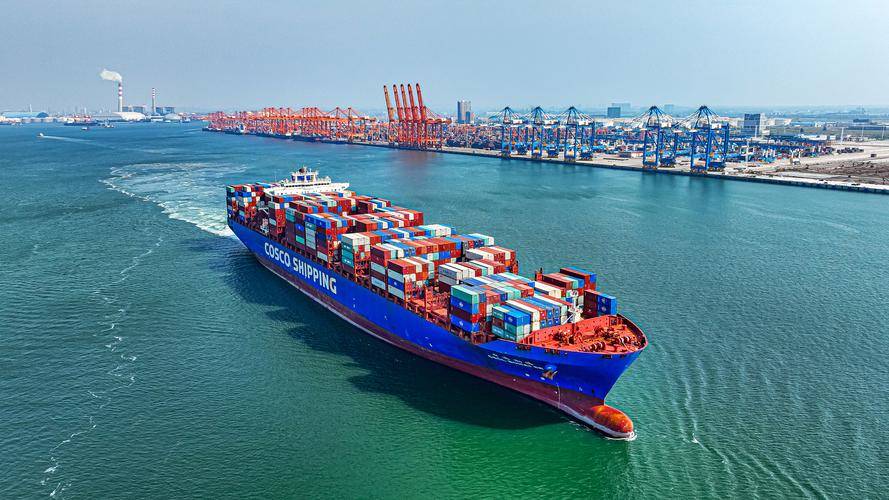
Core Insights - Zhejiang's economic transformation is marked by a shift from an external trade province to an open strong province, with significant growth in foreign trade and investment [1][3][8] - The province has successfully integrated into global supply chains through both inbound and outbound investments, enhancing its industrial structure and competitiveness [4][5][6][7] Economic Development - Since the opening of Ningbo Port in 1979, Zhejiang has seen continuous economic growth, with exports reaching 20 trillion yuan in the first half of 2023 [1][8] - The province's actual foreign investment utilization ranked fourth nationally in 2016, and it is projected to exceed 5 trillion yuan in import and export scale by 2024 [1][3] Industrial Restructuring - The entry into the World Trade Organization in 2001 prompted Zhejiang to address structural challenges in its economy, leading to a focus on attracting foreign investment for technology and management [3][4] - Companies like Jack Sewing Machine and China Jushi have successfully expanded their market presence through strategic acquisitions and technological advancements [4][6] Global Integration - Zhejiang's enterprises are increasingly "going global," with significant investments in overseas markets, such as Huayou Cobalt's ventures in the Democratic Republic of Congo [7][8] - The province has established a robust framework for international trade, exemplified by the success of the Yiwu International Trade City and the "Yi Xin Ou" China-Europe freight train service [16][17] Innovation and Branding - Zhejiang's focus on innovation has led to the emergence of high-quality brands, with a notable increase in exports of self-owned brand products [12][11] - The province has seen a rise in the number of enterprises recognized as national manufacturing champions, with 233 such companies projected by 2024 [10][11] Infrastructure Development - The integration of Ningbo and Zhoushan ports has significantly enhanced Zhejiang's logistics capabilities, making it a key hub for international trade [14][15] - The establishment of the Zhejiang Free Trade Zone has facilitated smoother trade processes and attracted foreign investment [20][21] Talent Attraction - Zhejiang has implemented policies to attract talent, resulting in a significant influx of skilled professionals and fostering a vibrant entrepreneurial ecosystem [29][30] - The province's commitment to creating a favorable business environment has been recognized as a critical factor in its economic success [23][25]
多晶硅期货本月暴涨超30%!"反内卷"政策预期引爆工业品期货强势反弹
Sou Hu Cai Jing· 2025-07-20 01:10
Group 1 - The industrial commodity futures market has shown a strong rebound, with polysilicon futures leading the surge, rising over 30% this month [1][3] - The "anti-involution" policy expectations have become a significant driving force behind the recent price increases in the industrial commodity sector [1][3] - The Wenhua Industrial Products Index has increased by 4.18% this month, with coal, building materials, and steel sectors rising by 12.17%, 9.99%, and 8.61% respectively [3] Group 2 - The recent price increases in industrial products are largely attributed to market expectations of supply-side structural reforms [4] - Key indicators for identifying the degree of "involution" include high inventory, high capital expenditure, low capacity utilization, and low price levels [4] - The Ministry of Industry and Information Technology announced plans for a new round of growth stabilization work for ten key industries, including steel and non-ferrous metals, which will provide clear guidance for structural adjustments [4] Group 3 - The polysilicon spot market has shown positive changes, with the average transaction price for n-type recycled material rising to 41,700 yuan per ton, a week-on-week increase of 12.4% [4] - Despite price increases, the fundamental support remains weak, and the supply-demand relationship has not yet achieved substantial improvement [4]
浙江荣泰20250718
2025-07-19 14:02
Summary of Zhejiang Rongtai Conference Call Company Overview - Zhejiang Rongtai is involved in the production of micro lead screws, high-temperature insulation mica products, and lightweight structural components, primarily serving the automotive industry, including major clients like Tesla, Volkswagen, and Toyota [2][6][7]. Key Points Micro Lead Screws - Expected annual delivery of approximately 50,000 micro lead screws, corresponding to 1,400 to 1,500 robots [2][3]. - Q2 delivery volume estimated at 10,000 to 20,000 screws, with a cumulative delivery of 20,000 to 30,000 screws by the end of Q3 [3]. - Anticipated supply share in Q4 to exceed 50% [3]. - Domestic weekly production capacity planned at 3,000 to 4,000 screws in H1 2025, doubling to 8,000 in H2 2025; production capacity expected to reach 30,000 to 40,000 screws post the launch of the Thailand factory in 2026 [2][4]. Profitability and Pricing - Micro lead screw pricing expected to remain below 500 RMB, with initial gross margin exceeding 35% and long-term margin maintaining above 30% [2][4]. - Ball screw products maintain a gross margin of 30% to 35% due to higher production complexity [4]. Mica Products - Mica business revenue growth projected at 25% to 30%, with Tesla as the largest client, accounting for 25% to 30% of sales [2][6]. - Other significant clients include Volkswagen, Toyota, BMW, and battery manufacturers like LG and SK [6]. - Competitive landscape for mica products is solid, with comparable companies like Ping An Electric achieving gross margins over 30% [6]. - Expected gross margin and net margin for mica business in 2024 are 35% and 20%, respectively [6]. Lightweight Structural Components - Lightweight structural components began supplying Tesla in 2024, generating several hundred million RMB in revenue [7]. - Limited growth expected in 2025 due to Tesla's sales impact, but future potential exists with other foreign clients like BMW [7]. Overall Company Performance - Zhejiang Rongtai is positioned as a core player in the T-chain, with a robust business model supporting a compound annual growth rate (CAGR) of 25% to 30% [8]. - Q2 performance showed a year-on-year growth of approximately 25%, with an expected annual net profit nearing 300 million RMB [8]. - Current market capitalization stands at 18 billion RMB, with potential to reach 30 billion RMB following the finalization of Tesla's plans in H2 [9]. Investment Recommendation - Continuous strong recommendation for Zhejiang Rongtai due to its solid fundamentals and growth prospects [9].
抄底时刻?大宗商品三次历史大底模型5000字深度解析!
对冲研投· 2025-07-18 12:02
Core Viewpoint - The article emphasizes the importance of systematic thinking in analyzing commodity markets, highlighting the need to consider both macroeconomic factors and industry-specific dynamics to understand price movements and investment opportunities [9][10][21]. Group 1: Systematic Thinking - Systematic thinking involves a comprehensive approach that considers the broader context and main contradictions in commodity markets, rather than focusing on isolated targets [8][9]. - The article contrasts goal-oriented thinking with systematic thinking, using weight loss as an analogy to illustrate the difference between short-term goals and long-term behavioral changes [5][6]. Group 2: Commodity Price Dynamics - Commodity prices are influenced by a combination of valuation and driving factors, with macroeconomic conditions affecting long-term price expectations [10][13]. - Recent trends show a contradiction where prices are rising despite weak demand and increasing inventories, leading to confusion among industry participants [15][20]. Group 3: Tools for Analyzing Market Contradictions - The article identifies two key tools for resolving contradictions between macroeconomic and industry perspectives: inventory cycles and basis [22][24]. - A focus on basis is crucial for understanding the direction of commodity prices, particularly in the context of macroeconomic trends [25][28]. Group 4: Historical Analysis of Commodity Bottoms - Historical analysis reveals that significant price bottoms are often preceded by rising industrial profits and subsequent inventory replenishment cycles [46][49]. - The article discusses three historical bottoms (2008, 2015, 2020) and their characteristics, emphasizing the role of demand-driven price increases [44][46]. Group 5: Current Market Conditions - The current market does not exhibit strong demand signals, but there is potential for demand to emerge as prices become more attractive [85][86]. - The article suggests that while macroeconomic factors are important, industry-specific analysis is necessary to navigate current market conditions effectively [86].
中证中国内地企业全球工业综合指数报2538.90点,前十大权重包含中远海控等
Jin Rong Jie· 2025-07-18 08:06
Group 1 - The core index, the CN Industrial Composite Index, has shown a significant increase of 5.77% over the past month, 11.65% over the past three months, and 6.12% year-to-date, reaching 2538.90 points [1] - The index is designed to reflect the overall performance of different industry securities from mainland Chinese enterprises, categorized according to the China Securities Index industry classification standards [1] - The top ten weighted stocks in the index include CATL (6.36%), China Railway Shanghai Group (1.49%), China State Construction Engineering (1.15%), and others, indicating a diverse representation of key sectors [1] Group 2 - The market capitalization distribution of the index shows that Shenzhen Stock Exchange accounts for 47.12%, Shanghai Stock Exchange for 44.98%, and other exchanges like Hong Kong and New York have smaller shares [2] - In terms of industry representation, the index is heavily weighted towards electric power equipment (29.21%) and machinery manufacturing (28.67%), with transportation and construction also holding significant portions [2] - The index samples are adjusted biannually, with changes implemented on the next trading day following the second Friday of June and December, ensuring the index remains relevant to current market conditions [3]
东亚机械(301028) - 301028东亚机械投资者关系管理信息20250717
2025-07-17 03:40
Group 1: Product Development and Market Performance - The company increased R&D investment in 2024, upgrading oil-free screw compressors and screw vacuum pumps, resulting in steady sales growth in these products, particularly in the semiconductor and new energy sectors [2] - The centrifugal compressor models completed phase application tests in 2024, with stable performance and increased product styles in early 2025, leading to expected shipments [2] - The company has successfully launched its first dry vacuum pump products for high-end industries, indicating a broader product line and market penetration [2] Group 2: Domestic Replacement Progress - The company has achieved significant domestic replacement capabilities, with products in medical, electronics, and semiconductor sectors gaining recognition from major companies [2] - The acceleration of domestic replacement is expected to boost demand for compressors and vacuum pumps [2] Group 3: Export Business and Market Expansion - Current export markets include Indonesia, Vietnam, Malaysia, and Thailand, with overseas revenue growing by 18.22% year-on-year in 2024 [2] - The company plans to expand its overseas market presence, particularly in Southeast Asia, leveraging the "Belt and Road" initiative to establish more foreign trade sales channels [2] Group 4: Profit Margin Stability - The company maintains stable gross margins due to a strong R&D team, enhanced competitiveness of high-end products, and an increasing number of large clients [3] - Cost control measures include improved internal management, long-term partnerships with key suppliers, and lean production practices [3] Group 5: Future Outlook - The company expects steady growth in 2025, focusing on high-end model R&D, product line expansion, and optimizing sales channels [3] - A new factory is set to be completed in 2025, with plans to adjust business strategies based on market conditions and explore new industries [3]
多重力量驱动下的欧元走势大逆转
Qi Huo Ri Bao Wang· 2025-07-17 00:46
Group 1: Euro's Initial Decline and Challenges - The euro faced significant depreciation, with the exchange rate against the dollar dropping below 1.0177, marking a 20-year low due to a "triple pressure" scenario [2] - The eurozone economy, particularly Germany, is experiencing structural weaknesses, with the manufacturing PMI remaining below the growth threshold for 12 consecutive months, indicating severe economic challenges [4] - Political instability in Germany, including significant divisions over fiscal policy, has raised concerns about the eurozone's fiscal discipline [5] Group 2: Dollar's Strength and Capital Flows - The Federal Reserve's high interest rates (4.25%-4.5%) have increased the dollar's attractiveness, leading to a surge in capital inflows into the U.S. market, with $1.2 trillion entering U.S. stocks and bonds in Q4 2024, 35% of which came from the eurozone [3] - German and French institutional investors have reduced their holdings in local bonds in favor of U.S. Treasuries, further exerting downward pressure on the euro [3] Group 3: Euro's Recovery and Driving Factors - In March 2025, the euro began a strong rebound, characterized by a "V" shaped recovery, driven by changes in monetary policy expectations, fiscal stimulus measures, and a crisis of confidence in the dollar [6] - The European Central Bank's interest rate cuts and the narrowing of the interest rate differential between the U.S. and Europe have led to a reallocation of global capital towards eurozone bonds, supporting the euro's recovery [8] Group 4: Structural Issues and Long-term Challenges - Despite the euro's rebound, structural issues such as industrial hollowing and an aging population continue to pose long-term challenges for the eurozone economy [20][19] - The eurozone's energy transition and fiscal coordination difficulties hinder effective economic policy, impacting the euro's stability [21] Group 5: Geopolitical and Market Sentiment Influences - Geopolitical events and market sentiment significantly affect the euro's exchange rate, with trade tariffs and central bank policy shifts amplifying volatility [16][17] - The eurozone faces external competition from the U.S. and China, which poses additional challenges to its economic position in the global market [22]
统筹发力化解融资难和放贷难
Jing Ji Ri Bao· 2025-07-17 00:21
Core Points - The establishment of a financing coordination mechanism for small and micro enterprises is essential for stabilizing the macro economy, promoting employment, and advancing economic transformation in China [2] - The mechanism aims to address the financing difficulties faced by small and micro enterprises and the challenges banks encounter in lending [3] Group 1: Financing Coordination Mechanism - The mechanism involves the establishment of coordination at national, provincial, municipal, and county levels, with dedicated teams to facilitate communication between banks and enterprises [3] - As of June, Zhejiang has visited 4.13 million enterprises, with 982,000 included in the recommendation list, and 963,000 receiving credit support, totaling 2.6 trillion yuan in loans [4] - In Fujian, over 3.75 million enterprises have been visited, with 456,793 million yuan in loans granted to 455,700 enterprises by June 2025 [4] Group 2: Precision Matching of Needs - The mechanism focuses on eliminating information gaps between small enterprises and financial institutions by conducting extensive visits to understand financing needs [5] - In Fujian, a "grid worker + bank loan officer" team was formed to conduct thorough visits and match financial products to the specific needs of enterprises [6] Group 3: Support for Technological Innovation - The mechanism is designed to support small and micro enterprises in the technology sector by providing tailored financial products and services [8] - Companies like Zhongyuan Machinery in Fujian successfully obtained 6.4 million yuan in loans through intellectual property pledge financing, facilitated by the mechanism [8] - Zhejiang Haolian Information Technology received 3 million yuan in a no-collateral loan within three working days, demonstrating the mechanism's efficiency in supporting tech enterprises [9]
东利机械: 对外担保管理制度
Zheng Quan Zhi Xing· 2025-07-16 16:13
Core Viewpoint - The document outlines the external guarantee management system of Baoding Dongli Machinery Manufacturing Co., Ltd, aiming to regulate external guarantee behaviors, control operational risks, and comply with relevant laws and regulations [1][2]. Summary by Sections General Principles - The external guarantee refers to the company providing guarantees for debts owed by third parties, including forms such as guarantees, mortgages, and pledges [1]. - The decision-making bodies for external guarantees are the shareholders' meeting and the board of directors, requiring approval for all external guarantee actions [2]. Regulations for External Guarantees - External guarantees must undergo a multi-layered review process involving the finance director and relevant departments for initial review and daily management [2]. - Subsidiaries are prohibited from providing external guarantees without company approval, and must notify the company of any decisions made by their own boards [2][3]. - Guarantees must require counter-guarantees from the other party, with assets such as land and property, and must comply with legal registration requirements [2]. Approval Process - Certain guarantees require board approval and subsequent shareholder meeting approval if they exceed specific thresholds, such as 10% of the latest audited net assets for a single guarantee or 50% for total guarantees [3][4]. - The board must approve guarantees involving related parties, and shareholders with conflicts of interest must abstain from voting [4][5]. Application and Review Procedures - The finance department is responsible for receiving and reviewing guarantee applications, which must include detailed financial and operational information about the applicant [8][10]. - The board of directors must carefully assess the risks associated with guarantees and may seek external evaluations if necessary [10]. Daily Management and Risk Control - Written contracts must be established for all guarantees, and the finance department is responsible for ongoing management and monitoring of the financial health of the guaranteed parties [10][11]. - Any significant adverse changes in the financial situation of the guaranteed party must be reported to the board promptly [10]. Legal Responsibilities - All directors are required to adhere to the established procedures for reviewing guarantees and may be held liable for any losses resulting from violations [11][12]. - The document stipulates that any unapproved guarantees or breaches of duty by management will lead to accountability for the responsible parties [12].
东利机械: 会计师事务所选聘制度
Zheng Quan Zhi Xing· 2025-07-16 16:13
Core Viewpoint - The document outlines the selection and appointment procedures for accounting firms by Baoding Dongli Machinery Manufacturing Co., Ltd, emphasizing the importance of maintaining shareholder interests and ensuring the quality of financial information [1][2]. Group 1: Selection Process - The selection of accounting firms must be approved by the Board of Directors and the shareholders' meeting, ensuring no interference from controlling shareholders before these approvals [2][3]. - The Audit Committee is responsible for proposing the selection of accounting firms and overseeing the audit process, including establishing policies and evaluating proposals [3][4]. Group 2: Quality Requirements - Selected accounting firms must possess independent legal status, relevant qualifications, and a good record of professional ethics and audit quality [2][5]. - The Audit Committee must maintain vigilance regarding changes in accounting firms, especially concerning quality issues or significant fee changes [4][5]. Group 3: Appointment Procedures - The selection process should involve competitive negotiations, public bidding, or invited bidding to ensure fairness and transparency [4][5]. - The selected accounting firm can be retained for a maximum of eight years, with the possibility of renewal upon approval from the Board and shareholders [5][6]. Group 4: Evaluation and Reporting - The Audit Committee must evaluate the performance of the accounting firm annually and report to the Board [3][12]. - Any significant changes in audit fees or the need for a change in the accounting firm must be disclosed in the financial reports [8][9]. Group 5: Termination and Replacement - The company must replace the accounting firm if there are significant quality defects or if the firm cannot meet reporting deadlines [10][11]. - The Audit Committee is responsible for investigating the reasons for any termination and must follow proper procedures for appointing a new firm [10][11].