Steel

Search documents
Steel Stock Pops on Upbeat Guidance
Schaeffers Investment Research· 2025-06-18 14:40
Core Viewpoint - Nucor Corp is experiencing a rise in stock price due to a strong second-quarter profit forecast, despite a slight decline in expected earnings compared to the previous year [1]. Group 1: Financial Performance - Nucor expects earnings between $2.55 and $2.65 per share for the second quarter, which is a small decline from $2.68 reported in the same quarter last year, but still above analyst estimates of $2.36 per share [1]. - The stock is currently trading at $128.15, reflecting a 4.9% increase [1]. Group 2: Stock Performance - Nucor's stock is at its highest levels since March and has seen an approximate 8% increase since the start of 2025 [2]. - The shares are facing resistance at their 160-day trendline, which has historically limited price increases [2]. Group 3: Options Activity - There is a notable surge in call options volume, with 5,095 calls exchanged, which is four times the typical volume for this time [3]. - The June 140 call is the most popular among traders, followed by the July 130 call, indicating strong interest in upward price movement [3]. - Nucor's Schaeffer's Volatility Index (SVI) is at 38%, suggesting that traders are currently pricing in low volatility expectations [3].



Steel Dynamics Provides Second Quarter 2025 Earnings Guidance
Prnewswire· 2025-06-18 12:00
Core Viewpoint - Steel Dynamics, Inc. anticipates second quarter 2025 earnings per diluted share in the range of $2.00 to $2.04, a decrease from $2.72 in the same quarter last year and an increase from $1.44 in the first quarter of 2025 [1][2]. Group 1: Steel Operations - Profitability from steel operations is expected to be significantly stronger than the first quarter of 2025, driven by expanded metal spreads and increased average realized steel pricing [2]. - Long product steel shipments improved sequentially, while flat rolled volumes contracted modestly due to inventory overhang from coated flat rolled steel imports [2]. - Demand is primarily led by the energy, non-residential construction, automotive, and industrial sectors [2]. - Steel segment pretax earnings were reduced by approximately $32 million due to a noncash write-off of consumable assets [2]. Group 2: Metals Recycling Operations - Earnings from metals recycling operations are expected to remain steady sequentially, as stronger shipments offset lower realized pricing [3]. Group 3: Steel Fabrication Operations - Earnings from steel fabrication operations are expected to decline compared to the first quarter of 2025, due to steady shipments and metal spread compression from increased raw material costs [4]. - The pace of order activity increased, and the order backlog improved, supported by demand from commercial, data center, manufacturing, warehouse, and healthcare sectors [4]. - Domestic manufacturing investment and the U.S. infrastructure program are expected to positively impact demand for steel products [4]. Group 4: Aluminum Operations - The company is successfully commissioning its aluminum flat rolled products mill in Columbus, Mississippi, and a satellite recycled slab center in San Luis Potosi, Mexico [5]. - The first aluminum ingot was cast in January and March 2025, with shipping expected to begin mid-2025 [5]. Group 5: Stock Repurchase - As of June 11, 2025, the company repurchased $179 million, or one percent, of its common stock during the second quarter [6]. Group 6: Company Overview - Steel Dynamics is a leading industrial metals solutions company, operating with a circular manufacturing model and focusing on lower-carbon-emission products [7]. - The company is one of the largest domestic steel producers and metal recyclers in North America, with ongoing investments in aluminum operations to diversify its product offerings [7].


Nucor Announces Guidance for the Second Quarter of 2025 Earnings
Prnewswire· 2025-06-18 11:30
Core Insights - Nucor Corporation expects second quarter earnings to be between $2.55 and $2.65 per diluted share, showing a decrease from $2.68 per diluted share in the same quarter of 2024 and an increase from $0.67 per diluted share in the first quarter of 2025 [1][2] Earnings Expectations - Earnings are anticipated to rise across all three operating segments, with the steel mills segment expected to see the largest increase due to higher average selling prices at sheet and plate mills [2] - The steel products segment is projected to benefit from stable pricing, increased volumes, and lower average costs per ton, leading to higher earnings compared to the first quarter of 2025 [2] - The raw materials segment is also expected to report increased earnings in the second quarter of 2025 [2] Share Repurchase and Returns - Nucor has repurchased approximately 1.8 million shares at an average price of $111.89 per share during the second quarter, totaling about 4.0 million shares year-to-date at an average price of $123.75 per share [3] - The company has returned approximately $755 million to stockholders through share repurchases and dividend payments year-to-date [3] Upcoming Earnings Release - Nucor plans to release its second quarter earnings after market close on July 28, 2025, followed by a conference call on July 29, 2025, at 10:00 a.m. Eastern Time [4]

不锈钢现货市场继续超跌低迷,等待转机!
Sou Hu Cai Jing· 2025-06-17 18:01
Market Overview - On June 17, the main contract for stainless steel futures closed at 12,480 CNY/ton, down 70 CNY/ton, while the main contract for nickel closed at 118,570 CNY/ton, down 1,120 CNY/ton, indicating a slight decline in stainless steel futures prices and an increase in bearish market sentiment [2]. - Domestic stainless steel prices mainly decreased, with 304 grade down by 50 CNY/ton, 201 grade down by 50 CNY/ton, and 430 grade remaining stable [2]. Price Changes by Steel Mills - Taigang's 304/2B (2.0mm) is priced at 15,600 CNY, down 50 CNY; 304/No.1 (3.0-12mm) at 14,800 CNY; and 430/2B (2.0mm) at 9,800 CNY [2]. - Zhangpu's 304/2B (2.0mm) is priced at 13,600 CNY, while Dongfang Special Steel's 304/No.1 (4-8mm) is at 12,500 CNY and 316L/No.1 (4-8mm) at 23,550 CNY [2]. Market Performance - In Wuxi, the price for 304 grade decreased by 50 CNY/ton, 201 grade also down by 50 CNY/ton, while 430 grade remained stable [2]. - In Foshan, the price for 304 grade decreased by 50 CNY/ton, 201 grade down by 50 CNY/ton, and 430 grade stable [2]. Raw Material Prices - On June 17, the price for nickel plate in the Yangtze River region was 120,100 CNY/ton, down 900 CNY/ton; high-carbon ferrochrome (FeCr55C1000) in Sichuan was 8,050 CNY/50 base tons, unchanged; and molybdenum iron (FeMo60) in Henan was 246,000 CNY/ton, unchanged [4]. Futures Market Analysis - The stainless steel futures market showed a weak trend, with the K-line closing as a small bearish candle, indicating a continuation of the bearish trend. The next trading day for the 2508 contract is expected to range between 12,550 CNY and 12,400 CNY [6].

Wall Street's Insights Into Key Metrics Ahead of Commercial Metals (CMC) Q3 Earnings
ZACKS· 2025-06-17 14:16
Core Viewpoint - Analysts project that Commercial Metals (CMC) will report quarterly earnings of $0.75 per share, reflecting a 26.5% decline year over year, with revenues expected to reach $2.01 billion, down 3.3% from the same quarter last year [1]. Earnings Estimates - Over the last 30 days, the consensus EPS estimate has been revised downward by 5.1%, indicating a collective reassessment by covering analysts [2]. - Revisions to earnings estimates are crucial indicators for predicting investor actions regarding the stock, with empirical research showing a strong correlation between earnings estimate trends and short-term stock price performance [3]. Revenue Projections - Analysts estimate that 'Net Sales- Emerging Businesses Group- Net sales from external customers' will be $185.76 million, a year-over-year decline of 1.5% [5]. - 'Net sales from external customers- North America' are projected to be $1.60 billion, reflecting a year-over-year decrease of 4.5% [5]. - 'Net sales from external customers- Europe' are expected to reach $215.88 million, indicating a year-over-year increase of 3.4% [6]. - 'Net sales from external customers- Corporate and Other' are estimated at $13.13 million, showing a significant year-over-year increase of 34.9% [6]. Key Metrics - The consensus estimate for 'Major product- North America- Other' is $37.24 million, reflecting a year-over-year increase of 18.4% [7]. - The average selling price (per ton) for 'Raw materials' in North America is forecasted to be $951.15, down from $970 in the same quarter last year [7]. - The estimated 'Steel products metal margin per ton' in Europe is projected at $289.43, slightly down from $292 year-over-year [7]. - The average selling price (per ton) for 'Downstream products' in North America is expected to be $1,252.19, down from $1,330 in the same quarter last year [8]. - The 'Steel products metal margin per ton' in North America is projected to be $495.12, down from $538 in the same quarter last year [9]. - 'Europe - Steel products (External tons shipped)' is expected to reach 317.31 thousand, up from 297 thousand year-over-year [9]. - The average prediction for 'Europe - Steel products - Rebar' is 97.15 thousand, up from 80 thousand in the same quarter last year [10]. Stock Performance - Over the past month, Commercial Metals shares have recorded a return of +0.8%, compared to the Zacks S&P 500 composite's +1.4% change, indicating potential underperformance in the upcoming period [11].

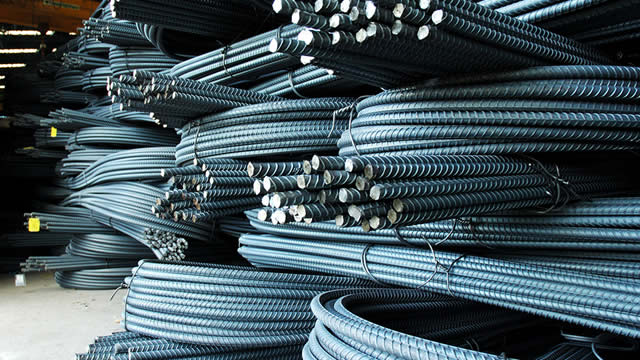
Trump greenlights U.S. Steel deal, promising $11B investment and 100,000 American jobs
Fox Business· 2025-06-16 20:16
Shares of U.S. Steel soared Monday after President Donald Trump issued an executive order on Friday approving U.S. Steel’s merger with Japan’s Nippon Steel through a National Security Agreement (NSA). The stock gained over 5% in the biggest percentage rise since March 2011, as tracked by Dow Jones Market Data Group. Ticker Security Last Change Change % X UNITED STATES STEEL CORP. 54.85 +2.66 +5.10% U.S. Steel .The NSA includes a commitment to more than $11 billion in new steelmaking investments in the U ...


Metallus(MTUS) - 2022 Q3 - Earnings Call Presentation
2025-06-16 18:01
Company Overview - TimkenSteel was founded in 1917 and became a standalone public company in 2014 [9] - The company produces steel primarily from recycled scrap metal using electric arc furnace (EAF) technology [9] - TimkenSteel's annual melt capacity is approximately 12 million tons, with a shipping capacity of approximately 09 million tons [9] - In 2021, TimkenSteel reported net sales of $13 billion [9] Financial Performance and Targets - TimkenSteel is targeting $80 million of run-rate profitability improvement through optimization [16] - The company generated $341 million of free cash flow [16] - The company's historical average adjusted EBITDA margin is 8%, with a long-term target of over 12% [85] - The company's historical average melt utilization rate is 61%, with a long-term target in the mid-80% range [85] - Capital expenditures are targeted between $30 million and $40 million [85] Environmental Goals - TimkenSteel has established 2030 environmental goals, including a reduction in Scope 1 and Scope 2 GHG emissions [9, 68] - From 2018 to 2021, the company achieved a 31% reduction in fresh water withdrawn [70] - From 2018 to 2021, the company achieved a 29% reduction in waste-to-landfill intensity [71] Q3 2022 Results and Outlook - In Q3 2022, TimkenSteel reported net sales of $3168 million [28] - The company experienced a net loss of $133 million with adjusted EBITDA of $108 million [28] - The company's total liquidity at the end of Q3 2022 was $4872 million [90]


X @Investopedia
Investopedia· 2025-06-16 17:00
United States Steel shares are jumping in premarket trading Monday, as the Pittsburgh-based company’s takeover by Japan’s Nippon Steel looks set to close following the deal's approval by President Donald Trump. https://t.co/HISBJeiYsP ...
Earnings Preview: Commercial Metals (CMC) Q3 Earnings Expected to Decline
ZACKS· 2025-06-16 15:00
Core Viewpoint - The market anticipates a year-over-year decline in earnings for Commercial Metals (CMC) due to lower revenues, with a focus on how actual results compare to estimates impacting stock price [1][2]. Earnings Expectations - Commercial Metals is expected to report quarterly earnings of $0.75 per share, reflecting a year-over-year decrease of 26.5% [3]. - Revenues are projected to be $2.01 billion, down 3.3% from the same quarter last year [3]. Estimate Revisions - The consensus EPS estimate has been revised down by 5.13% over the last 30 days, indicating a reassessment by analysts [4]. - A positive Earnings ESP of +14.67% suggests recent bullish sentiment among analysts, despite the stock holding a Zacks Rank of 4, complicating predictions of an earnings beat [12]. Earnings Surprise History - In the last reported quarter, Commercial Metals was expected to earn $0.31 per share but only achieved $0.26, resulting in a surprise of -16.13% [13]. - Over the past four quarters, the company has only beaten consensus EPS estimates once [14]. Conclusion - While the company does not appear to be a strong candidate for an earnings beat, investors should consider other factors when making decisions regarding the stock ahead of the earnings release [17].
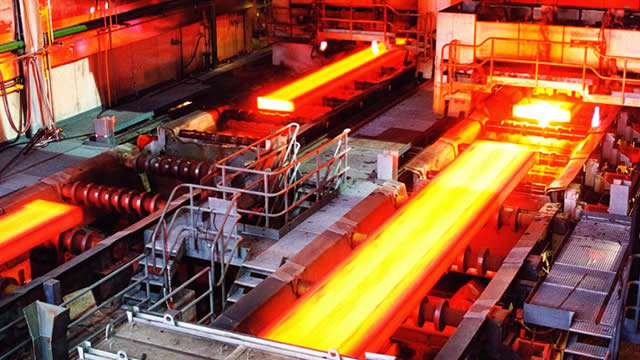
U.S. Steel Stock Surges on Approved Nippon Steel Merger
Schaeffers Investment Research· 2025-06-16 14:54
Group 1 - United States Steel Corp (NYSE:X) stock increased by 5.1% to $54.84 following President Trump's approval of a $14.9 billion merger with Nippon Steel, which includes a national security agreement granting the U.S. government a "golden share" [1] - The stock has risen 61.4% in 2025, reaching a 14-year high of $54.91, supported by the 20-day moving average and overcoming previous resistance at $45 after a 21.2% bull gap in late May [2] - Options trading volume is significantly higher than average, with 38,000 calls and 25,000 puts exchanged, indicating strong interest in the June 55 call and the 45 put [2] Group 2 - Short-term options traders are exhibiting a more bearish sentiment, as indicated by a Schaeffer's put/call open interest ratio (SOIR) of 1.16, which is in the 80th percentile of the past year's readings [3]